The highly anticipated sequel, Ready or Not 2: Here I Come, from the acclaimed filmmaking duo Matt Bettinelli-Olpin and Tyler Gillett, collectively known as Radio Silence, delivers a potent blend of visceral horror, dark comedy, and profound social commentary. Released to critical and audience buzz, the film expands on the gleefully subversive spirit of its 2019 predecessor, offering a narrative that is not only bloodier and more vicious but also remarkably intricate in its exploration of character interiority amidst histrionic chaos. At its core, the film provides the cathartic spectacle of the wealthy facing their devilish comeuppance, while simultaneously championing the enduring power of imaginative resistance against entrenched systems of power.
The Return of Radio Silence and a Bloodier Vision
Radio Silence, a name synonymous with a modern, often meta-aware approach to horror, has steadily built a reputation for reinvigorating established genres. Following their success with the 2022 Scream revival and their contributions to anthology films like V/H/S and Southbound, Bettinelli-Olpin and Gillett have returned to the universe they first established with Ready or Not. The original film, a cult hit with a worldwide gross of over $57 million against a modest $6 million budget, resonated with audiences for its unique premise and Samara Weaving’s breakout performance. This sequel, Ready or Not 2: Here I Come, capitalizes on that foundation, promising an even grander scale of mayhem and thematic depth.
Speaking on the film’s release day, the directors elaborated on their vision for the follow-up. Tyler Gillett highlighted the desire to amplify what resonated most with audiences from the first film: Grace’s indomitable scrappiness. "I think what people responded to from the first film was Grace’s scrappiness and how, down to the very end, she never gave up. She had every bit of fight in her at the end of Ready or Not that she had at the beginning," Gillett explained. This commitment to Grace’s tenacious spirit was a driving force in determining the sequel’s immediate narrative starting point.
Expanding the Lore: Grace’s Ordeal and New Alliances
The narrative of Ready or Not 2: Here I Come plunges audiences directly into the harrowing aftermath of the original film’s explosive finale. Grace (Samara Weaving), the sole survivor of the Le Domas family’s deadly "Hide-and-Seek" game, collapses on the steps of the now-incinerated estate. Her escape from the capitalist Satanic cult that saw her husband and his entire family spectacularly combust marked her as a unique figure in this dark universe.
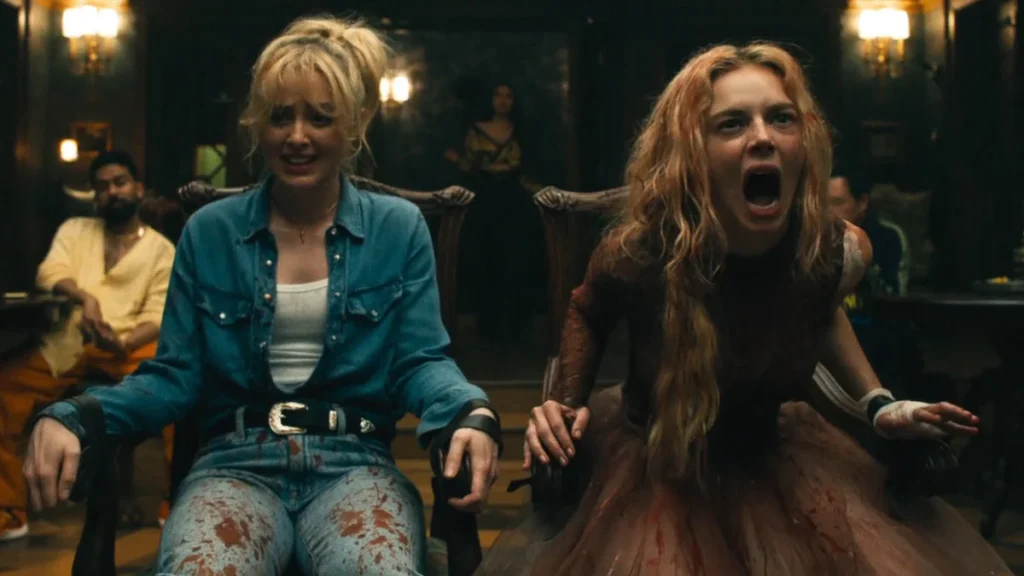
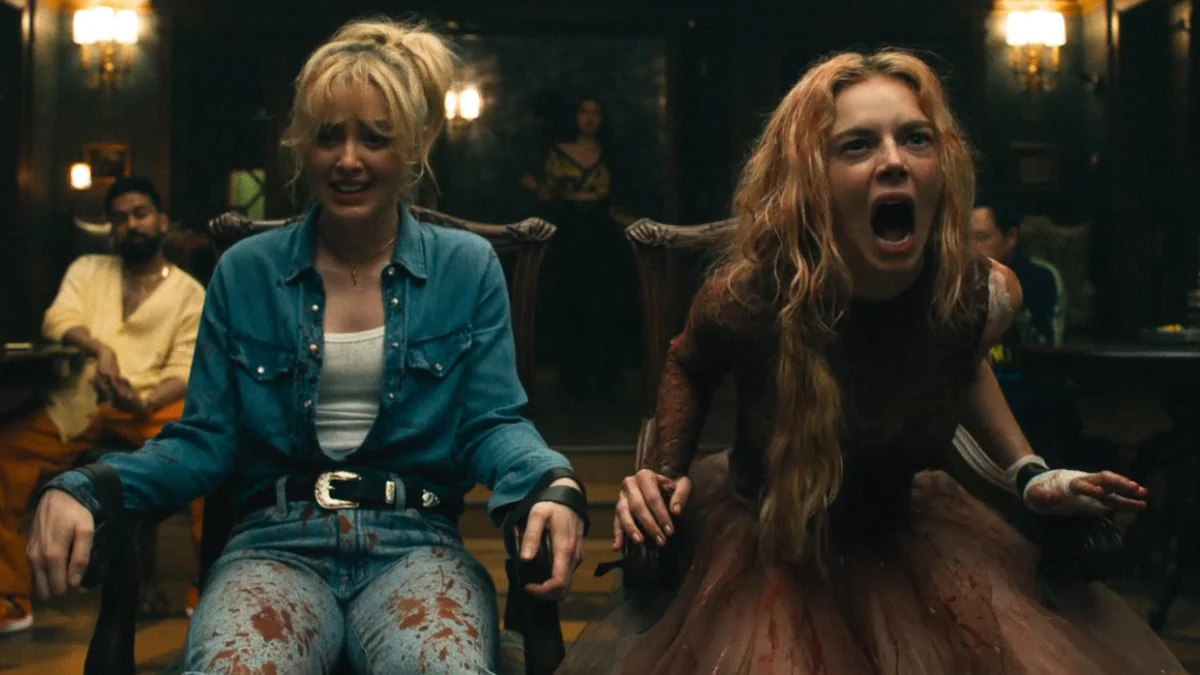
However, her reprieve is short-lived. She awakens to find her estranged sister, Faith (Kathryn Newton), at her side. Before any meaningful reconciliation or even a chance for their usual sibling barbs, they are captured. It is revealed that the Le Domas clan was merely one cog in a larger, more pervasive network of capitalist Satanic cults. Other powerful families, eager to seize leadership and further their nefarious agendas, now target Grace and Faith. Leading the charge are formidable siblings Titus (Shawn Hatosy) and Ursula (Sarah Michelle Gellar), who represent a new, more organized, and arguably more dangerous threat. The sisters’ only hope lies in surviving until dawn, navigating a treacherous game of cat and mouse against adversaries who are far more adept and ruthless than the Le Domas family ever was. This expanded scope immediately signals a shift from the contained, "chamber piece" nature of the first film to a broader, more intricate world of corruption.
Subverting Expectations: Humor, Horror, and Humanity
A hallmark of Radio Silence’s work is their skillful navigation of genre conventions, often subverting them for both comedic and thematic effect. Ready or Not 2 continues this tradition, deliberately zigging when audiences expect a zag. This approach is evident not just in the plot twists but also in the portrayal of its characters and their reactions to extreme violence.
Matt Bettinelli-Olpin noted this conscious subversion, recalling moments from the first film, such as the iconic image of Grace with a shotgun that ultimately misfired, defying the expected "badass" trope. "Guy and Ryan are really good at writing those moments where the movie tells you it’s heading towards something you’ve seen in another movie, and then it decides, ‘Nope, we’re not doing that,’" Bettinelli-Olpin shared, referring to writers Guy Busick and R. Christopher Murphy. This commitment to unexpected realism in moments of heightened genre tension is a key differentiator. The "laundry machine kills," for instance, are highlighted as an example where the film deliberately makes the audience uncomfortable by portraying the real pain and protracted nature of the violence, moving away from a stylized horror movie death.
Gillett further elaborated on their approach to supernatural horror, stating, "What you’re seeing in our work is very much a skewering and subversion of that subgenre. A lot of it is the sense of humor that is derived from colliding our very human world and characters with the high-octane, survive-the-night stakes of our stories." This philosophy ensures that even when the literal devil makes an appearance, as Bettinelli-Olpin candidly points out, the human element and the inherent absurdity of the situation remain central. The Le Domas family’s "cosplaying evil" in the first film, for example, is contrasted with the more knowing malevolence of the new families, but the underlying human fallibility and dark humor persist.
One of the film’s most lauded gags involves legendary filmmaker David Cronenberg making a cameo, texting in a group chat and issuing the command, "Approve the ceasefire." This moment, highlighted by both directors as a point of pride, perfectly encapsulates the film’s blend of modern absurdity and ancient power. "That was always funny on the page because our question was, ‘How do you distill this guy’s power into one moment?’" Bettinelli-Olpin revealed. The immediate resolution of a global conflict post-text message underscores the subtle yet pervasive influence these powerful figures wield, juxtaposing mundane technology with supernatural authority.

Behind the Scenes: Crafting the Sequel’s Unique Identity
The production of Ready or Not 2 saw an increase in resources, allowing the filmmakers to amplify aspects that were creatively constrained in the first film. The "blood budget" naturally increased, given the sequel’s promise of more viciousness. However, a more subtle, yet equally significant, increase was in the "candle budget."
Bettinelli-Olpin humorously recounted the limitations of the first film: "I think in the first film we had a total of fifteen candles and three candelabras. We’d move them into each shot to give them the appearance of candelabras in these long hallways. We’d have to then blow them out immediately so that they wouldn’t melt. Otherwise, we’d have to get new fucking candles that we could not afford." This anecdotal detail not only provides a glimpse into the ingenuity required for independent filmmaking but also underscores the deliberate choice to enhance the atmosphere in the sequel. The increased candle budget, therefore, symbolizes a more opulent, ritualistic, and genuinely sinister environment, reflecting the idea that "the families in this film know what the fuck they’re doing," unlike the somewhat clumsy Le Domas clan.
Character development, even for the antagonists, was a key focus. The character of Titus, portrayed by Shawn Hatosy, undergoes a nuanced transformation, marked by a series of significant slaps. Bettinelli-Olpin noted, "Even though Titus is a capital-V villain in this movie, you want to know why he is the way he is. There’s something about those slaps, especially from his dad, where you do feel empathy for him, and you watch that get peeled away throughout the movie." These instances—being slapped by his father, his sister Ursula, and eventually Faith—serve as psychological markers, charting his descent into unhinged brutality. Gillett drew a parallel to Alex, Grace’s husband from the first film, whose transformation was also influenced by the loss of his family pillars, suggesting a thematic thread of how individuals are shaped by their oppressive familial environments.
Thematic Undercurrents: Capitalism, Resistance, and the Supernatural
Beyond the gore and gags, Ready or Not 2: Here I Come continues to delve into substantive thematic territory, most notably the critique of inherited wealth and corporate greed, as well as the power of individual resistance. The Le Domas family’s ritualistic sacrifices, fueled by a pact with the devil for immense wealth, were a clear allegory for the dark underbelly of unchecked capitalism. The sequel expands this critique, presenting a more organized and widespread network of such families, effectively portraying a systemic evil.
The filmmakers articulated their commitment to embedding real thematic weight within their entertaining narratives. "We make fun, silly movies, but we really hope that the thematic stuff we deal with at the heart of our films is real and not goofy," Bettinelli-Olpin stated. This philosophy suggests that entertainment can be a powerful vehicle for conveying a worldview, making complex ideas digestible and impactful.
The film’s exploration of "imaginative resistance" stands out. Grace faces a stark binary choice: either join the corrupt system or be killed while fighting it. However, the film posits a third, more hopeful path. "To have Grace take that moment and say, ‘I don’t believe that. I think there’s another way.’ We’re not presented with that option anymore," Bettinelli-Olpin explained, highlighting the film’s deliberate departure from cynical narratives. Gillett passionately added, "In both versions of those scenarios, the bad guys win. I’m fucking sick of living in a world where the bad guys win. We don’t want to express that in our work; we want the good guys to get the shot at victory." This stance underscores the film’s optimistic, albeit hard-won, message that victory against oppressive systems is possible, provided one doesn’t succumb to cynicism or adopt the worldview of the oppressor.
The directors also touched upon their unique approach to the supernatural. While their films often feature divine or demonic elements, their interest lies more in the "skewering and subversion" of the subgenre rather than traditional entries into it. The supernatural serves as a catalyst for extreme human reactions and dark humor, rather than a straightforward exploration of spiritual horror. Even with the devil’s literal appearance, the focus remains on the human characters’ grounded struggles and their often-absurd attempts to grapple with forces beyond their comprehension.
Critical Acclaim and Broader Impact
Initial reactions to Ready or Not 2: Here I Come suggest that it successfully builds upon the strengths of its predecessor while carving out its own identity. Critics are likely to praise its audacious blend of horror and comedy, the elevated stakes, and the nuanced performances, particularly from Samara Weaving and Kathryn Newton. The film’s ability to deliver genuine scares and laugh-out-loud moments, coupled with its incisive social commentary, positions it as a significant entry in the contemporary horror landscape.
The success of films like Ready or Not 2 further solidifies Radio Silence’s reputation as innovative voices in genre cinema. Their consistent ability to blend entertainment with meaningful themes, without sacrificing either, demonstrates a sophisticated understanding of their craft and their audience. As Gillett concluded, "Our tone gets written off because it’s entertaining and silly and fun. I think people think, ‘Oh, there’s nothing to see here.’ There’s no deeper significance, message, or meaning. I would say that some of the hardest work that we do is actually working to hide all of that nutritive shit inside of something that is hopefully digestible and approachable." This dedication to crafting accessible yet profound cinematic experiences ensures that Ready or Not 2: Here I Come is more than just a horror sequel; it is a thoughtful, exhilarating statement on power, resistance, and the enduring fight for a world where the good guys, against all odds, can still win.