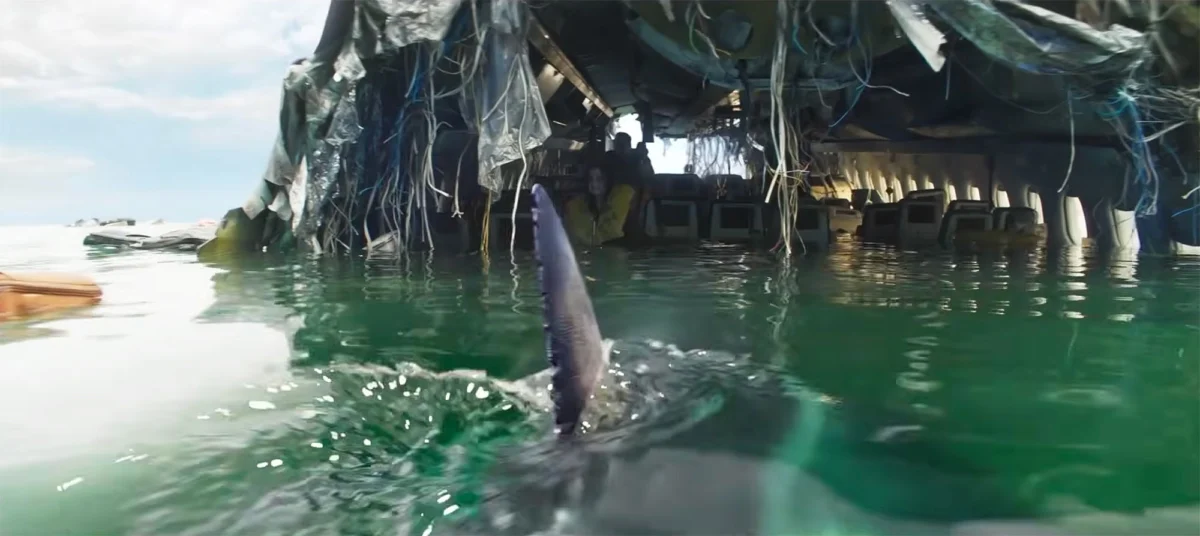
Magenta Light Studios has officially released the full-length trailer for Deep Water, a high-stakes survival horror film directed by Renny Harlin that combines the harrowing tension of a commercial aviation disaster with the primal terror of a shark-infested maritime environment. Scheduled for a nationwide theatrical release on May 1, 2026, the film marks a significant return to the shark-centric subgenre for Harlin, who famously helmed the 1999 cult classic Deep Blue Sea. Starring Academy Award winner Ben Kingsley and Golden Globe nominee Aaron Eckhart, Deep Water is positioned as a major early-summer tentpole, aiming to capture audiences with a blend of disaster-movie spectacle and visceral creature horror.
The narrative follows an international flight traveling from Los Angeles to Shanghai that encounters catastrophic mechanical failure, forcing the crew to attempt a perilous emergency landing in a remote stretch of the Pacific Ocean. While the initial impact provides a harrowing survival scenario in its own right, the surviving passengers and crew soon realize that the wreckage has drifted into the hunting grounds of a predatory shark population. The trailer highlights the escalating desperation of the survivors as they navigate the sinking fuselage and the open water, forced to cooperate under extreme duress while being methodically hunted by an unseen aquatic threat.
The Return of Renny Harlin to the Aquatic Horror Genre
The attachment of Renny Harlin to Deep Water has generated considerable interest within the industry and among genre enthusiasts. Harlin, a prolific Finnish filmmaker, established himself in the late 1980s and early 1990s as a master of high-octane action and horror, with credits including A Nightmare on Elm Street 4: The Dream Master, Die Hard 2, and Cliffhanger. However, it is his work on Deep Blue Sea that remains a touchstone for modern shark cinema. That film was noted for its use of large-scale practical effects and its subversion of genre tropes, and Deep Water appears to be a spiritual successor that utilizes modern filmmaking technology to heighten the sense of claustrophobia and dread.
Since the late 1990s, Harlin has maintained a prolific output across various genres, including recent ventures into the horror space with The Strangers: Chapter 1 through 3. Deep Water represents a homecoming to the "natural horror" elements that defined a significant portion of his early career. Industry analysts suggest that Harlin’s experience with complex water-based productions—notably the ambitious, if troubled, Cutthroat Island—gives him a unique perspective on managing the technical difficulties associated with filming survival stories set in aquatic environments.

Narrative Structure and Production Background
The screenplay for Deep Water was developed by Pete Bridges, Shayne Armstrong, and S.P. Krause. The script reportedly focuses on the psychological toll of survival, moving beyond the simple "slasher" mechanics often found in low-budget shark films. By placing the characters in the aftermath of a plane crash, the writers have introduced a secondary layer of conflict: the structural instability of the aircraft as it slowly submerges, which serves as both a sanctuary and a trap for the survivors.
Production was managed by a robust team of veteran producers, including Bob Yari, Dale G. Bradley, Grant Bradley, Adrián Guerra, Ryan Hamilton, Neal Kingston, Xavier Parache, Shaun Sanghani, and Robert Van Norden. The collaboration between Magenta Light Studios and this international production team indicates a strategy to market the film as a premium genre offering, distinguishing it from the plethora of direct-to-streaming shark movies that have saturated the market over the last decade.
The film’s timeline of development suggests a focused production cycle aimed at securing a prime May release date. This window is traditionally the start of the summer blockbuster season, where high-concept thrillers often find success as counter-programming to major superhero or franchise installments.
Casting and Character Dynamics
Deep Water features an ensemble cast led by Aaron Eckhart and Ben Kingsley, a pairing that suggests a level of dramatic gravity rarely seen in contemporary shark horror. Aaron Eckhart, known for his roles in The Dark Knight and Thank You for Smoking, has recently carved out a niche as a reliable lead in action-heavy thrillers, such as The Bricklayer (also directed by Harlin). In Deep Water, Eckhart appears to play a central role in the survival efforts, likely portraying a character with the tactical or professional background necessary to lead the disparate group of passengers.
Sir Ben Kingsley brings a prestigious presence to the film. While his specific character details have been kept relatively under wraps, the trailer suggests he plays a pivotal role among the international group of passengers. The inclusion of an actor of Kingsley’s caliber—an Academy Award winner for Gandhi—signals that the film intends to lean into character-driven tension.

The supporting cast is equally diverse, featuring Molly Belle Wright, Angus Sampson (known for the Insidious franchise), Kelly Gale, and Li Wenhan. This international ensemble reflects the Los Angeles-to-Shanghai flight path of the fictional aircraft, a narrative choice that broadens the film’s global appeal, particularly in the North American and Asian markets.
Technical Execution and Visual Style
Visually, Deep Water utilizes a color palette of deep blues and sterile metallic grays, emphasizing the isolation of the Pacific Ocean and the cold, industrial nature of the sinking plane. The trailer showcases a mix of practical sets and advanced digital effects. Harlin has historically preferred practical elements where possible, and the physical sets for the plane’s interior appear to have been constructed to allow for realistic water ingress, adding to the authenticity of the actors’ performances.
The depiction of the sharks themselves follows a trend of "elevated realism" seen in recent successes like The Shallows (2016) and Crawl (2019). Rather than relying on exaggerated sizes or supernatural abilities, Deep Water focuses on the terrifying reality of apex predators acting on instinct within a chaotic environment. The cinematography aims to capture the "unseen" threat, using underwater shots to create a sense of vulnerability for the characters treadling water on the surface.
Historical Context and Genre Evolution
The shark horror genre has undergone several transformations since Steven Spielberg’s Jaws defined the summer blockbuster in 1975. Following a period of diminishing returns in the 1980s, the genre was revitalized in the late 90s by Harlin’s Deep Blue Sea, which introduced smarter, faster predators. In the 2010s, the genre split into two distinct paths: the "mockbuster" style characterized by the Sharknado series, and the "prestige survival" style characterized by minimal casts and high-tension scenarios.
Deep Water appears to be an attempt to merge these paths—combining the large-scale disaster elements of a big-budget production with the focused, harrowing survivalism of modern thrillers. Data from recent years suggests a continued appetite for this content; films like 47 Meters Down (2017) outperformed box office expectations by focusing on the primal fear of being trapped in the ocean. By adding the plane crash element, Deep Water taps into "aerophobia" as well as "thalassophobia," doubling the potential triggers for audience anxiety.

Industry Implications and Market Strategy
The release of Deep Water on May 1, 2026, places it at a critical juncture in the theatrical calendar. As the first major horror-thriller of the summer, it will serve as a litmus test for the viability of mid-budget, high-concept original films in an era dominated by sequels and reboots. Magenta Light Studios’ decision to opt for a wide theatrical release underscores a confidence in the film’s "big screen" appeal, particularly the immersive sound design and visual scale of the crash sequence.
Furthermore, the film avoids the "camp" associated with many shark movies, opting instead for a gritty, R-rated approach to survival. This positioning is intended to attract older teenagers and adult audiences who gravitate toward the visceral intensity of Harlin’s previous work. Industry insiders note that if Deep Water succeeds, it could pave the way for a resurgence of "natural disaster horror," a genre that has seen sporadic success but lacks a consistent champion in the modern era.
Summary of Expectations
Deep Water is more than a simple creature feature; it is a technical exercise in suspense directed by a filmmaker with a proven track record in the genre. With a cast that brings significant dramatic weight and a premise that utilizes two of the most common human fears—flying and the deep sea—the film is poised to be a notable entry in the 2026 cinematic landscape.
As the promotional campaign continues throughout April, the focus remains on the film’s pedigree. The marketing materials have been careful to distinguish this production from the 2022 Ben Affleck-led erotic thriller of the same name, ensuring that audiences are prepared for a survival horror experience rather than a domestic drama. When Deep Water hits theaters in May, it will offer a high-stakes look at human resilience against the unforgiving forces of nature, reminding audiences why Renny Harlin remains a significant voice in the world of cinematic thrills.