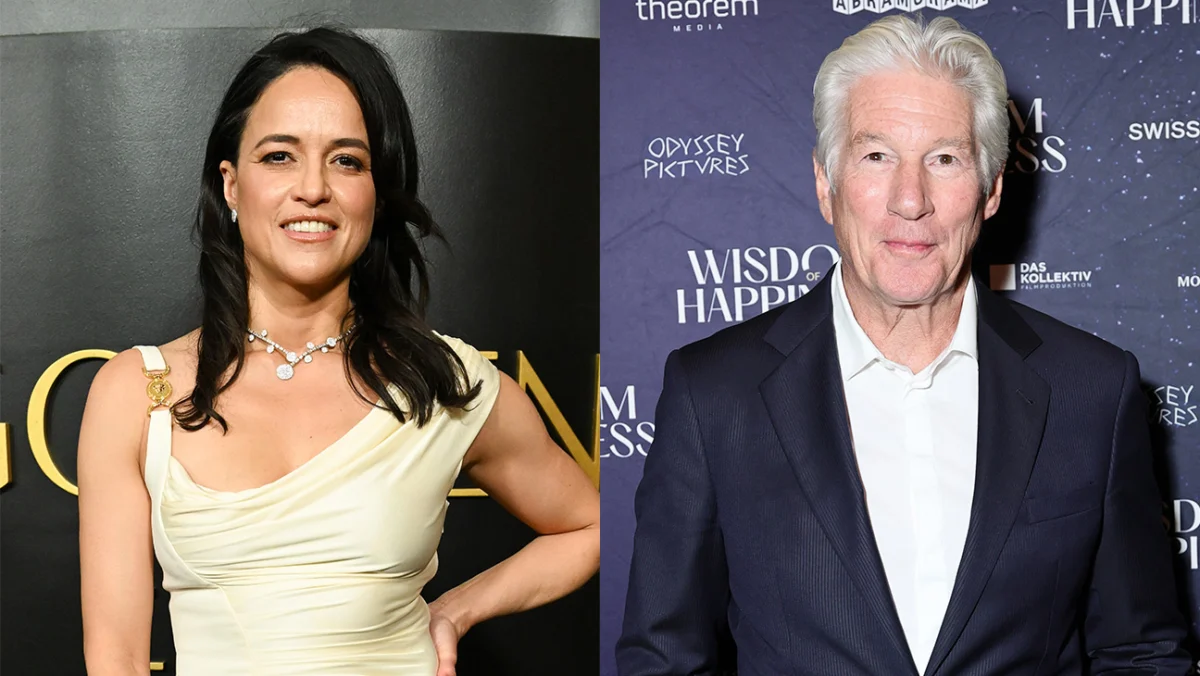
The highly anticipated contained thriller, Left Seat, has officially commenced production in Munich, Germany, at Bavaria Studios, marking a significant milestone for the project that was first announced as a Cannes market title a year ago. Veteran actor Richard Gere and action star Michelle Rodriguez are confirmed to headline the film, which promises a high-stakes, character-driven narrative set against the backdrop of an aerial emergency. This collaboration brings together two distinct cinematic presences for the first time, setting the stage for a compelling dramatic interplay.
The Thrilling Premise: A Battle for Survival at 30,000 Feet
At its core, Left Seat plunges audiences into an intense scenario where a routine flight turns into a desperate fight for survival. Michelle Rodriguez takes on the pivotal role of a pharmaceutical representative whose life is irrevocably altered when the pilot of her small charter plane unexpectedly loses consciousness mid-flight. Thrust into an unimaginable situation, she must take command of the aircraft, despite having no prior piloting experience. The narrative intensifies as she finds herself navigating not only a rapidly deteriorating mechanical crisis but also a treacherous, deadly storm that threatens to tear the plane apart.
Her only lifeline comes in the form of a mysterious man on the radio, portrayed by Richard Gere. This unseen guide becomes her sole source of instruction, offering a desperate lesson in aviation under the most extreme pressure. As the aircraft’s fuel reserves dwindle, the race against time becomes paramount, with the lives of everyone on board resting squarely on her ability to follow instructions and land the plane against all odds. James Weber Brown is also confirmed to have a small role in the film, adding another layer to the confined drama.
The film’s confined nature is a deliberate creative choice, designed to maximize tension and focus on character development. It has been aptly described as akin to Steven Knight’s critically acclaimed 2013 film, Locke, which famously starred Tom Hardy as a man in a car during the most difficult night of his life, largely alone on screen. This comparison underscores Left Seat‘s potential as a powerful showcase for its lead actor, demanding an intense, largely solo performance that relies heavily on emotional depth and sustained psychological tension. The pharmaceutical rep’s journey from a terrified passenger to a reluctant hero promises a gripping exploration of human resilience under duress.
A Star-Studded Duo: Gere and Rodriguez Unite
The casting of Richard Gere and Michelle Rodriguez is a fascinating blend of seasoned dramatic prowess and established action credibility. This project marks their first professional collaboration, generating considerable anticipation among film enthusiasts keen to witness their dynamic on screen.
Richard Gere, a cinematic icon with a career spanning over five decades, brings a wealth of experience and gravitas to his role. Known for his charismatic performances in films such as An Officer and a Gentleman, Pretty Woman, and Chicago, Gere has consistently demonstrated a remarkable range, transitioning seamlessly between romantic leads, intense dramatic characters, and morally complex figures in thrillers like Primal Fear. In recent years, Gere has often gravitated towards more nuanced, character-driven projects, including television roles like his upcoming appearance in Paramount+’s The Agency: Central Intelligence. His role in Left Seat, largely communicated through voice over a radio, will rely heavily on his vocal performance and ability to convey authority, calm, and urgency, providing a steadying presence amidst the airborne chaos. This type of role, requiring intense emotional connection without direct physical interaction, offers a unique challenge and opportunity for an actor of his caliber.
Michelle Rodriguez, on the other hand, has carved out a formidable niche as one of Hollywood’s most recognizable action stars. Her career took off with her breakout role in Girlfight, but she gained global recognition as Letty Ortiz in the immensely successful Fast & Furious franchise, a role she most recently reprised in Fast X and is expected to continue in the upcoming Fast Forever. Rodriguez is celebrated for her portrayal of strong, independent, and often physically formidable characters. Left Seat, however, presents a significant departure from her typical action-heavy roles. While the film certainly involves high stakes and intense pressure, her character’s struggle is primarily internal and cerebral, demanding a performance that emphasizes vulnerability, fear, and intellectual fortitude rather than physical combat. This role offers Rodriguez a unique opportunity to showcase her dramatic range and explore a different facet of her acting capabilities, potentially redefining audience perceptions of her artistic versatility.
The synergy between Gere’s commanding voice and Rodriguez’s intense, reactive performance is expected to be a central pillar of the film’s appeal. The narrative architecture, where one character is entirely reliant on the guidance of another, creates an inherent dramatic tension that is magnified by the distinct energies these two actors bring to their respective parts.
The Creative Minds Behind the Controls
Guiding this ambitious project is director Ben Younger, whose diverse filmography showcases a keen eye for character-driven narratives and intense drama. Younger is perhaps best known for helming the critically acclaimed boxing drama Bleed for This, which starred Miles Teller and explored the gritty reality of a boxer’s comeback. His earlier works include the financial drama Boiler Room and the romantic comedy Prime, demonstrating a versatile directorial approach.
Crucially, Younger brings a unique and invaluable expertise to Left Seat: he is an experienced pilot. This personal background offers an unparalleled level of authenticity and technical accuracy to the film’s aviation sequences and the inherent challenges of flying an aircraft. His understanding of aeronautics, emergency procedures, and the psychological demands of piloting will undoubtedly inform the visual language and narrative beats of the thriller, ensuring that the dramatic stakes are grounded in realistic detail. While official statements on his specific motivations for this project are not yet public, it can be inferred that the opportunity to combine his professional passion with his personal hobby would be a significant draw, allowing him to infuse the film with an authoritative realism often missing in aviation thrillers.
The screenplay for Left Seat was co-written by Ben Younger and David M. Crabtree. Crabtree originally penned the script in 2017, a testament to the long development journey often characteristic of independent film projects. He brought his initial concept to his former USC classmate, Jason Michael Berman, to further develop the project. This collaborative genesis highlights the importance of sustained creative partnerships in bringing complex stories to fruition.
Jason Michael Berman, a producer known for his work on films such as The Highest Low, is producing Left Seat via his company, A/Vantage Pictures. Berman’s involvement underscores his commitment to compelling, character-driven storytelling. He is joined in producing capacities by Younger and Crabtree, ensuring a cohesive creative vision, alongside Maximilian Leo and Jonas Katzenstein. The collective expertise of this producing team is instrumental in navigating the complexities of financing, logistics, and creative execution required for a high-concept contained thriller.
Innovation in Production: Filming on a Volume Stage in Munich
One of the most noteworthy aspects of Left Seat‘s production is its utilization of a Volume stage at Bavaria Studios in Munich, Germany. This cutting-edge virtual production technology represents a significant advancement in filmmaking, offering unprecedented flexibility and creative control, particularly for films with contained settings and challenging visual effects.
A Volume stage, popularized by shows like The Mandalorian, involves a massive array of high-resolution LED screens that form a seamless, immersive environment around the actors and physical sets. These screens display dynamically rendered virtual backgrounds in real-time, allowing filmmakers to create highly realistic and detailed environments that react to camera movement and lighting changes. For Left Seat, this technology is particularly advantageous. It enables the production team to simulate a range of aerial conditions – from clear skies to the turbulent chaos of a deadly storm – without the logistical challenges and costs associated with traditional green screen work or actual aerial photography.
The benefits are manifold:
- Realism: Actors can react to their virtual environment in real-time, leading to more authentic performances, as they are seeing the storm outside their cockpit windows rather than an empty green wall.
- Efficiency: Changes to lighting, time of day, or even entire environments can be made digitally and instantaneously, saving considerable time and resources compared to traditional location shooting or extensive post-production VFX.
- Safety and Control: Filming a plane crash or severe turbulence inside a controlled studio environment eliminates the inherent risks of shooting in actual aircraft or hazardous weather conditions.
- Cost-Effectiveness: While the initial setup of a Volume stage is an investment, it can ultimately reduce costs associated with travel, multiple location shoots, and extensive visual effects pipelines in post-production, especially for a contained film like Left Seat.
Bavaria Studios, a renowned film production facility, provides the ideal infrastructure for leveraging such advanced technology. Munich’s emergence as a hub for virtual production further solidifies Germany’s position in the global film industry, attracting international projects with its state-of-the-art facilities and skilled workforce.
Financing and International Collaboration: A Global Endeavor
The realization of Left Seat is a testament to robust international collaboration and a complex financing structure, typical of independent films with significant production values. Several key companies are involved in bringing the project to fruition: A/Vantage Pictures, Mandalay Pictures, and augenschein Filmproduktion are central to the production, with augenschein Filmproduktion specifically providing financing. Additional financial backing comes from Juniper Productions and StoneCastle Pictures, illustrating the syndicated nature of independent film investment.
The project has also garnered substantial support from German film funds, highlighting the country’s commitment to fostering both domestic and international productions. FFF Bayern (FilmFernsehFonds Bayern) and the German Federal Film Fund (DFFF) are actively supporting the film. These funds play a crucial role in attracting foreign investment and stimulating local industry growth by offering financial incentives and grants. The DFFF, for instance, provides grants for films that contribute to Germany’s cultural economy, making it an attractive partner for international co-productions seeking to leverage Germany’s production capabilities and talent. This governmental support not only bolsters the film’s budget but also ensures local employment and skill development within the German film sector.
On the distribution front, Anton is handling international sales, responsible for securing distribution deals across global territories. For the crucial North American market, WME Independent is managing sales. The involvement of such prominent sales agencies underscores the commercial potential seen in Left Seat, leveraging the star power of Gere and Rodriguez, the high-concept premise, and the innovative production techniques. The film’s announcement at the Cannes market a year prior was a strategic move to generate early interest and secure pre-sales, a common practice for independent films to de-risk production costs.
The "Contained Thriller" Renaissance: A Genre Defined by Tension
Left Seat firmly positions itself within the "contained thriller" genre, a subgenre that thrives on claustrophobia, psychological tension, and often, a minimal cast and single primary location. Films like Locke (as referenced by the original article), Buried, Phone Booth, and Flightplan exemplify this style, demonstrating how intense drama can be generated within strict spatial limitations. The genre forces filmmakers to rely heavily on character development, dialogue, and ingenious plot twists to maintain audience engagement, rather than expansive action sequences or multiple locations.
The enduring appeal of the contained thriller lies in its ability to create an immediate and palpable sense of vulnerability and immersion. Audiences are placed directly into the character’s predicament, sharing their fears and triumphs in real-time. For Left Seat, the setting of a small charter plane, combined with the extreme peril of an unconscious pilot, a raging storm, and dwindling fuel, provides a perfect crucible for this kind of intense, nerve-wracking storytelling. The psychological battle waged by Rodriguez’s character, guided by Gere’s voice, elevates the narrative beyond mere survival to an exploration of human limits and the power of connection in isolation.
This genre also offers a compelling proposition for actors, providing a platform for showcase performances that demand sustained intensity and emotional depth. For Rodriguez, it’s an opportunity to strip away the physical heroics and delve into a character’s raw, unadulterated fear and emergent courage. For Gere, his role as the disembodied voice offers a unique challenge to convey reassurance, expertise, and urgency solely through vocal delivery, making every word count.
Anticipation and Implications for the Industry
The commencement of production for Left Seat marks an exciting development in the independent film landscape. For Richard Gere and Michelle Rodriguez, the film represents a departure from their recent projects and an opportunity to explore new dramatic territories. For director Ben Younger, it’s a chance to blend his filmmaking prowess with his personal passion for aviation, potentially delivering a highly authentic and gripping cinematic experience.
The use of Volume stage technology at Bavaria Studios also signals a broader trend in the industry towards virtual production, offering a glimpse into the future of filmmaking. This method allows for greater creative freedom, enhanced realism, and potentially more efficient production cycles, especially for projects that benefit from controlled environments and complex visual effects.
As the film progresses through production and into post-production, anticipation will build for its eventual release. Given the strong cast, intriguing premise, and innovative production techniques, Left Seat is poised to capture the attention of film festivals, distributors, and audiences worldwide. It stands as a testament to the enduring power of compelling storytelling, proving that high-stakes drama can be found in the most confined spaces, driven by the sheer will of its characters. The project reinforces the vibrancy of the independent film sector and its capacity to produce unique, high-quality content that challenges conventional filmmaking approaches.