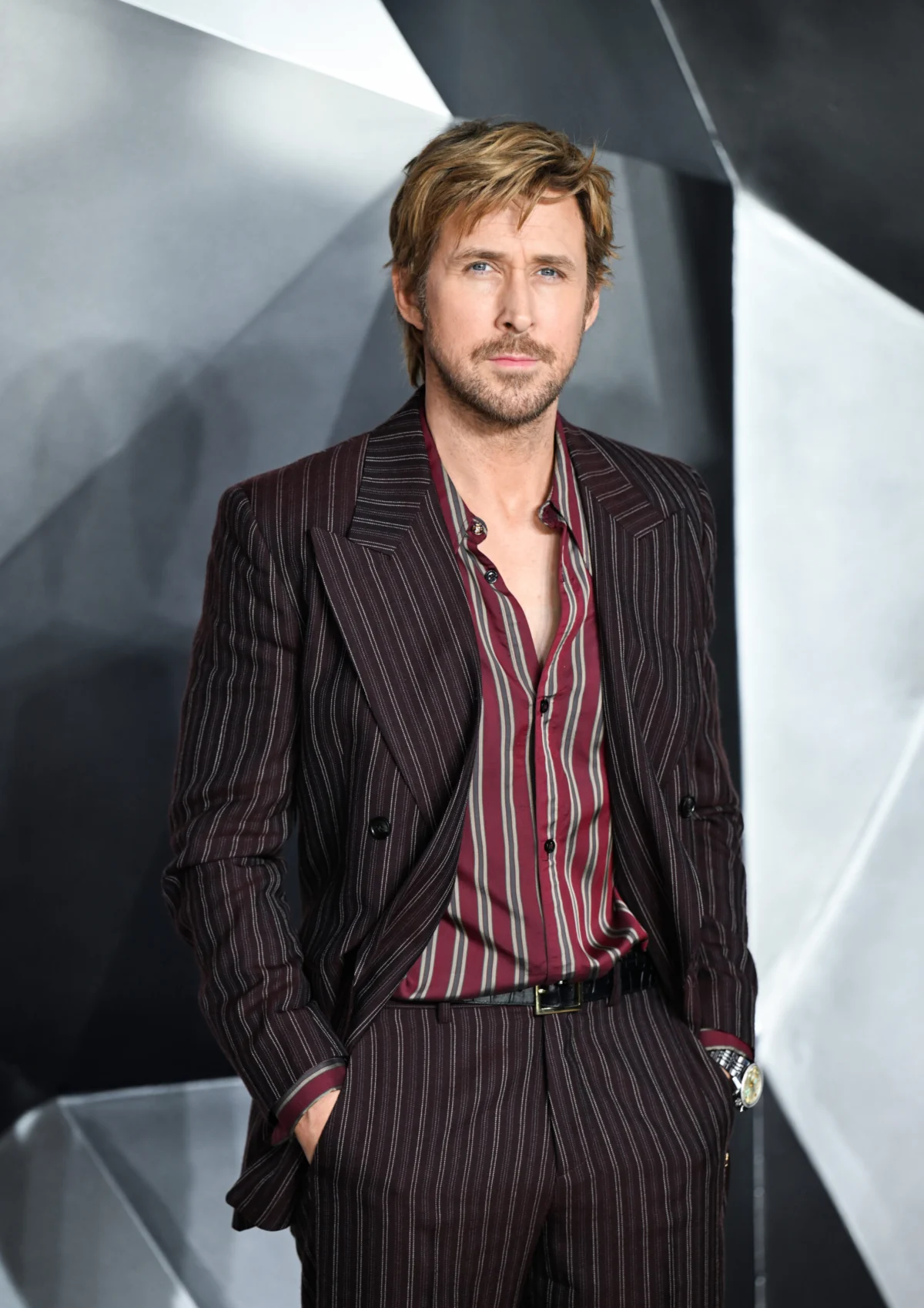
The highly anticipated collaboration between Oscar-winning filmmakers Daniel Kwan and Daniel Scheinert, collectively known as The Daniels, and global superstar Ryan Gosling has hit an unforeseen snag, with Gosling officially departing from their untitled Universal Pictures event film. The separation, attributed to insurmountable scheduling conflicts, marks a significant shift for a project already slated for a November 19, 2027 release and secured by a coveted California tax credit. The inability to adjust the film’s targeted summer production start proved to be the decisive factor, preventing the acclaimed actor from joining what was poised to be one of Hollywood’s most intriguing pairings.
The Unexpected Departure: A Deep Dive into Scheduling Complexities
The news, initially reported by Deadline and subsequently confirmed by The Hollywood Reporter, underscores the intricate ballet of logistics that defines modern tentpole film production. "Scheduling conflicts" is often a catch-all term in Hollywood, but in this instance, it appears to be genuinely rooted in the non-negotiable timelines of a major studio project coupled with the burgeoning commitments of one of the industry’s most sought-after stars. For an "event film" like The Daniels’ follow-up to their critically and commercially triumphant Everything Everywhere All at Once, a fixed release date nearly three years in advance (November 19, 2027) sets a rigid framework for pre-production, principal photography, and extensive post-production.
The planned summer start date for filming is critical for such a long-lead project, allowing ample time for the Daniels’ notoriously intricate visual storytelling and complex narrative structures to be brought to life. Shifting these dates is not a simple matter of moving a calendar entry. It impacts the availability of key crew members, soundstage bookings, location permits, and, crucially, the eligibility for the California tax credit. These tax incentives are designed to encourage film production within the state, but they often come with stringent deadlines and requirements that, if missed, can result in the forfeiture of millions of dollars in financial benefits. A studio like Universal would be highly motivated to adhere to the initial timeline to capitalize on such a significant financial boon, which can offset a substantial portion of a film’s budget.
Ryan Gosling, meanwhile, is experiencing a career zenith that has significantly increased demands on his time. His recent success with Project Hail Mary for Amazon MGM Studios, which debuted at No. 1 globally, has potentially launched a new franchise, requiring future commitments. This, coupled with the monumental success of Greta Gerwig’s Barbie, where his portrayal of Ken earned him an Academy Award nomination and solidified his status as a global box office draw, has made his schedule extraordinarily tight. Navigating overlapping production windows for multiple high-profile projects, each with its own set of demanding requirements, becomes a near-impossible feat, even for an actor with Gosling’s stature. The mutual decision to part ways, therefore, appears to be a practical acknowledgment of these logistical realities rather than a creative disagreement.
The Daniels’ Post-EEAAO Era: High Stakes and Creative Vision
For Daniel Kwan and Daniel Scheinert, their untitled Universal project carries immense weight as their official follow-up to the cultural phenomenon that was Everything Everywhere All at Once. Released in 2022, EEAAO defied expectations, grossing $143 million worldwide on a modest $25 million budget and sweeping the 95th Academy Awards with seven wins, including Best Picture, Best Director, and Best Original Screenplay. Its success not only cemented The Daniels’ unique artistic voice but also elevated them to a rare echelon of filmmakers who combine critical acclaim with broad commercial appeal.
Universal Pictures recognized this potential early, securing an overall deal with The Daniels and their longtime producing partner Jonathan Wang under their Playgrounds banner. This untitled film is the flagship project under that deal, designed to leverage their distinctive style for a major studio tentpole. Kwan, in an interview with Collider at SXSW, offered tantalizing glimpses into the film’s concept, describing it as a "fun sci-fi, action comedy with a big heart. Very existential. All those things that you would hope that one of our movies would be." He further elaborated on its thematic depth, noting the ambition to "meet the moment of a ‘complex’ world" and "reconcile all those things and put them into one movie," acknowledging the time-consuming nature of such an endeavor.
The casting of an ensemble, particularly with an emphasis on "younger talent," potentially in the high school age range, suggests a narrative dynamic where Gosling’s mature, charismatic presence would have anchored the youthful energy. His ability to blend comedic timing with dramatic gravitas, showcased in films like The Nice Guys and La La Land, would have been invaluable in balancing the film’s diverse tonal ambitions. The loss of such a prominent leading man, especially one who could bridge the gap between their indie sensibilities and mainstream appeal, necessitates a careful reassessment of the casting strategy while staying true to the directors’ vision.
Ryan Gosling’s Ascent: From Indie Darling to Global Star
Ryan Gosling’s career trajectory has been a fascinating blend of critical acclaim and commercial success, culminating in his current status as an undeniable Hollywood heavyweight. After first gaining widespread recognition in romantic dramas like The Notebook (2004), Gosling meticulously built a formidable filmography with diverse roles that showcased his range. He earned his first Academy Award nomination for Half Nelson (2006), followed by critically lauded performances in films like Drive (2011), The Place Beyond the Pines (2012), and Blade Runner 2049 (2017). His musical talents shone through in La La Land (2016), earning him another Oscar nod.
However, it was his transformative role as Ken in Greta Gerwig’s Barbie (2023) that propelled him into an unprecedented sphere of global stardom. The film’s staggering $1.4 billion worldwide box office haul and its pervasive cultural impact made Gosling a household name for a new generation, earning him a third Academy Award nomination and spawning the viral "Kenergy" phenomenon. This meteoric rise has made him an incredibly valuable asset for any studio, capable of driving massive box office numbers and generating significant buzz.
The initial casting of Gosling in The Daniels’ film was indeed perceived as a major "coup." It represented a strategic alignment of two of Hollywood’s most exciting creative forces with one of its most bankable stars. His involvement would have undoubtedly elevated the project’s profile, attracting a broader audience beyond The Daniels’ dedicated fanbase. Following Barbie, Gosling also has the highly anticipated action-comedy The Fall Guy set for release, further solidifying his diverse appeal. The success of Project Hail Mary and its potential to spawn a franchise only adds to his packed schedule, illustrating the very "conflicts" that led to this parting of ways.
The Impact on Universal Pictures: A Tentpole Strategy
For Universal Pictures, this development presents both a challenge and an opportunity. The studio has invested significantly in The Daniels, recognizing their unique storytelling capabilities and their ability to connect with audiences on a profound level. This untitled film, envisioned as an "event film," is a crucial component of Universal’s strategy to cultivate director-driven tentpoles alongside established franchises. The involvement of executive vice president of production development Sara Scott and director of production development Jacqueline Garell underscores the studio’s commitment to nurturing this project.
The securing of a California tax credit, as previously mentioned, is a testament to the film’s substantial budget and Universal’s intent to utilize financial incentives to maximize its production value. These credits are highly competitive and are often awarded based on factors like projected in-state spending and job creation. Losing the opportunity to leverage such a credit due to production delays or changes could have significant financial implications for the studio, making adherence to the established timeline paramount.
The search for a new lead actor will now commence, a process that is never simple, especially for a project of this magnitude and with such a distinct creative vision. While Gosling’s departure is a setback in terms of star power and initial marketing appeal, The Daniels’ reputation and the intriguing premise of the film will still attract a roster of A-list talent. The studio will likely seek an actor who can embody the existential, comedic, and action-oriented elements described by Kwan, someone who can complement the ensemble of younger talent and carry the emotional weight of the story. This recasting also offers a chance for Universal to potentially discover a new face or re-establish another star in a high-profile role.
Navigating Production Hurdles: The Intricacies of Hollywood Timelines
The decision highlights the inherent complexities and pressures within the Hollywood production pipeline. Major studio films are meticulously planned years in advance, with every aspect – from script development and casting to location scouting, crew hiring, and post-production – orchestrated to meet specific deadlines. A fixed release date, like November 19, 2027, is not merely aspirational; it dictates the entire production schedule, influencing everything from when visual effects vendors need to be engaged to when marketing campaigns must kick off.
The unavailability of a lead actor can create a cascading effect of delays and cost overruns. Rescheduling means finding a new window that accommodates not just the new lead but also the directors, key crew, and potentially other principal cast members. It also means renegotiating contracts, adjusting insurance policies, and potentially losing access to previously secured locations or specialized equipment. For a project that secured a tax credit based on a specific production timeline, any deviation could jeopardize that incentive, forcing the studio to either absorb the additional costs or attempt to secure new funding.
In an era where A-list talent often juggles multiple projects across film and television, managing schedules has become an increasingly sophisticated art. Agents and managers work tirelessly to map out their clients’ commitments, but unforeseen successes (like Project Hail Mary‘s strong opening) or sudden opportunities can quickly upend even the most carefully constructed plans. Studios, too, are under immense pressure to deliver a consistent slate of content, making flexibility a luxury they often cannot afford, especially for tentpole films crucial to their financial year.
The Road Ahead: What’s Next for The Daniels and Gosling?
For The Daniels, the immediate future involves an intensive recasting search. While the loss of Ryan Gosling is undoubtedly a significant development, their established reputation for innovative filmmaking and their recent Oscar triumph ensures that their project will remain highly attractive to top-tier talent. The challenge will be to find an actor who not only fits the demanding schedule but also embodies the unique blend of heart, humor, and existential depth that defines their work. The core creative vision, led by Kwan, Scheinert, and producer Jonathan Wang, remains intact, and their ability to craft compelling narratives with complex characters will undoubtedly guide their next casting choice. The industry will be watching closely to see who steps into this pivotal role, especially given the film’s promising premise and the high bar set by Everything Everywhere All at Once.
Ryan Gosling, meanwhile, will continue his impressive career trajectory unburdened by this particular commitment. His schedule is reportedly robust, with the aforementioned Project Hail Mary potentially evolving into a franchise, alongside other undisclosed projects that align with his current status as a global icon. His market value remains exceptionally high, and his ability to draw audiences to diverse films, from action spectacles to character-driven dramas, ensures a steady stream of opportunities. This amicable parting allows him to focus on his existing commitments without the added pressure of a potentially conflicting schedule, ensuring he can deliver his best work on each project.
For Universal, the goal remains clear: to deliver The Daniels’ vision to audiences on November 19, 2027. The studio will now pivot to finding a new leading man who can bring the necessary star power and acting prowess to this ambitious "event film." While recasting is a hurdle, it is a common occurrence in Hollywood and one that studios are well-equipped to navigate. The commitment to The Daniels’ distinctive voice and the film’s intriguing concept will continue to drive the project forward, solidifying its place as one of the most anticipated releases in the coming years.
The departure of Ryan Gosling from The Daniels’ untitled Universal film is a stark reminder of the dynamic and often unpredictable nature of Hollywood production. While a disappointment for those eager to see this particular collaboration, it underscores the complex logistical realities that govern major film projects. All parties involved are expected to move forward with professionalism, with The Daniels continuing their quest to deliver a worthy successor to their Oscar-winning phenomenon, and Ryan Gosling maintaining his reign as one of the industry’s most compelling and bankable stars.