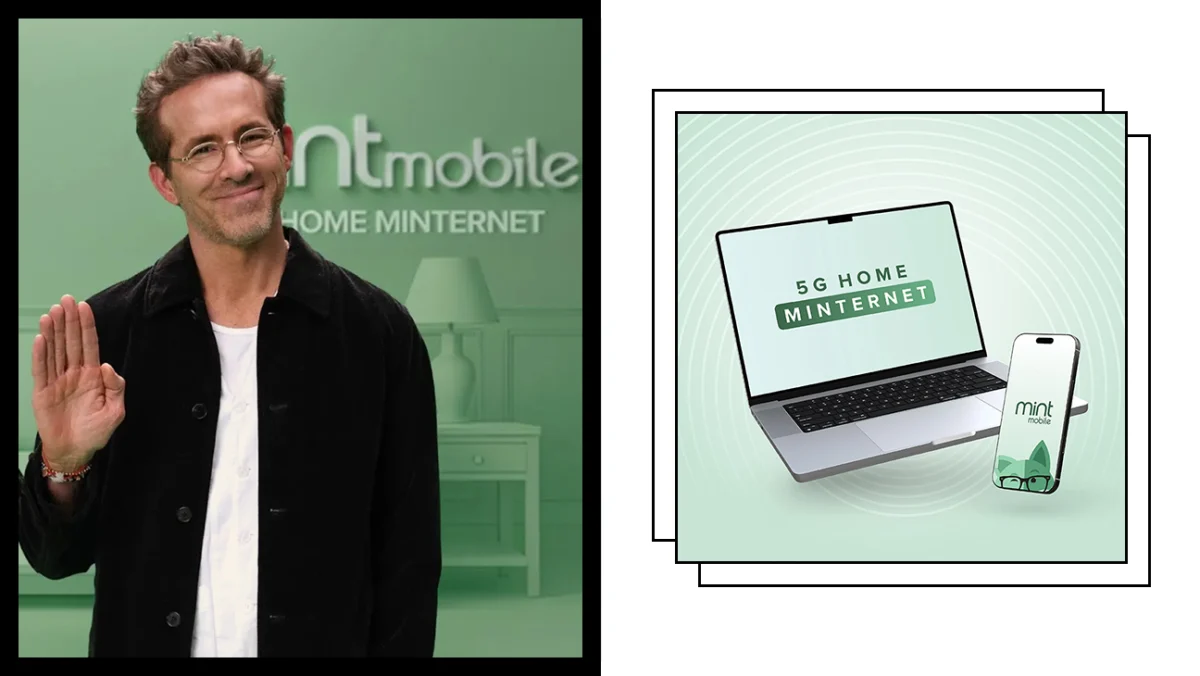
The telecommunications landscape is witnessing a strategic convergence of celebrity-driven marketing and disruptive pricing models as Mint Mobile announces its formal expansion into the home internet market. Ryan Reynolds, the actor and marketing entrepreneur who has become the face of the brand, is collaborating with world-renowned tidying expert Marie Kondo to introduce a new service bundle designed to challenge the dominance of traditional cable providers. The campaign, centered on the theme of "sparking joy" by eliminating complicated billing structures, marks a significant milestone in Mint Mobile’s evolution following its high-profile acquisition by T-Mobile.
The Strategy Behind the Mint Mobile Home Internet Bundle
At the heart of the new offering is a $45 monthly bundle that integrates both high-speed home internet and wireless mobile services. This aggressive pricing strategy is intended to undercut the "triple-play" packages and complex promotional rates often associated with legacy internet service providers (ISPs). The campaign’s primary creative asset, a digital spot featuring Reynolds and Kondo, utilizes the latter’s "KonMari" philosophy to highlight the lack of consumer satisfaction associated with traditional cable bills.
In the advertisement, Reynolds leverages his signature self-deprecating humor and direct-to-consumer communication style to contrast Mint’s simplicity with the perceived opacity of "Big Cable." The visual metaphor of Kondo assessing a cable bill for whether it "sparks joy" serves as a cultural touchstone for a broader critique of the ISP industry. According to Scott Venuti, General Manager of Home MINTernet at Mint Mobile, the initiative is a response to years of consumer frustration regarding price volatility and hidden fees. Venuti noted that while cable companies have historically utilized promotional periods to mask eventual price hikes, Mint Mobile intends to offer a "clear price that doesn’t slowly morph into something horrifying."
To further differentiate its service, Mint Mobile is introducing a five-year "no bill creep" guarantee. This commitment ensures that the $45 price point remains fixed for half a decade, a move designed to appeal to budget-conscious households navigating an inflationary economic environment.
Chronology of Mint Mobile’s Market Ascent
The expansion into home internet is the latest chapter in a rapid growth trajectory for Mint Mobile. Founded in 2016 as a mobile virtual network operator (MVNO) utilizing T-Mobile’s infrastructure, the company initially gained traction through its online-only, prepaid model.
In November 2019, Ryan Reynolds purchased an ownership stake in the company, subsequently becoming its primary spokesperson and creative director through his agency, Maximum Effort. Under Reynolds’ tenure, Mint Mobile became known for its low-budget, high-concept advertisements that frequently went viral, significantly lowering the cost of customer acquisition compared to competitors like Verizon or AT&T.
A pivotal moment occurred in March 2023, when T-Mobile announced it would acquire Ka’ena Corp., the parent company of Mint Mobile, in a deal valued at up to $1.35 billion. The transaction, which consisted of a combination of 35 percent cash and 65 percent stock, was finalized after a period of regulatory review. As part of the agreement, Reynolds remained in his creative role, ensuring that the brand’s distinct voice would be preserved even as it integrated into the T-Mobile ecosystem. The current home internet launch represents the first major product expansion since the completion of the merger, signaling T-Mobile’s intent to use the Mint brand to capture a larger share of the residential broadband market.
Analyzing the Competitive ISP Landscape
The entry of Mint Mobile into the home internet sector comes at a time of significant transition for the industry. Traditional cable giants such as Comcast (Xfinity) and Charter Communications (Spectrum) are facing increasing pressure from fixed wireless access (FWA) services provided by mobile carriers.
Data from the telecom sector indicates a shift in consumer behavior:
- The Rise of Fixed Wireless: In 2023, T-Mobile and Verizon accounted for the vast majority of net additions in the broadband market, largely through 5G-based home internet services.
- Consumer Dissatisfaction: National surveys frequently rank ISPs among the lowest-performing sectors in terms of customer satisfaction. Issues such as "bill creep"—the gradual increase of monthly costs after an initial promotional period—remain a primary driver of "churn," or customer turnover.
- Price Sensitivity: As streaming services continue to unbundle the traditional television experience, consumers are increasingly seeking standalone, high-quality internet at a predictable price point.
Mint Mobile’s $45 bundle is positioned to capitalize on these trends. By leveraging T-Mobile’s existing 5G network capacity, Mint can offer home internet without the significant overhead costs of laying physical fiber-optic or coaxial cables. This "asset-light" approach allows for the competitive pricing that forms the basis of the Kondo-led marketing campaign.
The Role of Maximum Effort and Celebrity Marketing
The partnership with Marie Kondo is emblematic of the "Maximum Effort" approach to advertising: identifying a cultural phenomenon and applying it to a mundane utility service. Since Reynolds took an active role in Mint Mobile, the company has consistently utilized zeitgeist-relevant figures to drive engagement. Past campaigns have featured Rick Moranis, Jack Gyllenhaal, and even the "real" people behind AI-generated content.
By bringing in Kondo, Mint Mobile is tapping into a specific psychological pain point. The "KonMari" method is not merely about tidying physical spaces but about removing unnecessary stress and clutter from one’s life. By framing a cable bill as "clutter" that fails to spark joy, the marketing team attempts to elevate a price-point discussion into a lifestyle choice. This strategy has proven effective for Reynolds’ other ventures, including Aviation Gin (which was sold to Diageo for $610 million) and the Wrexham Association Football Club, which has seen its global profile explode through the "Welcome to Wrexham" docuseries.
Official Responses and Industry Implications
Industry analysts view the Mint Mobile expansion as a strategic move by T-Mobile to diversify its brand portfolio. While the T-Mobile brand itself offers home internet, the Mint brand targets a different demographic: younger, digitally native, and highly price-sensitive consumers who may have an aversion to traditional corporate branding.
"Cable companies have mastered the art of making simple things complicated and expensive," Scott Venuti stated during the launch. "We’ve mastered the art of doing the opposite. And occasionally making jokes about it." This sentiment reflects a broader industry shift toward transparency. The Federal Communications Commission (FCC) has recently moved to mandate "Broadband Nutrition Labels," which require ISPs to clearly list all fees and performance metrics, a policy that aligns with Mint’s current marketing push.
The five-year price guarantee is perhaps the most disruptive element of the announcement. In an industry where 12-month promotional periods are the standard, a 60-month commitment to price stability is a direct challenge to the revenue models of legacy providers. If successful, this could force competitors to reconsider their own pricing structures to prevent further customer migration to wireless-based home internet solutions.
Future Outlook for Mint Mobile and T-Mobile
As Mint Mobile integrates more deeply with T-Mobile, the focus will likely shift toward maximizing the utilization of the 5G mid-band spectrum. The ability to offer a "MINTernet" service depends heavily on the geographic availability of T-Mobile’s 5G Ultra Capacity network. As infrastructure continues to expand into rural and underserved suburban areas, Mint’s potential market share increases.
Furthermore, the collaboration with Marie Kondo suggests that Mint Mobile will continue to rely on high-profile talent to maintain its "underdog" status, despite now being part of a multi-billion-dollar telecommunications giant. The challenge for the brand moving forward will be maintaining its perceived independence and disruptive edge while scaling to meet the technical demands of a national home internet provider.
For consumers, the arrival of a new, simplified bundle at a fixed price point offers a compelling alternative to the status quo. Whether the partnership with Marie Kondo will lead to a significant migration of customers remains to be seen, but the campaign has succeeded in highlighting the fundamental friction between traditional billing practices and modern consumer expectations. As the boundaries between mobile and home connectivity continue to blur, Mint Mobile’s latest venture underscores a future where simplicity and price transparency are as valuable as the bandwidth itself.