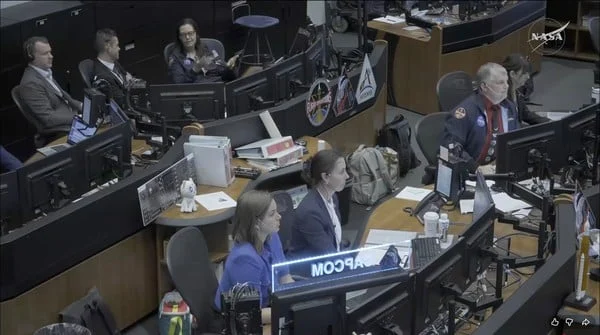
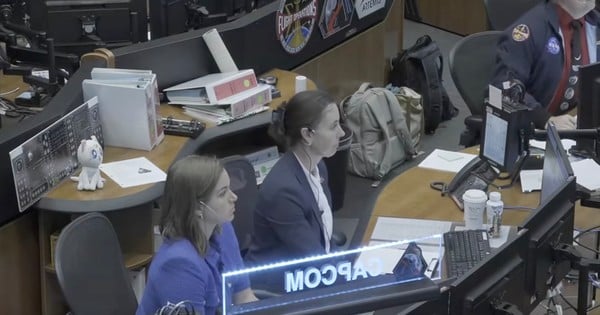
America’s National Aeronautics and Space Administration (NASA) captured global attention on Wednesday, April 3, 2026, with the successful launch of its Artemis II mission, marking a monumental step towards returning humans to the Moon for the first time in half a century. In a charming and unexpected display of intergalactic camaraderie, none other than Artemis, the white feline companion to Sailor Venus from the iconic Sailor Moon franchise, was present to "oversee" the launch. A plush representation of the beloved anime character is prominently displayed behind the Capcom (Capsule Communicator) desk at NASA’s Mission Control Center in Houston, serving as a whimsical mascot for this historic endeavor.
A Lunar Return: The Significance of Artemis II
The Artemis II mission represents a critical phase in NASA’s ambitious Artemis program, which aims to establish a sustainable human presence on the Moon and serve as a stepping stone for future missions to Mars. This 10-day crewed mission will send four astronauts – NASA astronauts Reid Wiseman, Victor Glover, and Christina Koch, alongside Canadian Space Agency astronaut Jeremy Hanson – on a trajectory that will orbit the Moon and traverse its far side. This flyby is designed to test critical systems and procedures necessary for future lunar landings, including the Orion spacecraft’s life support, communication, and navigation capabilities.
The significance of this mission cannot be overstated. It has been 52 years since the Apollo 17 mission in December 1972, which marked the last time humans walked on the lunar surface. Artemis II is not a landing mission but a crucial precursor, pushing the boundaries of human spaceflight and reigniting the spirit of lunar exploration. The astronauts will experience speeds and conditions far beyond those experienced in low Earth orbit, providing invaluable data for subsequent missions, including Artemis III, which is slated to land the first woman and the next man on the Moon.
Artemis: From Manga to Mission Control
The presence of Artemis the cat at Mission Control is a delightful nod to the cultural impact of the Sailor Moon series. Artemis first made his debut in Naoko Takeuchi’s Codename: Sailor V manga, a semi-prequel to the main Sailor Moon series, where he served as Minako Aino’s (Sailor V’s) loyal partner and advisor. He later transitioned to the main Sailor Moon manga and its numerous anime adaptations, continuing his role as a trusted confidant and guide to Minako (Sailor Venus). Known for his intelligence, wisdom, and unwavering support, Artemis embodies the spirit of guidance and companionship, qualities that resonate with the demanding nature of space exploration.
The decision to place a plush of Artemis at the heart of Mission Control is a testament to the power of pop culture to inspire and connect people across different domains. It serves as a lighthearted yet meaningful tribute, bridging the worlds of science fiction and scientific reality. This symbolic gesture not only offers a moment of levity for the dedicated teams working tirelessly to ensure the mission’s success but also highlights the universal human fascination with exploration and the stories that fuel our dreams.
The Artemis II Crew: Pioneers of a New Era
The four astronauts selected for the Artemis II mission are seasoned professionals with extensive experience in spaceflight and related fields.
- Reid Wiseman: A veteran of the International Space Station (ISS), Wiseman brings valuable operational experience and leadership skills to the mission.
- Victor Glover: Also a former ISS crew member, Glover has a distinguished career as a naval aviator and engineer, contributing significantly to various spaceflight initiatives.
- Christina Koch: Koch holds the record for the longest single spaceflight by a woman, having spent over 300 days on the ISS. Her expertise in human physiology and long-duration space travel will be critical.
- Jeremy Hanson: As a member of the Canadian Space Agency, Hanson represents the international collaboration that is a hallmark of modern space exploration. His participation underscores the global nature of the Artemis program.
Together, this crew represents a diverse and highly capable team tasked with undertaking a mission of unprecedented complexity and historical importance. Their training has encompassed rigorous simulations, extensive scientific preparation, and the mastering of advanced spacecraft systems.
A Timeline of Lunar Aspirations
The Artemis program, named after the twin sister of Apollo and goddess of the hunt in Greek mythology, is a multi-stage initiative with a clear progression of objectives:
- Artemis I (November-December 2022): An uncrewed test flight of the Space Launch System (SLS) rocket and Orion spacecraft, which successfully orbited the Moon and returned to Earth, validating the hardware and operational procedures.
- Artemis II (April 2026): The current crewed mission, a lunar flyby, designed to test the Orion spacecraft’s capabilities with astronauts aboard, paving the way for future lunar landings.
- Artemis III (Targeted for late 2020s): The mission intended to land the first woman and the next man on the lunar south pole, utilizing a human landing system and establishing a sustained presence.
- Future Artemis Missions: Subsequent missions will focus on building lunar infrastructure, conducting scientific research, and preparing for eventual crewed missions to Mars.
The launch on Wednesday signifies the successful execution of a key milestone in this ambitious roadmap. The Artemis II mission, with its carefully selected crew and cutting-edge technology, builds directly upon the foundational successes of Artemis I, demonstrating a steady and deliberate approach to achieving lunar exploration goals.
Supporting Data and Technological Advancements
The Artemis II mission relies on the formidable capabilities of the Space Launch System (SLS) rocket, the most powerful rocket ever built, capable of delivering the Orion spacecraft and its crew beyond Earth’s orbit. The Orion spacecraft itself is a marvel of engineering, designed to withstand the rigors of deep space, including the Van Allen radiation belts and the harsh lunar environment. Its advanced life support systems, navigation, and communication technologies are crucial for the astronauts’ safety and mission success.
Key systems being tested during the Artemis II flyby include:
- Orion’s Environmental Control and Life Support System (ECLSS): Ensuring a habitable environment for the crew throughout the 10-day mission.
- Communication Systems: Testing the ability to maintain contact with Mission Control across vast distances, including communication with the far side of the Moon.
- Navigation and Guidance: Verifying the precision of Orion’s trajectory control and its ability to perform critical maneuvers.
- Thermal Protection System: Evaluating the heat shield’s performance during re-entry into Earth’s atmosphere at high speeds.
The data collected from these tests will be invaluable for refining future missions and ensuring the safety of astronauts on lunar landings and beyond.
Reactions and Broader Implications
While official statements from NASA have focused on the scientific and exploratory objectives of the Artemis II mission, the inclusion of Artemis the cat has garnered widespread positive reactions from the public and the anime community. Social media platforms have been abuzz with images of the plush and discussions about the intersection of space exploration and popular culture. This has served as a powerful tool for engaging a broader audience, particularly younger generations, with the excitement and importance of space science.
The Artemis program, in general, represents a renewed commitment to human space exploration after a prolonged period where focus shifted primarily to robotic missions and low Earth orbit activities. The return to lunar exploration signifies not only scientific advancement but also a resurgence of national pride and international cooperation in the pursuit of ambitious goals.
Analysis of Implications
The successful execution of the Artemis II mission will have several far-reaching implications:
- Advancement of Lunar Science: The mission will provide crucial data that will inform future scientific research on the Moon, including studies on lunar geology, the potential for water ice, and the origins of the solar system.
- Technological Innovation: The development and testing of new technologies for Artemis missions will have spillover effects into various terrestrial industries, driving innovation in materials science, life support, and communication.
- Inspiration for Future Generations: The visual spectacle of a crewed mission to the Moon, coupled with relatable cultural touchstones like Artemis, can inspire a new generation of scientists, engineers, and explorers.
- International Collaboration: The Artemis Accords, a set of principles for responsible lunar exploration, are being signed by an increasing number of nations, fostering a framework for peaceful and cooperative space activities. The inclusion of the Canadian Space Agency in Artemis II is a prime example of this collaborative spirit.
- Economic Opportunities: The Artemis program is expected to stimulate economic growth through job creation, technological development, and the potential for future lunar resource utilization.
In conclusion, the Artemis II mission, with its blend of cutting-edge science and endearing pop culture representation, stands as a beacon of human ingenuity and our enduring quest to explore the cosmos. The presence of Artemis, the feline guardian from the world of Sailor Moon, adds a unique and heartwarming dimension to this historic endeavor, reminding us that even in the most ambitious scientific pursuits, there is room for wonder, imagination, and a touch of magic. The journey around the Moon has commenced, carrying with it the hopes and dreams of humanity, guided by both the expertise of NASA and the watchful, albeit plush, gaze of a beloved anime character.