Few films in Korean cinema have achieved the cult status and enduring influence of Save the Green Planet!. Released in 2003, the work by Jang Joon-hwan defied easy categorization, blending dark comedy, psychological thriller, science fiction, and profound social commentary into a singular, unforgettable cinematic experience. While initially divisive among critics and audiences, its audacious narrative and genre-bending audacity have since been widely recognized, cementing its place as one of the most daring and original entries in modern Korean cinema. Its core themes of alienation, systemic violence, and existential despair resonate even more strongly in the contemporary world. More than two decades later, its legacy continues to expand, inspiring international reinterpretations like Yorgos Lanthimos’s Bugonia and fueling ongoing critical reassessment.
Director Jang Joon-hwan recently offered an exclusive interview, delving into the initial inspiration behind Save the Green Planet!, comparing it with its recent adaptation, Bugonia, and dissecting the film’s iconic twist. He also reflected on the intricacies of casting, the meticulous craft of cinematography and production design, and the evolving state of the Korean movie industry. This rare conversation also shed light on his return to filmmaking after a hiatus following his last project, 1987, offering a glimpse into his upcoming endeavors.
The Enduring Legacy of a Cult Classic
When Save the Green Planet! first premiered in 2003, it landed like a cinematic grenade, splitting opinions with its unconventional narrative and stark tonal shifts. It garnered moderate box office success initially, but its true impact began to unfold in the years following its release. Emerging during the height of the Korean New Wave, a period marked by unprecedented artistic freedom and critical acclaim for Korean filmmakers, Jang’s film stood out even among a cohort of innovative works. Films like Park Chan-wook’s Oldboy (2003) and Bong Joon-ho’s Memories of Murder (2003) were defining the era, yet Save the Green Planet! carved its own niche with a distinct, often unsettling, vision.
Its journey from a polarizing release to a revered cult classic underscores its unique artistic merit. Over time, its layered storytelling, darkly comedic elements, and profound social critique were increasingly appreciated. Film festivals globally began championing it, and critical retrospectives consistently highlighted its foresight and originality. This enduring appeal is not merely nostalgic; it speaks to the film’s timeless interrogation of humanity’s flaws and societal structures, making it a powerful reference point for contemporary issues.
Genesis of a Cinematic Vision: From "Misery" to an Alien Conspiracy
Jang Joon-hwan revealed that two distinct yet equally potent factors converged to ignite the creative spark for Save the Green Planet!. The first was the profound impact of Rob Reiner’s 1990 psychological thriller, Misery. "I watched Misery with bated breath and found it thoroughly entertaining," Jang recalled. However, a lingering dissatisfaction gnawed at him. "After the credits rolled, I felt a sense of regret that the protagonist, Annie, was dismissed merely as a ‘madwoman’ or a ‘villain’ who deserved to die." This sentiment stemmed from a deeper, empathetic curiosity. "Perhaps it’s my nature to look at the world from a slightly skewed angle, but I felt a thirst to explore the hidden story behind why she became that way." This desire to delve into the motivations of perceived villains became a cornerstone of his own narrative. It is with a poignant note that Jang offered his deepest condolences on the passing of the great Rob Reiner, whose powerful film Misery served as such a profound inspiration.
The second, far more whimsical, catalyst came from an unexpected source. "Then, I came across a fascinating article in the film magazine Cine 21," Jang recounted. "It detailed a claim from a foreign website that Leonardo DiCaprio (the biggest star at the time) was actually an alien who had come to conquer Earth by seducing its women, and that his signature bangs were antennas used to communicate with UFOs." The absurdity of the claim was matched only by its imaginative power. "I burst into such a loud laugh while reading it on the bus that people actually stared. It was absurd, yet brilliantly imaginative."
The confluence of these two seemingly disparate inspirations – the psychological depth sought from Misery and the outlandish, yet compelling, alien conspiracy theory – triggered a powerful "chemical reaction" within Jang. This fusion culminated in a story with an entirely new molecular structure, one that would become Save the Green Planet!.
A Mirror to Society: Themes of Modern Relevance
The resulting outcry from the main character, Byung-gu, was never intended to be mere madness. "It was a desperate scream from those moaning under the weight of our society’s structural violence," Jang asserted. A quarter-century later, the director finds the questions he posed then to be "more hauntingly relevant than ever."

This heightened relevance is evident in the global landscape of 2026. From the escalating climate crisis and protracted geopolitical conflicts to the alarming rise of indiscriminate hatred and social fragmentation, the world faces challenges that mirror Byung-gu’s apocalyptic worldview. "Technology may have advanced exponentially since 2003, but the way human beings treat one another (and the Earth itself) seems more precarious," Jang observed. This paradox—rapid technological progress juxtaposed with a perceived regression in human empathy and global stability—amplifies the film’s core message.
Jang posits that "countless ‘Byung-gus’ are screaming in the shadows, trying to save humanity or simply to end their own pain." This suggests that the film’s protagonist is not an isolated anomaly but a manifestation of collective societal anguish. The central question posed by Save the Green Planet!—"Is humanity worth saving?"—strikes an even deeper, more painful chord today. The director concluded this thought with a profound statement: "The process of searching for that answer is exactly why we must protect this grieving planet." This underlines the film’s enduring power as a call to introspection and action, rather than just a narrative of despair.
"Bugonia" and the Art of Reinterpretation
The recent adaptation of his work by acclaimed director Yorgos Lanthimos, titled Bugonia, presents a unique opportunity for Jang to reflect on the nature of artistic reinterpretation. When asked to compare the two films, Jang offered a thoughtful analogy: "For a creator, it’s almost as difficult to answer as being asked, ‘Which is prettier, your own child or someone else’s?’" he quipped with a laugh.
He characterized his original Save the Green Planet! as a "bizarre cocktail where all sorts of intense flavors swirl and blend together." In contrast, Lanthimos’s Bugonia felt like a "smoky cocktail: dry, searing, and marked by his signature grotesque aesthetic." This comparison highlights the distinct directorial voices at play. Lanthimos, known for his darkly comedic and often unsettling style in films like The Lobster and Poor Things, brought his unique sensibility to the narrative.
Jang views the two films not in terms of superiority, but as independent works with entirely different "tastes" and "aromas." He praised Bugonia as a "brilliant artistic achievement in its own right," filtered through the lens of a master. For him, as the original creator, it was a "marvelous experience" to witness how Lanthimos inherited the DNA of the story while overlaying it with his characteristically cold and precise aesthetic.
While acknowledging the artistic merits of the adaptation, Jang also affirmed the unique soul of his original film. The 2003 version, he noted, "preserves the rough but passionate ‘raw energy’ and the zeitgeist-driven screams of that era." It holds a distinct identity forged in that specific time and place. He expressed deep respect for Lanthimos’s direction in Bugonia, which conveys a "bone-chilling pain," and commended the passion of its actors. The poetic and "eerie that it bordered on beautiful" ending of Bugonia particularly resonated with him. Ultimately, Jang is more than satisfied that both films offer audiences distinct forms of shock and inspiration, showcasing the richness of cinematic adaptation.
Crafting the Unforgettable Twist
The twist ending of Save the Green Planet! remains arguably its most memorable and discussed element, a testament to Jang’s meticulous approach to writing and directing. During the writing stage, the primary focus was on "meticulously weaving a thread of doubt: ‘Is Byung-gu truly insane, or is he the only one speaking the truth?’" The deliberate ambiguity was crucial; Jang never wanted the audience to settle into an easy answer. This psychological tug-of-war, where the audience is swayed between sympathy for Byung-gu’s perceived madness and suspicion of his delusions, was both the "most painful and the most meticulous part of the process."
When directing, the challenge shifted to translating this written tension into a three-dimensional, visceral experience. Jang aimed to "subtly subvert genre clichés," building a pervasive sense of dread that would culminate in an explosive finale, delivering a profound "sensory and emotional shock." He likened the entire process to the character Soon-i "balancing precariously on a tightrope." Even a slight imbalance, he explained, "would have shattered the film’s internal reality or robbed the twist of its impact." Maintaining this "razor-thin directorial balance" was his most difficult task. Ultimately, it was this very instability and ambiguity that allowed the truth, once revealed, to hit the audience not just as a surprise, but as a "profound and haunting question."
Masterful Ensemble: Casting and Performance
The casting of Save the Green Planet! was pivotal, especially for the multifaceted character of Byung-gu. Jang described it as a "high-stakes puzzle." The solution presented itself serendipitously when he encountered Shin Ha-kyun’s spread in KINO magazine. "Four photos, four completely different souls: one icy, one fiery, one grieving, and one pure," Jang recounted. This visual demonstration of range convinced him that Shin possessed the necessary emotional depth.

On set, Shin Ha-kyun "exceeded every expectation." Jang recalled moments where "the camera couldn’t even contain the raw intensity of his emotions, and his energy sent shivers down my spine and that of the entire crew." Shin meticulously blended vastly different acting styles—from understated comedy to dead-serious drama and explosive madness—into a single, cohesive character. Working with an actor of such immense range was a "great fortune and a pleasure" for the director.
The role of Kang Man-sik, the supposed alien, also presented casting challenges, with some actors initially turning it down due to the requirement of shaving their head and performing semi-naked. Baek Yoon-sik eventually emerged as a candidate, reportedly on the recommendation of producer Tcha Sung-jai. Though he had a history of supporting roles in the 1960s, this film effectively marked his debut as a film lead in the modern era.
Baek Yoon-sik initially agonized over the demands of the role. "He came to the set braced for a struggle, but the reality was even tougher than he’d imagined," Jang recalled. This hardship led to the actor’s now-famous quip: "This shoot has made me realize without a shadow of a doubt why human beings wear clothes." However, the grueling effort paid off handsomely. His radical transformation captivated both audiences and industry insiders, establishing him as a "titan of Korean cinema with a presence no one else can match" after the film’s release. Despite the "adorable complaints" Jang often had to soothe, working with Baek Yoon-sik was a "constant journey of discovery," resulting in a uniquely memorable antagonist. Jang humbly concluded, "Honestly, I think a great cast is often more important than the director’s relationship with the actors on set. I simply feel fortunate to have found the right people."
Visual Storytelling: Cinematography and Production Design
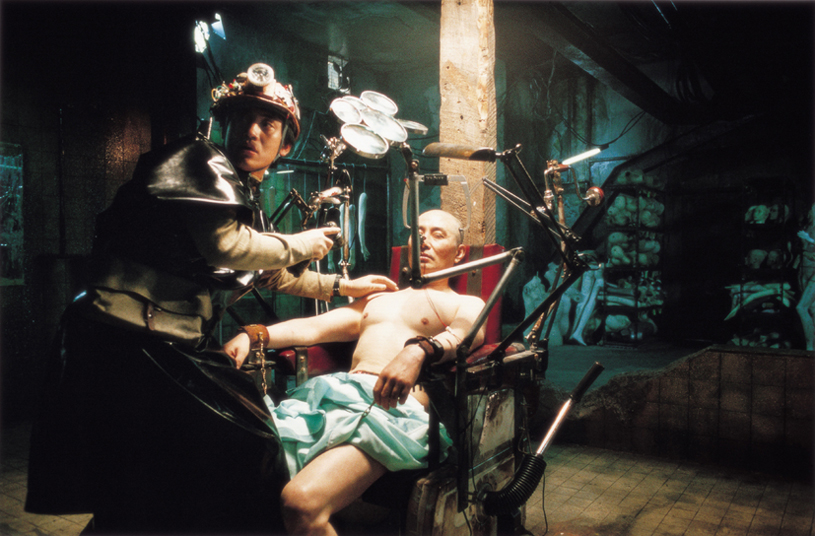
The iconic basement scenes in Save the Green Planet! are a masterclass in visual storytelling, a testament to the seamless collaboration between Jang, Director of Photography Hong Kyung-pyo, and Production Designer Jang Geun-young. From the earliest stages of pre-production, "nearly every scene was visualized through storyboards," Jang explained. This meticulous planning resulted in an astonishing 95% match rate between the original sketches and the final film. While this approach risks stifling spontaneity, the cast and crew transformed this rigid framework into a cinematic strength.
Production Designer Jang Geun-young was instrumental in crafting the film’s distinctive aesthetic. He personally created everything from Byung-gu’s black vinyl suit to the modified mining helmets used as props. The house set, inspired by traditional Gangwon-do houses with thick wooden shingles, was designed to appear as if Byung-gu had built it himself, becoming an extension of his character. Every prop was hand-selected and designed to reflect Byung-gu’s delusions and obsessions, creating an environment rich with psychological depth.
DP Hong Kyung-pyo then brought this meticulously designed environment to life. He strategically chose lenses to suit each character’s psyche and employed subtle camera movements and unique lighting to heighten the claustrophobic tension of the basement. The cinematography and production design functioned "like a single organism," meticulously controlling the flow of visual information while effectively baring the characters’ inner worlds to the audience. This integrated approach created a visual language that was both deeply immersive and unsettling.
The Rhythm of Intensity: Editing for Impact
Given Save the Green Planet!’s audacious blend of disparate genres—comedy, thriller, sci-fi, and even melodrama—editing was the "absolute key to binding these fragmented emotions into a singular, powerful flow." Jang collaborated with Park Gok-ji, one of the top editing masters in Korean cinema at the time. Their most heated discussions revolved around how to transform the "off-beat rhythm" created by these clashing tones into a unique cinematic energy.
The editing process was described as a "battlefield of wits against the audience." Every single cut was fine-tuned to decide what to reveal and what to hide, crucial for protecting the film’s ultimate twist. Information was strictly controlled to initially portray Byung-gu’s testimony as delusion, while simultaneously planting subtle clues about the truth throughout the narrative. Jang believes these precise editorial devices were what made the eventual genre subversion feel so explosive, both visually and emotionally.
One particularly grueling section to edit was the sequence where Kang Man-sik explains the history of Earth. This involved cross-cutting footage of apes violently smashing bones with archival clips of atrocities committed throughout human history. "Recounting that global cycle of sorrow where violence only breeds more violence through a montage was a deeply painful process that stays with me even now," Jang reflected, highlighting the emotional toll of shaping such powerful and disturbing narratives.
The Shifting Landscape of Korean Cinema
Jang Joon-hwan offered a comparative analysis of the Korean movie industry, contrasting its state in the early 2000s with its current reality in 2026. The early 2000s, when he began his career, was a period of "massive boom" for Korean cinema. While the capital base was smaller than today, the creative energy was "more vibrant and free than ever before." He credits this environment, along with the backing of daring producers like Tcha Sung-jai (who held more sway than investment firms at the time), for making bold challenges like Save the Green Planet! possible. This era, often referred to as the Korean New Wave, saw a surge in artistically ambitious and globally recognized films, establishing Korea as a formidable force in world cinema.
By 2026, the status of Korean cinema has risen to an "incomparable level." Korean content has become a mainstream global phenomenon, driven by the success of K-dramas, K-pop, and films like Bong Joon-ho’s Parasite and Hwang Dong-hyuk’s Squid Game. Technical prowess and capital investment have grown exponentially. However, this growth has brought its own set of challenges. "Paradoxically, as the industry has become more massive and systematized, the logic of capital has grown colder," Jang observed. There is a stronger tendency to avoid risk due to fear of failure, resulting in a narrower space for radical, subversive attempts. This cautious approach, he noted, has led to a vicious cycle where audiences are increasingly turning away from Korean films they perceive as clichéd.
Despite these hurdles, Jang remains optimistic about the resilience of Korean cinema. While the theatrical landscape is shifting and streaming platforms are redrawing the industry map, he believes the fundamental essence remains: "audiences are moved by stories they’ve never seen before." He expressed hope that global collaborations like Bugonia, along with diverse attempts made possible by new technology, can serve as a breakthrough. His ultimate wish is for a "Second Renaissance" where creative adventures are once again welcomed and fostered within the Korean film industry.
A Director’s Return: New Projects on the Horizon
Many have wondered about Jang Joon-hwan’s activities since his critically acclaimed film 1987, which was released almost a decade ago. He candidly addressed his prolonged absence from the spotlight. "To be honest, due to unexpected personal health issues, I had no choice but to step away from the industry for a while and take an extended break," he revealed. The initial period was painful, as it forced him to halt his creative output "right when I should have been at the peak of my creative energy." However, in retrospect, this time became a "precious ‘period of reflection’" during which he could look back on his life and films, and recharge with new energy.
Fortunately, Jang has fully recovered his health and is now ready to return to filmmaking. His new project, a "music film chronicling the life of a legendary Korean rocker," is now "in full swing." Bringing the rocker’s "fiery music and life to the screen" is both a new challenge and a source of great excitement for him.
Beyond this musical film, Jang is also "dusting off those ‘quirky projects’ that I’ve been brooding over for years." His goal is to synthesize the visceral creativity of his early work with the matured vision he has developed during his hiatus. He eagerly anticipates sharing these "high-density, singular stories" with audiences soon, expressing gratitude for their continued support. His return signifies not just the comeback of a celebrated director, but a renewed promise of unique and thought-provoking cinema in an evolving industry landscape.