Celebrated Chinese filmmaker Zhang Yimou has once again captivated global attention with his latest feature, "Scare Out," a modern-day surveillance thriller that has premiered through Trinity Cine Asia. The film distinguishes itself not only by its genre but by an unprecedented collaboration: it is the first feature film explicitly created under the guidance of the Ministry of State Security (MSS) of the People’s Republic of China. This development signals a notable shift in the landscape of Chinese cinema, particularly for a director of Zhang Yimou’s stature, whose career has frequently intersected with the complexities of state censorship and cultural policy.
Zhang Yimou’s Evolving Oeuvre: A Career Under Scrutiny
Zhang Yimou, a preeminent figure of China’s Fifth Generation filmmakers, initially rose to international acclaim in the late 1980s and early 1990s with visually stunning and often politically charged films such as "Red Sorghum" (1987), "Ju Dou" (1990), and "Raise the Red Lantern" (1991). These early works, characterized by their striking cinematography, strong female protagonists, and critical undertones regarding traditional Chinese society, garnered numerous awards at prestigious international film festivals, cementing Zhang’s reputation as an auteur. His film "To Live" (1994), a poignant chronicle of a family’s struggles through China’s tumultuous 20th century, famously faced a ban from domestic distribution and prevented Zhang from attending the Cannes Film Festival where it won the Grand Prix, illustrating early clashes with state censors over perceived historical inaccuracies and critical perspectives.
Following this period, Zhang Yimou embarked on a new phase, embracing commercial blockbusters. Films like "Hero" (2002) and "House of Flying Daggers" (2004) showcased opulent visuals, elaborate martial arts sequences, and grand narratives, achieving immense box office success both domestically and internationally. While these films were lauded for their aesthetic grandeur, some critics observed a move away from the nuanced social commentary of his earlier works, suggesting a growing alignment with more palatable nationalistic themes, particularly in "Hero," which was seen by some as implicitly endorsing a unified, strong China under central authority.
The 2020s have marked another curious turn in Zhang’s illustrious career. A pivotal incident occurred in 2020 when his film "One Second," a deeply personal project set during the Cultural Revolution, was abruptly pulled from its premiere at the Berlin International Film Festival just hours before its scheduled screening. The official reason cited was "technical reasons," a euphemism frequently employed by Chinese authorities to mask censorship interventions. This event, widely interpreted as a direct result of political sensitivities surrounding its historical content, underscored the persistent challenges faced by Chinese filmmakers navigating state control, even for a director of Zhang’s international renown. Since then, his output, including "Cliff Walkers" (2021) and now "Scare Out," has predominantly comprised productions that are overtly "state-friendly," often championing nationalistic narratives or highlighting the capabilities and integrity of state institutions. This trajectory has led to ongoing discussions among film critics and scholars about the compromises artists must make within an increasingly regulated cultural landscape in China.
"Scare Out": An Unprecedented Collaboration with State Security
The most striking aspect of "Scare Out" is its direct association with the Ministry of State Security. This unprecedented collaboration marks a significant moment in Chinese cinema, where a major feature film is not merely approved by, but actively developed "under the guidance of" a key intelligence and law enforcement agency. The MSS is China’s principal civilian intelligence, security, and secret police agency, responsible for counter-intelligence, foreign intelligence, and internal security. Its explicit involvement in a film production suggests a deliberate strategy to utilize popular culture as a medium for messaging, potentially aimed at bolstering public perception of its capabilities and promoting national security awareness among the populace.
The timing of this collaboration is particularly salient. In recent years, under President Xi Jinping’s leadership, China has intensified its focus on national security, enacting stricter laws and launching public campaigns to raise awareness about espionage and foreign interference. The "National Security Education Day" and various public service announcements actively encourage citizens to report suspicious activities, fostering a climate where national security is paramount. Against this backdrop, "Scare Out" can be interpreted as a cinematic extension of these broader state efforts, designed to educate, inform, and perhaps even subtly influence public opinion regarding the efficacy and vigilance of China’s security apparatus.
The film’s international release by Trinity Cine Asia further complicates its reception. While the domestic audience might interpret the MSS guidance as a mark of authenticity and patriotic endorsement, international viewers, especially those familiar with Zhang Yimou’s arthouse origins, are likely to view it through a more critical lens, scrutinizing its narrative for propagandistic elements. Trinity Cine Asia, a distributor specializing in Asian cinema for Western markets, faces the challenge of marketing a film deeply embedded in a specific political context to a diverse global audience. This highlights the intricate balance between cultural exchange and the potential for perceived ideological messaging in contemporary global cinema.
Narrative Under the Lens: Espionage, Loyalty, and the "Western Enemy"
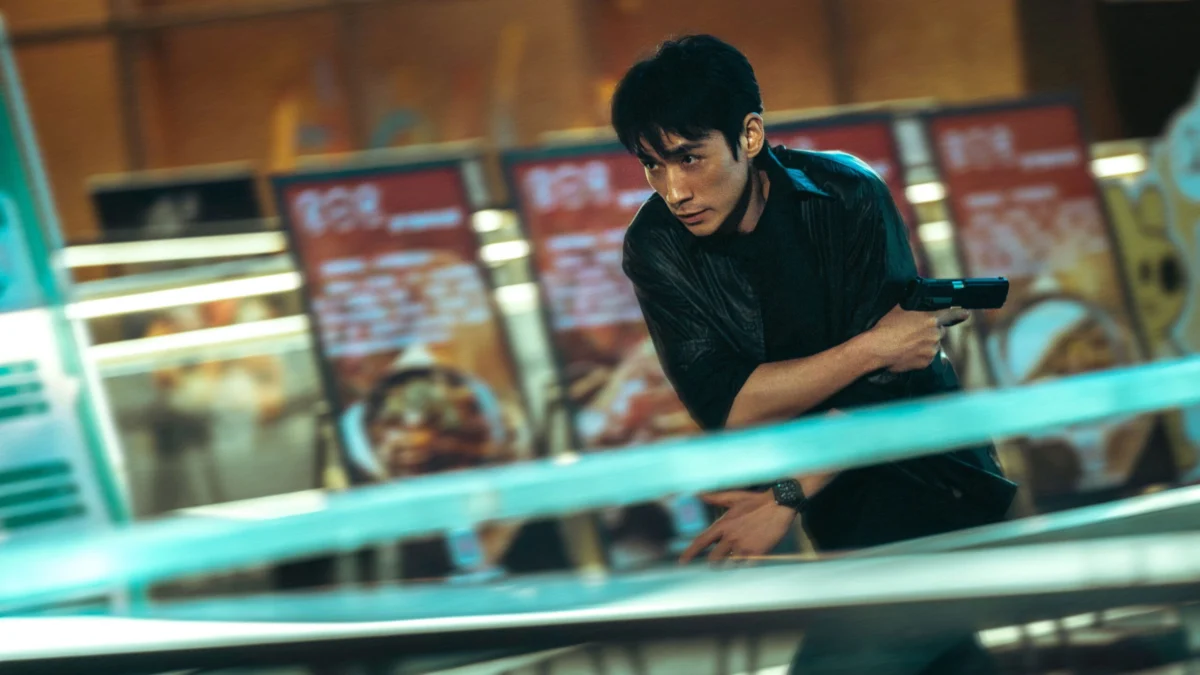
"Scare Out" plunges audiences into the high-stakes world of modern Chinese counter-intelligence. The plot centers on National Security team leader Huang Yi (Zhu Yilong) and his second-in-command Yan Di (Jackson Yee), who are thrust into a critical investigation following a botched operation. An American suspect, Nathan, is involved, and the incident results in one target killed and an agent injured. Their newly appointed superior, Zhao Hong, reveals a chilling truth: a mole has infiltrated their ranks, actively leaking sensitive information to "Western enemies." The duo is tasked with the arduous mission of unmasking this traitor, but as their investigation progresses, they confront the unsettling possibility that the enemy might be closer than imagined, leading to a tense, high-stakes game of cat-and-mouse.
The film’s narrative, penned by Chen Liang, navigates the familiar tropes of the spy thriller genre. However, its state sponsorship introduces unique ideological constraints that shape the story’s development and character arcs. A central tension arises from the desire to tell a compelling story about betrayal and espionage while simultaneously upholding the image of an infallible and patriotic national security force. The original critique notes that the film struggles with this dichotomy: it posits the existence of a mole within the elite National Security Services, yet it simultaneously seeks to reassure the audience that its "patriotic soldiers cannot be full-fledged enemy agents."
This ideological tightrope walk manifests in the portrayal of the mole. The narrative attempts to reconcile this contradiction by suggesting the mole is "in the process of being turned" rather than a fully committed adversary from the outset. Yet, as the original review points out, the mole’s actions, once introduced, often contradict this portrayal, suggesting a level of infiltration and commitment that belies a nascent turning process. This narrative inconsistency can undermine the film’s credibility, particularly for an audience accustomed to more complex and morally ambiguous spy thrillers.
Furthermore, the film’s antagonists are conspicuously "Western." The American suspect, Nathan, is presented with minimal dialogue, reducing him to a symbolic representation of an external threat rather than a developed character. The main antagonist, despite being Western, speaks fluent Mandarin, a narrative device that conveniently obscures their nationality and potentially allows for a more fluid interaction within the Chinese setting without directly confronting linguistic or cultural barriers. This portrayal aligns with a prevalent theme in contemporary Chinese media, where "Western enemies" are often depicted as shadowy, manipulative forces seeking to undermine China’s stability and progress. "Scare Out" thus becomes a cinematic reflection of current geopolitical rhetoric, emphasizing external threats and the vigilance required to counter them. The film also overtly functions as a showcase for the capabilities of China’s Security Services, frequently highlighting their proficiency in tracking individuals through advanced technology and extensive manpower, reinforcing an image of competence and omnipresence.
Craft and Performance: A Divergence from Zhang’s Signature Style
Visually, "Scare Out" presents a polished, if somewhat generic, aesthetic. Zhang Yimou’s regular cinematographer capably captures the metropolis splendor of modern-day China, showcasing pristine tall skyscrapers and gorgeous lighting that paints a picture of a prosperous and technologically advanced nation. However, critics note that the cinematography, while competent, lacks the distinctive visual flair and symbolic depth often associated with Zhang’s earlier masterpieces. Films like "Hero" and "House of Flying Daggers" were celebrated for their vibrant color palettes and meticulously choreographed action sequences, while "Raise the Red Lantern" utilized its confined settings to powerful dramatic effect. In "Scare Out," the visual language feels more functional, serving the genre’s demands without imbuing the film with a unique artistic signature.
Perhaps the most significant technical critique leveled against "Scare Out" is its editing. The film’s hyperactive and frantic cutting style is described as counterproductive, frequently disorienting the viewer and detracting from the narrative’s immersion. This is particularly jarring given Zhang Yimou’s reputation for beautiful, lingering shots that allow scenes to breathe and emotions to resonate. The prevalence of quick cuts, even in conversational moments, creates a sense of perpetual urgency that can feel manufactured rather than organic. This stylistic choice, whether an attempt to emulate contemporary Hollywood thrillers or a reflection of underlying narrative anxieties, ultimately works against the film’s potential impact, preventing the audience from fully connecting with the characters or the unfolding drama.
Despite these criticisms of the film’s craft, "Scare Out" benefits from a strong ensemble cast. Zhu Yilong and Jackson Yee, playing Huang Yi and Yan Di respectively, deliver able performances. Both actors, prominent figures in contemporary Chinese cinema, imbue their characters with sufficient gravitas and determination, carrying the bulk of the film’s emotional and narrative weight. Their characters are afforded balanced arcs, allowing both actors to take center stage at various points. However, the standout performance, as noted in the original review, belongs to Yang Mi, who portrays Bi Fan, the mole’s contact and an enemy agent. Yang Mi’s portrayal of Bi Fan as a sexy, feisty, and entirely in-control femme fatale injects a much-needed spark into the proceedings. Her character exudes confidence and cunning, and Yang Mi appears to relish the role, making Bi Fan a compelling and memorable antagonist who often steals the scene from her male counterparts.
The musical score effectively complements the thriller genre, enhancing the palpable thrill of the chase and suspenseful moments. However, its effectiveness is often undermined by the aforementioned editing issues, which prevent a cohesive and immersive cinematic experience.
The Delicate Balance: Domestic Appeal vs. International Reception
"Scare Out" occupies a fascinating, yet precarious, position in the global cinematic landscape. Domestically, its explicit guidance by the Ministry of State Security, coupled with its patriotic themes and depiction of a vigilant security apparatus, is likely to resonate positively with Chinese audiences. In an era where national pride and security are heavily emphasized, a film that showcases the strength and integrity of state institutions, particularly in countering "Western enemies," can be a powerful tool for reinforcing national narratives and public trust. This alignment with official messaging could ensure strong box office performance and critical acclaim within China, positioning the film as a successful example of culturally relevant entertainment.
However, the film’s reception among international audiences and critics, particularly those familiar with Zhang Yimou’s storied career, is anticipated to be markedly different. Zhang’s traditional fanbase, often drawn to his arthouse sensibilities and willingness to explore complex social and historical themes, may find "Scare Out" to be a departure from his signature style and a concession to state-mandated narratives. The overt "state-friendly" nature, the simplistic portrayal of "Western enemies," and the narrative’s ultimate retreat from challenging ideological boundaries could alienate viewers accustomed to more nuanced storytelling. The film’s ending, which reportedly "chickens out" of a potentially interesting twist to serve the repute of patriotic agents, further underscores this ideological compromise, prioritizing nationalistic messaging over narrative complexity and artistic boldness.
This dichotomy highlights the ongoing tension in China’s cultural diplomacy efforts. While films like "Scare Out" aim to project an image of a strong, secure, and technologically advanced nation, their overt propagandistic elements can inadvertently create a barrier to genuine international cultural exchange. Soft power, traditionally achieved through universal themes and artistic freedom, risks becoming less effective when the underlying message is perceived as overtly nationalistic or ideologically driven. "Scare Out" stands as a testament to this delicate balance, demonstrating how a film can succeed in one context while potentially struggling for broader acceptance in another. Its comparison to Zhang’s earlier "Cliff Walkers," which, despite its patriotic spy thriller premise, offered more impressive cinematography and performances, further emphasizes the perceived artistic compromises in "Scare Out."
Looking Ahead: The Future of Chinese Filmmaking and State Influence
The release of "Scare Out" under the direct guidance of the Ministry of State Security is a significant indicator of the evolving relationship between the Chinese state and its film industry. It suggests a deepening integration of national security themes and narratives into mainstream entertainment, potentially signaling a future where similar collaborations become more common. This trend raises pertinent questions about artistic freedom, narrative diversity, and the boundaries of creative expression for Chinese filmmakers.
For Zhang Yimou, "Scare Out" marks a distinct phase in a career that has spanned decades of profound political and social change in China. From his early days as a dissident voice to his embrace of commercial blockbusters and now to overtly state-sponsored projects, his trajectory reflects the complex pressures and opportunities facing artists in a rapidly transforming nation. While his earlier works challenged conventions, his recent output, including "Scare Out," appears to prioritize alignment with official narratives, even at the cost of the unique artistic vision that once defined him.
The film’s impact extends beyond its immediate reception. It contributes to a broader global discourse on media control, state propaganda, and the role of cinema in shaping national identity and international perceptions. As China continues to expand its cultural influence globally, the ideological content and production contexts of its films will increasingly come under scrutiny. "Scare Out," therefore, is not merely a surveillance thriller; it is a cultural artifact that offers insights into the prevailing sociopolitical currents in China and the intricate dance between artistic expression and state power in the 21st century. Its legacy will undoubtedly be debated, serving as a benchmark for how far a celebrated auteur might go in navigating the demands of a powerful and omnipresent state.