High in the rugged Caucasus mountains, photojournalist Rena Effendi embarks on a poignant and challenging quest, not just for a rare butterfly named after her elusive father, but for the truth about his life and their fractured family. The landscape itself mirrors the difficulty of her mission: stark, beautiful, and unforgiving. The summer sun scorches the earth to a brittle yellow, the butterfly’s food source is depleted by grazing sheep, and the Satyrus effendi, if it exists at all, is a solitary phantom, flitting across vast expanses of rock, scree, and steep slopes.
This unlikely pursuit forms the heart of the prize-winning documentary "Searching for Satyrus," a gripping narrative that unveils a seldom-seen corner of the world while grappling with profound themes of war, nationalism, global heating, and the specter of extinction. At its core, Effendi’s search for her father’s namesake butterfly evolves into a deeply personal reckoning with the unspoken secrets and deceptions within her family and the enigmatic life of her wayward father, Rustam Effendi.
The Elusive Butterfly, The Elusive Father
"Satyrus effendi is a melancholic, brooding butterfly," warns Dmitrii V Morgun, a lepidopterist and one of the handful of individuals globally who have ever witnessed this ephemeral, endangered creature. This description serves as a potent metaphor for Rustam Effendi himself. A brilliant Azerbaijani butterfly scientist, he was a flighty, capricious figure in Rena’s childhood, rarely present and even more rarely understood.
Rustam Effendi, described by one of Rena’s half-sisters as an "incorrigible womanizer and wine lover," was a man of parallel lives. His absences from home were frequent and prolonged, dictated by his passionate pursuit of lepidopterology and, it seems, other relationships. He eventually divorced Rena’s mother and passed away when she was just 14. The funeral was a somber gathering of women – three of his four wives, a half-sister, and unfamiliar faces – a testament to the complicated tapestry of his personal life. This was also a period of immense upheaval; the Soviet Union was collapsing, and Effendi’s homeland, Azerbaijan, was embroiled in a protracted conflict with Armenia, a war that, despite recent diplomatic overtures, continues to cast a long shadow.
Effendi, seeking to shield herself from the pain and confusion of her father’s absence, had long suppressed memories of him. This changed in 2017 when, on a sudden impulse, she searched his name online. Her discovery on a Russian Wikipedia page was startling: a butterfly bore his name, Satyrus effendi. Critically endangered, it inhabited the very borderlands between Azerbaijan and Armenia – regions marked by conflict and division. "I thought: what a story – that this butterfly had to be there and nowhere else. And it carries my father’s name and it carries my name," she reflects during a video call from her home in Istanbul.

The subsequent recapture of these borderlands by Azerbaijan, following another escalation of the conflict, presented Effendi with a unique opportunity. It became possible for her to retrace her father’s scientific expeditions, to journey from the Azerbaijani capital, Baku, to the remote mountains where he had discovered and documented this rare insect.
The Unraveling of a Legacy
The documentary "Searching for Satyrus" mirrors the unfolding of Effendi’s own journey. Her initial steps lead her to the underfunded Institute of Zoology in Baku. Here, she encounters a disheartening reality: the meticulously collected specimens of butterflies, gathered by her father over decades of research and intrepid fieldwork, are deteriorating, literally turning to dust. This stark visual underscores the fragility of scientific legacy and the passage of time.
Navigating the complexities of post-Soviet borders and ongoing geopolitical tensions proved challenging. While free movement was once a given for her father during Soviet times, it was a luxury Effendi could not assume. She eventually secured special permission to enter Armenia, a process that involved intense scrutiny. "After about an hour of questioning and the bewildered policeman asking: ‘What are you doing here?’ – ‘I’m here to hunt for this rare species of butterfly,’ sounded like a perfect spy cover story – they let me in," she recounts, highlighting the precariousness of her mission.
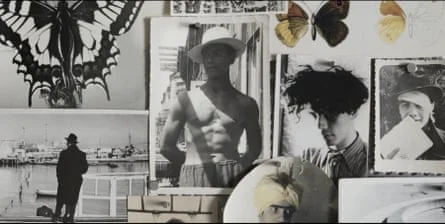
Effendi’s pursuit of the Satyrus effendi is intrinsically linked to her quest to understand the man her father truly was. Her childhood memories are fragmented, fleeting impressions of a man who would appear and then vanish, embarking on his butterfly hunts. "He had an almost ghostly presence in my life," she explains. "I would find jars with insects inside and his negatives in the wardrobe – vestiges of his life – around the house. One of the reasons for me to delve into this film was he had a full life outside our home. And I wanted to paint that picture of him in more vivid colours, but I couldn’t find those colours in my own history."
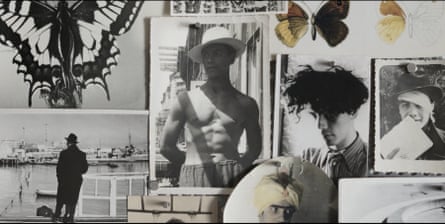
As she developed her career as a photojournalist, Effendi recognized striking parallels between her profession and her father’s scientific endeavors. "There is the hunt, its solitary nature, all the wandering and waiting until the moment comes and then you have to act fast, with a net or with a camera. It’s almost identical. Every butterfly comes with a story; every picture comes with a story. He collected thousands of butterflies; I have thousands of pictures in my archive. Pinning down a butterfly is like pinning down a moment. Even those tiny labels that he wrote [under pinned butterflies] – I see them as captions to my photographs."
Echoes of the Past, Whispers of Truth
During her visit to Armenia, a significant encounter occurs with Pavlik Kazaryan, an elderly lepidopterist and an old friend of her father’s. Kazaryan, an ethnic Armenian originally from Baku, had become a refugee during the conflict and now resides in Armenia. Together, they venture into the mountains in search of the Satyrus effendi. Kazaryan reveals a poignant detail: the butterfly net he wields was designed by Rustam Effendi himself, ingeniously crafted from a bra.
Kazaryan speaks of Rustam with deep affection, referring to him as "like a father to me, a good one." He recalls Rustam’s pride in his three daughters, but also notes that he would refer to Rena as "little Effendi, invisible girl, just like a butterfly," a nickname stemming from his father’s reticence to speak of her. This revelation intensifies Effendi’s questions: Why was she so invisible to her father? Why did he maintain such emotional distance? Her quest for the butterfly becomes an excavation of family secrets, a delicate balancing act between her roles as subject and documentarian. The narrative deepens for the audience, but the emotional toll on Effendi mounts.
A turning point arrives when one of her half-sisters shares letters Rustam had written to their mother. The experience is profoundly moving and painful for Effendi, as her own mother never received such declarations of love. "My presence is erased from his life" in these correspondence, she notes. Yet, the letters themselves are beautiful, romantic evocations of his scientific expeditions – vivid descriptions of alpine meadows, cascading waterfalls, and "poppies the size of teacups." "I could hear his voice for the first time. It was almost like being inside his mind for a second," Effendi confesses, revealing a deep yearning for connection. "And I craved that communication."
Further investigations into her father’s life uncover more complexities. Friends and relatives suggest he possessed two passports, implying a capacity for bigamy. However, Effendi questions the feasibility of such a dual existence within the strictures of Soviet Russia. "Just like that butterfly is mythological and people refuse to believe it exists because it’s flying over the war border, my father’s life was also mythological," she muses, drawing a parallel between the elusive insect and the enigmatic man.
Confronting the Present, Understanding the Past
As Effendi’s inquiries into her parents’ relationship intensify, she turns to her mother, who has historically been "very evasive" when questioned about Rena’s childhood. In a pivotal and emotionally charged scene, Effendi finds herself caught between her roles as journalist and daughter. She asserts her right to the truth, a demand amplified by the presence of the camera. "When you put someone in the spotlight of a camera, it holds you responsible for telling the truth. The dynamic changes. It wasn’t ‘I’m the daughter and she’s my mother.’ It was more ‘I’m an investigator and she’s my subject.’ It’s almost cruel, but that’s what the camera does. In the end, she had to open up." This confrontation leads to a revelation that fundamentally alters Effendi’s perception of her childhood.
Beyond the deeply personal narrative, the film also powerfully addresses pressing global issues. The plight of the Satyrus effendi serves as a stark indicator of the impacts of climate change. Effendi learns that increasingly hotter summers are compelling shepherds to drive their flocks higher into the mountains in search of sustenance. This necessitates grazing on the delicate high-altitude flora that forms the crucial food source for the butterfly’s caterpillars, thus directly threatening its survival. Data from the International Union for Conservation of Nature (IUCN) indicates that climate change is a significant driver of species decline, with rising temperatures and altered weather patterns disrupting ecosystems worldwide.
Driven by an intense obsession, Effendi extends the filming period for another year, determined to find the Satyrus effendi. "I became obsessed with finding it," she admits. "I dreamed about it." She and Morgun endure challenging conditions, including five days camped at high altitudes, battling persistent rain and wind. Yet, amidst these struggles, the butterfly hunt offers a glimmer of hope. Morgun observes, "He flies above everything. For him, there are no borders, no wars, nothing. Just his mountains." This sentiment resonates as a powerful metaphor for the potential for peace and coexistence, even in regions torn by conflict. The existence of the Satyrus effendi, a creature that transcends human-made divisions, becomes a symbol of nature’s resilience and a silent plea for understanding and reconciliation between Armenians and Azerbaijanis. The film, through its dual focus on a personal family saga and broader environmental and geopolitical concerns, offers a profound and timely exploration of connection, loss, and the enduring search for truth in a fractured world.