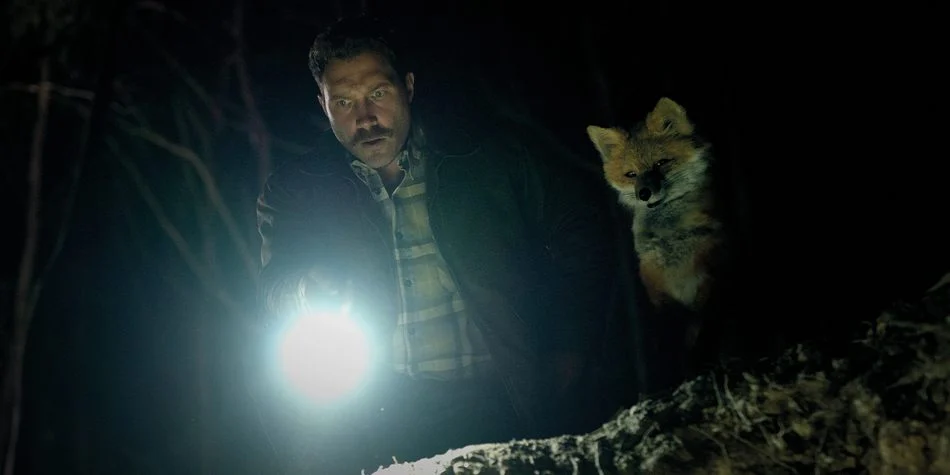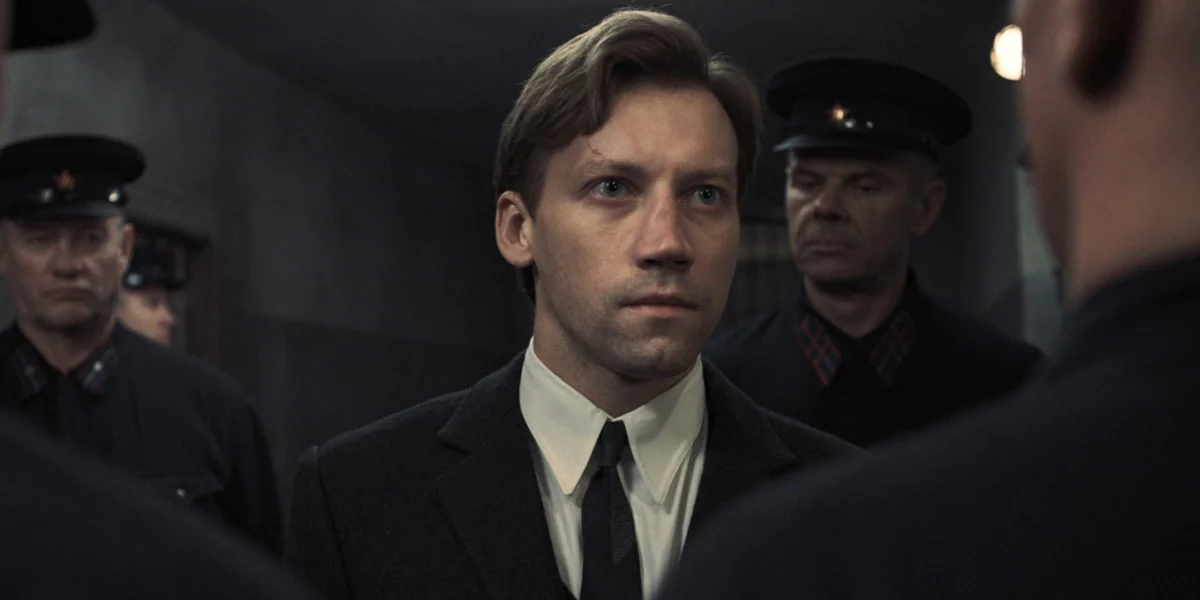
The 2025 historical drama Two Prosecutors, written and directed by acclaimed Ukrainian filmmaker Sergei Loznitsa, has emerged as a significant cinematic examination of the Soviet Union’s darkest era. Based on the novella by Georgy Demidov, the film made its world premiere in the Main Competition of the 78th Cannes Film Festival, where it garnered critical acclaim for its austere portrayal of moral erosion and the search for justice within a totalitarian framework. Starring Aleksandr Kuznetsov and Aleksandr Filippenko, the production was recently awarded the François Chalais Prize, a distinction reserved for films that best reflect the reality and inner life of the world. Janus Films has secured the North American distribution rights, with a scheduled theatrical release set for March 20, 2025.
Historical Foundations and Literary Origins
The narrative of Two Prosecutors is rooted in the lived experience of Georgy Demidov, a physicist and writer who became a victim of the very system described in his prose. Demidov, a former student of the Nobel laureate Lev Landau, was arrested in 1938 during the height of the Great Purge and spent 14 years in the Kolyma labor camps. His literary works, often compared to those of Varlam Shalamov, provide a granular, unsentimental look at the mechanisms of Soviet repression.
The film adaptation focuses on a young Soviet prosecutor who attempts to navigate the labyrinthine and often contradictory legal landscape of the late 1930s. As he seeks justice for a political prisoner, he finds himself in direct conflict with the institutionalized terror of the era. By centering the story on a member of the legal apparatus, Loznitsa explores the internal contradictions of a state that maintained the outward appearance of judicial process while systematically dismantling the rule of law.
The Great Purge: A Backdrop of Institutionalized Terror
To understand the stakes of Two Prosecutors, one must look at the historical data regarding the Great Purge, or the Yezhovshchina, which occurred between 1936 and 1938. During this period, Joseph Stalin’s government conducted a massive campaign of political repression, involving the purge of the Communist Party, the execution of military leaders, and the widespread persecution of "anti-Soviet elements."
Historical records from the NKVD (the precursor to the KGB) suggest that at least 681,692 people were executed during the years 1937 and 1938 alone—an average of nearly 1,000 executions per day. Millions more were sent to the Gulag system. The legal system was transformed into a rubber-stamp mechanism where "Troikas" (three-person commissions) issued sentences without formal trials or defense counsel. Loznitsa’s film captures the precise moment when the last vestiges of traditional legal ethics were being replaced by this "revolutionary expediency," placing the protagonist in an impossible moral position.
Directorial Vision: Sergei Loznitsa’s Analytical Lens
Sergei Loznitsa has long been recognized as one of the most rigorous chroniclers of Eastern European history. His filmography oscillates between harrowing narrative features, such as My Joy (2010) and Donbass (2018), and meticulous documentary works composed of archival footage, such as State Funeral (2019) and Babi Yar. Context (2021).
In Two Prosecutors, Loznitsa utilizes a narrative style that reflects his documentary background. The film is characterized by long takes, a restrained color palette, and a focus on the procedural details of the Soviet bureaucracy. This "clinical" approach allows the audience to witness the banality of evil—the way in which paperwork, signatures, and bureaucratic protocols were used to facilitate mass murder. During the Cannes Film Festival, Loznitsa emphasized that his goal was not merely to create a period piece, but to analyze how a society’s intellectual and legal elite can be co-opted by a criminal regime.
Critical Reception and the François Chalais Prize
The reception at Cannes was overwhelmingly positive, with critics praising the performances of Aleksandr Kuznetsov and the veteran actor Aleksandr Filippenko. Filippenko, a legendary figure in Russian cinema and theater, brings a seasoned weight to the role of an elder official, representing the transition from the early Bolshevik idealism to the grim reality of Stalinist survival.

The awarding of the François Chalais Prize was a pivotal moment for the film’s international profile. Named after the French journalist and film critic, the prize is awarded at Cannes to a film that "best highlights the presence of life and journalists’ values." The jury noted that Two Prosecutors succeeded in documenting a historical "truth" that remains relevant in the contemporary geopolitical climate. Critics have noted that while the film is set in 1937, its themes of judicial independence and the manipulation of truth resonate strongly with current events in Eastern Europe and beyond.
Production Notes and Technical Craft
The production of Two Prosecutors involved an international collaboration, reflecting Loznitsa’s standing in the global film community. The cinematography, handled by Loznitsa’s frequent collaborator Oleg Mutu, utilizes a visual language that evokes the oppressive atmosphere of the 1930s without relying on melodramatic lighting. The set design meticulously recreates the "Stalinist Empire" style of architecture—vast, cold, and designed to make the individual feel insignificant.
The casting of Aleksandr Kuznetsov, known for his roles in both Russian and international productions (such as Fantastic Beasts: The Secrets of Dumbledore), marks a significant career milestone. His portrayal of the young prosecutor is described as a study in quiet desperation, capturing the gradual realization that the system he serves is inherently predatory.
Chronology of Development and Release
The journey of Two Prosecutors from page to screen followed a deliberate timeline:
- 2021–2022: Sergei Loznitsa begins adapting Georgy Demidov’s novella, conducting extensive research in Soviet judicial archives to ensure the accuracy of the procedural elements.
- 2023: Principal photography commences across various locations in Europe, chosen for their preserved mid-century architecture.
- May 2025: The film premieres at the 78th Cannes Film Festival in the Main Competition.
- May 2025: The film wins the François Chalais Prize at Cannes.
- Late 2025: The film tours the international festival circuit, including stops at Toronto and New York.
- March 20, 2025: Janus Films initiates a theatrical rollout in North America.
Broader Impact and Implications
The release of Two Prosecutors by Janus Films—a distributor renowned for its association with the Criterion Collection and its dedication to "art-house" cinema—signals that the film is expected to be a major contender during the 2025 awards season. Janus Films has a history of championing works that require deep cultural and historical context, and Two Prosecutors fits this profile perfectly.
Beyond its artistic merits, the film serves as a crucial educational tool. In an era where historical revisionism is on the rise in several former Soviet states, Loznitsa’s insistence on factual accuracy and the exploration of "difficult" history acts as a corrective. The film’s focus on the legal profession is particularly salient; it asks what happens when the very people tasked with protecting society become the instruments of its destruction.
Conclusion: The Contemporary Relevance of Soviet History
Two Prosecutors is more than a historical reenactment; it is a psychological study of complicity and the fragility of individual conscience. By choosing to adapt Demidov’s work, Loznitsa gives voice to a writer who was silenced for decades, ensuring that the human cost of the Great Purge is not forgotten.
As the film prepares for its March 2025 release, it stands as a testament to the power of cinema to act as a witness to history. The combination of Loznitsa’s rigorous direction, the haunting source material of Georgy Demidov, and the prestige of the Cannes François Chalais Prize positions Two Prosecutors as one of the most significant cultural releases of the year. For audiences and historians alike, the film offers a sobering reminder that the structures of justice are only as strong as the individuals who uphold them.