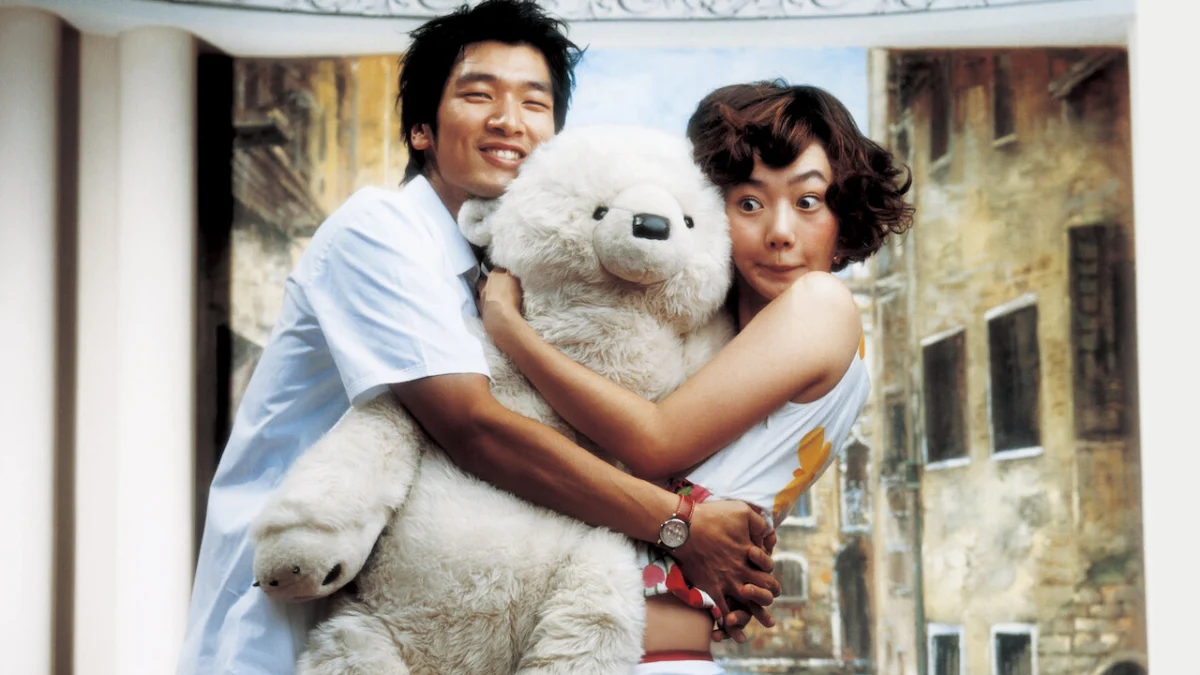
"Spring Bears Love" is a South Korean romantic drama that debuted in 2003, marking the feature film directorial debut of Yong Yi, who had previously carved a niche for himself in the competitive fields of commercial advertising and music video production. Upon its release, the film garnered a modest but largely positive critical reception, earning praise for its gentle narrative tone and introspective thematic approach. Despite this critical acknowledgement, the film did not achieve significant commercial success at the box office, a common challenge for character-driven dramas in a market often dominated by more mainstream blockbusters or action-oriented features.
A Director’s Debut and a Narrative of Quiet Longing
The film’s narrative centers on Hyun-chae, portrayed by the acclaimed actress Bae Doona, a young woman characterized by her somewhat awkward demeanor and persistent streak of bad luck in romantic relationships. Despite her inherent honesty and emotional transparency, Hyun-chae struggles to forge lasting connections. Adding to her personal challenges is the responsibility of caring for her father, an alcoholic whose endearing personality often masks the difficulties of his condition.
Hyun-chae’s life takes an unexpected turn when, while perusing art books, she stumbles upon a series of handwritten notes meticulously hidden within their pages. The discovery begins with a poetic confession that immediately captures her imagination and sparks a profound curiosity. These messages, intimate and deeply thoughtful, resonate with Hyun-chae, leading her to believe that they are specifically addressed to her, a clandestine communication from an unknown admirer. As she meticulously follows the trail of these enigmatic notes, her initial curiosity gradually deepens into a significant emotional investment. This burgeoning connection with an imagined figure fuels her desire to uncover the identity of the mysterious writer, culminating in a belief that she is, in fact, falling in love with him.
Yong Yi’s transition from the fast-paced, visually driven world of commercials and music videos to feature filmmaking is a notable aspect of "Spring Bears Love." This trajectory is not uncommon in the South Korean film industry, where directors often hone their visual storytelling skills in shorter formats before tackling the complexities of a full-length narrative. Yi’s background is evident in the film’s aesthetic, which prioritizes a certain visual lyricism and an intimate focus on character expression, even if the narrative pacing occasionally reflects a vignette-like structure.
Contextualizing the Era: South Korean Romantic Dramas in the Early 2000s
The early 2000s represented a dynamic period for South Korean cinema, often referred to as the burgeoning era of the "Korean Wave" (Hallyu). This period saw a significant increase in both the quantity and quality of domestic film productions, with a growing international recognition for Korean directors and actors. Romantic dramas and romantic comedies were particularly popular, often exploring themes of first love, unrequited affection, and the complexities of modern relationships. Films like "My Sassy Girl" (2001) had redefined the genre, injecting humor and unconventional character dynamics into traditional romance narratives.
"Spring Bears Love" emerged within this vibrant landscape, offering a more melancholic and introspective take on love compared to some of its more overtly comedic or melodramatic contemporaries. It delved into the psychological nuances of longing and idealization, positioning itself as a quieter, more reflective piece within the broader genre. The film subtly engaged with established genre conventions, such as the love triangle and the "childhood friend" trope, but infused them with a nuanced exploration of internal conflict and self-discovery.
Behind the Lens: Production Insights and Artistic Choices
Casting the Leads: Bae Doona and Kim Nam-jin
The casting of Bae Doona as Hyun-chae was a pivotal decision. By 2003, Bae Doona had already established herself as an actress of considerable range and unique appeal, known for her roles in critically acclaimed films like Bong Joon-ho’s "Barking Dogs Never Bite" (2000) and Park Chan-wook’s "Sympathy for Mr. Vengeance" (2002), as well as her breakout performance in "Take Care of My Cat" (2001). Her ability to portray vulnerability, quirkiness, and an underlying strength made her an ideal choice for Hyun-chae, a character who, despite her struggles, maintains an endearing and optimistic spirit. Her presence undoubtedly lent a certain artistic credibility and draw to the production.
Kim Nam-jin, playing Dong-ha, provided a grounding presence opposite Bae Doona’s more ethereal character. His casting as the steadfast, silently devoted childhood friend was crucial for establishing the emotional counterpoint to Hyun-chae’s fantastical pursuit. Their shared chemistry, noted by critics, was essential in carrying the film’s "will-they-won’t-they" premise, allowing the audience to invest in their complicated relationship.
Cinematic Vision: Park Ki-woong’s Aesthetic
One of the most consistently praised aspects of "Spring Bears Love" was its cinematography, helmed by DP Park Ki-woong. Beyond merely showcasing Bae Doona’s "quirky beauty"—a directorial intent explicitly mentioned in early reviews—Ki-woong’s work captured the pervasive melancholy that underpins the characters’ lives and the realistically bleak urban environments they inhabit. His lens transformed mundane settings, such as the aisles of a supermarket, into spaces imbued with a quiet despair and yearning. The meticulous framing and evocative lighting contributed significantly to the film’s gentle, introspective tone, turning everyday scenes into poignant visual statements. The visual focus on Bae Doona, even in a seemingly ordinary Carrefour uniform, highlighted not just her inherent appeal but also subtly pointed to the growing trend of product placement and brand integration within Korean cinema during this period, often serving as a discreet form of commercial sponsorship.
Thematic Depths: Navigating Idealism and Authenticity
Hyun-chae’s Psychological Journey: The Allure of the Unknown
Hyun-chae’s character arc is a profound exploration of human psychology, particularly the tendency to project desires and ideals onto an unknown or imagined figure. Her obsession with the mysterious notes is not merely a search for a romantic partner; it is a quest for an idealized version of love that addresses her deep-seated loneliness and dissatisfaction with her current reality. The poetic nature of the messages allows her to construct a perfect image of the writer in her mind, creating a fantasy that, for a time, feels more real and fulfilling than the tangible connections around her. This narrative choice delves into the universal human longing for an ideal soulmate and the escapism offered by imagination.
Dong-ha’s Silent Devotion: A Counterpoint to Fantasy
In stark contrast to Hyun-chae’s pursuit of an imagined love, the film presents Dong-ha, her childhood friend, as the embodiment of genuine, steadfast affection. Dong-ha, who has harbored a quiet love for Hyun-chae for years, consistently goes out of his way to support her and fulfill her wishes, often without recognition. An illustrative scene depicts him dropping everything to bring her ramen late one night, only to be overlooked in favor of Hyun-chae’s preoccupation with her fantastical admirer. Yong Yi’s skillful direction ensures that Dong-hae’s devotion does not paint Hyun-chae as an exploitative character. Instead, the film attributes her obliviousness to her inherent naivety, her emotional burdens (such as caring for her father), and her general dissatisfaction with her job, framing her not as a villain but as a flawed, relatable individual grappling with her own complexities. This balance is crucial for maintaining audience sympathy for both characters.
The Illusion of Love: Fantasy vs. Truth
The central thematic conflict of "Spring Bears Love" lies in the stark dichotomy between fantasy and truth. As Hyun-chae becomes increasingly immersed in her idealized vision, she inadvertently overlooks the genuine connection that already exists in her life with Dong-ha. The eventual revelation of the mysterious writer’s identity forces her to confront the chasm between her imagined ideal and the often imperfect, yet real, nature of love. This confrontation serves as the narrative’s emotional climax, challenging Hyun-chae—and by extension, the audience—to differentiate between the intoxicating allure of projection and the quiet strength of authentic presence. The film effectively comments on how individuals often create idealized images of others, allowing these images to replace reality in their minds, echoing psychological observations about human perception and desire.
Loneliness and the Essence of Connection
Beyond romantic love, the film sensitively explores themes of loneliness and the true nature of human connection. Hyun-chae’s pursuit of the notes stems from a profound sense of isolation, a common affliction in modern urban life. The film subtly argues that love is not solely about grand romantic gestures, but more importantly, about consistent presence, empathy, and support, particularly during challenging times. Dong-ha’s actions exemplify this philosophy, portraying love as an active, unassuming commitment rather than a dramatic declaration.
Critical Reception and Industry Impact
A Modest Box Office Performance
While critically appreciated, "Spring Bears Love" struggled to find a large audience. The South Korean film market in the early 2000s was becoming increasingly competitive, with a growing number of domestic films vying for audience attention alongside Hollywood blockbusters. Films with a quieter, more introspective tone, like "Spring Bears Love," often faced an uphill battle against more commercially oriented productions. Its "modest" box office performance likely meant it did not break even or generate significant profit, a common fate for many artistically driven films that prioritize character and theme over widespread appeal.
Strengths and Criticisms: A Balanced View
Critics lauded the film for its authentic performances, particularly from Bae Doona and Kim Nam-jin, whose chemistry was cited as a major strength. The thematic depth, especially the exploration of fantasy versus reality and the nature of genuine connection, resonated positively with reviewers. Park Ki-woong’s cinematography was consistently highlighted as a standout element, praised for its ability to convey mood and character without relying on overt stylization.
However, the film was not without its drawbacks. The editing, in particular, was frequently cited as problematic. Reviewers noted that the narrative often felt like a series of loosely connected vignettes rather than a cohesive story, impacting the overall flow and coherence. Furthermore, several side arcs were perceived as disconnected from the main plot, detracting from the central emotional journey. Some critics also found Hyun-chae’s prolonged obliviousness to Dong-ha’s feelings stretched credibility, pushing the boundaries of dramatic license. Additionally, Yong Yi was criticized for occasionally succumbing to "forced sentimentalism," particularly towards the film’s conclusion, undermining some of its earlier subtlety.
Legacy and Enduring Appeal
Despite its initial commercial limitations and structural flaws, "Spring Bears Love" has maintained a quiet presence in South Korean cinema. For director Yong Yi, it served as an important stepping stone, showcasing his capacity for nuanced character direction and atmospheric storytelling. While he has not achieved the global renown of some of his contemporaries, the film solidified his reputation as a director with a distinct artistic sensibility.
For Bae Doona, "Spring Bears Love" further cemented her status as an actress unafraid to tackle complex, unconventional roles. Her portrayal of Hyun-chae added another layer to her diverse filmography, demonstrating her ability to inhabit characters who are simultaneously vulnerable and resilient. Kim Nam-jin’s performance, though less celebrated than Bae Doona’s, contributed significantly to the film’s emotional core and highlighted his potential as a leading man capable of conveying understated emotion.
In retrospect, "Spring Bears Love" remains a film that, despite its issues, offers a compelling and often moving exploration of universal themes. Its strengths—the captivating performances, the thoughtful thematic commentary on idealized love versus real connection, and the exceptional cinematography—allow it to transcend its narrative shortcomings. It serves as a gentle reminder of the power of introspection in storytelling and the enduring human quest for genuine affection in a world often overshadowed by fantasy. For those seeking a character-driven romantic drama with a melancholic yet hopeful heart, "Spring Bears Love" undoubtedly deserves a watch.