The latest installment in the expansive Star Trek universe, Starfleet Academy, is charting a bold new course, approximately 900 years after the events of Star Trek: The Original Series. This ambitious endeavor aims to redefine the Federation’s future, reflecting contemporary cultural sensibilities while building upon the established lore. The series emerges at a unique juncture for the franchise, balancing nostalgia for its classic era with a forward-looking vision that grapples with the complexities of the present day. Starfleet Academy takes on the significant challenge of establishing a narrative foundation for this distant future, a task that began with the introduction of this era in the later seasons of Star Trek: Discovery.
Central to this new era is the catastrophic event known as The Burn. Occurring approximately 120 years before the events depicted in Starfleet Academy, The Burn saw all active dilithium sources across the galaxy spontaneously ignite. This cataclysm resulted in immense loss of life, estimated to be in the millions, and led to the fragmentation of the United Federation of Planets. The ensuing century has been characterized by the Federation’s arduous process of rebuilding and reunification, a process significantly advanced by the efforts shown in Star Trek: Discovery to ensure the prevention of a recurrence of such a devastating event. However, the aftermath of The Burn has fostered a generation marked by reactionary isolationism, a mindset that Starfleet Academy seeks to address and correct.
The immediate and most visible aspect of this correction is the re-establishment of Starfleet and, crucially, the reopening of Starfleet Academy. This development naturally raises questions about the intervening years and the continuity of Starfleet’s operational capacity. If the Academy was closed or severely diminished, where did Starfleet procure its officers during the century following The Burn? The narrative reveals a stark replacement: the War College.

The Rise of the War College
The introduction of the War College as the de facto successor to Starfleet Academy presents a significant thematic departure from Star Trek’s established ideals. Unlike a traditional military academy or a naval training facility, the War College is explicitly dedicated to the study and practice of warfare. Its existence implies a Federation that, for over a century, has prioritized strategic combat readiness above exploration and diplomacy as its primary educational focus for aspiring officers. This institutional shift suggests a profound reorientation of the Federation’s core values in response to the existential threat posed by The Burn and its subsequent fallout.
The narrative arc of Starfleet Academy, particularly as the first season concludes, appears to be exploring a reconciliation between the re-established Starfleet Academy and the established War College. The creators seem to be leaning towards themes of mutual understanding and interdependence, positing a scenario where both institutions are necessary for the Federation’s continued stability. Alternatively, the series may be moving towards a complete reintegration, effectively phasing out the War College and returning to the pre-Burn status quo where Starfleet Academy alone served the Federation’s needs.
However, this perceived dichotomy overlooks a fundamental aspect of Star Trek’s DNA: Starfleet, at its core, is a military organization. This reality has often been a point of contention for some segments of the fanbase, as it appears to challenge the utopian socialist ideals often associated with the Federation. Even in its most idealistic iterations, the Federation relies on a robust defense force – a "big stick" – and the willingness to wield it when necessary. Starfleet’s operational framework inherently requires a hierarchical structure, where the judgment and decisions of certain individuals are prioritized over others, particularly in critical situations. Rank and command structure are indispensable to its functioning.
Examining Militarism in Star Trek
The exploration of militaristic structures is not new to Star Trek. The franchise has consistently used its futuristic setting to examine complex societal and ethical issues. For instance, Star Trek: Deep Space Nine delved into the moral compromises inherent in engaging in prolonged conflict to avert galactic subjugation. Star Trek: Voyager frequently placed Captain Janeway in situations where her adherence to duty and the safety of her crew required difficult, often unilateral, decisions that challenged the crew’s perspectives. Similarly, Star Trek: Picard tackled the internal challenges within Starfleet, particularly concerning the ban on synthetic life, highlighting the organization’s susceptibility to reactionary elements and its struggles with rigid adherence to command structures that can sometimes conflict with everyday decision-making and cooperation.

These narratives acknowledge the inherent rigidity of military structures and how they can clash with the nuances of diplomacy, cooperation, and complex problem-solving. This tension is often resolved through Starfleet officers acting against orders, with their insubordination either being overlooked or even rewarded for achieving a greater good.
The introduction of the War College, however, presents a less nuanced approach. It risks creating a superficial separation between the "militaristic" aspects of the Federation and the more idealistic goals of Starfleet, potentially shielding Starfleet from the more challenging ethical implications of its own structure. This mirrors the problematic nature of Section 31, the Federation’s clandestine intelligence agency, which operates outside standard oversight and accountability. While attempts have been made to reframe Section 31 as a group of morally complex operatives, its existence fundamentally questions the Federation’s stated principles of transparency and accountability. Similarly, the War College, born from a period of existential crisis and a return to hierarchical dominance, appears to embody a convenient compartmentalization of the Federation’s more unsavory operational necessities.
The War College’s Narrative Pitfalls
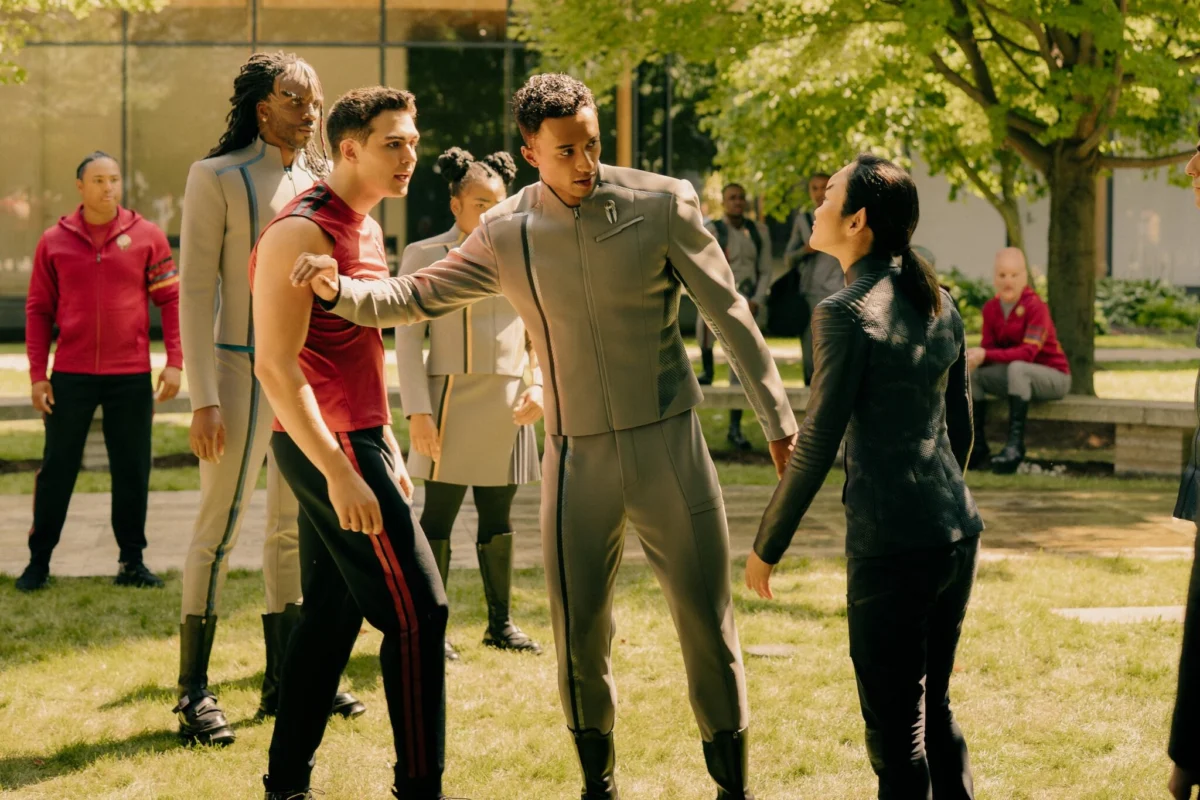
The current portrayal of the War College in Starfleet Academy seems to create facile rivalries for the Starfleet cadets. While Starfleet Academy cadets are encouraged to engage with science, empathy, and communication, their War College counterparts are depicted as prioritizing physical hardiness and discipline. This simplistic "jocks versus nerds" dynamic feels like a regression, particularly within the progressive ethos of Star Trek.
This perceived overemphasis on militarism is further exemplified in the episode "Vitus Reflux." The episode centers on Calica, a centuries-old team sport played by Starfleet cadets. Conceptually, Calica is presented as a glorified, albeit bloody, version of Capture the Flag, framed as a brutal war game designed to sharpen cadets for combat. This is presented as a long-standing tradition within Starfleet, raising concerns about the organization’s priorities.

The episode also features a rigorous physical training regime overseen by First Officer Lura Thok, who is of Klingon and Jem’Hadar heritage. The training appears indistinguishable from a conventional army boot camp. The narrative misses opportunities to explore the cultural influences behind such training or to address the diverse physical capabilities of cadets. The presence of a cadet in a wheelchair, without clear indications of accommodations for various disabilities, raises uncomfortable questions about Starfleet’s accessibility policies and its increasingly militarized image. Military organizations often have stringent physical requirements that exclude individuals with certain disabilities, and the show’s portrayal, while perhaps unintentional, highlights this potential conflict with the Federation’s inclusive ideals.
Moving Forward: Reimagining Leadership and Structure
Despite these narrative challenges, the series does offer glimmers of hope for a more nuanced exploration of the Federation’s future. The episode culminates in Starfleet Academy winning a prank war against the War College, with Captain Ake reminding her cadets that Starfleet’s primary objective is de-escalation and disarming opponents without resorting to conflict. This emphasis on diplomacy and non-violent resolution suggests a potential pathway for the series to move beyond its current narrative limitations.
The season finale, featuring Jett Reno taking command of frightened cadets aboard the Athena during a crisis involving Nus Braka, offers a compelling model for future leadership. Reno guides the cadets through a life-or-death situation not as a strict commander, but as a project manager, fostering collaboration and empowering them without condescension. This leadership style echoes that of Captain Michael Burnham of the Discovery. Burnham’s command was built on mutual respect, affection, and belief in her crew. She was decisive but not tyrannical, adept at discerning genuine objections from personal grievances. Her strength lay in her interpersonal skills, making her a less overtly militaristic commander than many of her predecessors.
The core challenge for Starfleet Academy and the broader Star Trek franchise lies in acknowledging the hierarchical and sometimes militaristic nature of our present reality without becoming beholden to it. Imagining alternative structures for governance and teamwork is essential, and Star Trek, with its optimistic yet critical lens, remains an ideal platform for seeding these ideas. Starfleet Academy has the potential to be a significant series in exploring these possibilities.

However, the current reliance on the War College as a narrative device remains unsettling. While future seasons may offer a more sophisticated engagement with this concept, the creation of an entire institution dedicated to the "worst of our impulses" risks a superficial treatment of complex issues. For the Federation to truly move beyond its more problematic aspects, it must confront them directly rather than compartmentalize them. The journey toward a more evolved future requires a deeper examination of how the Federation can learn from its past mistakes and actively work to transcend them, rather than simply relegate them to an isolated college.