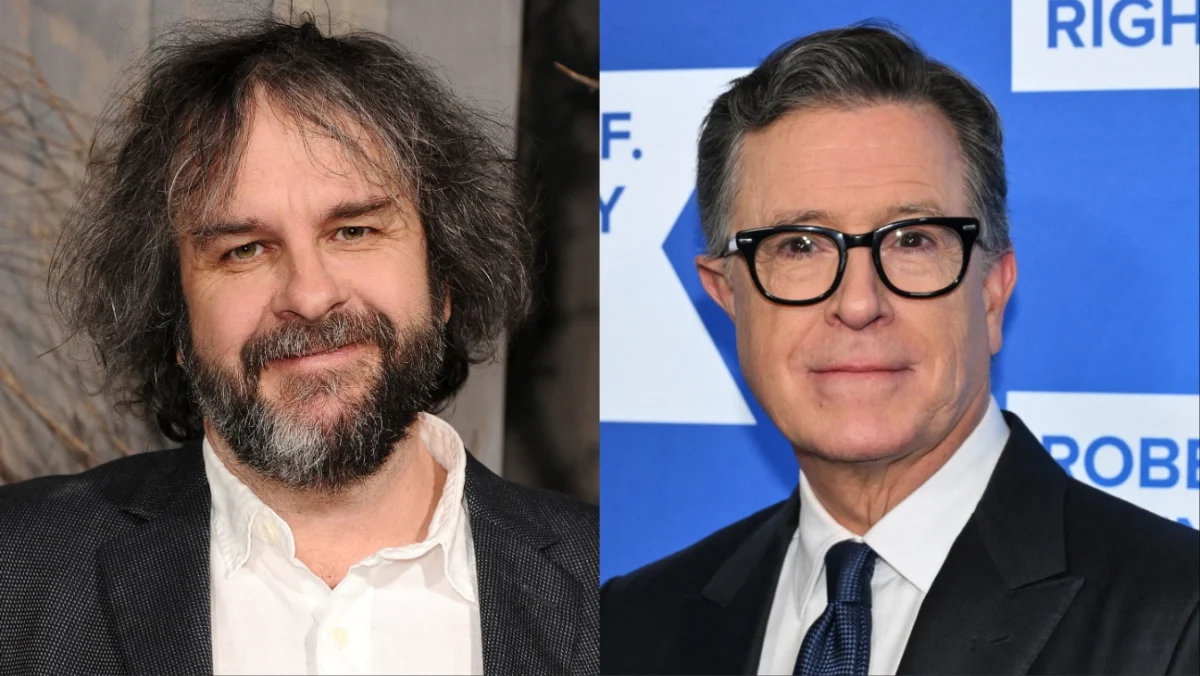
On April 1, 2024, the entertainment world was momentarily captivated by a seemingly monumental announcement: Stephen Colbert, the Emmy-winning host of CBS’s The Late Show, was slated to co-write a new Lord of the Rings film alongside Peter Jackson’s acclaimed collaborators, Philippa Boyens and a newly introduced "Peter McGee." This revelation, shared through an engaging social media video featuring Colbert and Jackson, quickly spread across fan communities and news aggregators. However, astute observers and fans of Colbert’s well-known penchant for elaborate humor, particularly on April Fool’s Day, soon recognized the announcement for what it truly was: a highly sophisticated and brilliantly executed prank designed to delight and momentarily deceive Tolkien enthusiasts worldwide. The widespread report that The Late Show was cancelled and Colbert was seeking a "post-Late Show job" served as the ultimate giveaway, as Colbert’s show remains a prominent and ongoing fixture in late-night television.
The Grand Unveiling and Its Truth
The meticulously crafted announcement video featured Stephen Colbert in conversation with Peter Jackson, lending significant credibility to the initial claim. Colbert detailed his supposed journey to this dream project, explaining how he poured over the early chapters of J.R.R. Tolkien’s The Fellowship of the Ring, specifically "Three Is Company" through "Fog on the Barrow-downs," believing they held the potential for a standalone yet faithful cinematic narrative. He claimed to have developed this concept with his son, identified as "Peter McGee," before pitching it to Jackson two years prior. The alleged working title for this new installment was The Lord of the Rings: Shadow of the Past, positioned as the second of two new films in the franchise, following Andy Serkis’s already announced The Lord of the Rings: Hunt for Gollum. The synopsis offered for Shadow of the Past was equally compelling: "Fourteen years after the passing of Frodo, Sam, Merry, and Pippin set out to retrace the first steps of their adventure. Meanwhile, Sam’s daughter, Elanor, has discovered a long-buried secret and is determined to uncover why the War of the Ring was very nearly lost before it even began." This narrative, rich with potential for new Middle-earth lore and beloved characters, resonated deeply with the fandom.
The inclusion of Peter Jackson, the visionary director behind the highly successful Lord of the Rings and The Hobbit trilogies, was a masterstroke in lending authenticity to the prank. Jackson, alongside Fran Walsh and Philippa Boyens, formed the Oscar-winning creative core that brought Tolkien’s world to the big screen with unprecedented success. Their involvement, even in a mock announcement, suggested a legitimate continuation of their legacy. Furthermore, Colbert’s mention of Warner Bros. executives Pam Abdy and Mike De Luca supposedly "loving" the concept added another layer of corporate endorsement, making the story appear thoroughly vetted and officially sanctioned. However, the crucial detail that unraveled the entire fabrication was the assertion that Colbert’s role was a "post-Late Show job" because CBS had "decided to cancel the long-running late night talk show last year," with its final episode slated for May 21. This specific piece of information directly contradicted widely known public facts, as The Late Show with Stephen Colbert has not been cancelled and continues to air to strong viewership and critical acclaim. This blatant inaccuracy, coupled with the April 1st date of the announcement, definitively marked the news as an elaborate April Fool’s joke.
Colbert’s Unwavering Devotion to Middle-earth
The prank’s believability stemmed largely from Stephen Colbert’s genuine and well-documented passion for J.R.R. Tolkien’s works. Colbert is not merely a casual fan; he is renowned as a bona fide Tolkien scholar and enthusiast, possessing an encyclopedic knowledge of Middle-earth lore that frequently surfaces in his public persona and television career. His depth of understanding goes far beyond the movies, delving into the intricacies of The Silmarillion, Unfinished Tales, and The History of Middle-earth series.
During his tenure on The Colbert Report and later The Late Show, Colbert has regularly showcased his Tolkien expertise. Memorable segments include his "Hobbit Week" specials, where he interviewed Peter Jackson and members of the cast, often challenging them with obscure trivia about Middle-earth geography, genealogy, and Elvish linguistics. He has famously corrected guests on finer points of Tolkien canon and demonstrated an ability to recite Elvish phrases or detail the lineage of minor characters. In 2014, he engaged in a "Tolkien Quiz" with James Franco on The Late Show, effortlessly answering questions that stumped many, solidifying his reputation as a Tolkien superfan. His passion is so profound that he made a cameo appearance in The Hobbit: The Desolation of Smaug (2013) as a Laketown spy, a testament to his connection with Jackson and the franchise.
Colbert’s deep appreciation for the source material, particularly the literary nuances and philosophical underpinnings of Tolkien’s mythology, made the idea of him developing a film based on lesser-explored book chapters entirely plausible. His stated aim in the prank video—to create a story "completely faithful to the books while also being completely faithful to the movies"—echoes his consistent public stance on adaptations of beloved works. This profound personal investment in Tolkien’s legendarium is what made the April Fool’s joke so effective, leveraging his genuine fandom to craft a scenario that, for a brief moment, felt utterly real to many who know his intellectual curiosity and specific interests.
The Genuine Future of Middle-earth on Screen
While Stephen Colbert’s announcement was a clever diversion, the cinematic future of Middle-earth is indeed vibrant and actively developing. Warner Bros. Pictures and New Line Cinema are genuinely committed to expanding the beloved franchise, with several authentic projects in various stages of production. This authentic cinematic pipeline provides the perfect backdrop against which such an elaborate prank could thrive.
The most prominent confirmed project is The Lord of the Rings: Hunt for Gollum. Announced in May 2024, this film marks the return of Andy Serkis to the director’s chair, having famously portrayed Gollum through motion capture in Jackson’s original trilogy. Serkis is also set to reprise his iconic role, bringing his unique understanding of the character to both sides of the camera. The screenplay for Hunt for Gollum is being penned by Fran Walsh, Philippa Boyens, Phoebe Gittins, and Arty Papageorgiou. Peter Jackson, Fran Walsh, and Philippa Boyens are attached as producers, ensuring a continuity of vision and quality that fans have come to expect. The film is officially slated for a theatrical release on December 17, 2027.
The cast for Hunt for Gollum is already taking shape, with significant names confirmed and rumored. Sir Ian McKellen is confirmed to return as Gandalf, a role he originated in The Fellowship of the Ring (2001) and continued through The Hobbit trilogy. His reprisal is a major draw for longtime fans. Additionally, Academy Award-winner Kate Winslet has been cast in an undisclosed role, adding another layer of star power and intrigue to the project. Elijah Wood, who portrayed Frodo Baggins in the original trilogy, has also strongly hinted at his return, generating considerable excitement about potential reunions and character arcs. The story for Hunt for Gollum is set chronologically between The Hobbit and The Lord of the Rings trilogies, focusing on Aragorn and Gandalf’s perilous quest to track down Gollum. This mission is crucial for uncovering information about Bilbo’s magical ring, which is later revealed to be the One Ring, the central artifact threatening Middle-earth during the events of The Lord of the Rings. This narrative period is rich with unexplored potential, offering a bridge between the two established film sagas.
Beyond Hunt for Gollum, Warner Bros. has indicated a broader strategy for developing multiple new films set in the Lord of the Rings universe, signaling a long-term commitment to the franchise. This expansion follows the immense success of Peter Jackson’s original Lord of the Rings trilogy, which collectively grossed nearly $3 billion worldwide and garnered 17 Academy Awards, including Best Picture for The Return of the King (2003). The subsequent Hobbit trilogy, while met with mixed critical reception compared to its predecessor, still achieved significant commercial success, pulling in over $2.9 billion globally. These figures underscore the enduring global appeal and financial viability of Tolkien’s world on the big screen, making it a prime candidate for continued cinematic exploration. The Amazon Prime Video series The Lord of the Rings: The Rings of Power, set in the Second Age of Middle-earth, also demonstrates the appetite for new stories, even outside the direct narrative continuity of Jackson’s films. The combination of these genuine projects and the deep history of cinematic success created a fertile ground for Colbert’s believable April Fool’s stunt, playing into the very real anticipation for more Middle-earth content.
The Craft of the Cinematic April Fool’s Prank
The April Fool’s Day tradition of elaborate hoaxes has a long and storied history, particularly within media and entertainment. From BBC’s infamous 1957 "Spaghetti Tree Harvest" report to countless celebrity "announcements" and product launches, the goal is to momentarily suspend disbelief and then reveal the jest, often to widespread amusement. Stephen Colbert’s Lord of the Rings screenwriting announcement stands out as a masterclass in this tradition, leveraging high production values, genuine industry connections, and a deep understanding of fan culture to craft a prank of exceptional quality.
What made Colbert’s prank particularly effective was its blend of plausible elements with subtle, yet ultimately undeniable, falsehoods. The involvement of Peter Jackson, a figure synonymous with Lord of the Rings cinema, immediately lent weight to the announcement. The detailed "plot" points, referencing specific chapters from Tolkien’s books and introducing a new character like Elanor (Samwise Gamgee’s daughter, a canonical character who exists in the Appendices of The Lord of the Rings), resonated with the expectations of a discerning Tolkien fanbase. The mention of specific Warner Bros. executives further grounded the prank in a semblance of corporate reality. This level of detail and insider knowledge demonstrated a significant investment of time and resources, elevating it beyond a simple tweet or casual remark.
The timing, on April 1st, was the primary indicator, yet the sheer convincing nature of the presentation initially overshadowed this traditional caveat for many. The ultimate reveal, however, hinged on the patently false claim about The Late Show‘s cancellation. This deliberate and easily verifiable untruth served as the punchline, a nod and a wink to those who follow Colbert’s career closely. The prank highlights the increasing sophistication of media hoaxes in the digital age, where social media platforms can amplify messages globally in an instant. It also underscores the power of celebrity and beloved franchises to generate instant, widespread attention, even when the news is entirely fabricated. Such pranks, when executed with good humor and without malicious intent, often serve to foster a sense of community among fans, creating a shared experience of collective, good-natured deception.
Repercussions and Resonance: A Fandom’s Reaction
The initial reaction to Stephen Colbert’s Lord of the Rings announcement was a rapid surge of excitement and speculation across social media platforms and fan forums. For many, the prospect of a new Middle-earth film co-written by a known Tolkien devotee like Colbert, and with the tacit involvement of Peter Jackson, was an exhilarating prospect. Fans debated the merits of adapting the specific chapters mentioned, discussed the implications of Elanor Gamgee’s storyline, and expressed eagerness for what seemed like a truly authentic expansion of the cinematic universe. The idea of Colbert moving into such a creative role after his late-night career was also intriguing, signaling a potential new chapter for the beloved comedian.
As the day progressed and the April Fool’s nature of the announcement became apparent, aided by the glaring inaccuracy regarding The Late Show‘s cancellation, the initial excitement transformed into a collective chuckle. Many fans expressed admiration for the prank’s cleverness and the effort put into its execution. The engagement metrics on the announcement video itself, and subsequent discussions, demonstrated the widespread reach and impact of the joke. It spurred conversations not only about the prank itself but also about Colbert’s genuine Tolkien scholarship, the existing Lord of the Rings canon, and the real upcoming film projects.
The prank served as a powerful reminder of the enduring appeal of J.R.R. Tolkien’s world and the deep emotional connection fans have to Middle-earth. It tapped into a genuine desire for more content that respects the source material and expands the beloved narrative. The prank also reinforced Stephen Colbert’s status as a cultural figure capable of orchestrating sophisticated humor that resonates beyond his nightly talk show. His ability to enlist Peter Jackson in such a high-profile jest further cemented his comedic and intellectual credibility, showcasing a playful side that endears him to his audience. In a media landscape often dominated by serious news, such lighthearted yet intelligent pranks provide a welcome moment of shared amusement and highlight the playful side of the entertainment industry.
Conclusion: The Enduring Legacy of Tolkien and Timely Humor
Stephen Colbert’s April Fool’s Day announcement, despite being a well-executed prank, underscored several truths about the enduring power of J.R.R. Tolkien’s The Lord of the Rings and the unique cultural position of figures like Colbert. The immediate, widespread, and largely positive reaction demonstrated the fervent global appetite for new stories set in Middle-earth, particularly those that promise fidelity to the source material and involve the original creative architects. While The Lord of the Rings: Shadow of the Past will not be gracing cinema screens, the genuine excitement it generated serves as a powerful testament to the franchise’s cinematic potential and its deep resonance with audiences decades after its literary inception.
Furthermore, the prank highlighted Stephen Colbert’s singular blend of intellectual rigor, comedic timing, and deep personal passions. His ability to craft such a convincing narrative, leveraging his genuine Tolkien expertise and high-level industry connections, speaks volumes about his creative capacity beyond the late-night desk. As Warner Bros. and New Line Cinema genuinely move forward with projects like The Lord of the Rings: Hunt for Gollum, the incident also subtly reinforces the high bar set for any new Middle-earth adaptations. Fans expect authenticity, quality, and a deep understanding of Tolkien’s intricate world. Colbert’s elaborate jest, therefore, was not merely a fleeting moment of April Fool’s humor but a potent cultural commentary, celebrating a beloved literary universe while reminding us of the joy found in shared, intelligent amusement.