"Sunshine Woman’s Choir," a poignant Taiwanese Mandarin-language drama helmed by director Gavin Lin and co-written by Hermes Lu, has emerged as a landmark cinematic achievement, capturing the hearts of audiences and shattering box office records in its home territory. Marking another successful collaboration between Lin and Lu following their acclaimed remake of "More than Blue," the film premiered on December 31, 2025, drawing inspiration from compelling real-life narratives while also adapting key elements from Kang Dae-kyu’s celebrated 2010 Korean film, "Harmony." This unique production masterfully blends the intensity of a prison drama with the uplifting power of musical elements, delving deep into universal themes of redemption, the enduring strength of motherhood, and the profound solidarity forged within a confined environment. The film boasts a stellar ensemble cast, featuring prominent Taiwanese talents such as Ivy Chen, Sun Shu-mei, Amber An, Judy Ongg, and Ho Man-xi, who collectively bring to life a rich tapestry of characters within the stark yet ultimately hopeful prison setting.
A Phenomenal Commercial Success
The film’s impact on the Taiwanese cinematic landscape has been nothing short of historic. "Sunshine Woman’s Choir" quickly ascended to become the highest-grossing local production in Taiwan’s history, achieving an astounding box office haul that surpassed NT$545 million. This monumental achievement saw it overtake the long-standing record held by Wei Te-sheng’s iconic 2008 romantic comedy-drama, "Cape No. 7," which had previously set the benchmark for local films with NT$545.22 million. The film’s commercial dominance was evident from its strong performance, reaching the coveted number one position at the daily box office on January 12 and maintaining formidable momentum with consistent daily earnings exceeding NT$10 million for an extended period. This unprecedented success not only highlights the film’s widespread appeal but also signals a vibrant resurgence in the local film industry, demonstrating a powerful connection between Taiwanese filmmakers and their audience.
Industry analysts quickly weighed in on the film’s extraordinary performance. Dr. Li Wei-ching, a prominent film studies professor at National Taiwan University, remarked, "The success of ‘Sunshine Woman’s Choir’ is a testament to the power of authentic storytelling combined with universal themes. It’s not just a box office triumph; it’s a cultural phenomenon that reaffirms the audience’s appetite for local narratives that resonate deeply. Surpassing ‘Cape No. 7’ is a significant symbolic victory, marking a new chapter for Taiwanese cinema’s commercial viability and artistic ambition." This sentiment underscores the film’s dual achievement: critical acclaim for its narrative and character development, coupled with an undeniable connection with the general public.
UK & Ireland Premiere: Expanding International Reach
Building on its domestic triumph, "Sunshine Woman’s Choir" is now poised to captivate international audiences, with its eagerly anticipated screening in UK and Ireland cinemas scheduled for April 17. This international release is made possible courtesy of Central City Media, a key distributor known for bringing diverse and compelling global cinema to European screens. The expansion into these markets signifies the growing global recognition of Taiwanese filmmaking and the universal appeal of the film’s core themes.
A spokesperson for Central City Media expressed enthusiasm for the release: "We are incredibly proud to bring ‘Sunshine Woman’s Choir’ to audiences in the UK and Ireland. Its powerful story of hope, resilience, and the transformative nature of music transcends cultural boundaries. We believe its blend of heartwarming drama and inspiring performances will resonate strongly with viewers here, much as it has in Taiwan, offering a unique and moving cinematic experience." This strategic distribution move is expected to introduce the richness of contemporary Taiwanese drama to a broader European audience, further cementing the film’s international footprint.
Narrative Core: A Journey of Motherhood and Redemption
At its heart, "Sunshine Woman’s Choir" unfolds the compelling narrative of Hui-zhen, an inmate navigating the harsh realities of a women’s prison. Her life takes an unforeseen turn when she gives birth to her daughter, Yun-shi, while incarcerated. Within the confines of the prison walls, Hui-zhen shares her daily existence with a diverse group of fellow inmates, each burdened by their own troubled pasts and complex histories. This makeshift family includes the outwardly warm-hearted yet cunning scam artist Pei-ying, the fiery and hot-tempered Xiu-lan, and the venerable Yu-ying, a former music star whose past glamour now contrasts sharply with her present circumstances.
Their shared journey within the prison gradually fosters a surrogate family dynamic, a bond strengthened by their collective effort to help raise the newborn Yun-shi. This unusual arrangement, permitted by surprisingly lenient prison authorities, sets the stage for moments of unexpected tenderness and profound human connection amidst the bleakness. The fragile balance of this unique community is initially disrupted by the arrival of You-xin, a rebellious and guarded newcomer. However, through a gradual process of interaction and shared experiences, You-xin eventually finds her place within the group, softening her exterior and contributing to the evolving sisterhood.
A pivotal turning point in the narrative arises with the revelation that Yun-shi suffers from a degenerative eye condition. Faced with the heartbreaking prospect of her daughter’s eventual adoption and declining eyesight, Hui-zhen is driven by a desperate desire to create a lasting, meaningful memory for Yun-shi before the inevitable separation. This profound maternal instinct sparks the idea of forming a prison choir. The initiative brings together different factions and personalities within the prison, challenging existing tensions and rivalries. Under the expert guidance of Yu-ying, the former music star, the diverse group embarks on a journey of musical preparation. The choir’s performance transcends a mere concert; it becomes a powerful collective expression of hope, connection, and emotional release, serving as a beacon of light in their confined lives. The narrative skillfully weaves in glimpses of Yun-shi’s future beyond the prison walls, offering a hopeful counterpoint to the immediate struggles of her mother and the choir members.
Thematic Depth and Artistic Blending
Gavin Lin’s directorial vision for "Sunshine Woman’s Choir" is characterized by an ambitious attempt to combine two dominant mainstream styles: comedy and melodrama. This fusion is further enriched by the specificities of the prison setting and the inherent uplifting quality of musical performance. The film’s strength lies in Lin’s adeptness at transitioning between these tonal registers, though at times, the seamlessness of these shifts can be debated, suggesting that certain scenes might have achieved greater impact if presented with a different emotional emphasis.
The film effectively champions the enduring "underdog" trope, portraying characters striving for success against seemingly insurmountable odds. This theme is embodied from Hui-zhen’s initial struggle to raise her baby in prison to the collective endeavor of her cellmates, culminating in the formation of a choir composed of individuals from vastly different backgrounds and with varying levels of musical talent. While the unfolding narrative embraces a degree of cinematic license, deviating from strict realism in its depiction of the prison environment and the rapid progression of the choir, the strong melodramatic undercurrent acts as a crucial anchor. This prevents the story from becoming overly light-hearted despite its inherently challenging circumstances, maintaining a delicate balance between escapism and emotional gravity.
A pronounced "girl-power" element permeates the narrative, with a significant number of inmates portrayed as victims of deeply abusive men, depicted through various forms of violence and exploitation. This focus on female resilience and solidarity is further reinforced by the gradual revelation of the prison’s female head’s compassionate side, as well as the supportive role a male policeman plays towards the film’s conclusion. While this approach might be seen as somewhat exaggerated in its portrayal of gender dynamics, the overarching melodramatic tone, particularly in its poignant ending, successfully maintains a sense of emotional balance and thematic coherence.
Crafting Diversity and Ensemble Power
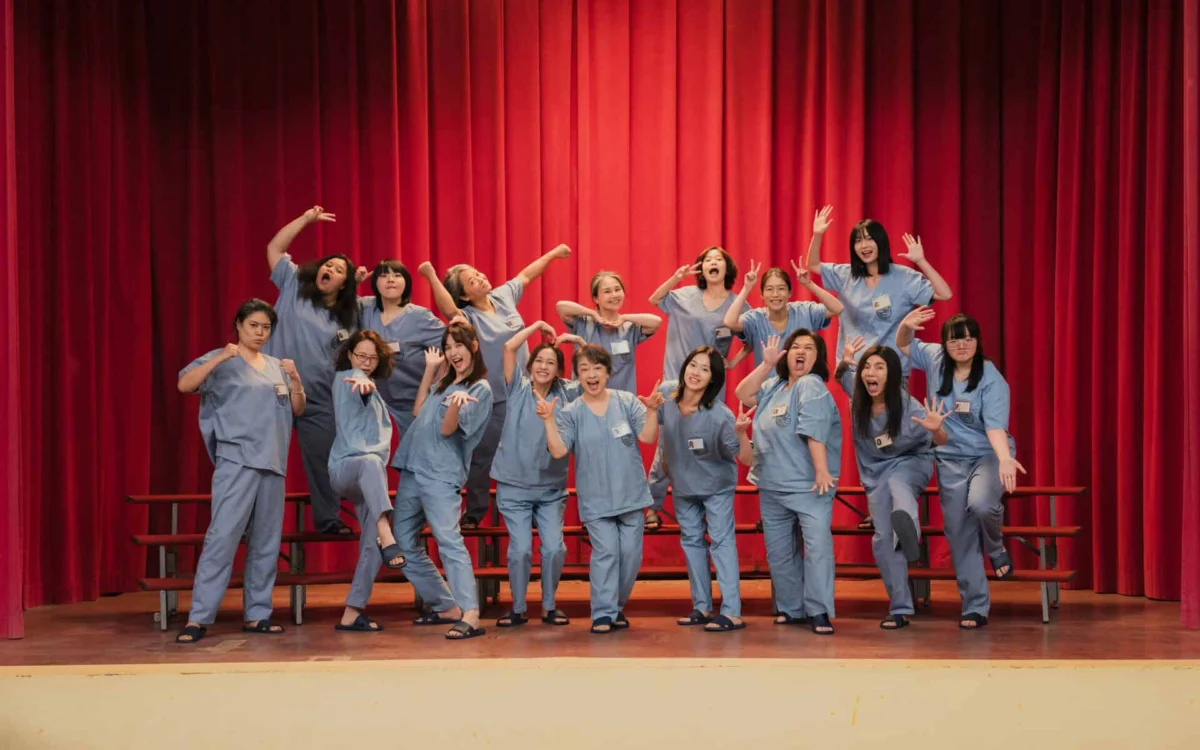
The careful selection of the group that ultimately forms the choir is a testament to the film’s inclusive approach, embracing a wide spectrum of personalities and backgrounds. The ensemble includes a single mother, an older woman, an overweight inmate, a model-like figure, a tomboy, and a housewife. This deliberate diversity is a key strength, allowing for broader audience identification and significantly enhancing the film’s crowd-pleasing appeal. Each character, while contributing to the collective, retains her individuality, a crucial aspect that elevates the narrative beyond a simple group story.
The process through which these disparate individuals come together, particularly in the formation of the choir, is a standout achievement, attributable to both Gavin Lin’s nuanced direction and Cheng-Shin Lin’s skillful editing. The pacing of the film is meticulously crafted, allowing each character’s arc to unfold naturally without feeling rushed, yet maintaining a brisk and engaging rhythm throughout. Visually, Eric Chao’s cinematography plays a vital role in setting the atmosphere. His bright and polished aesthetic during moments of hope and community subtly shifts to a darker, more somber palette during the film’s more dramatic or flashback sequences, effectively mirroring the emotional landscape of the story. Complementing the visuals, the film’s original music and meticulously choreographed performances are integral to its emotional impact, elevating the narrative and deeply embedding the musical aspect within the characters’ journeys.
Exceptional Performances Drive the Narrative
The acting across the board in "Sunshine Woman’s Choir" is of a remarkably high caliber, with each performer contributing significantly to the film’s emotional depth and authenticity. Ivy Chen, in the central role of Hui-zhen, delivers a performance imbued with profound conviction. She masterfully navigates the complexities of a character who is simultaneously a loving mother, a victim of circumstance, a budding leader, a mentor, and occasionally, even a bully. Chen maintains a captivating screen presence that remains consistently engaging, anchoring the film’s emotional core.
Ho Man-xi, as the rebellious newcomer You-xin, is equally effective. Her portrayal of a troubled teenager who gradually opens up through her interactions with the group is both nuanced and compelling. The film thoughtfully highlights her evident beauty in a tasteful manner, ensuring it serves the character’s journey rather than merely being a superficial attribute. Chung Hsin-ling, in her role as Mei-li, provides one of the main sources of humor, delivering a scene-stealing performance that offers moments of much-needed levity amidst the drama. Finally, Judy Ongg’s portrayal of Yu-ying, the former music star, provides a calm, composed, and anchoring presence within the ensemble, embodying wisdom and quiet strength that guides the choir’s formation. The collective strength of this cast ensures that the film’s emotional beats land with impact, making the characters’ struggles and triumphs profoundly relatable.
A Feel-Good Experience with Lasting Resonance
While "Sunshine Woman’s Choir" may not be intended as a deeply thought-provoking philosophical treatise upon close scrutiny, its undeniable strength lies in its ability to remain consistently engaging and eminently watchable. Its expert blend of comedy and drama, coupled with its powerful ensemble-driven approach, culminates in a highly effective and deeply satisfying feel-good cinematic experience. The film’s commercial success and critical reception underscore its universal appeal, demonstrating that stories of human resilience, the transformative power of art, and the unbreakable bonds forged in adversity continue to resonate profoundly with audiences.
As "Sunshine Woman’s Choir" expands its reach to international markets, it carries with it the promise of not only entertaining but also inspiring viewers with its message of hope and second chances. Its record-breaking performance in Taiwan serves as a significant benchmark for local cinema, proving that authentic, emotionally resonant narratives can achieve both artistic merit and unparalleled commercial success. The film stands as a testament to the vibrant creativity of Taiwanese filmmakers and their ability to craft stories that transcend borders and touch the human spirit.