The current season of the History Channel’s long-running docuseries Swamp People has reached a critical juncture as the 30-day alligator hunting window in Louisiana enters its final five days. For the veteran hunters of the Atchafalaya Basin, this period represents the most high-stakes portion of the annual harvest, where the pressure to fill remaining tags coincides with increasingly difficult environmental conditions. In the most recent episode, aired on March 25, the narrative focused on a convergence of ecological adversity, multi-generational family dynamics, and the pursuit of legendary "bull" alligators that have eluded capture for decades.
As the season wanes, the primary antagonist for the hunters has transitioned from the predators themselves to the receding water levels of the bayous. Low water creates a logistical nightmare for swamp boats, often leaving hunters stranded in mud or unable to reach the deep-water holes where the largest alligators congregate. This environmental factor served as the backdrop for several key developments involving the show’s most prominent figures, including Troy Landry, Bruce Mitchell, and the Edgar family.
Environmental Challenges and the Mitchell-Ribbeck Record
Bruce Mitchell and his partner, Anna Ribbeck, faced significant hurdles early in the episode due to the shallow conditions. Navigating the low-water regions of the swamp requires a delicate balance of speed and caution to avoid damaging engines on submerged logs. Initially, the duo struggled with a series of smaller catches, which, while helpful for filling the quota, do not provide the high-value hides necessary for a lucrative season.
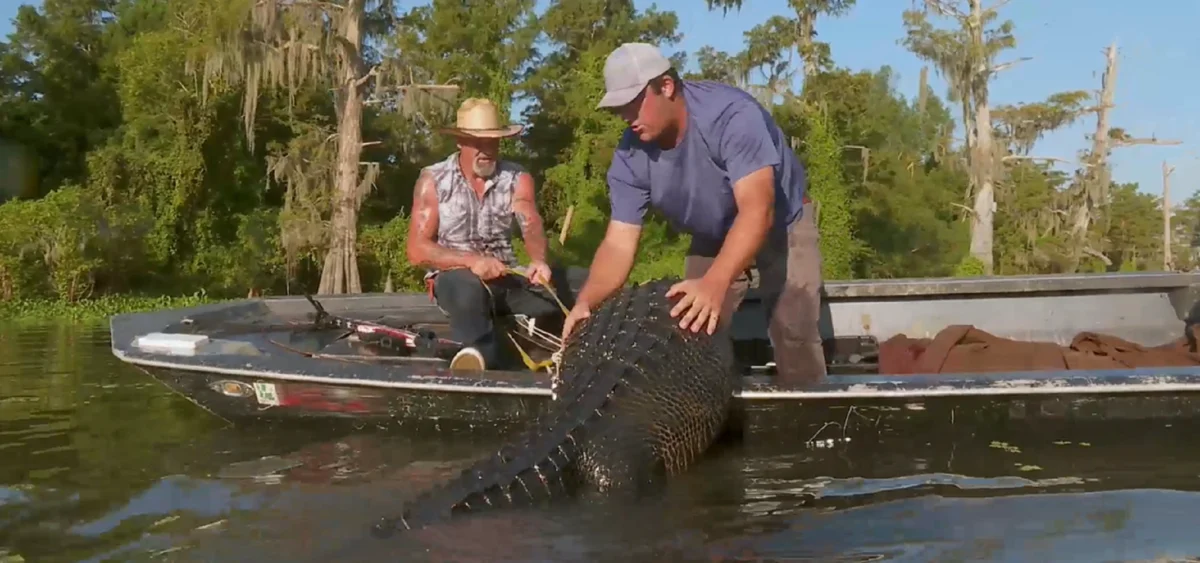
The momentum shifted when they encountered a line that had been stripped of its bait by a massive predator. After an initial struggle where a large alligator managed to break free—a common occurrence when the animal’s weight exceeds the tension strength of the line—Mitchell and Ribbeck pivoted their strategy. By saturating the area with high-tension lines and returning the following morning, they successfully harvested a 13-foot alligator. This specimen represents a significant milestone for the partnership, marking their largest combined catch to date. In the context of alligator biology, a 13-footer is an apex predator, likely several decades old, and its removal from the ecosystem is a key component of the state’s population management program, which aims to balance the number of large bulls to protect younger populations.
The Landry Legacy: Three Generations on the Water
Troy Landry, often referred to as the "King of the Swamp," utilized the final days of the season to reinforce the importance of speed and efficiency. Faced with the same low-water frustrations as Mitchell, Landry took the unconventional step of bringing his 81-year-old mother on board his vessel. While the move was framed as a motivational tactic for his regular deckhand, Cheyenne “Pickle” Wheat, it also served as a poignant reminder of the deep-rooted cultural heritage of alligator hunting in Cajun country.
The elder Landry’s participation was not merely ceremonial. Under her son’s supervision, she successfully dispatched an eight-foot alligator, demonstrating the marksmanship and resilience that characterize the Landry family line. This segment highlighted the "tender side" of the industry, as noted by Wheat, particularly when fellow hunter Tony arrived to present the matriarch with flowers—a gesture that earned him the moniker “swamp florist.” Beyond the entertainment value, the scene underscored the reality that alligator hunting in Louisiana is frequently a family-run enterprise where knowledge and skills are passed down through oral tradition and hands-on experience.
Economic Interdependence: The Edgar Family and St. Mary Seafood
The episode also shed light on the economic infrastructure that supports the hunting season. Joey Edgar and his daughter, Kallie, were on track to finish a successful run, having secured 50 more tags than in the previous year. However, the commercial reality of their lives intervened when a mechanical failure occurred at the family’s business, St. Mary Seafood.
The breakdown of an ice machine in a seafood processing facility is a critical emergency; without adequate refrigeration, thousands of dollars in perishable inventory are at risk. This forced Joey Edgar to abandon the hunt to address the repairs, leaving Kallie Edgar to run the lines solo for the first time. The transition to a solo hunt is a significant rite of passage in the swamp. Managing a heavy skiff, navigating treacherous waters, and hauling hundreds of pounds of thrashing alligator into a boat without assistance is a feat of physical strength and mental fortitude. Kallie’s success in filling her tags alone served as a definitive proof of concept for the next generation of the Edgar hunting dynasty.
The Legend of Methuselah: Don Brewer and Calum Landry
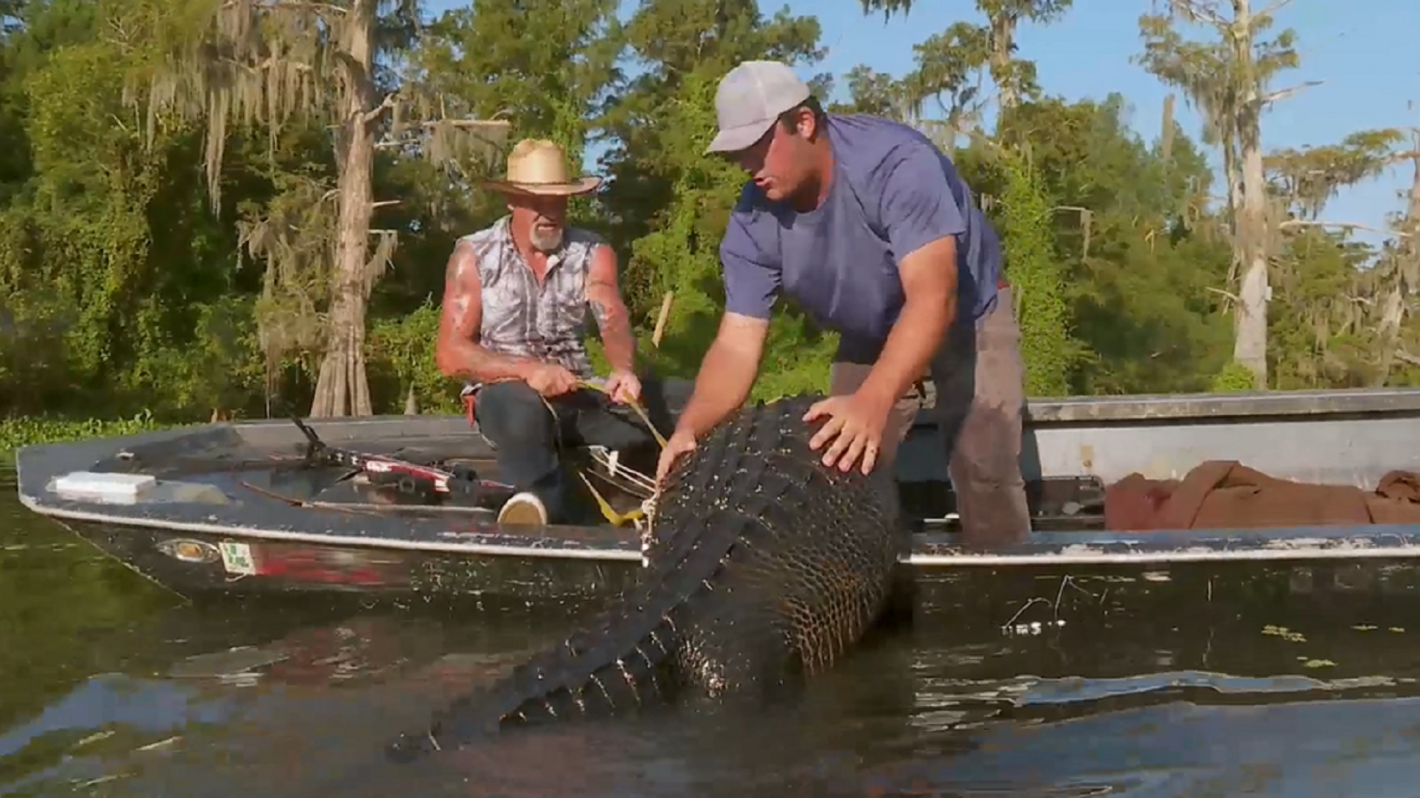
One of the more dramatic segments of the episode involved Don Brewer and Calum Landry’s pursuit of a legendary alligator known as "Methuselah." In swamp lore, certain alligators achieve a mythic status due to their size, age, and ability to evade capture over multiple seasons. Brewer described an encounter with a submerged object that felt like a "submarine hit," a tactile indication of the massive displacement caused by a giant bull alligator.
The duo eventually successfully harvested a 13-foot bull. Brewer noted that the legend of this particular alligator spanned generations of the Landry family, emphasizing the historical continuity of the hunt. From a biological perspective, alligators of this size are rare, representing the top 1% of the population. Their hides are highly prized in the international luxury goods market, though the difficulty of the harvest often outweighs the immediate financial gain, making such catches more about prestige and safety for the local community.
Tactical Tag Management: Jones and Williams
For Leron Jones and Anthony “Porkchop” Williams, the episode was defined by a high-stakes business transaction. Alligator hunting in Louisiana is strictly regulated by the Louisiana Department of Wildlife and Fisheries (LDWF) through a tagging system. Hunters are only permitted to harvest as many alligators as they have tags for, and these tags are often distributed based on land ownership or specific state-issued quotas.
Jones and Williams entered into a "tag deal" with another hunter who required five tags to be filled immediately. The agreement stipulated that if the duo could fulfill this short-term requirement, they would be rewarded with an additional 15 tags for their own use. Despite the challenges of low water and the pressure of a ticking clock, they successfully harvested the required quota, including a 10-footer and an 11-footer. This acquisition of 15 additional tags in the final days of the season significantly increases their earning potential, as each tag represents a potential harvest worth hundreds of dollars depending on the size and quality of the hide.
Analysis of Implications and Management
The events depicted in this episode reflect the broader reality of the American alligator’s status as a conservation success story. Once on the brink of extinction, the Alligator mississippiensis has rebounded to the point where managed harvests are necessary to prevent overpopulation and human-wildlife conflict. The LDWF’s management program is cited globally as a model for sustainable use of a natural resource.
The "final five days" narrative is not just a television trope but a reflection of the intense seasonal window dictated by biology and law. As temperatures begin to drop in late September and early October, alligators become less active, their metabolism slows, and they eventually stop feeding, making them nearly impossible to catch using traditional hook-and-line methods. Furthermore, the 30-day season is timed to avoid the peak nesting period and the subsequent hatching of the next generation.
Conclusion
The March 25 episode of Swamp People provided a comprehensive look at the multifaceted nature of the Louisiana alligator harvest. It illustrated that the hunt is rarely just about the predator; it is a complex interplay of environmental monitoring, mechanical maintenance, family legacy, and economic negotiation. As the season draws to a close, the success of these hunters will be measured not just in the number of alligators caught, but in their ability to adapt to a rapidly changing swamp environment and ensure the continuity of their way of life for another year.
The History Channel continues to broadcast Swamp People on Wednesdays at 8/7c, with the season finale expected to showcase the final tally of tags and the ultimate economic outcome for the featured teams.