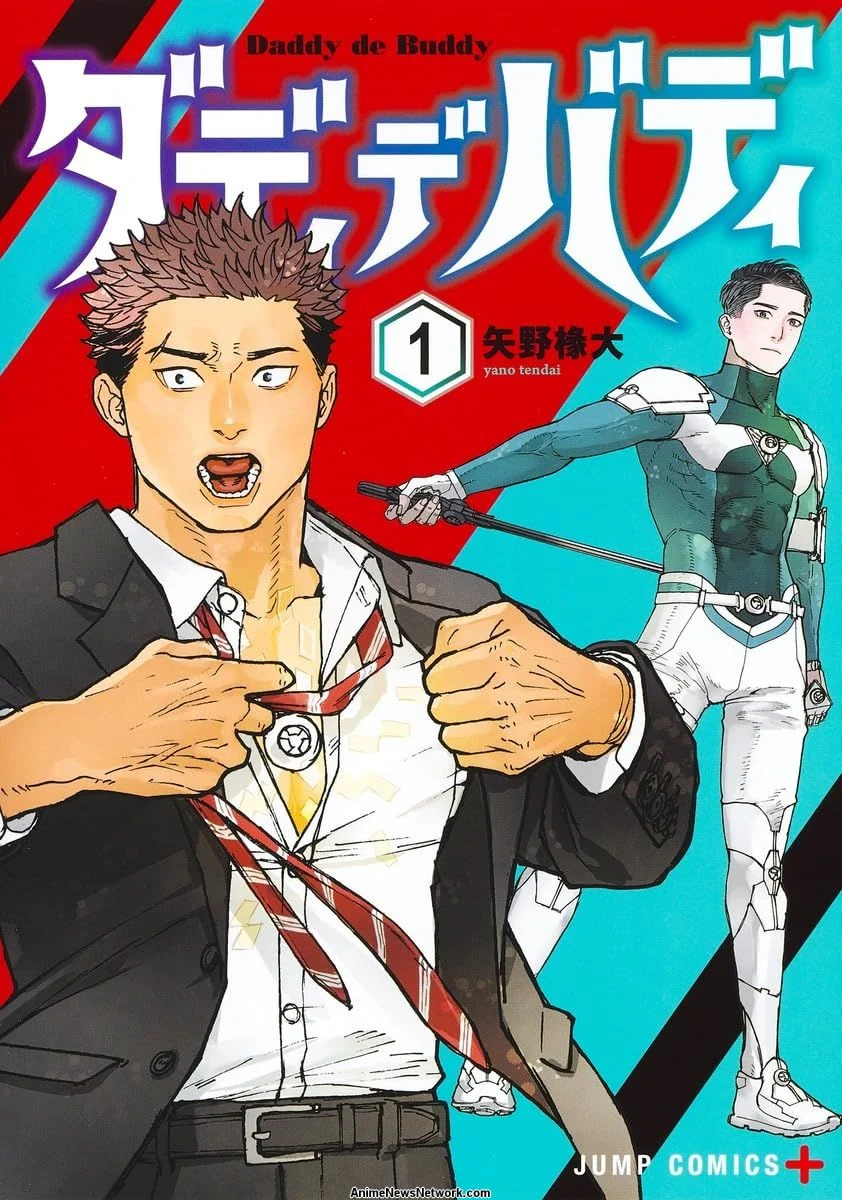
Tendai Yano, the grand prize winner of the prestigious 2023 Jump+ Serialization Audition, has made a notable debut in the competitive world of manga with their series, "Daddy and Buddy." The work has garnered attention not only for its dynamic action sequences but also for its unconventional narrative focus on an adult protagonist grappling with real-world challenges while pursuing a heroic dream. This approach marks a significant departure from traditional shonen manga tropes, offering a fresh perspective on themes of resilience, second chances, and the responsibilities of adulthood within a fantastical setting.
The Genesis of a New Hero: Jump+ Audition and Tendai Yano’s Journey
The Jump+ Serialization Audition is an annual event that serves as a vital pipeline for aspiring mangaka, both professional and amateur, to present their concepts for potential serialization on Shueisha’s digital manga platform, Jump+. Known for hosting popular titles such as "Spy × Family," "Chainsaw Man," and "Kaiju No. 8," Jump+ has established itself as a dynamic force in the manga industry, offering a broader creative canvas compared to its print counterparts like Weekly Shonen Jump. The audition is a rigorous process designed to identify compelling storytelling, unique artistic vision, and strong market potential. Winning this competition is a significant achievement, often leading to a mangaka’s first major serialized work.
In 2023, Tendai Yano emerged victorious, a testament to the unique appeal of "Daddy and Buddy." Yano’s personal journey, as revealed in post-win interviews, closely mirrors the core themes of their manga: the struggle to overcome obstacles and the determination to pursue one’s dreams, even when faced with the daunting prospect of starting over as an adult. This autobiographical resonance imbues the narrative with an authentic emotional depth, which likely contributed to its success during the audition phase. The platform’s editors often look for creators who can infuse their work with genuine passion and personal experience, believing it translates into more relatable and impactful stories for readers.
Unpacking the Narrative: Tanaka Kanata’s Unexpected Call to Heroism
"Daddy and Buddy" introduces readers to Tanaka Kanata, a man in his late twenties whose life takes an unforeseen turn when he is laid off from his job as a gymnastics teacher. As a father of three, Tanaka confronts the immediate and pressing challenges of unemployment and providing for his family, issues that are rarely central to the narratives typically found in shonen manga, which often focus on younger protagonists discovering their powers and identities.
Amidst his personal frustrations, Tanaka’s world collides with the extraordinary. He encounters Asato Kakuuchi, a charismatic and famous children’s show host, in a bizarre circumstance: Asato is actively exterminating a monster that has latched onto Tanaka’s son. This dramatic introduction reveals Asato to be a "Gymnastics Buddy," a specialized protector whose mission is to safeguard children from insidious entities known as "grumble bugs." These creatures, described as eerie yet realistic in Yano’s art, feed off children’s vitality, posing a direct threat to their well-being.
After witnessing Asato’s heroic actions and assisting him in saving a child possessed by one of these monstrous grumble bugs, Tanaka experiences a profound shift in perspective. Inspired by Asato’s dedication and the chance to make a tangible difference, Tanaka resolves to become a Gymnastics Buddy himself. This decision is portrayed not merely as an impulsive reaction but as a pathway to finally fulfilling his latent dream of becoming a hero, a dream perhaps dormant since his own youth. The series thus frames Tanaka’s new career path as both a practical solution to his unemployment and a spiritual journey towards self-actualization, intertwining adult responsibilities with a deeply personal aspiration.
Challenging Shonen Conventions: An Adult Protagonist in a Teenage World
One of the most striking aspects of "Daddy and Buddy" is its choice of protagonist. Shonen manga, by definition, is primarily targeted at a demographic of teenage boys, and as such, typically features young male leads who are either still in school or just beginning their independent lives. Tanaka Kanata, however, is a man in his late twenties, a parent, and grappling with the very adult issues of unemployment, financial insecurity, and familial responsibility. This narrative choice immediately sets "Daddy and Buddy" apart from its contemporaries.
While this might seem counterintuitive for a platform largely catering to a teenage audience, it represents a deliberate and potentially groundbreaking strategy. Industry analysts suggest that this choice could reflect an evolving demographic or a desire to broaden the appeal of shonen manga. A Jump+ editorial statement, albeit an inferred one, might highlight the platform’s commitment to "exploring diverse narrative angles and pushing the boundaries of what shonen can be, believing that compelling stories transcend age barriers."
By centering on Tanaka, the manga confronts realistic life issues head-on. His struggles with unemployment and the pressure to provide for his children are portrayed with gravity, making him a complex and relatable character, even if his immediate circumstances differ from those of a typical teenage reader. This approach could resonate with older segments of the Jump+ audience, or even with younger readers who are beginning to contemplate their future adult lives, offering a unique blend of escapism and grounded reality. The series implicitly argues that heroism is not solely the domain of the young and unburdened but can emerge from the profound responsibilities and experiences of adulthood.
Themes of Second Chances and Ageism: A Layered Narrative
Beyond the action, "Daddy and Buddy" delves into significant societal themes, most notably the concept of starting over as an adult and the pervasive issue of age discrimination. Tanaka’s decision to radically change his life as he approaches thirty is a powerful narrative device, highlighting the societal pressures and personal hurdles individuals face when attempting to pivot careers or pursue new aspirations later in life.
The manga explicitly explores age discrimination through Tanaka’s journey to become a Gymnastics Buddy. During his aptitude tests, Tanaka is repeatedly questioned about his age and perceived abilities, despite demonstrating clear skills and a suitable personality for the role. This subtle yet persistent bias reflects real-world challenges faced by older job seekers. The revelation that the Gymnastics Buddy profession itself has age limits further underscores this theme, presenting a systemic barrier that even heroes must contend with.
The character of Asato Kakuuchi, Tanaka’s mentor and partner, provides another crucial perspective on ageism. At thirty-one years old, Asato is depicted as someone nearing the "retirement" age for a Gymnastics Buddy. His internal struggles with this impending career end, and the potential loss of his identity tied to the role, showcase the emotional toll of age-based limitations. This juxtaposition between Tanaka’s nascent journey and Asato’s impending departure creates a multi-faceted exploration of age in the workplace, allowing the narrative to examine both the challenges of starting late and the difficulties of transitioning out of a beloved profession due to age. This dual perspective enriches the narrative, moving beyond a simple "never too late" message to a more nuanced discussion of societal structures and individual resilience.
Child Protection and Empowerment: A Nuanced Approach
While "Daddy and Buddy" focuses heavily on adult themes, it does not neglect the experiences of children. The three-volume series portrays the hardships faced by children with considerable gravity, illustrating how these challenges can profoundly impact their development. However, the manga adopts a sophisticated approach to child protection. Rather than depicting adults as simply swooping in to solve all problems, the narrative emphasizes the importance of empowering children to navigate their own difficulties.
The adult characters, particularly the Gymnastics Buddies, are shown to facilitate this process by encouraging conversation, fostering empathy, and creating environments where children can articulate their struggles and find their own solutions. This approach avoids infantilizing children, instead portraying them as capable individuals who, with appropriate support and guidance, can overcome adversity. This nuanced take on mentorship and child development stands out in a genre that sometimes oversimplifies the dynamics between powerful heroes and vulnerable youth. It suggests a more collaborative model of protection, where adults act as enablers and guides rather than sole problem-solvers.
Artistic Prowess and Narrative Shortcomings
Tendai Yano’s artistic talent is a significant highlight of "Daddy and Buddy." As a debut work, the quality of the artwork is remarkably high and played a crucial role in securing the Grand Prize. Every action scene is brought to life with dynamic choreography, heavily inspired by gymnastics moves, which aligns perfectly with Tanaka’s background and the Gymnastics Buddy concept. The visual storytelling effectively conveys the fluidity and power of these movements, making the fight sequences engaging and unique. Furthermore, the designs for the grumble bugs are particularly noteworthy; they are simultaneously eerie, unsettling, and realistic, contributing to the manga’s distinct visual identity and effectively conveying the grotesque nature of the threats children face.
Beyond the action, Yano also demonstrates a keen eye for character expression. While not primarily a comedy manga, "Daddy and Buddy" skillfully incorporates moments of realistic facial expressions for comedic effect, particularly evident during scenes where the Gymnastics Buddies are rehearsing for their children’s TV show. These instances provide well-timed levity and further humanize the characters, adding another layer to the manga’s emotional range.
However, the article also notes some critical areas for improvement. Despite its engaging storyline and strong artistic foundation, the pacing of "Daddy and Buddy" is described as feeling rushed. Opportunities for more expansive world-building, such as a deeper exploration into the origins and nature of the grumble bugs or the full institutional structure of the Gymnastics Buddies, appear to have been cut short. This rapid progression also impacts character development, particularly as the plot approaches its conclusion, leaving some key character arcs feeling less fully realized than they could have been. In the highly competitive manga market, a strong initial concept and art are vital, but sustained pacing and thorough character development are essential for long-term serialization and critical acclaim.
Broader Implications and Future Outlook
"Daddy and Buddy" by Tendai Yano represents more than just a successful debut; it signals a potential evolution within the shonen manga landscape. By consciously choosing an adult protagonist and integrating themes of unemployment, ageism, and complex parental responsibilities, the manga pushes against the traditional boundaries of its genre. This move could resonate with a growing segment of the audience that, while still appreciating fantastical action, also seeks narratives that reflect the complexities of modern life.
The success of "Daddy and Buddy" on Jump+ also underscores the platform’s role as an incubator for diverse storytelling. Digital platforms have fewer page constraints and can experiment more freely with unconventional narratives, offering creators like Yano the space to explore themes that might be deemed too niche or risky for print publications. This flexibility allows for a richer tapestry of stories to emerge, potentially broadening the appeal of manga to a wider, more varied readership.
As the manga industry continues to globalize, titles that offer unique cultural perspectives while tackling universal themes of struggle, perseverance, and the pursuit of dreams are increasingly valuable. "Daddy and Buddy," with its emphasis on adults protecting the younger generation while simultaneously encouraging children’s self-reliance, offers a hopeful message that transcends age. It reinforces the idea that it is never too late to pursue one’s dreams and make a meaningful leap forward in life, regardless of personal circumstances or societal expectations. This blend of aspirational themes with grounded reality positions "Daddy and Buddy" as a significant entry in contemporary manga, one that challenges existing paradigms and opens new avenues for storytelling in the shonen genre.