Maggie Gyllenhaal’s highly anticipated sophomore directorial feature, The Bride!, plunges audiences into a wildly ambitious reimagining of the iconic Frankenstein mythos, explicitly framing the narrative through a distinctly feminine lens. Unveiled to a diverse critical reception, the film has been described as an "overstuffed," "frantically paced," and "wildly uneven" yet "good-hearted" endeavor, sparking considerable debate regarding its narrative cohesion and its complex engagement with feminist themes within the horror genre. As a new entry in a burgeoning subgenre of female-centric monster stories, The Bride! positions itself directly within a cultural lineage that began with Mary Shelley herself, aiming to deconstruct and reassert the agency of its titular character, a figure historically denied a voice.
The Enduring Feminist Resonance of Mary Shelley’s Frankenstein
The enduring narrative of the zombie and the created being has, in many interpretations, found a profound connection with the feminine experience, a link forged in the crucible of its very inception. The genesis of Frankenstein; or, The Modern Prometheus by Mary Shelley in 1818 is steeped in circumstances that imbue it with an intrinsic feminist and maternal subtext. Shelley, a mere teenager at the time of its writing, was the daughter of two formidable intellectual figures: the pioneering feminist philosopher Mary Wollstonecraft and the radical political philosopher William Godwin. Her mother died shortly after her birth, a tragedy that profoundly shaped Shelley’s life and work, instilling a deep understanding of maternal anguish, loss, and the creation of life.
Shelley conceived the story during a ghost story competition among literary luminaries like Lord Byron and her future husband, Percy Bysshe Shelley, at Villa Diodati in 1816, a year famously known for its dismal weather. This intellectual crucible, combined with her personal experiences and radical upbringing, allowed her to pour complex themes of creation, abandonment, societal rejection, and the usurpation of natural reproductive processes into her narrative. Dr. Victor Frankenstein’s audacious act of creating life without female participation—a scientific birth—has long been interpreted as a masculine attempt to control or bypass female generative power, with devastating consequences. The Creature, a being ostracized and reviled for its appearance, mirrors the societal marginalization often imposed upon women who deviate from prescribed norms. This foundational text, therefore, is not merely a horror story but a profound commentary on identity, responsibility, and the societal construction of "monstrosity," especially as it relates to gender.
A Chronology of the Undead Woman: From Classic Horror to Contemporary Visions
The cinematic legacy of Frankenstein’s monster, and particularly his bride, offers a rich tapestry of interpretations that underscore this inherent feminist connection.
1935: Bride of Frankenstein and the Birth of an Icon
James Whale’s 1935 masterpiece, Bride of Frankenstein, cemented the "Bride" as an indelible horror icon. Elsa Lanchester’s portrayal, though brief, was electrifying. Rising from the slab with her iconic electrified hair, bandaged body, and a piercing scream, she repudiated her intended mate, the Monster, in less than five minutes of screen time before choosing to return to destruction. Her immediate rejection and subsequent demise, while tragic, conveyed a potent, albeit fleeting, assertion of self-will. This short, explosive performance birthed generations of "rictus rebel daughters" in the cultural imagination, signifying a creature born into subjugation but possessing an innate, untameable spirit. This film’s original script even planned for Mary Shelley to frame the narrative, claiming authorship, a detail that foreshadows the metatextual ambitions of later adaptations.
The Post-War Era and Beyond: Shifting Paradigms
While the immediate decades following Bride of Frankenstein saw various monster movies, the explicit focus on the "female zombie" as a vehicle for feminist commentary gained more traction in later periods, particularly as horror cinema evolved to explore deeper psychological and societal anxieties. Films like Frankenhooker (1990) and Return of the Living Dead III (1993) began to experiment with female characters resurrected or transformed, often against their will, who then exerted a terrifying, albeit often chaotic, form of agency. These films, while diverse in tone and intent, contributed to a growing subtext of female defiance against male control, even in death.
The 21st Century Revival: A New Wave of Female-Centric Monster Narratives
The last decade, and particularly the past few years, have witnessed a notable resurgence in zombie and Frankenstein-adjacent narratives, many of which explicitly prioritize female perspectives and agency. This micro-revival sets a crucial stage for Gyllenhaal’s The Bride!:
- 2023: Poor Things (Directed by Yorgos Lanthimos): This critically acclaimed and commercially successful film, which garnered four Academy Awards, including Best Actress for Emma Stone, offered a self-consciously feminist take on the Frankenstein myth. It followed Bella Baxter, a young woman resurrected with the brain of an infant, on a journey of radical self-discovery, challenging societal norms and exploring sexuality, freedom, and identity. Its unique aesthetic and bold narrative directly informed contemporary discussions around female bodily autonomy and intellectual awakening within a monstrous context.
- 2023: Lisa Frankenstein (Directed by Zelda Williams, Written by Diablo Cody): This pop-punk infused rom-com brought a quippy, teen-angst-laden sensibility to the Frankenstein story. It depicted a lonely high schooler who reanimates a Victorian corpse and embarks on a journey of self-acceptance and outsider romance, channeling Shelley’s gothic independence into a modern quest for belonging.
- Upcoming: Guillermo del Toro’s Frankenstein: The renowned director, known for his unique blend of dark fantasy and profound humanism, is set to deliver his own big-budget adaptation. While specific details about its feminist leanings are yet to be fully revealed, del Toro’s previous works, such as The Shape of Water, suggest a sympathetic approach to monstrous outsiders and complex female protagonists. The original article mentions his adaptation lavishing attention on Lady Elizabeth Harlander (Mia Goth), now a politically active bug enthusiast, and her affinity for Victor’s despised progeny, suggesting a shift in focus from the traditional narrative.
- 2024: Queens of the Dead (Directed by Tina Romero): George Romero’s daughter rejuvenated her father’s iconic zombie franchise with a comic and queer sensibility. These "glittery zombies" attacking a Bushwick club represent a playful yet pointed subversion of traditional zombie tropes, injecting LGBTQ+ themes and a vibrant, rebellious spirit into the undead genre.
- 2025: Dead Lover (Directed by Grace Glowicki): Scheduled for a limited U.S. release, this independent film promises a madcap, raunchily gothic tale. It flips Shelley’s script by focusing on a "smelly gravedigger" who attempts to revive the only man she ever loved, presenting a narrative of female desire and agency that defies natural laws in a darkly humorous way.
These diverse projects collectively highlight a vibrant cultural moment where filmmakers are actively re-examining classic monster narratives through a contemporary feminist lens, seeking to empower and give voice to characters historically relegated to secondary or monstrous roles.
Maggie Gyllenhaal’s The Bride!: A Labyrinth of Ambition
It is within this rich historical and contemporary landscape that Maggie Gyllenhaal’s The Bride! arrives, attempting to synthesize centuries of feminine anguish, rage, and rebellion into a single, cohesive cinematic statement. Gyllenhaal’s stated inspiration—her frustration with Elsa Lanchester’s silence in Whale’s original film—underscores her ambition to provide a direct corrective, giving the Bride a voice and agency she was denied.
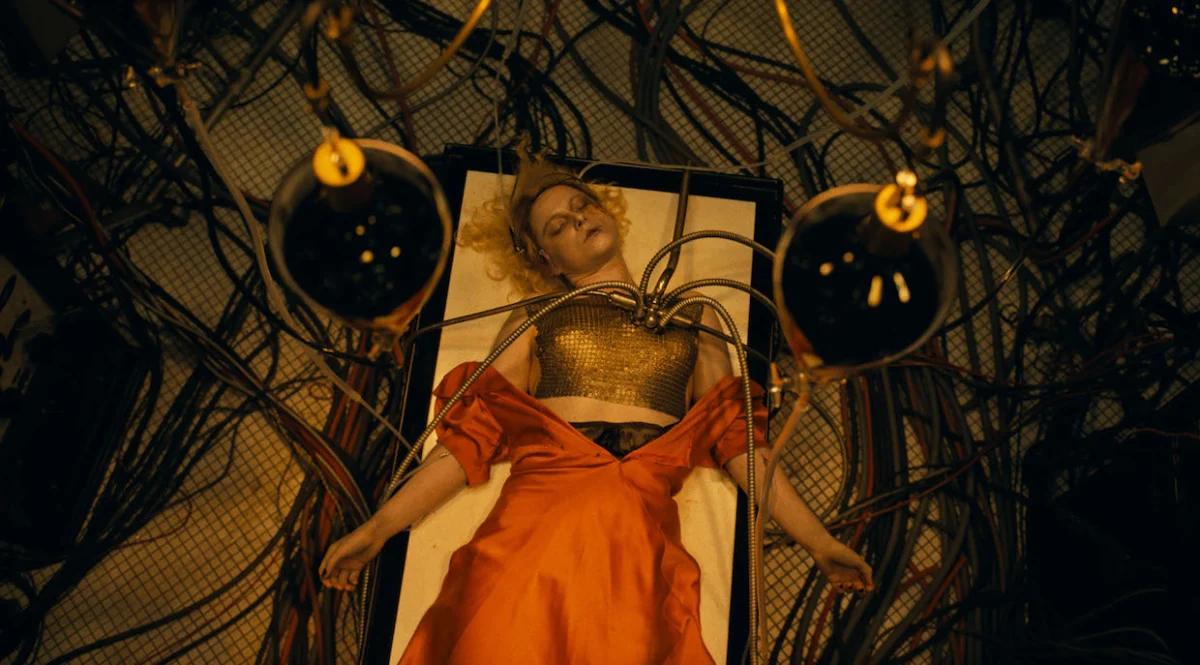
The film’s plot is, by all accounts, exceptionally intricate, a "genre-blending Bonnie & Clyde-style ’30s period piece" that weaves together multiple narrative threads. It opens with Mary Shelley (Jessie Buckley) speaking from "the void," a metatextual nod to the original film’s excised frame narrative, before she possesses the body of Ida (also Buckley). Ida, a "rowdy mob moll and all around good time gal," is quickly murdered for knowing too much and subsequently revived by a mad scientist (Annette Bening) at the behest of Frankenstein’s Monster (Christian Bale). This dual plot of zombification and possession immediately signals the film’s narrative density.

Over its two-hour-and-seven-minute runtime, The Bride! attempts to unfold an empowering, Poor Things-esque tale of feminine self-discovery, complete with zombification, amnesia, and an authorial ghost. This central quest is then layered with an outsider romance subplot involving a beloved musical actor (Jake Gyllenhaal), a half-baked gangland drama, and a Coens-esque detective story. The detective subplot itself contains a further tangential narrative about Penélope Cruz achieving "Girlboss empowerment" as a female cop. Adding to this already crowded canvas is a "zany Riot Grrrl revolution narrative à la Times Square (1980)." All these elements are interspersed with constant dialogue and pastiche-y references (like "Puttin’ on the Ritz!") that explicitly remind the audience of the film’s revisionist metanarrative intentions.
The cast, featuring acclaimed actors like Jessie Buckley, Christian Bale, Annette Bening, Jake Gyllenhaal, and Penélope Cruz, lends considerable gravitas to the project. Buckley, in particular, tackles a demanding dual role, showcasing her versatility. The film also benefits from inventive production design, sleek cinematography, and a score reportedly borrowed from Joker, one of the film’s more obvious stylistic analogues. These technical and performative strengths suggest a film crafted with significant artistic intent and resources.
Analysis of Implications: Narrative Overload and Feminist Nuance
The critical response to The Bride! largely centers on the tension between its boundless ambition and its often-muddled execution. The sheer volume of subplots, as noted by critics, leads to a significant problem of narrative coherence and character development. The original article aptly uses the metaphor of "Frankenstein’s Movie," quoting Victor Frankenstein himself: "I had worked hard for nearly two years… I had desired it with an ardor that far exceeded moderation; but now that I had finished, the beauty of the dream vanished." This sentiment perfectly encapsulates the film’s perceived flaw: a grand vision that, in its attempt to incorporate everything, ultimately loses its distinct shape and impact.
The "narrative muddle" results in practically every subplot feeling "excruciatingly underdeveloped." The possession plot, for instance, vanishes for extended periods, perhaps due to the "cartoonish, Jack Sparrow-ish affect" Buckley adopts, which might have distracted from the film’s broader intentions. Similarly, the "stylish Riot Grrrls" feel like a vestige of an earlier draft, their potential for empowering narrative potency quickly fading. This tendency for promising avenues of female resistance to "fall away, replaced with something shallower, flatter, and more overly simplified," raises questions about the film’s core feminist message.
While The Bride! clearly aspires to a punk rock ethos, its feminism, according to some analyses, leans more towards "Katy Perry" – broadly appealing but lacking the subversive edge necessary for truly radical commentary. The film’s direct comparisons to Poor Things, Bonnie & Clyde, and Joker Folie à Deux are telling. While it might marginally improve upon the latter, this is a "tragically low bar." Poor Things, for example, achieved its feminist exploration with a singular, focused narrative, allowing its protagonist’s journey of self-discovery to unfold organically. The Bride!‘s fragmented approach risks diluting its powerful themes.
The film’s inability to fully realize its potential is particularly poignant given its underlying premise about the complex agency of zombie women. Zombies, unlike ghosts or vampires, are often depicted as creatures devoid of their original self, resurrected against their will or constructed to serve a male purpose. Their resistance, therefore, becomes doubly tragic and satisfying, a defiant assertion of self against systemic subjugation. While The Bride! gestures towards these profound ideas, its narrative overload prevents a deep, sustained exploration. The film’s "mall-goth heart" may be "in the right place," and its leads may form a "genuinely endearing screen pair," but the "misbegotten melange of mismatched generic parts and visible narrative sutures" ultimately prevents this zombie romance from truly breathing, either "in life or after it."
Broader Impact: The Cultural Significance of the Female Monster
The enduring fascination with female monsters, particularly in the context of the zombie or created being, is not merely a cinematic trend but a reflection of deeper societal currents. As Jess Zimmerman articulates in her 2021 study, Women and Other Monsters, "Women and monsters have a lot in common… They are both outcasts; alienated, derided and feared by society. They are biological freaks with bodies that transgress and fluctuate, and they are both threats to male power." This observation neatly encapsulates the contemporary pop cultural fascination with "feminine villainy" and monstrous empowerment.
Maggie Gyllenhaal herself echoed this sentiment at the film’s U.S. premiere, stating, "There’s a little monster in all of us." While true, the specific nature of the undead adds layers of complexity, particularly concerning agency. Unlike ghosts or vampires who retain their sense of self post-mortem, zombies are often devoid of it, making their eventual assertion of will a powerful act of defiance against their constructed existence. From the Bride of Frankenstein to the more recent examples, female zombie characters are often resurrected against their will or built to please a male protagonist, only to prove themselves flawed, rotting, untameable, self-made, and even, at times, riotously happy. Their very existence is a testament to systemic misogyny, making their triumphs—however small or fleeting—doubly poignant.
The critical reception and anticipated box office performance of The Bride! (which currently appears to be heading towards "box-office-bomb territory") will undoubtedly contribute to ongoing discussions within the film industry about the viability of ambitious, female-led genre films. While some might view it as a cautionary tale against narrative excess, others might embrace its "raucously enthusiastic narrative overflow" as the makings of a future cult classic, a film whose flaws are part of its charm for those who enjoy "creative ambition run violently amok." Its mixed results serve as a testament to the challenges of translating profound historical and philosophical feminist ideas into a commercial cinematic narrative without losing the nuance in the process.
Ultimately, The Bride! stands as a bold, if flawed, testament to the enduring power of the Frankenstein myth and its particular resonance with the feminine experience. It is a film that bravely attempts to give voice to the silenced, to empower the monstrous, and to explicitly connect the historical threads of feminist thought to a genre often dismissed as mere entertainment. Despite its narrative stumbles, its ambition ensures its place in the ongoing, evolving dialogue about women, monsters, and the complex journey towards self-discovery and agency in a world that often seeks to control and define them.