Maggie Gyllenhaal’s latest directorial endeavor, The Bride!, has emerged as a significant, albeit divisive, entry into the burgeoning canon of feminist horror, grappling explicitly with the rich, often unacknowledged, feminine lineage of the zombie narrative. Following her critically acclaimed debut with The Lost Daughter, Gyllenhaal’s sophomore feature attempts to weave together a complex tapestry of genres and themes, drawing heavily from Mary Shelley’s foundational Frankenstein and James Whale’s iconic 1935 sequel, Bride of Frankenstein. The film’s release has ignited considerable discussion among critics and audiences alike, highlighting both its ambitious scope and its perceived narrative fragmentation.
The Enduring Feminine Heart of the Undead Narrative
The connection between the zombie archetype and the feminine experience is a deeply rooted one, stretching back to the origins of the genre. Mary Shelley, a prodigious literary figure and daughter of the pioneering feminist Mary Wollstonecraft, first conceived Frankenstein; or, The Modern Prometheus in 1818. Written during a period of profound personal loss and societal upheaval, Shelley’s novel transcended a mere ghost story, becoming a profound exploration of creation, abandonment, societal rejection, and the responsibilities of parenthood – themes often resonating deeply with maternal anguish and the experience of being an "outsider." The creature, an assembly of disparate parts brought to life, mirrors the fragmented identities often imposed upon women in patriarchal societies, and its yearning for connection, only to be met with horror and ostracization, underscores a universal sense of alienation.
This intrinsic link was further cemented with Elsa Lanchester’s indelible portrayal of the Monster’s intended mate in James Whale’s 1935 classic, Bride of Frankenstein. Despite appearing for less than five minutes of screen time, Lanchester’s performance—a creature born against her will, screaming in terror and rejection, ultimately choosing to destroy herself rather than submit to a forced union—etched itself into cinematic history. Her wild hair, bandaged neck, and iconic shriek became an instant symbol of female rebellion and the visceral rejection of male control over the female body and destiny. This fleeting yet powerful appearance birthed a lineage of "rictus rebel daughters," inspiring countless interpretations of female figures who rise from the dead, physically or metaphorically, to reclaim agency. The Bride! explicitly positions itself within this tradition, aiming to give voice and autonomy to the silent, screaming bride.
A Micro-Revival of Feminist Zombie Narratives
The past half-decade has witnessed a notable resurgence of interest in undead narratives, particularly those centered on female experiences, often re-examining the Frankenstein mythos through a distinctly feminist lens. This "micro-revival" provides a crucial context for Gyllenhaal’s film, demonstrating a broader cultural appetite for stories that challenge traditional portrayals of women and monsters.
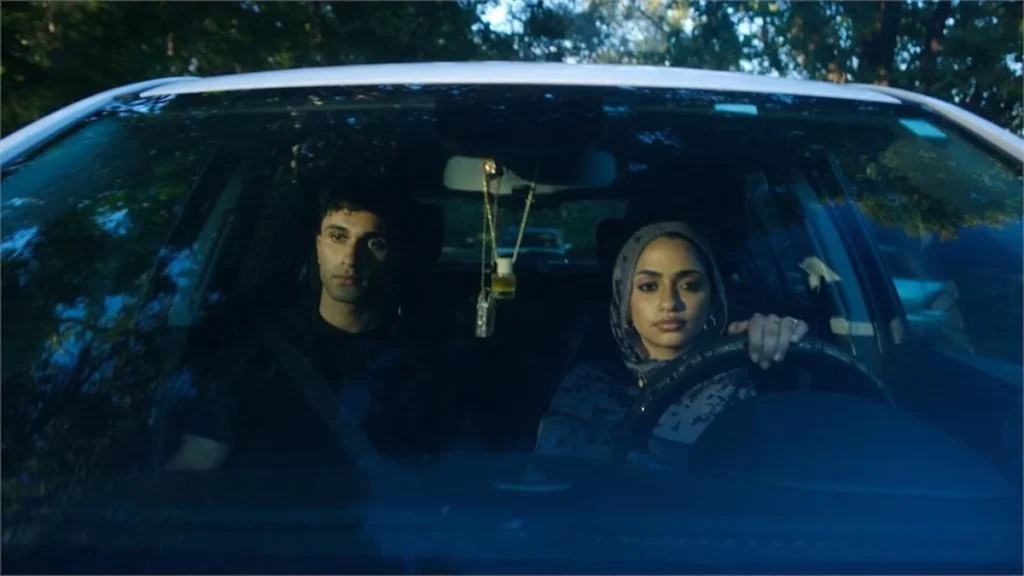
In the winter preceding The Bride!’s release, Grace Glowicki’s Dead Lover (scheduled for limited U.S. theatrical release on March 18th) offered a darkly comedic and raunchily gothic inversion of Shelley’s original. The film follows a tenacious gravedigger who, driven by an unconventional love, endeavors to reanimate the only man she ever truly connected with. This narrative flips the creator-creature dynamic, placing a woman in the position of audacious scientific pursuit and emotional yearning, irrespective of natural laws.
Last summer saw Tina Romero, daughter of the legendary George A. Romero, inject a fresh, queer sensibility into her father’s iconic zombie franchise with Queens of the Dead. This film featured glittery, queer zombies attacking a Bushwick club, transforming the undead apocalypse into a vibrant, subversive celebration of identity and community. It reimagined the zombie as a vehicle for social commentary on marginalization and resilience within specific cultural contexts.
The preceding year, 2023, was particularly rich with these themes. Diablo Cody brought her distinctive pop-punk aesthetic to Zelda Williams’s Lisa Frankenstein, a quippy, teen-angst-laden rom-com. The film chronicled a lonely teenager’s journey to reanimate a Victorian-era corpse, finding an unconventional soulmate and challenging suburban orthodoxy in the process. It deftly blended gothic romance with contemporary coming-of-age anxieties, resonating with a younger audience seeking alternative narratives of connection and self-acceptance.
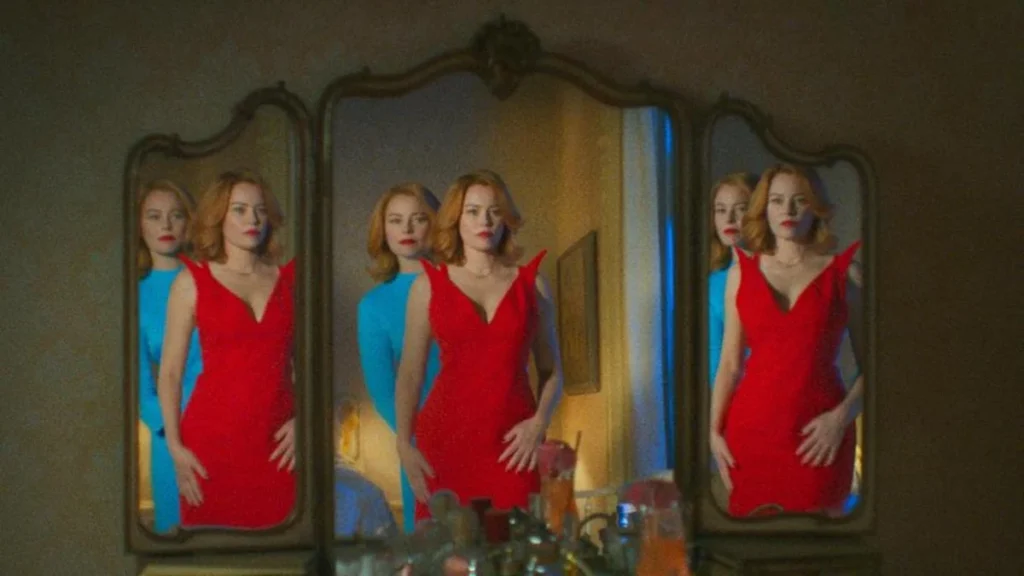
Perhaps the most commercially and critically successful example of this trend prior to The Bride! was Yorgos Lanthimos’s Poor Things, which garnered four Academy Awards at the 2023 ceremony. This visually audacious and intellectually provocative film presented a self-consciously feminist take on the coming-of-age elements of the Frankenstein tale, following Bella Baxter, a young woman resurrected with the brain of an infant, as she embarks on a journey of self-discovery, sexual liberation, and intellectual awakening in a highly stylized, fantastical 19th-century Europe. While not a direct zombie narrative, its themes of reanimation, bodily autonomy, and societal re-education positioned it firmly within this burgeoning subgenre. Even Guillermo del Toro’s highly anticipated, large-budget remake of Frankenstein (though not yet released at the time of The Bride!’s review) is part of this renewed interest, with early reports suggesting a greater emphasis on certain female characters.
These films, while varying widely in quality, tone, and specific political aims, share a common thread: an endeavor to foreground stories of outsider feminine agency. Whether it’s Glowicki’s horny, bisexual genius Gravedigger, Lisa Frankenstein’s quest for understanding beyond suburban constraints, or Bella Baxter’s radical self-discovery, each narrative reclaims the monstrous feminine as a site of power and resistance. Even in del Toro’s anticipated adaptation, early details suggest an elevated role for Lady Elizabeth Harlander (Mia Goth), transforming her into a politically active bug enthusiast with a profound affinity for Victor’s reviled creation, hinting at a more nuanced portrayal of female engagement with the monstrous. However, the original article notes that del Toro’s adaptation, despite these promising elements, concludes with a tone-deaf epigraph from Lord Byron rather than Shelley herself, highlighting the persistent challenge of truly centering the female voice within these re-imaginings.
The Ambitious, Yet Overstuffed, Vision of The Bride!

Gyllenhaal’s The Bride! emerges from a stated frustration with Lanchester’s original silence, aiming to provide a direct corrective by empowering its resurrected female protagonist with voice and narrative agency. The film, framed as a genre-blending 1930s period piece with Bonnie & Clyde-esque undertones, consciously positions itself as a metanarrative, directly engaging with its historical and literary predecessors.
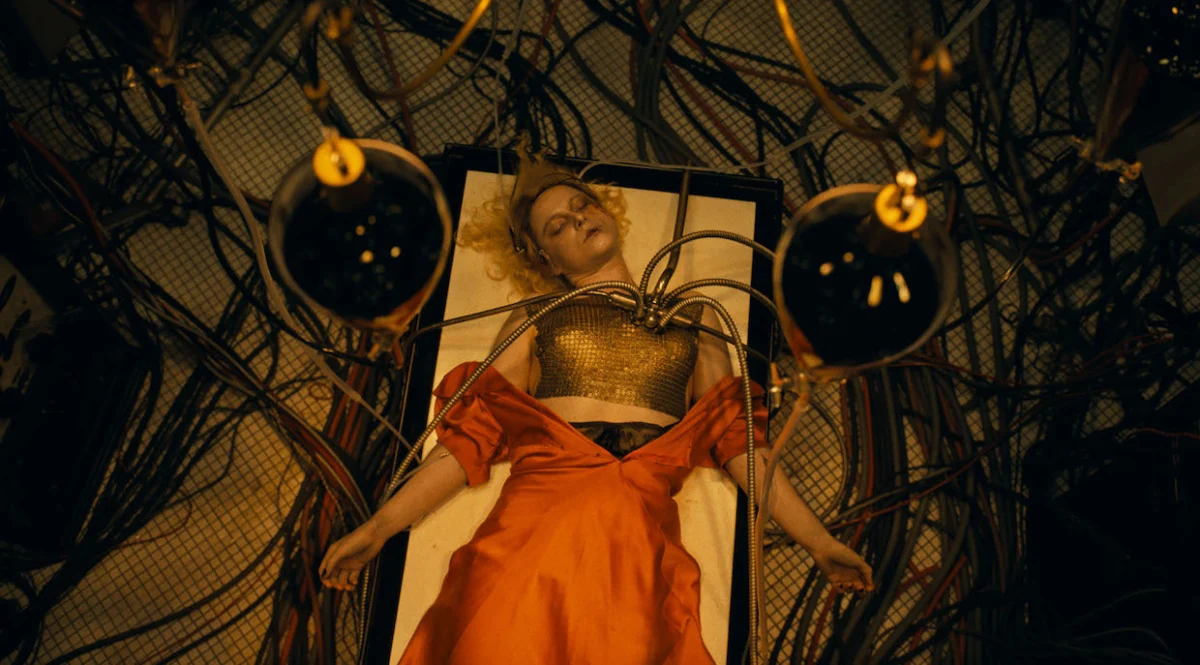
The narrative structure is ambitious, perhaps to a fault. The film opens with Mary Shelley (Jessie Buckley) speaking to the audience from "the void," a clear nod to the original Bride of Frankenstein‘s planned but ultimately cut frame narrative where Shelley herself would introduce the story. This meta-commentary quickly transitions into Shelley possessing the body of Ida (also Buckley), a vivacious mob moll who is murdered for knowing too much. Ida is then revived by a mad scientist (Annette Bening) at the behest of Frankenstein’s Monster (Christian Bale). This initial setup, featuring both a zombie plot and a possession plot, immediately signals the film’s complex, and at times contradictory, narrative ambitions.
Over its two-hour and seven-minute runtime, The Bride! attempts to juggle an extraordinary number of subplots and thematic explorations. It endeavors to deliver an empowering, Poor Things-esque tale of feminine self-discovery through zombification, amnesia, and the guiding presence of a metatextual authorial ghost. Simultaneously, it weaves in an outsider romance, featuring a subplot involving a beloved musical actor (Jake Gyllenhaal), a half-baked gangland drama, and a Coens-esque detective story (which itself includes a subplot about Penélope Cruz achieving "Girlboss" empowerment as a female cop). Adding to this melange is a zany "Riot Grrrl" revolution narrative reminiscent of Times Square (1980), all while constantly reminding the audience through dialogue and pastiche-y references ("Puttin’ on the Ritz!") that it is a revisionist take on the original.
The primary critical challenge identified in The Bride! is its inability to fully develop any single one of these myriad subplots. They blink in and out of existence, serving momentary narrative functions before fading away. For instance, the possession element, with Buckley adopting a cartoonish, Jack Sparrow-esque affect, becomes distracting and often vanishes in the film’s latter half. Similarly, the stylish "Riot Grrrls" feel like a remnant from an earlier draft or a more extensive cut, their potential for narrative potency largely untapped. This "overstuffed" quality leads to a lack of focus, preventing the film from fully realizing its feminist aspirations.
Critical Reception and Narrative Muddle
The film’s narrative muddle has not gone unnoticed by critics. Many have drawn parallels to Victor Frankenstein’s own lament: "I had worked hard for nearly two years… I had desired it with an ardor that far exceeded moderation; but now that I had finished, the beauty of the dream vanished." This sentiment aptly captures the perception that The Bride!, despite its noble intentions and evident passion, suffers from a foundational structural issue. As it reportedly "shambles towards box-office-bomb territory," the film paradoxically also suggests the potential for a future cult classic, its chaotic exuberance appealing to a niche audience that appreciates creative ambition, even when "violently amok." The Bride’s jubilant character design, with ink splattering from her mouth, visually reflects this "raucously enthusiastic narrative overflow" that, despite its flaws, makes the film frequently engaging.
However, this fragmented rhythm undeniably undercuts the film’s central feminist message. Subplots with the most significant potential for portraying women’s resistance—such as the "vanishing Riot Grrrls" or the fate of the "murdered mob gals"—are often the quickest to recede, replaced by shallower or overly simplified narratives. The comparison to Last Night in SoHo (2021) suggests a pattern where promising feminist narratives are introduced but ultimately diluted. A poignant moment where The Bride screams "Me too!" highlights the film’s aspiration for a punk rock ethos, yet its execution, according to some critiques, leans more towards a "Katy Perry" brand of feminism—a surface-level empowerment that lacks the deeper, systemic critique or raw edge of genuine rebellion. As a direct monster mash-up of Poor Things, Bonnie & Clyde, and Joker Folie à Deux (2024), it is suggested that The Bride! improves only on the latter, a tragically low bar.
Strengths Amidst the Chaos
Despite its narrative shortcomings, The Bride! possesses undeniable strengths. The film’s lead actors, Jessie Buckley and Christian Bale, reportedly form a genuinely endearing screen pair, their chemistry providing a much-needed anchor amidst the narrative whirlwind. The production design is consistently inventive and distinct, creating a visually rich and immersive 1930s world. Furthermore, the cinematography and score, borrowed "whole hog" from Joker (one of the film’s more obvious analogues), are sleek and effective, contributing significantly to the film’s atmosphere and aesthetic appeal. These technical accomplishments and strong performances suggest a film with a "mall-goth heart clearly in the right place," even if its ambitious story ultimately becomes its undoing. The inherent tragedy, as the review states, is that "this zombie romance is never allowed to breathe, in life or after it."
The Complexities of Zombie Agency and Feminist Storytelling
The enduring affinity between women and monsters, particularly zombies, stems from a shared experience of otherness. As Jess Zimmerman eloquently posits in her 2021 study, Women and Other Monsters, "Women and monsters have a lot in common… They are both outcasts; alienated, derided and feared by society. They are biological freaks with bodies that transgress and fluctuate, and they are both threats to male power." Maggie Gyllenhaal herself acknowledged this at the film’s U.S. premiere, stating, "There’s a little monster in all of us."
However, the question of agency for the undead is uniquely complex, and it is here that The Bride! struggles most profoundly. Unlike ghosts or vampires, who often retain their sense of self after death, zombies are typically portrayed as abject creatures of decay and passivity, resurrected against their will or constructed without a past. This inherent passivity makes their eventual resistance doubly tragic and satisfying. From Bride of Frankenstein to Frankenhooker (1990), Return of the Living Dead III (1993), and Life After Beth (2014), female zombie characters often emerge as flawed, rotting, untameable, and self-made beings who, despite their origins, carve out their own existence, sometimes even finding riotous happiness. Their very existence often serves as a powerful metaphor for systemic misogyny, making their triumphs, however small, profoundly poignant.
While The Bride! gestures towards these profound ideas of agency, resurrection, and female resistance, its dense narrative and conflicting subplots ultimately dilute their impact. Over two hundred years of literary and cinematic translation, the nuanced implications of Shelley’s original vision and Lanchester’s iconic scream appear to have become somewhat lost in Gyllenhaal’s ambitious, yet ultimately sprawling, sophomore effort. The film’s admirable goal of empowering its silenced protagonist is evident, but the execution highlights the formidable challenge of synthesizing such a rich, multifaceted legacy into a cohesive and impactful contemporary narrative.