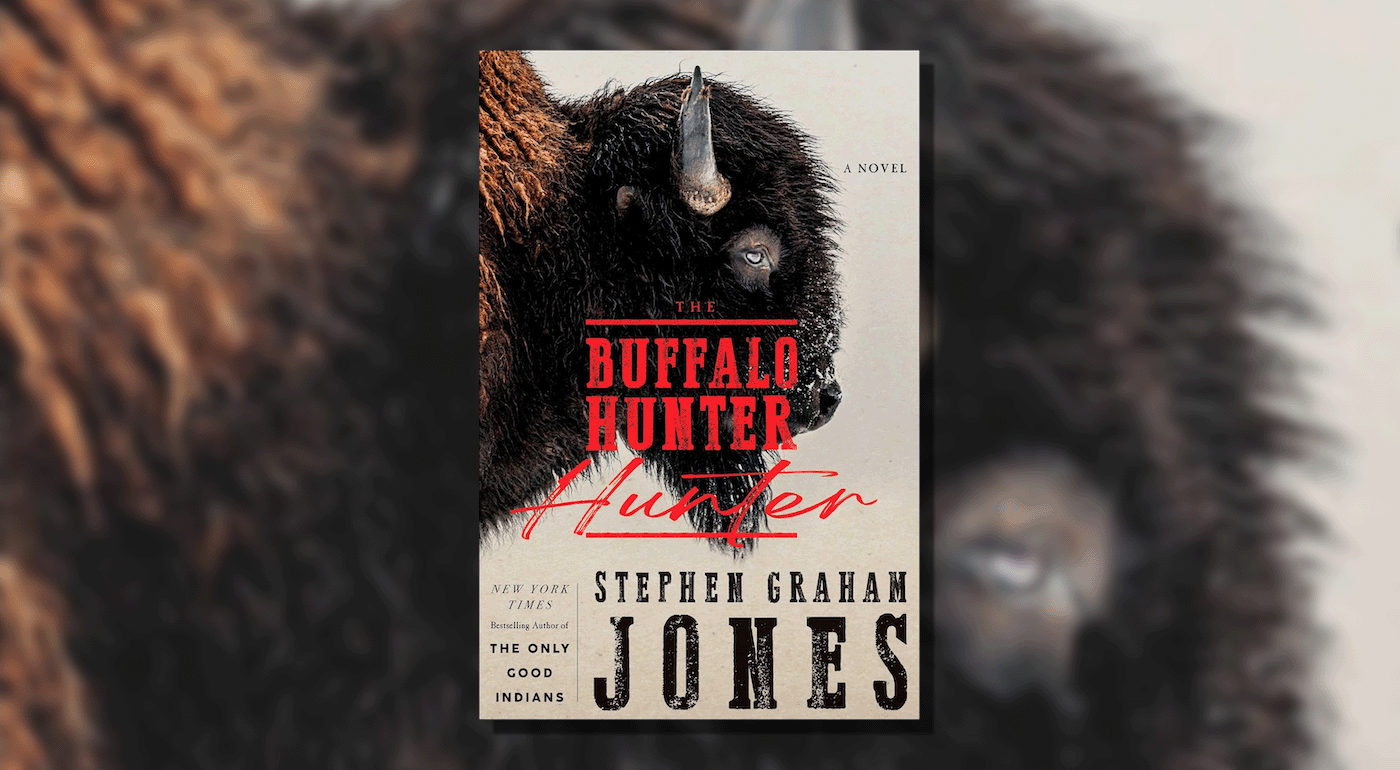
The latest installment of "Reading the Weird" delves into Chapters 5 and 6 of Stephen Graham Jones’s 2025 novel, The Buffalo Hunter Hunter, offering a critical examination of its unique blend of cosmic horror, Native American folklore, and vampiric mythology. This analysis unpacks the narrative’s exploration of Good Stab’s transformation, Arthur Beaucarne’s complex motivations, and the broader implications of Jones’s distinctive approach to the vampire archetype.
The Harrowing Account of Good Stab’s Transformation
The narrative picks up on April 7, 1912, with the death of a poisoned dog, a detail Sheriff Doyle had apparently anticipated. Simultaneously, the character known as Good Stab reappears in Arthur Beaucarne’s back pew, raising questions about his purported demise. Beaucarne, a figure wrestling with the intersection of Christian faith and rational skepticism, finds himself confronting unsettling realities. The dialogue between Beaucarne and Good Stab reveals the latter’s past experiences in wartime, including the Civil War and subsequent frontier conflicts, which have clearly left indelible marks.
The core of these chapters lies in Good Stab’s origin story, a chilling account of his transformation into something far more monstrous than a mere human warrior. At the age of twelve, accompanying a hunting party that included his father, Good Stab encountered a solitary white soldier exhibiting animalistic behavior. The soldier, wounded and disoriented, was left in Good Stab’s charge. In a brutal turn of events, the soldier broke free and attacked Good Stab, strangling him. In a desperate act of self-preservation, Good Stab instinctively grabbed an arrow and fatally stabbed his assailant. This act, a "good stab" as it was later described by his father, earned him his warrior name.
This initial encounter, however, was merely the prelude to a more profound and terrifying metamorphosis. The soldier Good Stab killed was the first of many. Following a brutal conflict in "the Backbone," Good Stab awoke to find himself crawling on all fours, his body covered in a layer of burned, black skin. He discovered an enhanced sense of smell, allowing him to "taste" the presence of living things. Sunlight became unbearable, forcing him to seek shelter during the day and hunt by night. His first post-transformation feeding was on a soldier, whose blood revitalized him to an unprecedented degree. He describes the experience as suckling like a baby until the soldier was "empty and dead," but found he could not digest the marrow, rejecting anything but blood.
This ravenous hunger and altered state are presented not as a mere affliction but as a form of punishment. Good Stab attributes his condition to killing a beaver, an act that appears to have violated a sacred pact or natural order within his indigenous belief system. He describes himself as a child of the "Cat Man," armed with retractable dagger-like fangs, identifying his condition with the Pikuni concept of an atupyoye, or Person-Eater, but with a more terrifying intensity. His attempts to end his own life—cutting his throat, stabbing himself in the heart—prove futile as his wounds rapidly heal. Cursed with an insatiable thirst that water cannot quench, he is compelled to consume living blood to the point of bursting. His tears become blood, and his eyes, though piercing the darkness, cannot bear the sight of the Sun Chief, necessitating the use of dark glasses to simulate night during daylight hours.
His struggle for survival leads him to overwinter in a den with a hibernating bear. Upon waking in spring, both ravenous, the bear’s strength proves too formidable for him to consume. Instead, he turns to drinking the blood of antelopes and deer. This diet, however, has further consequences, causing him to develop a spotted hide and horns, transforming him further into a beastly form. To maintain his human appearance, he realizes he must subsist solely on human blood. White trappers become his primary sustenance.
A pivotal moment occurs when he climbs Face Mountain and spends twenty-one days in contemplation. He allows the sun to burn his skin, fasting until hunger drives him to hunt. His first human prey is a young Pikuni from his own band, White Teeth, who had previously lost fingers mishandling Good Stab’s prized gun. The sight of White Teeth, a figure from his past life, triggers a profound revulsion and flight from "the Backbone" and his current existence. He encounters a herd of buffalo, their robes removed but their meat untouched, killed by bullets—a scene that troubles him deeply. As he kneels to close the eyes of a blackhorn, he himself is shot through the shoulder, the pain of a buffalo horn piercing his hand echoing with an intensity that blurs the lines between present agony and the strength of memory. The pipe is then emptied, signifying the end of his telling for the day.
Thematic Explorations and "Weirdbuilding"
The narrative carefully constructs its unique mythological framework through several key lenses:
- Cyclopean Language: Good Stab’s storytelling is marked by specific linguistic choices. He uses "blackhorn" or "real-meat" when referring to buffalo, reserving "buffalo" for other contexts. Occasionally, he slips into his native Pikuni dialect, referred to as his "coughing word with all the i’s in it." This linguistic detail underscores the deeply ingrained cultural and historical context of his narrative.
- The Degenerate Dutch: The commentary highlights a potentially problematic colonial perspective, suggesting a white, Christian duty "to attempt to capture these last exhalations of a people who won’t be seen again in the world." This perspective implies a romanticized and potentially exploitative view of indigenous cultures as relics of the past, rather than living, evolving societies.
- Weirdbuilding and Indigenous Folklore: A significant aspect of the novel’s construction is Good Stab’s reinterpretation of his vampiric condition through the lens of Pikuni mythology. Instead of relying on European vampiric tropes, he identifies his monstrous state with the atupyoye or Person-Eater of his people’s lore. This integration of indigenous beliefs into the supernatural framework is a hallmark of Jones’s "weirdbuilding."
- Libronomicon and Self-Aggrandizement: Arthur Beaucarne’s internal monologue reveals a self-comparison to Alexander Pope, acknowledging a tendency towards grandiose pronouncements. He likens his record of Good Stab’s confession to a new Gospel, a clear act of self-aggrandizement, suggesting his own perceived significance in documenting these events.
Ruthanna’s Commentary: The Spectrum of Unlife
Ruthanna’s analysis provides a compelling framework for understanding Good Stab’s vampiric existence. She posits a scale from 0 (a soulless, mindless monster) to 10 (a powerful, immortal being with few limitations). Good Stab, she argues, resides at the lower end of this spectrum. His key limitations include his inability to fully detach from his human memories and community, his lack of control over his feeding habits, and the unsettling phenomenon of becoming what he consumes. While he gains enhanced senses like smell and the ability to share dreams, these are offset by his profound emotional distress and alienation.
Ruthanna observes that Good Stab’s unlife is shaped by his "attitude." He views his vampiric appetites as a punishment for his past transgressions, particularly his choice to prioritize "napikwan weapons" over the beaver protectors of the Pikuni. His monstrousness is not a source of power or pride but a constant reminder of his fallen state. He is an animal who remembers being human, but not a sacred one. His presence is destructive; where he feeds, life cannot thrive. His attempts to reconnect with his people fail, even when he tries to adhere to a diet of white trappers.
The commentary also critically examines Arthur Beaucarne’s perspective. Ruthanna suggests that Beaucarne sees Good Stab’s purpose as a symbolic reminder of white guilt and the dispossession of indigenous peoples. He views indigenous individuals as remnants of a dying past, their existence serving to prompt remorse in white society. This interpretation highlights a potential critique of colonial guilt narratives, where indigenous people are relegated to symbolic roles rather than being acknowledged as full subjects with their own agency and experiences of being wronged.
Beaucarne’s own struggles with alcoholism are also brought to the fore. His physical tremors, likely withdrawal symptoms, underscore his ongoing battle with addiction, a theme that resonates with the medical and societal understanding of the time. His reliance on sherry to quell his shakes reveals a cycle of dependence, a stark contrast to Good Stab’s supernatural afflictions. The commentary questions Beaucarne’s potential involvement in the mysterious slaughter of buffalo, suggesting that some of his guilt may be more deeply rooted and justified than his personal struggles. The intertwined fates of Good Stab and Beaucarne, linked by their approximate ages and past mistakes, are presented as a central theme, hinting at a deeper connection beyond their immediate circumstances.
Anne’s Commentary: Embracing the Icon of the Weird
Anne’s commentary focuses on Stephen Graham Jones’s deliberate and nuanced engagement with the vampire archetype, a figure she describes as the "icon of icons" within the genre of the weird. She references Conner Read’s Publishers Weekly article, noting Jones’s initial reluctance to incorporate vampires into his oeuvre, alongside zombies and werewolves, due to the genre’s accumulated "junk DNA" and over-codified imagery. Jones’s approach, therefore, necessitated finding a unique entry point, a personal interpretation that avoids the clichés of the cape-wearing, fang-sporting vampire.
The commentary emphasizes the necessity for writers of vampire fiction to forge their own path, whether by adhering to established tropes or reinventing them through personalization. This personalization, Anne argues, is the most potent approach, allowing writers to "become the vampire" in their creative process. This rigorous commitment is exemplified by Jones’s assertion in an Austin Chronicle interview: "If I were a vampire, I could do it better." This statement goes beyond a simple promise to write a good vampire story; it signifies a deeper immersion into the character’s being.
Anne acknowledges the vast repository of folkloric and literary history associated with the vampire, which has indeed led to a complex and sometimes contradictory mythology. However, she counters the notion that the vampire is "so codified" by highlighting the diversity of its manifestations. She points to the Nachzehrer, as defined by Arthur Beaucarne, which retains only one universal vampiric trait: subsisting on the lives of the living. This leaves ample room for creative interpretation regarding other attributes.
The analysis then delves into the specific rules of Good Stab’s vampiric existence as established in Chapter Six. He can die and revive, heals quickly, and is restricted to a diet of blood. All other human intake, including water, sickens him. While he can go weeks between feedings, the hunger is an irresistible drive. A critical rule is that he "becomes what he eats," acquiring the dominant physical attributes of his prey. This leads to his mutable appearance, ranging from fully human to monstrous hybrids. A human diet allows him to maintain a human guise due to retractable fangs. He is photosensitive and shields himself from sunlight, but can travel by day. Sacred objects have no effect on him. His fundamental temperament remains human, but he is emotionally wrecked by the loss of his former life and community, wandering in solitude. The narrative suggests he was created when he was bitten by "Cat-Man" and inadvertently drank his blood.
Good Stab’s moral compass, rooted in his Pikuni upbringing, exacerbates his suffering, making him a figure of profound angst. While not overtly sexualized in this chapter, his presence is noted to have developed a compelling aura by the time he interacts with Arthur Beaucarne.
Anne concludes by noting that Good Stab’s character exists around the midpoint of the realism-fantasy scale. This balance, she suggests, is achieved by Jones’s masterful portrayal of a world where the "natural and the supernatural are not distinguished even a little bit" within the character’s worldview. This consistency in depicting the character’s mindset is highlighted as a key strength of the novel’s construction.
Broader Impact and Implications
The detailed exploration of Chapters 5 and 6 of The Buffalo Hunter Hunter reveals a novel that is not merely a genre exercise but a profound engagement with themes of identity, transformation, cultural trauma, and the complex legacy of colonialism. By weaving indigenous folklore into the fabric of vampiric mythology, Stephen Graham Jones challenges conventional understandings of both, creating a unique and unsettling narrative landscape. The character of Good Stab, caught between his humanity and his monstrous appetites, serves as a powerful allegory for loss, punishment, and the enduring struggle for self-acceptance. Arthur Beaucarne’s presence, representing the complexities of faith, guilt, and the colonial gaze, adds further layers of thematic richness. The novel’s success lies in its ability to subvert expectations and offer a fresh, deeply personal, and culturally resonant take on the enduring myth of the vampire.