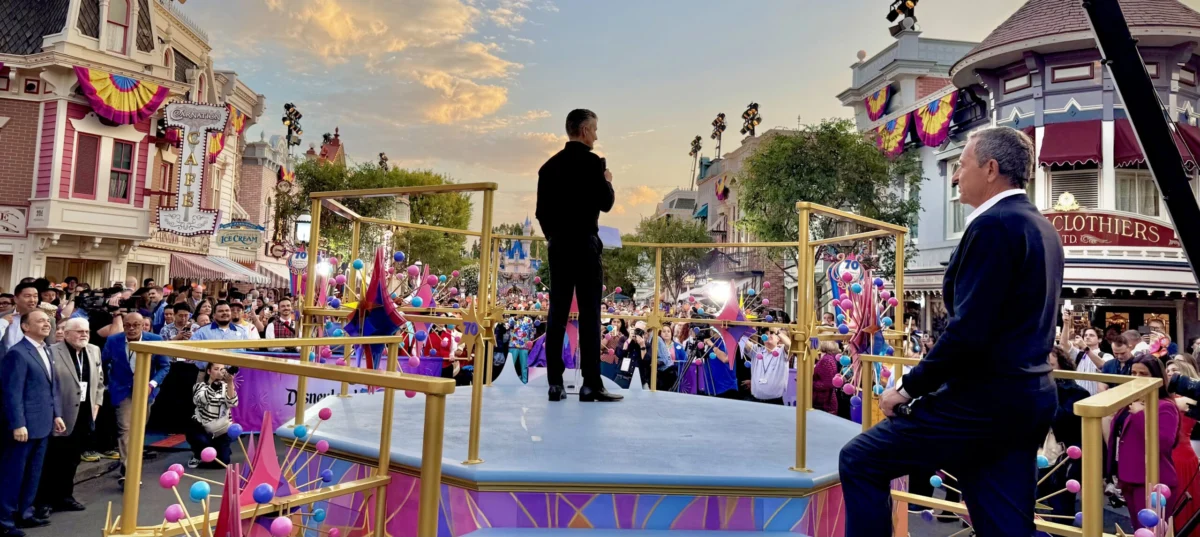
The physical and symbolic transformation of the Walt Disney Company reached a definitive milestone this Wednesday as the corner office on the Burbank studio lot, long occupied by Bob Iger, was formally cleared to make way for the company’s new Chief Executive Officer, Josh D’Amaro. This transition, occurring in tandem with the company’s highly anticipated annual shareholder meeting, marks the conclusion of one of the most influential leadership runs in the history of modern media. Unlike the 2020 transition, where Iger famously retained his office and a significant degree of operational control as Executive Chairman during Bob Chapek’s short-lived tenure, this week’s move was absolute. The message delivered to investors and employees alike was unmistakable: the Iger era has concluded, and a new chapter under D’Amaro and Disney Entertainment Co-Chairman Dana Walden has officially begun.
The atmosphere on the Burbank lot reflected the gravity of the moment, blending a celebration of the past with an introduction to the future. Employees, traditionally referred to within the organization as "cast members," were greeted with commemorative buttons featuring a cartoon likeness of Iger captioned with the phrase, “Thank you, Bob!” Visual tributes were scattered throughout the campus, including a prominent billboard on a studio building featuring Tinkerbell waving her wand alongside the greeting, “Welcome, Josh!” These gestures underscored the company’s effort to ensure a smooth cultural transition following several years of internal and external turbulence.
A Legacy Defined by Strategic Expansion and Consolidation
Bob Iger’s departure marks the end of a quarter-century during which he effectively redrew the map of Hollywood. When Iger first ascended to the CEO role in 2005, succeeding Michael Eisner, he inherited a company facing stagnation and strained creative partnerships, most notably with Steve Jobs’ Pixar Animation Studios. During his first earnings call as CEO-elect in the third quarter of 2005, Iger articulated three strategic priorities that would guide his leadership for the next two decades: the creation of high-quality branded content, the aggressive application of technology to distribution, and the expansion of the Disney brand into global markets.
The execution of these priorities resulted in a series of acquisitions that are now considered some of the most successful in corporate history. In 2006, Iger repaired the relationship with Jobs and acquired Pixar for $7.4 billion. This was followed by the $4 billion acquisition of Marvel Entertainment in 2009 and the $4 billion acquisition of Lucasfilm in 2012. These deals provided Disney with a nearly inexhaustible well of intellectual property, including the Marvel Cinematic Universe and the Star Wars franchise, which became the backbone of the company’s box office dominance and eventual streaming strategy.
In 2019, Iger completed his most ambitious and controversial deal: the $71 billion acquisition of 21st Century Fox. While the high price tag and the subsequent debt load drew criticism from some financial analysts, the merger brought the X-Men, Fantastic Four, and James Cameron’s Avatar into the Disney fold. More importantly, it secured the executive talent of Dana Walden, who now serves as a central figure in the new leadership structure alongside D’Amaro.

The Global Footprint and the Rise of Disney Experiences
Iger’s tenure was also characterized by a massive expansion of Disney’s physical presence. On the global front, he successfully navigated the complexities of the Chinese market to open Hong Kong Disneyland and the $5.5 billion Shanghai Disney Resort. These projects established Disney as a premier entertainment brand in Asia, a feat that many of its competitors struggled to replicate.
The growth of the Disney Cruise Line also serves as a testament to this expansionist philosophy. When Iger first took the helm, the fleet consisted of only two ships. By the time of his final departure, the fleet had grown to eight, with five additional vessels in various stages of development. Among these is the Disney Adventure, the company’s first ship to be permanently based in Singapore, signaling a continued commitment to the Southeast Asian market. In one of his final public appearances before the CEO handover, Iger toured the Disney Adventure alongside D’Amaro and actor Robert Downey Jr., a figure whose career trajectory as Iron Man mirrored the rise of the Disney-Marvel era.
Technological Disruption and the Streaming Pivot
Perhaps the most significant shift during the Iger era was the pivot toward direct-to-consumer technology. Recognizing early that traditional linear television was in secular decline, Iger pushed the company toward the launch of Disney+. To facilitate this, he orchestrated the acquisition of BAMTech from Major League Baseball, providing the company with the proprietary streaming architecture necessary to compete with Netflix.
While the streaming business initially faced heavy losses—peaking at billions of dollars in annual deficits—recent financial reports indicate the division has finally reached profitability. This achievement was a core requirement for Iger’s final exit, as he sought to leave the company on a stable financial footing. Additionally, Iger’s final months were marked by forward-looking partnerships with Epic Games and OpenAI, acknowledging that the future of storytelling will likely be interactive and driven by artificial intelligence.
The Challenges of Succession and the Stabilizer Era
The path to this week’s transition was not without significant setbacks. Iger’s initial retirement in early 2020 proved ill-timed, as the COVID-19 pandemic forced the closure of theme parks and cinemas worldwide just weeks after Bob Chapek took the reins. The subsequent two years were marked by internal strife, a high-profile legal battle with actress Scarlett Johansson, and a perceived decline in creative quality as the company prioritized streaming volume over theatrical excellence.
Iger’s return in November 2022 was framed as a rescue mission. During this "second act," he pivoted from being "Bob the Builder" to "Bob the Stabilizer." He outlined a new set of four strategic pillars:

- Restoring the creative output and economic efficiency of the film studios.
- Achieving sustained profitability in the streaming sector.
- Transitioning ESPN into a preeminent digital sports destination.
- Turbocharging growth in the Disney Experiences (Parks and Resorts) division.
At Wednesday’s shareholder meeting, Iger reflected on this return, admitting that the morale of the company had been severely damaged during his absence. "When I returned in 2022, people had lost confidence in the company they worked for," Iger told shareholders. He noted that his second term was defined by a "tremendous responsibility" to repair the culture and refocus the company’s creative engines.
The D’Amaro Era: A Modernized Flywheel
Josh D’Amaro takes the helm with a deep background in the company’s theme park division, a sector that remains Disney’s most reliable profit engine. D’Amaro has committed to a $60 billion investment in the Experiences division over the next decade, focusing on expanding park capacity and integrating newer IP like Frozen, Zootopia, and Black Panther into physical attractions.
D’Amaro’s vision for the company is rooted in a modernization of Walt Disney’s original 1957 "corporate strategy chart." This classic diagram placed the film studio at the center of a "flywheel," with parks, merchandise, and music acting as interlocking gears that amplified the core content. D’Amaro’s updated version of this flywheel includes gaming, interactive media, and digital sports. In a significant structural move, the company recently moved its games business under Dana Walden’s purview, seeking to create a more seamless integration between filmed entertainment and interactive experiences.
"This next chapter will be driven by staying focused on world-class creativity enhanced by technology," D’Amaro stated during his inaugural remarks as CEO. "We are operating from a place of strength with ample opportunity for growth."
Governance and the Role of the Board
The selection of D’Amaro was overseen by a succession committee led by James Gorman, the former Morgan Stanley CEO who joined the Disney board specifically to rectify the failures of the 2020 transition. Gorman has emphasized that the board’s primary goal was to ensure stability and retain top-tier talent. By selecting D’Amaro but keeping Dana Walden in a powerful creative leadership role, the board aims to avoid the executive exodus that often accompanies a CEO change.
Gorman praised the "collegiality" that Iger built within the executive team during his final years, noting that the transition process involved extensive mentorship and collaboration. "The most important thing boards do is figure out the CEO transition," Gorman told reporters. "There’s great respect that not every team has, and I give credit to Bob for building that."

Future Implications and Iger’s Next Steps
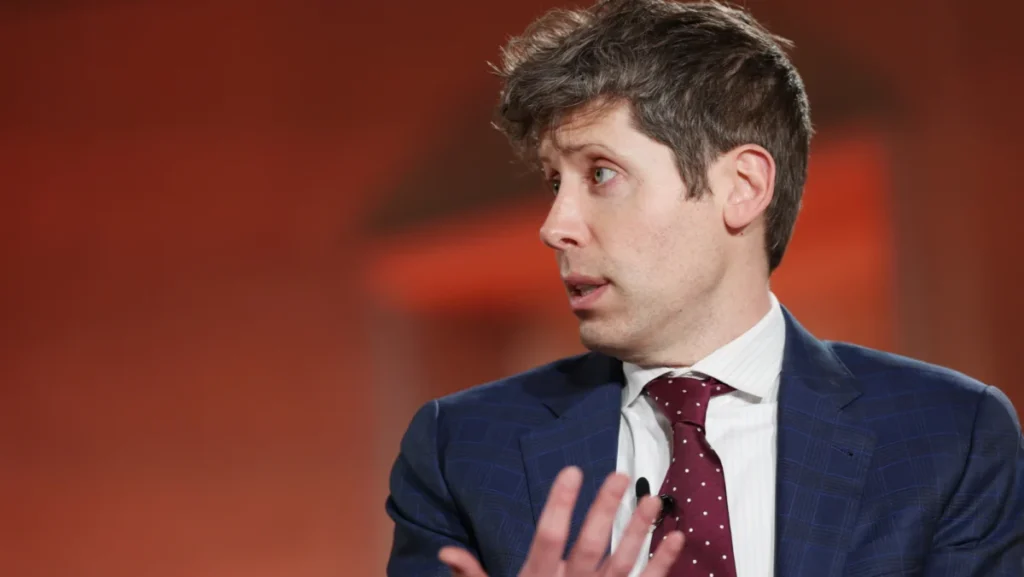
As for Bob Iger, his future remains a subject of intense speculation within the industry. While he has formally stepped down from day-to-day operations, history suggests he may remain an influential figure in the broader tech and media landscape. During his previous hiatus, he joined Thrive Capital and built relationships with Silicon Valley leaders like Sam Altman. Analysts expect him to transition into an advisory or investment role rather than returning to an operational position.
The immediate challenge for D’Amaro and Walden will be maintaining the momentum Iger established in his final months. This includes navigating the transition of ESPN to a full direct-to-consumer model and ensuring that the film studio’s recent recovery—boosted by hits like Inside Out 2 and Deadpool & Wolverine—becomes a long-term trend rather than a temporary surge.
With the Burbank office now cleared and the shareholder meeting concluded, the Walt Disney Company enters a period of new leadership with a clear mandate: to preserve the legacy of its founders while navigating the most rapid technological shift in the history of entertainment. The Iger era, defined by massive consolidation and the birth of the streaming age, has ended. The D’Amaro era, likely to be defined by interactive storytelling and the global expansion of physical experiences, has begun.