The stark landscape of Falme became the stage for a pivotal confrontation as Rand al’Thor, the Dragon Reborn, met with Tuon, the Daughter of the Nine Moons, marking a critical juncture in the unfolding war against the Shadow. This historic meeting, fraught with ancient prophecies and simmering geopolitical tensions, saw the two most powerful figures in the known world attempt to forge an alliance or solidify their inevitable conflict. Simultaneously, the strategic machinations of Mat Cauthon and the subtle influence of Verin Mathwin continued to shape the unfolding events, highlighting the complex web of power and destiny that defines the era.
Strategic Maneuvers and Mysterious Omens
Before the dramatic meeting at Falme, Mat Cauthon was observed meticulously planning defensive and offensive strategies for his encampment. In his tent, Mat convened with key lieutenants, including Talmanes, Thom Merrilin, Noal, Juilin Sandar, and Mandevwin, to finalize preparations for an anticipated encounter with an unknown woman who had been circulating his likeness. This detailed planning extended to creating elaborate backstories for his officers, a testament to Mat’s characteristically unconventional approach to leadership. Mandevwin was assigned the role of Thom’s apprentice, while Talmanes was to pose as a passing Warder, much to Talmanes’s visible amusement. Mat’s determination to avoid being caught off guard was evident in his declaration, "I’m not going to be surprised again, Thom. Burn me, but I’m not going to let it happen. I’m tired of walking into traps unprepared. I plan to take command of my own destiny, stop running from problem to problem. It’s time to be in charge." His strategy included intricate tactical positioning of cavalry and crossbowmen, demonstrating a foresight born from past experiences.
Aludra’s Dragons and the Cost of War
Mat’s inspection of the camp led him to the tents of Aludra, the skilled artificer, where he was momentarily detained by Bayle Domon. Aludra, visibly hurt by Mat’s marriage to Tuon, was engaged in developing her formidable "dragons" – potent siege weaponry. The projected costs and material requirements for this endeavor were staggering, including access to all copper and tin mines in Caemlyn, Cairhien, Illian, and Tear, and the mobilization of every bellfounder and ironworker. Mat expressed concern about the financial feasibility, a sentiment Aludra dismissed as pessimism. The sheer scale of Aludra’s project underscored the immense logistical and economic pressures accompanying the looming Last Battle.
Verin’s Arrival and the Tapestry of Ta’veren
As Mat concluded his visit with Aludra, a message arrived from Talmanes: a woman was at the camp, possessing images of Mat and seeking information about him. This proved to be Verin Mathwin, who revealed she had learned of Mat’s location from a merchant Mat had hired for mapmaking. Verin explained her presence was to prevent Mat from impulsively entering Trustair. She further elaborated that his ta’veren nature had, in a sense, drawn her to him, a concept that continues to fuel speculation about the mechanics of ta’veren influence. Verin’s ability to Travel also hinted at her deeper involvement in the larger strategic landscape.
The Dragon Reborn’s Return to Falme
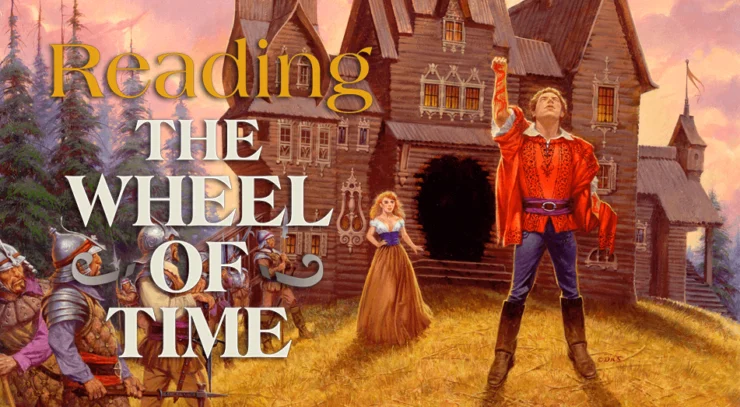
Meanwhile, Rand al’Thor arrived at Falme via gateway, a location that evoked profound memories of his transformation from a simple shepherd to the Dragon Reborn. The city held a significant place in his past, marking the site of his initial rise to power and a critical battle against the Seanchan. Nynaeve al’Meara accompanied Rand, her evolving adaptation to different cultures noted by Rand. Their shared reflections on Falme led Rand to confide in Nynaeve about killing Turak, an event he had previously kept secret. This revelation touched upon the tradition of heron-marked blades and the definition of a blademaster, highlighting Rand’s internal struggles with his identity and legacy.
A Diplomatic Standoff at Falme
Rand’s arrival at Falme was intended to signal a desire for peace, with a token guard of channelers accompanying him. However, he prudently reinforced his power by drawing upon saidin through an access key, preparing for potential hostility. The meeting with Tuon revealed her youth and regal bearing, which belied a keen observational intellect. Tuon, despite her initial surprise at Rand’s youth, recognized his potential and was unsettled by the presence of male channelers and a marath’damane in his retinue.
The negotiation was tense from the outset. al’Thor, speaking with an authority that seemed to border on command, declared that peace would be made. He invoked prophecies to emphasize the danger of division as the Last Battle approached, contrasting it with the Seanchan’s expected role in uniting the lands. Tuon countered, suggesting Rand should unite his lands under the Seanchan banner, a statement Rand preemptively cut off before she could mention the need to leash channelers.
Rand firmly rejected the Seanchan’s methods, stating, "We must have peace. Our alliance need last only until my life ends. I assure you that will not be overly long." This assertion of his impending mortality was met with Tuon’s attempt to assert Seanchan dominance, suggesting he unite his lands under their banner and take the oath, a veiled reference to the subjugation of channelers.
Tuon’s Resistance and the Empress’s Ascent
The conversation shifted when Tuon brought up Mat, remarking on his character. Both Rand and the marath’damane accompanying him defended Mat with fierce loyalty, surprising Tuon. Ultimately, Rand presented Tuon with an ultimatum: sign a treaty, not as a request, but as his will. Tuon experienced a disconcerting urge to comply, her thoughts of opposition dissolving. The narrative describes a perceived "dark halo" around Rand, a chilling visual that seemed to bolster Tuon’s resolve. She resisted the compulsion, whispering a "no" and asserting her own claim to power, declaring, "You will bow before me, Rand al’Thor. It will not happen the other way around." She perceived a "seething hatred" in him that terrified her, a sentiment she found unfamiliar.
Following this failed diplomatic overture, Rand departed in anger. Tuon, regaining her composure, then addressed her own followers, proclaiming, "I am the Empress." This declaration, though soon to be followed by formal ceremonies, immediately positioned her as the sovereign ruler. Her immediate strategic directive was an attack on the White Tower, a move intended to diminish Rand’s power and influence.
Analysis of Ta’veren Dynamics and Prophetic Interpretations
The events at Falme and the preceding preparations offer a rich ground for analyzing the enigmatic concept of ta’veren. Verin’s explanation for her presence, claiming to be drawn by Mat’s ta’veren pull, raises questions about the conscious control and extent of this power. While plausible within the established lore of ta’veren influencing the Pattern, it also presents a convenient, potentially misleading, explanation for her actions. The possibility of Verin being a Darkfriend and using this explanation as a cover for a directive from Moridin cannot be entirely dismissed, given her history of deception.
Tuon’s resistance to Rand’s influence during their meeting is particularly noteworthy. While Rand’s ta’veren nature is known to sway individuals, Tuon’s ability to perceive and actively fight against this compulsion suggests a formidable mental fortitude, potentially amplified by her upbringing and inherent character. The possibility that Tuon herself might be ta’veren has been previously raised and gains credence with this display of resistance, aligning with her belief in her destiny to lead. Alternatively, the "dark halo" observed around Rand might have played a role, suggesting that the corruption of saidin could be affecting his ta’veren abilities, twisting them into something more sinister, or that Tuon’s own deep-seated beliefs and duty were too strong to be overcome by chance.
The contrasting perspectives of Rand and Tuon on their respective roles in the Last Battle highlight the difficulty in interpreting prophecy. Both see their own capitulation as a threat to the world’s salvation, stemming from deeply ingrained beliefs about their destinies. Rand, viewing himself as the protector who has forged unity, sees Tuon’s ambition as a dangerous distraction. Tuon, guided by Seanchan prophecies, believes her leadership is paramount for global salvation. The inherent conflict lies in their mutually exclusive visions for the world’s future.
Tuon’s subsequent decision to attack the White Tower, while intended to weaken Rand, is likely to have the opposite effect, potentially galvanizing him and further escalating the conflict. The production of Aludra’s dragons further adds to the technological and military stakes, promising a devastating impact on future battles. The question of how Tuon’s deeply ingrained Seanchan traditions, particularly regarding the subjugation of channelers, can be reconciled with the needs of the Last Battle remains a critical narrative thread.
Looking Ahead: Verin’s Revelations and Min’s Perspective
The narrative anticipates further revelations from Verin Mathwin regarding her circumstances and connection to Mat’s ta’veren web. Additionally, Tuon is poised for a name change, signifying her full assumption of the Empress title. The upcoming chapters are also expected to feature a perspective from Min Farshaw, offering crucial insight into her emotional state following her near-fatal encounter with Semirhage. Rand’s concern that Min can no longer love him in the same way, given the trauma, is a poignant aspect of his evolving relationships and the personal toll of his responsibilities. The complex interplay of power, destiny, and personal relationships will continue to unfold as the world hurtles towards its prophesied end.