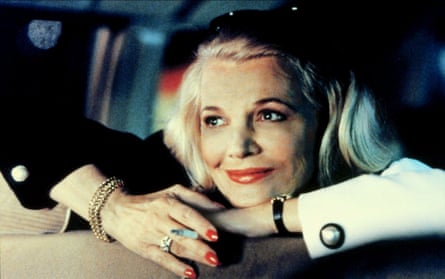
In the year 1991, acclaimed director Jim Jarmusch embarked on the casting process for his distinctive anthology film, Night on Earth. The film’s premise was deceptively simple: five taxi drivers in five disparate cities would ferry passengers, all set against the evocative soundscape crafted by the legendary Tom Waits. For one of his passenger roles, Jarmusch envisioned the inimitable Gena Rowlands. However, Rowlands, a titan of independent cinema, required considerable persuasion to join the project. "Night on Earth was the first film she’d made since losing John [Cassavetes, her husband] and she wasn’t sure," Jarmusch recounted, his voice, as he described it, taking on the perfect cadence of Rowlands, a testament to his uncanny ability to capture the essence of those he quotes. "Eventually she said: ‘OK, I’ll be in this film for you.’" This anecdote, shared by Jarmusch from his book-lined New York study, underscores the profound respect and personal connection that often define his creative endeavors, particularly in the wake of Rowlands’ passing in 2024 at the age of 94.
The Melancholy of Night on Earth and Rowlands’ Enduring Gift
The opening vignette of Night on Earth immediately showcased the compelling dynamic Jarmusch sought. Winona Ryder, portraying a cabbie with a distinctly modern, almost defiant, demeanor—chewing gum, baseball cap askew, cigarette in hand—picks up Rowlands, who embodies an old-school Hollywood elegance as a casting director. In the intimate confines of the taxi, Rowlands probes Ryder about her aspirations, only to be met with a surprising declaration: Ryder’s dream was not stardom, but the practical artistry of becoming a mechanic. Reflecting on this scene now, knowing Rowlands’ personal grief at the time, Jarmusch perceives an almost palpable infusion of melancholy and quiet humanity within her performance. This, he believes, was Rowlands’ singular gift to cinema: an authentic, unvarnished portrayal of the human spirit.
Jarmusch’s own contribution to the cinematic landscape, as he articulated in a 2024 interview, lies in his ability to elicit deeply felt, understated performances from established stars within the framework of his idiosyncratic independent films. His directorial philosophy consistently prioritizes character, asserting that he has "no interest in writing scripts about sex, revenge, making a lot of money." This focus on the human condition, often found in the overlooked corners of everyday life, has been a hallmark of his career since his early works like Permanent Vacation and the groundbreaking Stranger Than Paradise.
A Deep Connection: Jarmusch, Rowlands, and the Ghost of Cassavetes
Jarmusch, now 73, was speaking from his New York residence to promote his latest critically acclaimed film, Father Mother Sister Brother. The film, which garnered the prestigious Golden Lion at the Venice Film Festival in September 2024, cemented Jarmusch’s reputation as a filmmaker capable of captivating global audiences with his unique vision. His appearance—sculptural white hair, tinted glasses, signature black attire, and an almost permanent, thoughtful pout—is as instantly recognizable as his cinematic style.

Before delving into his new project, Jarmusch’s thoughts returned to Gena Rowlands. "Gena Rowlands. What can I say? What a remarkable, apparently effortless person," he mused, a flicker of genuine sadness crossing his face. "Nothing was forced or faked. Coming from the Cassavetes procedure, she knew that the beauty of cinema was to find this real thing and let it come out of you. Man, what an incredibly beautiful experience. One of the most beautiful gifts of my working life." The profound respect is evident; Jarmusch clearly saw Rowlands not just as an actor, but as a kindred spirit who understood the core of authentic cinematic expression.
The bond between Jarmusch, Rowlands, and the legacy of John Cassavetes was further illuminated by a humorous anecdote. While filming Night on Earth, Peter Falk, who had famously starred alongside Rowlands in Cassavetes’ seminal 1974 film A Woman Under the Influence, would frequently call Jarmusch. "Jarmusch, Falk here. What’s going on with Gena? Do you need anything?" Jarmusch, with uncanny accuracy, mimicked Falk’s gruff voice, before adding with a laugh, "She was a lioness; she didn’t really need protection." This exchange highlights the tight-knit community and mutual support that characterized the independent film scene, particularly those connected to the Cassavetes legacy.
A Missed Opportunity and a Cinematic Fulcrum
Years after Night on Earth, Rowlands approached Jarmusch with a deeply personal project: a John Cassavetes script titled Unless That Someone Is You. Cassavetes had written this "beautiful, nonjudgmental love story about a woman and a younger person on the spectrum" for Rowlands before his death, and she harbored a strong desire for Jarmusch to direct it, believing he was the only one who could bring it to fruition. Initially, Jarmusch demurred, suggesting he would only direct if Rowlands herself took the lead. A period of quiet passed, during which Rowlands’ Alzheimer’s progressed. She contacted Jarmusch again, conveying a sense of urgency: "time was running out."
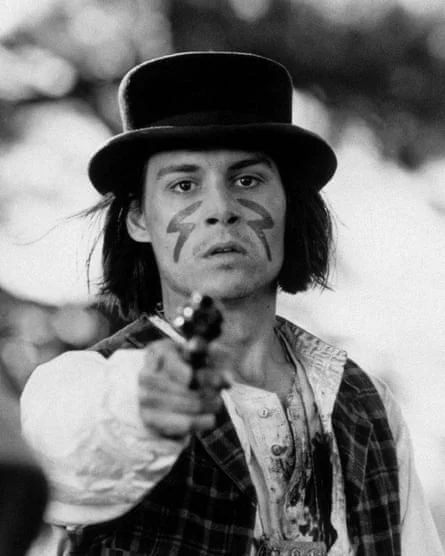
However, Jarmusch was deeply immersed in the demanding pre-production of Dead Man, his 1995 neo-western starring Johnny Depp. The immense logistical and creative challenges of that project, which he later described as a "psychedelic western," forced him to decline Rowlands’ offer. "Dead Man was a nightmare to prepare and I was like: ‘Oh fuck, I can’t do it right now.’ That was the only time I had any interest in directing someone else’s script." The missed opportunity to bring a Cassavetes script to life with Rowlands at its center undoubtedly weighs on Jarmusch, yet he views it as a testament to the profound influence of both Cassavetes and filmmakers like David Lynch on his own artistic trajectory. He describes himself as a "humanist romantic," positioned at a "fulcrum" between these two American cinematic giants.
Jarmusch’s Distinctive Approach: Embracing the Unseen
Jarmusch’s oeuvre is characterized by a deliberate eschewing of conventional narrative structures. He has consistently focused on "offbeat Americana," favoring vignettes that explore the quotidian and the mundane, often infusing them with his signature deadpan humor. His creative philosophy is encapsulated in his statement: "I make films out of the things other people would leave out." This is evident in films like Coffee and Cigarettes, where he deliberately explored the pauses and breaks from "real things" that people take.
This philosophy is profoundly present in his latest film, Father Mother Sister Brother. Jarmusch openly acknowledges a debt to the master of everyday observation, Yasujirō Ozu. The film, a three-part anthology, is set in New Jersey, Dublin, and Paris. While the characters do not overlap, recurring visual motifs, such as a pack of skateboarders navigating urban traffic, and the curiously placed, resolutely British idiom "Bob’s your uncle," weave a subtle connective thread through the disparate narratives.
The Father Vignette: Family Dynamics and Financial Strain
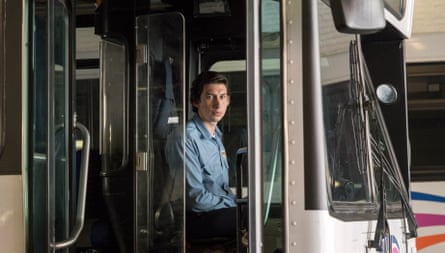
The first segment, "Father," introduces Jeff (Adam Driver) and Emily (Mayim Bialik) as they visit their widowed father (Tom Waits) in his secluded country home. The atmosphere is thick with unspoken tension. The manipulative father insists on his financial precarity, shamelessly soliciting funds from his successful, yet emotionally distant, children. The dialogue, though sparse between the siblings, reveals a fractured familial bond, a common theme in Jarmusch’s explorations of human relationships.
The Mother Vignette: The Shadow of Parental Disconnect
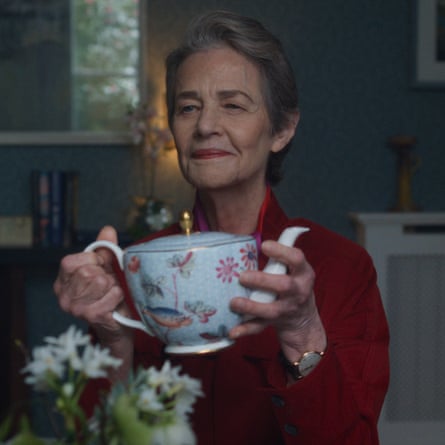
In stark contrast, the "Mother" segment unfolds in a grand Dublin residence, focusing on a celebrated author mother (Charlotte Rampling) and her two daughters, Timothea (Cate Blanchett) and Lilith (Vicky Krieps). The familial disconnect is palpable. Timothea is depicted as reserved and self-contained, while Lilith embodies a more bohemian spirit, her engagement with her phone during a formal tea service highlighting the generational and personal chasm. Despite their differences, the sisters find a subtle solidarity in their shared experience of their emotionally frigid mother, a character whose presence evokes a sterile, almost untouchable aura, reminiscent of overly protected, yet unstylish, domesticity.
The Sister Vignette: Memory, Loss, and Parisian Echoes
The final triptych, "Sister," shifts to Paris, where New York-born fraternal twins Billy (Luka Sabbat) and Skye (Indya Moore) reunite in their deceased parents’ apartment. The space, filled with the echoes of warm memories, serves as a poignant backdrop for their shared grief and the processing of their parents’ tragic death in a plane crash.
The "Cast First, Write Fast" Philosophy in Action
Jarmusch’s creative process is remarkably efficient. He often allows ideas to percolate for extended periods before embarking on the writing phase, which he describes as rapid. A key element of this approach is his tendency to begin with the actors he wishes to collaborate with. "I was just thinking how interesting it would be if Tom Waits played Adam Driver’s father. Like: wow!" he explained, detailing the genesis of the "Father" segment. "And then I thought of Mayim Bialik as Adam’s sister because she was my favourite host on Jeopardy!. I wrote it in, I don’t know, 10 days. Maybe two weeks." This "cast first, write fast" methodology allows him to imbue characters with specific actors’ nuances from the outset, a practice that has yielded fruitful collaborations with a recurring ensemble of talent.
This collaborative spirit is evident in his long-standing relationships with actors like Tom Waits, whom he first met at a Jean-Michel Basquiat party, and Adam Driver, with whom he previously worked on Paterson and The Dead Don’t Die. Cate Blanchett, who also appeared in Coffee and Cigarettes, offered her perspective via email: "Jim gives his actors and the crew every last drop of himself. He looks at and listens to the world in a very particular way; he notices elements most of us would miss. He prizes and underscores the oddball parts of people that would normally be discarded or overlooked. Father Mother Brother Sister has, like the man himself, a mysterious deep pulse, with no extraneous elements."
Steve Coogan, another veteran of Coffee and Cigarettes, lauded Jarmusch’s work, noting its status as a "touchstone" among auteur filmmakers. He affectionately recalled his two days on set as "the most remunerative two days of my life," adding, "I miss him." Jarmusch reciprocated the sentiment, reminiscing about their shared "crazy shit" in Los Angeles and New York.
Venice Triumph and Artistic Independence
The journey of Father Mother Sister Brother to critical acclaim was not without its unexpected turns. When the film was initially passed over by the Cannes Film Festival, Jarmusch presented it at Venice, where it surprised many by securing the coveted Golden Lion, triumphing over films like The Voice of Hind Rajab. "I didn’t expect to win," Jarmusch admitted, though he expressed genuine appreciation for the accolade. He remains philosophically opposed to the competitive nature of artistic expression, viewing it as "nonsense." However, he vividly recounted the warmth of the Italian reception at Venice airport when he carried his Golden Lion trophy through security, eliciting shouts of "Bravo! Fantastico! Auguri!" – a moment he described as "just so Italian. I was very moved."
Navigating the Industry and Embracing the Present
Jarmusch’s commitment to artistic integrity remains unwavering. He is set to begin shooting his next project in Paris in May, a film he is reluctant to discuss due to his deep-seated superstition. Reflecting on a 1990 assertion that "ambition can be very evil," he continues to find the financial aspects of filmmaking challenging. He remains resolute in his refusal to compromise with potential backers, stating that he will "walk away" if asked to deviate from his vision, particularly from individuals he deems unqualified to dictate his artistic direction.
The practicalities of independent filmmaking mean smaller budgets and compressed timelines. This has contributed to the five-year gap between The Dead Don’t Die and Father Mother Sister Brother. "It’s harder every time to get a film made. I’m not a commercial director. I’m not even a professional film-maker," he candidly stated.
The themes of loss and grieving in Father Mother Sister Brother prompted a brief discussion on mortality. Jarmusch, however, approaches the subject with a philosophical detachment, drawing inspiration from Buddhist principles. "Things are cyclical. I believe that energy isn’t created or destroyed [when we die]… Life is a beautiful gift, but I don’t mourn the idea that I will lose it someday." He actively cultivates a present-moment awareness through swimming, tai chi, and meditation, a practice he finds increasingly vital in a world facing environmental destruction and inherent fragility. "The planet is being destroyed and everything is so fragile that I somehow want to appreciate my life," he confessed.
When asked about his future plans, Jarmusch invoked the wisdom of Neil Young: "Jim, the best plan, man, is no plan." He remains, at his core, a dedicated cinephile, finding immense joy in watching films daily, from silent classics that he likens to dreams to contemporary works. His passion for cinema, coupled with his stubborn determination to bring his own unique visions to the screen, defines his enduring legacy. "I’m still a cinephile. I’m blown away by watching films of all kinds… I try to watch a film every day – and I can’t imagine a more beautiful thing to get to do. And then I fight to get to make my own films. I’m lucky, but I’m stubborn as hell as well."