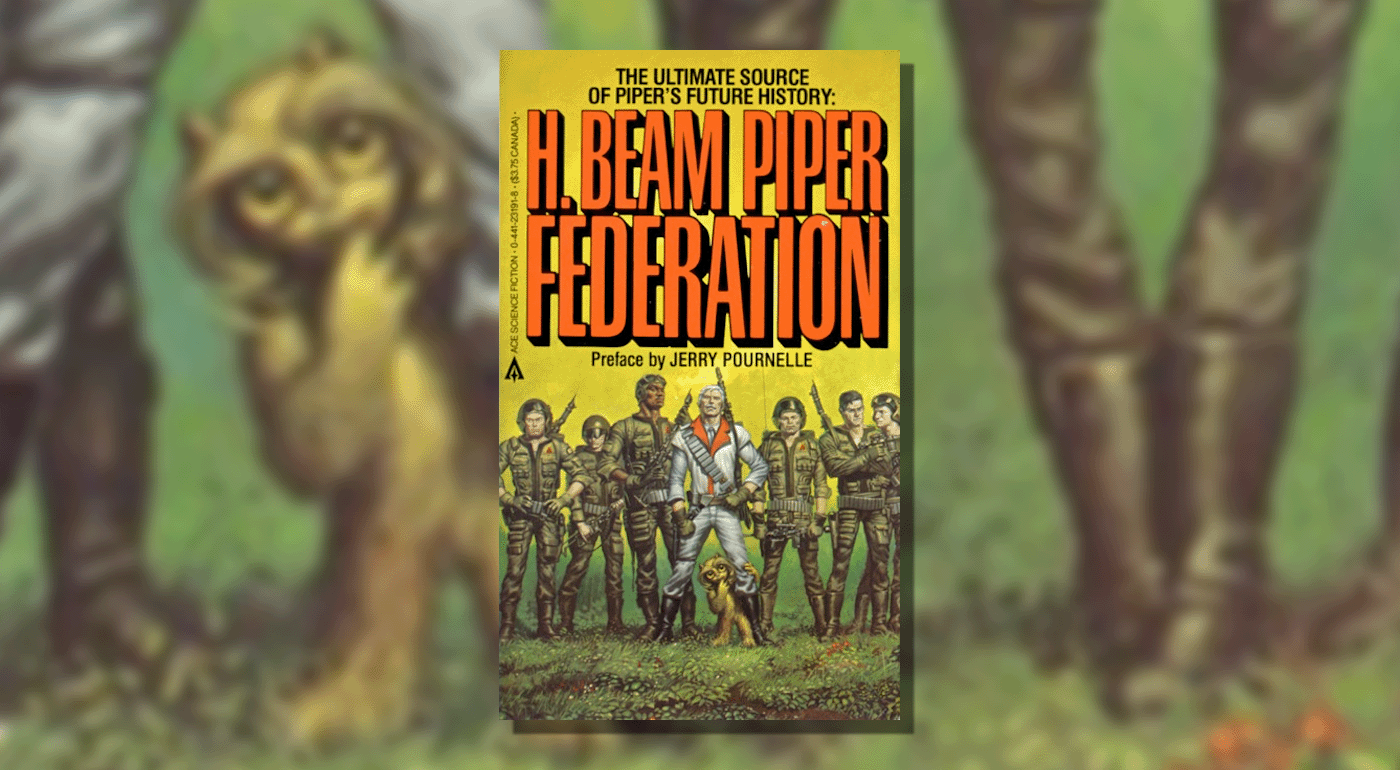
The recent record-breaking storm that swept through New England served as an unexpected catalyst for a deep dive into the shelves of classic science fiction, prompting a re-evaluation of familiar narratives. Alan Brown, in his bi-weekly series "Front Lines and Frontiers," typically explores tales of soldiers, spacers, scientists, and adventurers—stories brimming with the "alarums and excursions" of battle, chase, and clash. This time, however, the author’s chosen comfort read, a collection of H. Beam Piper’s shorter works, offered a more complex and, at times, unsettling experience. The collection, published in 1981 by Ace Books as part of a larger effort to revive Piper’s bibliography, featured striking cover art by Michael Whelan, a testament to the enduring appeal of Piper’s imaginative worlds.
While the initial re-read began promisingly with the highly regarded story "Omnilingual," the subsequent tales quickly shifted focus to colonial expansion, presenting a narrative predominantly from the colonizers’ perspective. This stark contrast, particularly in an era increasingly attuned to the impacts and moral ambiguities of colonialism and postcolonialism, rendered the anticipated comfort reading a more introspective and critical engagement.
H. Beam Piper: A Legacy of Cycles and Capitalism
H. Beam Piper (1904-1964) was an American science fiction author whose prolific career was tragically cut short by suicide before achieving widespread recognition for his complex world-building. His work is deeply embedded in the concept of the "Terro-Human Future History," a sprawling narrative framework that posits historical forces operate in repeating cycles of growth, destruction, and renewal. This overarching history chronicles humanity’s trajectory from the formation of a planetary Federation, through interstellar expansion, subsequent dark ages following the Federation’s collapse, and the rise and fall of various empires. Piper’s stories often championed individual self-interest and capitalism, interwoven with thrilling plots of exploration, adventure, and warfare.
A significant aspect of Piper’s legacy is that his copyrights were not renewed after his death. This oversight has made a substantial portion of his extensive body of work freely available, notably through Project Gutenberg, allowing new generations of readers to discover his unique contributions to the genre. Prior reviews of Piper’s work, including analyses of Lord Kalvan of Otherwhen, Little Fuzzy, Space Viking, and The Cosmic Computer, further illuminate his biographical details and the foundational principles of his future history.
John F. Carr: Steward of Piper’s Universe
The collection Federation is introduced by John F. Carr, an American science fiction author and editor renowned for his collaborative anthologies with Jerry Pournelle, his stewardship of the War World shared universe series, and his dedicated efforts to preserve and promote H. Beam Piper’s literary heritage. Carr authored two biographies of Piper, H. Beam Piper: A Biography and Typewriter Killer, and has extensively edited collections of Piper’s work. He has also contributed sequels to several of Piper’s most iconic novels, demonstrating a deep understanding and appreciation for the author’s vision. It is worth noting that the reviewer acknowledges a personal friendship with Carr and has contributed to the War World series.
The Enduring Shadow of Colonialism
The concepts of colonialism and postcolonialism are now deeply ingrained in contemporary discourse, reflecting a global effort to understand the lasting impact of colonial rule on subjugated peoples and cultures. Historically, European powers such as Spain, Portugal, England, and France, from the 15th to the 20th centuries, engaged in widespread military expansion across the Americas, Africa, and Asia. Their objectives were to establish dominance, extract wealth, and exploit resources for their own benefit, often at the severe expense of indigenous populations.
This spirit of expansionism is paralleled in the American ideology of Manifest Destiny, a belief that the United States was divinely ordained to expand its dominion and spread democracy across the North American continent. During H. Beam Piper’s writing career, it was common for science fiction authors to envision space as the next frontier for such expansion. Consequently, numerous stories emerged from a colonialist and/or imperialist perspective, depicting space colonies, colonial revolts, and the rise and fall of interstellar empires. However, as societal understanding evolved, a counter-narrative emerged within science fiction, with increasing numbers of stories challenging the assumptions and beliefs that underpinned the colonial project, offering critical examinations of its practice and morality.
Federation: A Collection of Early Visions
John F. Carr’s introduction to the collection Federation details the genesis of his research into H. Beam Piper’s work, tracing his growing admiration for the author and his literary contributions.
"Omnilingual": A Martian Rosetta Stone
"Omnilingual," first published in Astounding Science Fiction in February 1957, is widely considered one of H. Beam Piper’s finest stories and a standout piece in science fiction history. The narrative centers on Martha Dane, a junior archaeologist on one of the inaugural human expeditions to Mars. The explorers discover that Mars was once inhabited by a human-like civilization that declined around the same period humans on Earth were developing cave paintings. Martha’s crucial task is to decipher the Martians’ written language, a feat deemed nearly impossible by most of the expedition, largely comprised of military personnel from the Federation Space Force. The absence of a linguistic key, akin to the Rosetta Stone, presents a formidable challenge. Piper skillfully portrays the expedition’s environment and the interpersonal dynamics, particularly the supportive relationship Martha shares with senior archaeologist Selim von Ohlmhorst, contrasted with the scorn she faces from the ambitious young Tony Lattimer.
The expedition uncovers an ancient Martian city, its taller structures still emerging from the Martian dust. Upon entering the upper levels, they find many areas looted, but eventually discover a fully furnished building, which they identify as a university. Within its walls, filled with books and murals, they begin to piece together fragments of the Martian language. The breakthrough occurs when Martha and her colleagues realize they have indeed found a functional "Rosetta Stone" of sorts. The story is lauded for its compelling structure, believable characters, and its notable inclusion of a female protagonist, a rarity for its time. Although Piper’s envisioned future has diverged into alternate history, "Omnilingual" remains a highly readable and rewarding story, available for free on Project Gutenberg.
"Naudsonce": The Puzzle of Non-Linguistic Communication
Similar to "Omnilingual," the story "Naudsonce" hinges on the challenge of deciphering an alien language. In this narrative, a Federation Space Navy/Colonial Office expedition discovers a planet rich in resources and ecologically compatible with Terran life. However, the planet is inhabited by a sentient, albeit primitive, population. Federation regulations mandate that expeditions establish friendly relations and secure permission to settle through treaties with local officials. This requires understanding the inhabitants, peculiar beings whose behavior is often perplexing and whose vocalizations do not appear to follow discernible linguistic patterns. Tensions rise as the Marines within the expedition grow impatient and eager for conflict, readying their bayonets at the slightest provocation. The crux of the story lies in solving the mystery of how this species communicates without what Terrans recognize as language, leading to the coining of the term "Naudsonce" to describe this unique communication process.
"Oomphel in the Sky": Colonial Bureaucracy and Moral Ambiguity
"Oomphel in the Sky" presents another scenario of Federation colonization on an inhabited planet. By this point, the Terrans have established a presence and trained local auxiliaries, whom they refer to as "sepoys"—a term historically used for locally recruited soldiers in colonial armies. The Terrans have implemented plantations, but face unrest as local priests interpret the periodic approach of a binary star as a harbinger of the end times. The narrative highlights the increasing influence of Federation bureaucracy in colonization efforts, including a Native Welfare Commission whose well-intentioned actions often prove detrimental.
A Terran representative arrives, armed with neo-Marxist theories that prove impractical in the face of local realities. The story functions as a heavy-handed morality tale, advocating for the superior efficacy of capitalist self-interest over governmental intervention. The resolution to the Terran’s problems involves deception and manipulation of the local populace’s religious beliefs. This results in a morally ambiguous narrative devoid of clear heroes. Its sole redeeming feature is the introduction of Captain Foxx Travis, a character who later becomes a significant figure in the System States War, a conflict marked by the revolt of colony worlds against a stagnant Terran Federation.
"Graveyard of Dreams": Echoes of The Cosmic Computer
"Graveyard of Dreams" serves as a condensed version of Piper’s novel The Cosmic Computer. The story follows Conn Maxwell, dispatched from the planet Poictesme to Earth to study computer science and locate a legendary supercomputer believed to have single-handedly decided a recent war. Poictesme, lacking indigenous sapients to dominate, allows this story to focus on the internal decay of colonial empires rather than the imposition of rule. Conn’s home world is littered with abandoned military hardware from the interstellar Federation after the System States War, and salvaging this surplus is the primary industry on the impoverished planet. Conn discovers the supercomputer is mythical but devises a plan with his father to search for it in a way that encourages the inhabitants to rebuild their economy and become a space-faring civilization. While the novel elaborates on subsequent events, the short story concludes at this pivotal juncture.
"When in the Course": The Genesis of Lord Kalvan of Otherwhen
"When in the Course" is another example of a story germinating into a larger, distinct narrative. Readers familiar with Piper’s work will recognize elements that foreshadow his novel Lord Kalvan of Otherwhen. However, this story lacks the protagonist Kalvan and is set on another planet rather than an alternate timeline. The colonial expedition here is not a governmental operation but is sponsored by a private chartered company. The expedition is astonished to encounter not only sapient bipeds but beings indistinguishable from humans—a phenomenon they attribute to parallel evolution. They stumble upon the territory of Prince Ptosphes of Hostigos, who is beset by enemies, particularly the priests of Styphon. The Styphon priests, controlling the secret of gunpowder production and adept at pitting local leaders against each other, exert significant influence over the planet. Desperate for aid, Prince Ptosphes readily agrees to the treaty required by Federation regulations in exchange for the expedition’s assistance.
Using their contragravity vehicles, the expedition aids the Hostigos forces in recapturing a vital castle through an airborne assault and subsequently attacking massing armies on their borders. They share the secret of gunpowder and assist in constructing wooden vessels that are transformed into airships by equipping them with jet engines and contragravity gear. Ultimately, they facilitate Prince Ptosphes’s ascension to planetary ruler. During this process, two expedition members fall in love with and marry locals. The notion of an expedition establishing a world government to then secure a treaty is, at best, morally ambiguous. The narrative’s depiction of the slaughter unleashed by advanced technology evokes sympathy for the defeated opponents.
This previously unpublished story, while offering a glimpse into Piper’s creative process, does not resonate as strongly as the reworked version that became Lord Kalvan of Otherwhen. In that novel, the plausible scenario of a single protagonist, Pennsylvania State Policeman Calvin Morrison, being transported into an alternate history is more compelling than the concept of parallel evolution creating identical humanoids on another planet. This revision also heightened the peril for the protagonist and his allies, who faced their adversaries with only the secret of gunpowder and strategic acumen. While it was an interesting exercise to see an alternative approach to a familiar story, the reasons for its abandonment and rework are readily apparent.
Final Thoughts: A Complex Legacy
The collection Federation offers a collection of entertaining stories, serving as compelling evidence of the remarkable conceptual depth of Piper’s "Terro-Human Future History." By presenting early iterations of narratives that would later blossom into the novels The Cosmic Computer and Lord Kalvan of Otherwhen, the collection provides invaluable insights into the author’s creative evolution. While the generally favorable attitude toward colonialism within these stories can temper the enjoyment for some readers, the narratives remain significant and worthy of exploration for their imaginative scope and foundational contributions to science fiction.
The stories, though products of their time, invite contemporary readers to engage with the evolving discourse surrounding colonialism and its portrayal in speculative fiction. As discussions around historical injustices and their ongoing impact continue, revisiting Piper’s work through this lens offers a unique opportunity to appreciate both the imaginative power of early science fiction and the critical re-evaluations that shape our understanding of the genre and its relationship with the wider world.