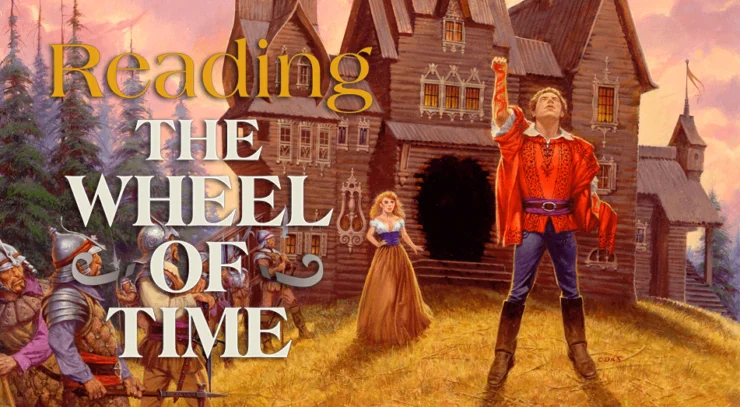
As the Aiel procession advanced into Bandar Eban, Rand al’Thor, the Dragon Reborn, rode at its head, his mind a battlefield of echoes. The list of murdered women, a grim tally he carried in his thoughts, began with Moiraine, her absence a gaping wound. Beside him, the spectral voice of Lews Therin, his past self, joined the litany, adding Ilyena’s name to the chorus of loss. Yet, a subtle shift had occurred within Rand; the sharp agony of these memories had dulled, replaced by a distant ache. The brutal ordeal at the hands of Semirhage, the Forsaken, had inadvertently forged a new defense mechanism, teaching him to compartmentalize, to bury the overwhelming guilt and pain beneath layers of hardened resolve.
This newfound emotional distance was starkly illustrated when Lews Therin, in a chilling echo of Rand’s own buried fears, appended Min’s name to the list. Rand’s abrupt halt, his followers startled, spoke volumes. He rebuked Lews Therin, reminding the phantom that Min lived, that Semirhage, not he, was the architect of that near-fatal attack. But the unspoken truth resonated: had Min perished, it would have been a testament to his perceived weakness, his inability to shield those he loved.
The city of Bandar Eban presented a tableau of suffering. The gaunt faces of the populace, etched with starvation, and the lingering signs of recent disorder served as stark reminders of the upheaval that had preceded Dobraine and the Aiel’s intervention. Amidst this desolation, Merise, a figure of authority, approached Rand, her complaint a dissonant note against the grim reality. She chided him for his treatment of Cadsuane, urging him to seek forgiveness. Rand’s response was a chilling departure from his former volatile self. He met Merise’s gaze with an unnerving stillness, his silence a more potent weapon than any shout. This new strategy—responding to demands with silence and challenges with questions—proved remarkably effective. Merise faltered, visibly shivering, her gaze drawn to the pouch on his saddle containing the symbol of his burden.
Rand’s Evolving Tactics and the Shadow of a New Power
Rand’s stoic demeanor masked a profound internal conflict. He explained to Merise that mistakes, even unintentional ones, demanded consequences. As their conversation concluded, a chilling synchronicity unfolded: balconies on opposite sides of the street collapsed simultaneously. While onlookers might have attributed this to Rand’s use of the One Power, it was, in fact, a manifestation of his ta’veren nature, a subtle manipulation of fate. However, the violence of these events, more pronounced than usual, sparked a disquieting question in Rand’s mind. Could a nascent, mysterious power, one that Lews Therin deemed beyond Rand’s grasp, be influencing these ta’veren effects? He recalled the Bore, drilled in pursuit of such an unknown power, a power ultimately linked to the Dark One himself.
To manage the overwhelming temptation of this unknown force, Rand now carried the Access Key, its immense power a counterweight to the allure of the "True Power." He confessed that this other force "called to him, sang to him, tempted him. So much power, so much divine wonder. But it terrified him. He didn’t dare touch it, not again."
His stay in Bandar Eban was in a mansion belonging to Milisair Chadmar, a prominent merchant. Rand summoned her, seeking the last messenger who had carried royal orders. Milisair’s hesitant admission, under Rand’s unwavering interrogation, revealed a darker truth: the messenger had been tortured for information and was now imprisoned. Rand demanded the messenger be brought before him. When Milisair alluded to Alsalam’s presumed death and the swiftness of a potential coronation, Rand firmly stated his disinterest in being king of Arad Doman.
As Milisair departed, a fleeting glimpse of Min in the hallway, her expression troubled, ignited a new worry in Rand. Had she experienced a viewing concerning Milisair? Before he could call out, Min turned away, leaving Rand to refocus on the pressing matter of grain distribution. He mused that even if Alsalam was indeed dead, discovering his fate was crucial, as Alsalam represented his best lead on Graendal. The thought of confronting her, and the inevitable retribution, was stark: "If he did find her, he would see that she died by balefire, just like Semirhage. He would do what must be done."
Gawyn’s Quest for Purpose Amidst Political Maneuvering
Meanwhile, in the rebel Aes Sedai encampment, Gawyn, Prince Consort of Andor, found himself entangled in a frustrating diplomatic dance. His audience with Lelaine, a powerful Aes Sedai, was aimed at securing Egwene’s prohibition against a rescue mission. His efforts were largely in vain, reduced to playing Lelaine and Romanda against each other and offering carefully curated insights into Elayne’s political strategies to maintain their interest.
He recalled a poignant piece of advice from his father, Taringail Damodred, to his half-brother Galad: "The two people one can never trust: beautiful women and Aes Sedai. And then he added: ‘Light help you, son, if you ever have to face someone who is both.’” Gawyn felt a similar unease dealing with Lelaine. While not conventionally beautiful, her attractiveness possessed a subtle danger, lulling men into a false sense of security that overt beauty often avoided.
After an hour of fruitless discussion on Andoran taxation rates, met only with vague assurances, Gawyn left, uncertain of any progress. His departure from the main camp was, as always, overseen by a white-robed novice. He observed Lelaine and Romanda’s discourse on Egwene, noting their palpable respect for a woman whom Gawyn perceived as overwhelmed. "Was he the only one who remembered that she’d been an Accepted just months ago? She was in over her head. However, she’d also impressed the people in this camp. It was like his mother’s own rise to power in Andor many years before."
Bryne’s Counsel and the Weight of Allegiance
Gawyn had arranged to accompany Gareth Bryne, the seasoned general, on an inspection of the outer guard posts. This provided a deadline for his meeting with Lelaine, a tactic Bryne himself had once imparted. It also offered Gawyn a much-needed distraction, as most soldiers in the camp harbored hostility towards him following his raids on their forces.
As they rode, Bryne broached the subject of the raids, seeking tactical details. Gawyn, however, refused to betray his former men, stating, "he may have abandoned his men, but he has not and will not betray them." To appease Bryne, he conceded that his troops were young and barely trained, suggesting they were better suited for sparring than battle, and risked severe casualties without his leadership and knowledge of Bryne’s tactics. Bryne, mollified for the moment, cautioned that successful raids would prompt further discussion.
Gawyn then posed a hypothetical: what if he were ordered to fight against the White Tower? Bryne’s response was unwavering: he would obey, as sworn. Gawyn expressed distress at the prospect of inter-factional warfare within the White Tower. Bryne, in turn, probed Gawyn’s concern, questioning his identity and allegiances. He explained that while most soldiers followed orders, commanders bore the weight of choosing sides and the responsibility of ensuring those choices were righteous.
Gawyn replied that his loyalty lay with Elayne. Bryne countered that Gawyn was currently fighting for Egwene, not Elayne. This led to a profound exchange: "‘Whom to serve?’ Bryne said, thoughtful. ‘Our own skill frightens us, sometimes. What is the ability to kill if one has no outlet for it? A wasted talent? The pathway to becoming a murderer? The power to protect and preserve is daunting. So you look for someone to give the skill to, someone who will use it wisely. The need to make a decision chews at you, even after you’ve made it.’”
Bryne confessed his own struggles, having pledged his abilities to Morgase, only to feel betrayed. This led him to question the meaning of his past actions, the lives he had taken on her behalf. "‘You wonder why I’m here, instead of in Andor?’ Bryne asked. ‘It’s because I can’t let go. It’s because the world is changing, and I need to be part of it. It’s because once everything in Andor was taken from me, I needed a new place for my loyalty. The Pattern brought me this opportunity.’”
Bryne admitted his belief in the rebel Aes Sedai’s cause, having witnessed the devastating impact of poor leadership, exemplified by Elaida. He reiterated the importance of Gawyn choosing a side and understanding the rationale behind that choice. Gawyn, riding away, admitted his own confusion, feeling adrift, unsure of the sides involved, let alone where he belonged.
Analysis: Thematic Depth and Character Arcs
This chapter, despite Gawyn’s often underdeveloped characterization, delves into a central theme that has resonated throughout the Wheel of Time series: the fundamental question of allegiance and the moral compass guiding difficult choices in a world teetering on the brink of cataclysm. While Robert Jordan’s untimely passing means this theme will not be explored in his precise words, its emergence here is significant and promises further exploration.
From the unwavering devotion of Warders to the conviction of the Whitecloaks, the dedication of Sheriam to the Black Ajah, and the very premise of the Dragon Reborn wielding tainted saidin, the narrative consistently presents characters facing the ultimate question: in the face of global conflict and pervasive deception, where does one stand? The challenge of discerning trustworthy leaders, those who prioritize the well-being of their followers and the world, is magnified by the spread of misinformation and the limitations of communication within this intricate world.
Gawyn’s trajectory offers a compelling case study. His choices, often driven by emotion rather than calculated strategy, highlight the complexity of loyalty. His brother, Galad, operates on a rigid moral framework, prioritizing righteousness above personal connections. This contrast, while distinct, reveals a shared characteristic: a form of single-mindedness, albeit expressed differently. Gawyn’s loyalty, whether to Elayne or Egwene, is rooted in personal feeling, a testament to his emotional nature.
The impending bond between Egwene and Gawyn as Warder and Amyrlin Seat, respectively, presents a fascinating parallel to Gawyn’s existing role as First Prince of the Sword. Both positions demand unwavering obedience and protection, transcending personal desires. Gawyn’s upbringing and training have instilled in him an identity of service, a path irrevocably altered by the tumultuous events of this age. The coming of the Dragon Reborn is prophesied to unravel oaths and loyalties, and Gawyn is a prime example of this upheaval.
The potential for Gawyn to either exhibit unwavering loyalty to Egwene or cause her harm, as foretold by Min’s visions, imbues his journey with significant narrative weight. This use of precognition as a narrative device, as seen with Cadsuane’s efforts to guide Rand, elevates reader investment.
Bryne’s character arc is also illuminated. His sense of betrayal by Morgase transcended personal hurt, triggering an existential crisis that forced him to re-evaluate his past actions and allegiances. His faith in the rebel Aes Sedai, likely influenced by Siuan, underscores the profound impact of leadership and the search for a worthy cause.
Juxtaposing Gawyn and Bryne with Rand reveals the immense burden carried by the Dragon Reborn. Unlike those who can pledge their skills to a higher authority, Rand shoulders the solitary weight of leadership, his choices and the ensuing casualties a constant source of internal torment. His hardening resolve, a defense mechanism against the pain, has led him to isolate himself, pushing away the counsel of friends and loved ones. His diminished emotional response to the list of fallen women, including Semirhage, signifies a profound detachment, a move away from the moral boundaries he once painstakingly maintained.
However, glimpses of the former Rand persist. His concern for Min’s feelings, his desire to see Aviendha, and his continued focus on the world’s future beyond the Last Battle demonstrate an enduring capacity for care. Even his hesitation to execute Milisair, acknowledging her youth, suggests a lingering thread of empathy. His decision to carry the Access Key, not to use it but to acknowledge its allure, signifies a line he still refuses to cross, offering a sliver of hope for his eventual self-redemption.
The collapsing balconies in Bandar Eban raise a critical question: has Rand’s interaction with the "True Power" corrupted his ta’veren abilities? If the "True Power" inherently tears at the Pattern, as seen in Moridin’s travels, then Rand’s future actions may be irrevocably tainted by destruction. The balance of good and bad, inherent in the Pattern, may be disrupted, leading to a future dominated by disaster if Rand succumbs to temptation.
The narrative is poised to further explore these evolving character dynamics and thematic underpinnings in the upcoming chapters, promising a deeper examination of Rand’s internal transformation and Gawyn’s quest for purpose.