In an era where the lines between technological innovation and artistic expression are increasingly blurred, filmmaker Zack London, known online as Gossip Goblin, has emerged as a groundbreaking figure, challenging traditional cinematic paradigms with his unique approach to AI-generated storytelling. His work, characterized by bleak sci-fi epics, mutated creatures, and philosophical narratives, feels uncannily like fragments of big-budget genre cinema, yet it bypasses the conventional demands of soundstages and extensive visual effects studios. Instead, London harnesses the burgeoning power of artificial intelligence to generate and assemble his captivating short films, positioning himself at the vanguard of a new cinematic movement.
The Genesis of a Digital Auteur: Zack London’s Unconventional Path
Zack London, a 35-year-old Los Angeles native, has maintained a relatively low public profile despite his work garnering immense online traction. His journey to becoming a pioneering AI filmmaker is an intriguing tapestry woven from diverse academic and professional experiences. London initially pursued sculpture and anthropology at Pitzer College, disciplines that, while seemingly distant from filmmaking, instilled in him a profound understanding of form, narrative, and human societies – elements that now heavily inform the rich, conceptual worlds he creates.
After his academic pursuits, London embarked on a Fulbright scholarship in Malaysia, spending nearly two years traversing Southeast Asia. This period of extensive travel and cultural immersion broadened his worldview and fueled his innate storytelling instincts. Upon returning, he transitioned into the burgeoning tech sector, working as a product designer at various startups before landing a significant role at Facebook, where he contributed to Oculus’s virtual reality initiatives. This experience in VR proved crucial, exposing him to the cutting edge of digital world-building and immersive technologies.
Four years ago, London relocated to Stockholm after meeting his Swedish partner, a pivotal move that coincided with his deep dive into AI. It was in Sweden, while experimenting with early image-generation software after his tech job hours, that he stumbled upon a revelation: a new, accessible method for visualizing the stories he had long been writing. Filmmaking, which had never seemed a viable path, suddenly became a tangible reality through AI. His early experiments included a satirical travel writing series about a fictional Soviet satellite state called Urumquan, complete with Midjourney-generated, semi-documentary yet surreal images. This unexpected online success ignited his passion for storytelling through nascent AI tools.
Gossip Goblin: An Emerging Aesthetic and a Provocative Possibility
The moniker "Gossip Goblin" began as a deliberately unserious, internet-native alias, but it has since transformed into a distinctive banner for a growing body of work that is anything but disposable. London’s films offer a provocative possibility in a Hollywood still grappling with the definition and implications of AI: that artificial intelligence already possesses an emerging aesthetic, one that belongs not to monolithic studios but to individual creators willing to sculpt it into something deeply personal.
Unlike many AI-generated videos, often dismissed as "slop" for their generic quality, London’s films lean into the medium’s inherent strangeness. He embraces the dream logic, synthetic textures, and the sense of images that feel half-remembered rather than fully observed. This approach suggests a form of storytelling that resonates less with traditional filmmaking and more with visualized thought, creating a unique signature that distinguishes Gossip Goblin in a crowded digital landscape. His narrative worlds are populated by mutated creatures, bunker societies, and philosophical narrators contemplating the nature of reality, all rendered with an uncanny resemblance to big-budget genre cinema, despite their humble, AI-driven origins.
The Rise of AI Filmmaking: Context and Tools
London’s success comes at a time of rapid acceleration in generative AI capabilities. Just a few years ago, AI-generated video was rudimentary, often characterized by distorted figures and incoherent motion. However, advancements in models like Midjourney, Stable Diffusion, RunwayML, Luma AI, and Pika Labs have made sophisticated image and video generation accessible to a broader audience. These tools, which learn from vast datasets of existing media, can produce highly detailed, stylized, and increasingly consistent visuals based on text prompts. The global market for AI in media and entertainment, valued at billions, is projected to grow exponentially, signaling a fundamental shift in content creation.
Hollywood itself has been a battleground for this technological revolution. The WGA and SAG-AFTRA strikes of 2023 prominently featured AI as a central point of contention, with concerns over job displacement, intellectual property rights, and the ethical use of synthetic performances. While some studio executives view AI primarily as a cost-cutting tool, others, like London, see it as the foundation for an entirely new cinematic language and a democratizing force in filmmaking. This dichotomy forms the backdrop against which London’s work gains particular significance.
Behind the Scenes: Gossip Goblin’s Meticulous Process
Despite the common misconception that AI filmmaking involves simply typing a prompt and receiving a finished movie, London insists his process is far more intricate and laborious, mirroring many steps of traditional filmmaking. His team’s workflow is a testament to the blend of cutting-edge technology and time-honored cinematic craft:
- Scripting and Pre-visualization: Every project begins with a meticulously crafted script, which is then broken down into a detailed shot list, outlining every scene, angle, and environment. This initial phase is crucial for establishing the narrative and visual blueprint.
- Visual World Development: London and his team dedicate significant effort to exploring and defining the visual aesthetic. This includes conceptualizing character designs, creature appearances, lighting conditions, and architectural styles to create a cohesive and immersive world.
- Generation and Refinement: Using a suite of 15 to 25 different AI tools, the team generates and refines hundreds, sometimes thousands, of images and video clips that align with the story’s aesthetic and narrative requirements. Midjourney remains a favorite for initial image generation, but other specialized models are employed for tasks like ensuring character consistency across multiple shots and angles – a significant challenge in AI filmmaking where characters can easily "mutate" between frames.
- Assembly and Post-Production: All generated assets are then meticulously assembled and edited in DaVinci Resolve, a professional video editing software, much like a conventional film. This involves careful sequencing, pacing, and visual continuity.
- Sound Design and Performance: London’s commitment to quality extends beyond visuals. He collaborates with human voice actors to bring characters to life, eschewing synthetic voices despite their increasing sophistication. A dedicated foley artist creates custom sound effects, and original scores are composed, adding layers of depth and immersion that elevate the overall cinematic experience.
This multi-faceted approach stands in stark contrast to the "one-click" AI videos prevalent on social media. London’s dedication to narrative, aesthetic consistency, and traditional post-production elements ensures his work transcends mere technological demonstration, evolving into compelling storytelling.
The Patchwright: A Landmark Achievement
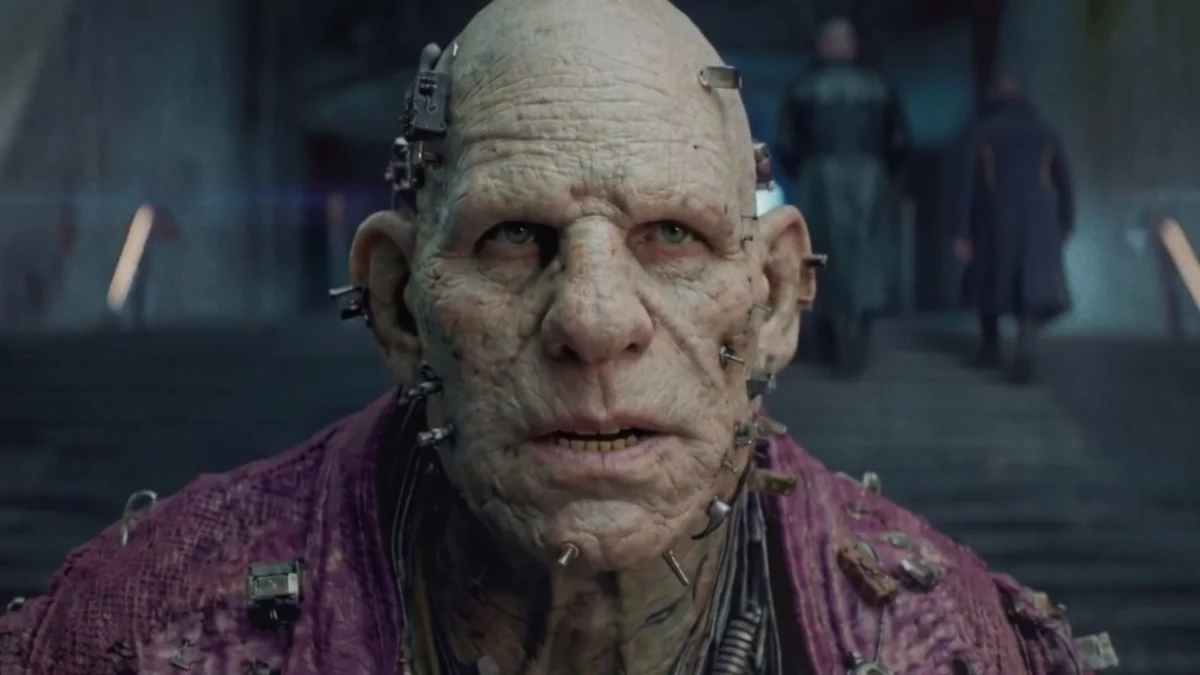
A significant milestone for Gossip Goblin is the upcoming release of The Patchwright, a 20-minute short film. Produced over approximately five months, this ambitious project is set in a grungy, Blade Runner-esque world teeming with flesh-and-metal hybrid characters. It features a full cast of human voice actors, a foley artist, and an original score, demonstrating the potential for AI-driven films to achieve a high level of production value and artistic ambition. The film serves as a powerful example of how London’s methodology can yield sophisticated, narrative-driven content.
Initially, London’s films relied heavily on narration rather than dialogue, primarily due to the technical limitations of early AI tools in generating convincing synchronized speech and performances. However, with the rapid evolution of technology, his upcoming 25-minute project will be significantly more dialogue-driven, showcasing the increasing capabilities of AI to handle complex character interactions.
Beyond the "Slop": Cultivating a Unique Vision
London attributes his work’s standout quality to a deliberate effort to resist the "default visual style" of AI. He explains that simply accepting what the AI generates often results in generic imagery. His process involves actively pushing the AI away from its baseline, imposing a specific creative vision and a rigorous selection process. While many creators focus solely on impressive visuals, London prioritizes storytelling, character development, and world-building, aiming to construct an expansive mythology with recurring characters and narratives that inhabit a larger, coherent universe.
This focus on narrative depth and unique aesthetic has resonated deeply with audiences. Gossip Goblin has quietly amassed over 1 million followers on Instagram and millions more views across various platforms. This organic growth underscores the hunger for innovative, high-quality content that transcends the ephemeral nature of much online media.
Hollywood’s Curious Gaze and the Future of Independent IP
London’s success has not gone unnoticed by the traditional entertainment industry. He confirms fielding calls from major studios, streamers, actors, and directors, all expressing curiosity about the future of AI storytelling. These conversations reflect a broader industry introspection: How will AI reshape creative workflows? What are the implications for talent licensing their voices or likenesses? While definitive answers remain elusive, the interest signals a recognition of AI’s transformative potential.
For London, the ultimate goal extends beyond mere technological demonstration. He recently quit his tech job, secured a small round of funding, and launched a studio to produce longer AI-driven films with a small international team. His vision is to build out a larger universe of stories – not mass-manufactured content, but thoughtful science fiction crafted with a focused creative team. He believes AI can enable ambitious genre storytelling without the exorbitant budgets historically required for large-scale productions. A handful of individuals, armed with advanced AI tools, could potentially create visually comparable content with significantly fewer resources than traditional studio productions.
Crucially, London’s strategy emphasizes retaining ownership of intellectual property (IP). In a future saturated with AI-generated content, he argues that recognizable characters, compelling narratives, and immersive worlds that audiences genuinely connect with will hold the most value. By building a small set of stories and IP that resonate, he aims to establish long-term value in an increasingly commoditized content landscape.
Implications for the Entertainment Industry: A New Frontier
The emergence of creators like Gossip Goblin signals profound implications for the entertainment industry:
- Democratization of Filmmaking: AI tools lower the barrier to entry for ambitious cinematic projects, enabling independent filmmakers and small teams to create high-quality, visually stunning content without needing massive budgets or extensive physical infrastructure. This could foster a new wave of diverse voices and unconventional narratives.
- Economic Disruption: The cost-efficiency of AI production could challenge traditional studio models, potentially leading to leaner production pipelines and a redistribution of resources. However, it also raises concerns about job displacement for traditional crew roles, from VFX artists to set designers.
- Evolution of Aesthetics: AI introduces novel visual styles and narrative possibilities. The "dream logic" and "synthetic textures" that London embraces could become defining characteristics of a new cinematic genre, pushing the boundaries of visual storytelling.
- Intellectual Property and Ethics: The debate over AI’s impact on copyright, authorship, and the ethical use of digital likenesses will intensify. London’s focus on retaining IP highlights a proactive approach to navigating these complex legal and ethical waters.
- The "Blockbuster" Question: While London is less concerned with being the first to prove an AI-generated blockbuster is possible, he acknowledges its inevitability. The technology’s rapid advancement suggests that sophisticated, feature-length AI films capable of captivating mass audiences are on the horizon. The key, as London stresses, will be compelling storytelling over mere technological novelty.
Zack London, through Gossip Goblin, is not merely experimenting with new tools; he is actively shaping a new artistic medium. His journey from an aspiring writer and tech professional to a pioneering AI filmmaker underscores a fundamental truth: technology, when wielded with a clear artistic vision, can unlock unprecedented creative potential. As Hollywood continues its dialogue with AI, figures like London offer a compelling glimpse into a future where innovative storytelling might thrive, unbound by conventional limitations, creating vast, unfiltered epics with remarkable efficiency and a distinct, personal touch. The "George Lucas of AI filmmaking" may yet emerge from the digital ether, proving that compelling narratives, not just colossal budgets, will ultimately capture the human imagination.