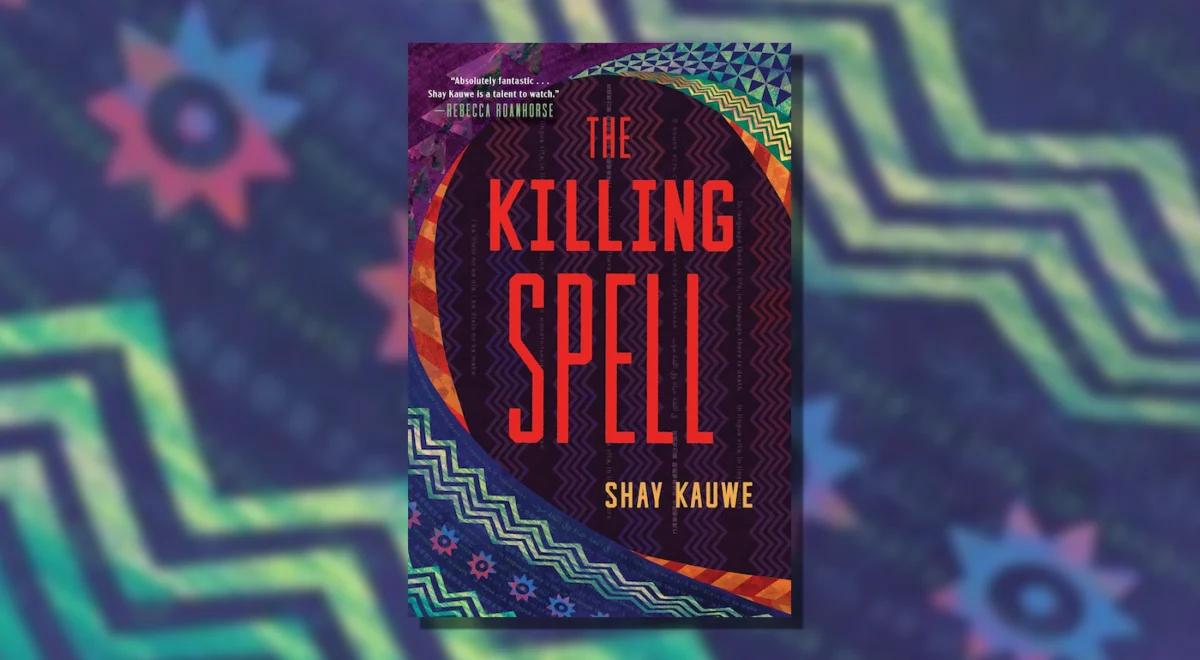
Saga Press, an imprint of Simon & Schuster, is set to release Shay Kauwe’s debut fantasy novel, The Killing Spell, on April 14th, offering readers a glimpse into a world where ancient magic collides with contemporary challenges. The novel introduces Kea Petrova, a young Hawaiian clan leader in outer Los Angeles, who finds herself embroiled in a murder investigation that threatens the delicate balance of her community and the fragile peace established generations ago. The release is accompanied by an excerpt that paints a vivid picture of the novel’s intricate world-building and its protagonist’s desperate fight for survival.
The narrative unfolds in a Los Angeles transformed by a cataclysmic flood nearly two centuries prior. This deluge not only reshaped the Hawaiian Islands but also unleashed dormant magical energies into the world. In the aftermath, Hawaiian clans, displaced from their ancestral homeland, forged a treaty with the city of Los Angeles, establishing a new sanctuary known as the Homestead. This treaty, however, is now on the precipice of expiration, creating an atmosphere of unease and instability for Kea and her clan, who are already struggling to maintain their footing in this new world.
At twenty-five, Kea shoulders the immense responsibility of leading one of the five Hawaiian clans on the Homestead. Her financial struggles are a constant source of anxiety, with her clan’s survival hinging on odd jobs and the sale of her unique craft: Hawaiian language spells. While her proficiency in linguistic magic is her primary asset, she harbors a deep-seated insecurity, feeling dwarched by the legacy of her predecessors. The precarious existence of her clan is further jeopardized by a shocking event: the murder of Angelo Reyes, a prominent Filipino activist in Los Angeles.
The circumstances surrounding Reyes’ death are particularly alarming. He was killed by a death spell, a form of magic that, due to the inherent properties of language magic, can only be conjured through the Hawaiian language. This revelation immediately casts a shadow of suspicion over Kea, as independent spellsmithing, while a source of income for many on the Homestead, is technically illegal. As the prime suspect, Kea must navigate a treacherous landscape of power, prejudice, and potent magic to clear her name and uncover the truth behind Reyes’ assassination. Her investigation will force her to confront LA’s most influential and dangerous figures, each wielding their own specialized magical abilities. The ticking clock intensifies the stakes, as Kea races against time to protect herself, her clan, and the very existence of the Homestead.
The Regulatory Framework of Magic in Los Angeles
The excerpt also provides a critical piece of background through the inclusion of "LA CITY ORDINANCE #11358." This ordinance, decreed by the Los Angeles Board, establishes a stringent licensing system for any individual wishing to practice magic within the city’s jurisdiction. The examination process is rigorous, requiring proficiency in one of the regulated languages: Latin, French, Italian, or Spanish. This regulation highlights a systematic effort by the city to control and categorize magical practice, likely stemming from the widespread release of magic following the Great Flood.
The ordinance also outlines a process for the potential inclusion of new languages into the regulatory framework. Every three years, the Board reviews the list of regulated languages, considering those with a "history of proven merit." A language can be considered for regulation up to three times before permanent disqualification. This mechanism suggests a dynamic and evolving understanding of magic, acknowledging its diverse origins and manifestations.
Crucially, the ordinance reveals the Board’s recognition of the global impact of certain languages on magical traditions. Amendment 1, for instance, notes Arabic’s successful second attempt at regulation, grading it as "exceptional" due to its profound influence on global literature and its proclivity toward storytelling, narration, and documentation. The inclusion of Arabic signifies the Board’s acknowledgment of its unique contributions to magical study, leading to the creation of a dedicated seat on the Board for a licensed Arabic speaker from a recognized clan.
Amendment 2 further expands this recognition by acknowledging Cantonese, Mandarin, and Japanese. These languages, graded as "noteworthy," have passed their first attempt at regulation. Their contributions to culture and art are deemed worthy of further study, with specific mention of Cantonese and Mandarin’s effects on good fortune and Japanese’s manipulation of the human body. This has resulted in the opening of two seats on the Board for licensed speakers of these languages from recognized clans.
Conversely, the ordinance notes the failure of Tagalog in its first attempt at regulation, with no amendment to be made. This detail underscores the competitive and merit-based nature of language inclusion in the magical regulatory system, hinting at potential political or social implications for communities whose languages are not recognized.
A Perilous Encounter in the Coop
The excerpt from Chapter 1 immediately plunges the reader into a scene of palpable tension and immediate danger. Kea is alerted by her cousin, Makani, through telepathic communication, to a threat within the chicken coop. The initial irritation at Makani’s potential "goofing off" quickly transforms into "ice-cold fear" as Kea rushes to the backyard. The description of Fiona, a hen, hobbling out with a twisted leg, serves as an immediate indicator of the violence that has transpired.
The smudged chalk of a ward around the coop door, attributed to Makani, suggests an attempt to protect the space, but its breach signifies the potency of the intruder. Kea’s apprehension is amplified by the realization that she is armed only with a leiomano, a shark-tooth club, and lacks the space for effective combat within the confines of the shed. Her primary concern is to lure whatever is inside out.

Peering through a crack in the door, Kea discovers Makani, trembling and hidden amongst the birds’ perch, surrounded by feathers, blood, and deceased chickens. A low, guttural hiss emanates from the darkness, confirming the presence of a dangerous creature. Makani’s telepathic message, "It’s behind the door," confirms the immediate proximity of the threat.
Confronting a Magi
The detailed description of the creature that emerges from the shadows – a "mo’o," a lizard creature approximately five feet long with sharp teeth and green scales – solidifies the supernatural element of the narrative. Kea recognizes it as a "magi," a creature born from magic, but ultimately an animal driven by primal instincts. Her strategy shifts to luring the magi away from Makani and the confines of the coop.
To achieve this, Kea employs a dangerous tactic: drawing blood from her own forearm with the leiomano to attract the magi’s predatory attention. This act of self-harm, though painful, is a calculated risk to draw the creature out into the open. The magi’s immediate fixation on the scent of blood underscores its animalistic nature.
Kea then leads the magi on a chase across the property, employing her knowledge of the terrain and the creature’s predictable behavior. The narrative highlights the physical exertion and fear involved, as Kea’s bare feet pound against the dry grass and her palms grow sweaty around the leiomano. Her primary objective is to keep the magi from ascending the back stairs and entering the house, while also seeking an opportunity to use her magic.
The Power and Peril of Language Magic
The chase culminates in a tense standoff on the front lawn, where Kea faces the charging mo’o. With the creature just feet away, Kea is forced to resort to her primary skill: language magic. The excerpt details her internal debate about which language to employ. Russian is considered for its simplicity and effectiveness, but the lack of an immediate rhyming word for her intended spell proves a hindrance. English, with its poetic requirements, is deemed too slow and unreliable for the urgent situation.
This leaves Hawaiian as her only viable option. However, the vagueness of Hawaiian spells, particularly a simple "stop" spell, carries the risk of unintended and potentially fatal consequences, such as halting vital bodily functions. The proximity of the mo’o – four feet, then three, then nearly touching – amplifies the pressure.
In a moment of desperate improvisation, Kea digs her fingers into the lawn for balance and utters the single word, "E ho’opa’a," meaning "stick." The magic surges, binding the magi’s legs firmly to the ground. This one-word casting, while effective in immobilizing the creature, comes with a significant personal cost: Kea finds herself also stuck to the ground. This unexpected consequence highlights the unpredictable nature of her magic, a recurring theme that suggests her spells, while often successful, rarely function precisely as intended.
A Sister’s Reluctant Assistance
The immediate aftermath of Kea’s spell sees her stranded, immobilized, and facing a spitting, struggling magi. Her only hope lies in her teenage sister, Sisi, who is inside the house. Kea’s repeated calls for "Sisi!" and "Sicilia!" eventually draw her sister to the screen door.
The interaction between the sisters reveals a complex dynamic. Sisi, initially appearing oblivious and somewhat nonchalant, is characterized by her "disdainful glance" at the magi and her casual chewing of bubble gum. Kea’s plea for help is met with a pragmatic, almost dismissive, question: "What am I supposed to do about that?"
Kea explains her predicament, emphasizing that she cannot release the spell without freeing the magi as well. Sisi’s response, "You do it," and her observation, "Doesn’t look like that to me," suggest a reluctance to engage directly with the danger. The narrative reveals Sisi’s preference for her crossbow and her concern about "lizard guts all over my favorite shorts," indicating a practical, perhaps even vain, motivation for her actions.
The excerpt concludes with Sisi’s exasperated sigh and her decision to retrieve her crossbow, leaving Kea once again alone with the immobilized, yet still dangerous, magi. This unresolved cliffhanger underscores Kea’s ongoing struggle, not only against external threats but also against the limitations of her own magic and the often-unreliable support of her family. The incident serves as a potent introduction to the challenges Kea faces, both in her personal life and in her broader role as a leader in a world where magic, law, and survival are inextricably intertwined.
The inclusion of the LA City Ordinance provides a crucial layer of world-building, demonstrating that magic is not a wild, untamed force but a regulated entity within this fictional Los Angeles. The restrictions and the specific languages recognized suggest a historical context where certain cultures and their associated magical traditions have gained prominence, while others have been marginalized. This regulatory framework adds a layer of sociopolitical complexity to the fantasy narrative, hinting at potential conflicts and power struggles between different linguistic and cultural groups within the city. The excerpt, therefore, serves not only as a thrilling action sequence but also as an insightful exposition of the novel’s central themes and its richly imagined world.