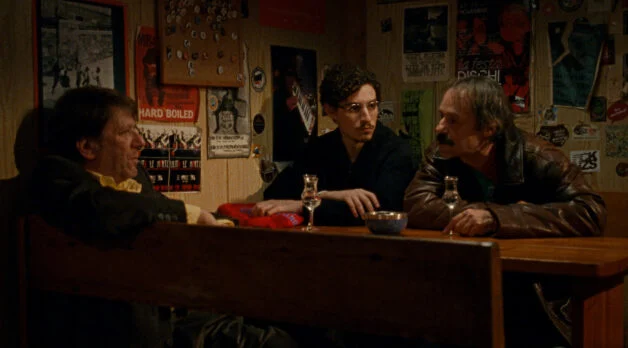
The highly anticipated second feature from Italian director Francesco Sossai, The Last One for the Road, is set to captivate audiences with its nuanced portrayal of an unlikely camaraderie forged amidst the backdrop of a declining industrial Italy. Filmmaker magazine recently unveiled the trailer premiere for this poignant cinematic offering, which chronicles the journey of two alcoholic petty criminals, Carlobianchi (Sergio Romano) and Doriano (Pierpaolo Capovilla, making his film debut as a member of the band One Dimensional Man), whose paths intersect with a quiet architecture student named Giulio (Filippo Scotti). The film, which garnered significant attention on the international festival circuit, is scheduled for a theatrical release via Music Box Films, commencing at New York’s IFC Center and Film at Lincoln Center on May 1, with subsequent screenings planned for other major cities.
The Genesis of a Venetian Odyssey: Inspiration and Artistic Vision
Francesco Sossai’s The Last One for the Road is more than just a narrative; it is a deeply personal exploration rooted in the filmmaker’s own experiences and a profound affection for Italy’s northern Veneto region. This personal connection provides an authentic undercurrent to the film’s narrative, imbuing its characters and settings with a palpable sense of lived reality. The decision to set the story in Veneto is particularly significant. The region, known for its diverse landscape ranging from the Dolomite mountains to the Adriatic coast, and its rich historical and cultural heritage, also bears the marks of post-industrial transformation. Sossai’s film, therefore, serves as a cinematic homage to this complex region, capturing both its enduring beauty and the subtle shifts in its socio-economic fabric.
The inspiration for The Last One for the Road emerged from Sossai’s observations of societal changes, particularly the lingering effects of the 2008 global financial crisis on local communities and individual lives. While the original article references a direct conversation between Leonardo Goi and Sossai for Filmmaker magazine, it can be inferred that the director aimed to craft a story that resonated with the anxieties and disillusions of a generation grappling with economic instability and a perceived loss of traditional values. This thematic depth elevates the film beyond a simple road movie or a caper, positioning it as a thoughtful commentary on modern Italian identity.
A Tapestry of Characters: The Unlikely Trio
At the heart of The Last One for the Road lies the compelling dynamic between its three central characters. Carlobianchi, portrayed by the seasoned actor Sergio Romano, and Doriano, brought to life by musician Pierpaolo Capovilla in his inaugural film role, represent the vestiges of a bygone era. These "small-time Italian crooks," as described in the film’s synopsis, find themselves at a crossroads, facing the "impending mediocrity of middle age" after their illicit ventures have faltered since the 2008 financial downturn. Romano, known for his nuanced performances in various Italian productions, lends a weary authenticity to Carlobianchi, embodying a man whose cunning has dulled but whose spirit for one last score flickers. Capovilla, a prominent figure in the Italian music scene with his band One Dimensional Man, brings an unexpected rawness to Doriano, a character likely defined by impulsiveness and a hard-partying lifestyle. His casting, a departure from conventional acting, might suggest a deliberate choice by Sossai to introduce an unpolished, visceral energy to the ensemble.
Their world collides with that of Giulio, a "soft-spoken architecture student" played by Filippo Scotti. Scotti, an emerging talent in Italian cinema, likely brings a quiet introspection to Giulio, serving as a foil to the boisterous, often abrasive, personalities of Carlobianchi and Doriano. The synopsis hints at Giulio’s initial reluctance to engage with the "sodden pair," gradually warming to their company and indulging their "rants about the folly of globalization and the slow decline of local color." This intergenerational dynamic is crucial, offering different perspectives on Italy’s past, present, and uncertain future. Giulio represents a younger generation, perhaps more attuned to the abstract concepts of architecture and global trends, yet drawn into the very tangible, if chaotic, reality of the older men’s lives. This interaction allows the film to explore themes of mentorship, disillusionment, and the search for meaning across generational divides.
Thematic Layers: Economic Discontent and Societal Reflection
The narrative of The Last One for the Road is deeply embedded in the socio-economic realities of post-2008 Italy. The 2008 financial crisis, which triggered a prolonged recession in many European countries, had a particularly severe impact on Italy, exacerbating existing structural weaknesses in its economy. Small businesses struggled, unemployment rose, and a sense of disillusionment permeated various sectors of society. The film directly references this period, stating that Carlobianchi and Doriano "haven’t been able to mount an honest scam since the 2008 financial crisis." This detail is not merely a plot device; it underscores the film’s broader commentary on the decline of traditional livelihoods, both legal and illicit, and the increasing difficulty for individuals to find their footing in a changing economic landscape.
Beyond the immediate impact of the crisis, the film delves into the "folly of globalization" and the "slow decline of local color." These themes are particularly resonant in a country like Italy, which prides itself on its regional identities, artisanal traditions, and unique cultural nuances. Globalization, while bringing certain economic benefits, has also led to the homogenization of culture, the decline of local industries unable to compete with larger international players, and a sense of loss for communities that once thrived on distinct local characteristics. Sossai’s film, through the eyes of his protagonists, paints a picture of a vanishing industrial Italy, a landscape scarred by abandoned factories and struggling towns, where the promise of a glorious past clashes with the stark realities of a challenging present. The "slow motion, alcoholic grand tour of the Venetian countryside" thus becomes a metaphorical journey through a nation grappling with its identity in the 21st century. Each roadside tavern, promising "one last drink," can be seen as a momentary pause, a fleeting attempt to escape or prolong a fading way of life, hinting at the cyclical nature of their struggles and the elusive nature of a final resolution.
A Chronology of Critical Acclaim: From Cannes to New York
The journey of The Last One for the Road through the international film festival circuit is a testament to its artistic merit and universal appeal. The film made its auspicious debut "last year" in the prestigious Un Certain Regard section of the Cannes Film Festival. Un Certain Regard, an official selection of the Cannes Film Festival, is specifically dedicated to showcasing original and daring works by emerging filmmakers, often presenting films with a unique vision and non-traditional narratives. Its selection here immediately positioned Sossai’s film as a significant piece of contemporary international cinema, drawing the attention of critics, industry professionals, and cinephiles alike. The fact that Filmmaker magazine’s Leonardo Goi sat down with Sossai at Cannes to discuss the film further highlights the early buzz and critical interest surrounding its premiere.
Following its successful unveiling at Cannes, the film continued its triumphant run through the fall festival season. It screened at the Toronto International Film Festival (TIFF), one of the largest and most influential film festivals in North America, known for its strong programming of international cinema and its role as a major platform for films seeking distribution. Subsequently, The Last One for the Road was also featured at the New York Film Festival (NYFF), a highly curated event presented by Film at Lincoln Center, which annually showcases the best in world cinema. Its inclusion in these top-tier festivals not only broadened its exposure but also solidified its reputation as a critically acclaimed work. Each festival stop contributed to building anticipation for its wider release, generating positive word-of-mouth and establishing its artistic credentials among a global audience.
The Path to Audiences: Distribution and Theatrical Release
Securing distribution for an independent international film is often a challenging endeavor, making the acquisition of The Last One for the Road by Music Box Films a significant endorsement of its commercial and artistic potential. Music Box Films is a highly respected independent distributor known for bringing acclaimed foreign language and independent films to North American audiences. Their track record includes numerous Oscar-nominated and award-winning titles, signaling their discerning taste and commitment to quality cinema. For The Last One for the Road, Music Box Films will orchestrate its theatrical release, beginning with a crucial launch in New York City.
The film’s premiere engagement in New York on May 1 will take place at two iconic venues: the IFC Center and Film at Lincoln Center. The IFC Center, located in Greenwich Village, is a prominent art-house cinema celebrated for its diverse programming of independent, foreign, and documentary films, often hosting Q&As and special events. Film at Lincoln Center, a cornerstone of New New York’s cultural landscape, is home to the Walter Reade Theater and the Elinor Bunin Munroe Film Center, and serves as the primary presenter of the New York Film Festival. These venues are pivotal for launching independent films, as they cater to a sophisticated audience of film enthusiasts and critics, providing a crucial platform for critical reception and audience engagement. A successful run in these theaters can often generate momentum for expansion into other cities. The planned release in "other cities to follow" indicates a strategic rollout, leveraging initial critical and audience response in New York to build broader interest across the country. This phased approach is typical for independent foreign films, allowing distributors to gauge market interest and tailor their campaigns accordingly.
Broader Implications: A Voice for Contemporary Italian Cinema
The Last One for the Road stands as a significant contribution to contemporary Italian cinema, offering a fresh perspective on both its narrative conventions and its engagement with societal issues. In an era where mainstream cinema often gravitates towards established franchises or formulaic storytelling, Sossai’s film exemplifies the enduring power of independent filmmaking to explore complex themes and present authentic human experiences. It joins a lineage of Italian films that skillfully blend social commentary with compelling character studies, echoing works that have historically interrogated the nation’s identity, economic shifts, and regional peculiarities.
The film’s success on the international festival circuit underscores the continued global appetite for diverse cinematic voices and nuanced storytelling from Italy. For Francesco Sossai, The Last One for the Road marks a pivotal moment in his burgeoning career. As his second feature, its critical reception and distribution trajectory will likely solidify his reputation as an important voice in European cinema, potentially opening doors for future projects and collaborations. For the actors, particularly Pierpaolo Capovilla in his film debut, it offers a high-profile entry into the acting world, showcasing his versatility beyond his musical career.
Moreover, the film’s focus on the Veneto region and its struggles contributes to a broader understanding of Italy’s diverse socio-economic landscapes beyond the more commonly depicted tourist destinations. It humanizes the impact of global economic forces and cultural shifts on local communities, inviting audiences to reflect on similar transformations occurring worldwide. As a "road movie, a casual caper, a tribute to a vanishing industrial Italy, a scruffy intergenerational odyssey, and free-flowing bender through time and space," The Last One for the Road promises a multifaceted cinematic experience that is both entertaining and profoundly thought-provoking, offering a mirror to a society in flux and the resilient, albeit flawed, individuals who navigate its complexities. Its release through Music Box Films ensures that this unique vision will reach a wider audience, contributing to the ongoing dialogue about the state of modern Italy and the universal themes of friendship, decline, and the relentless search for meaning.