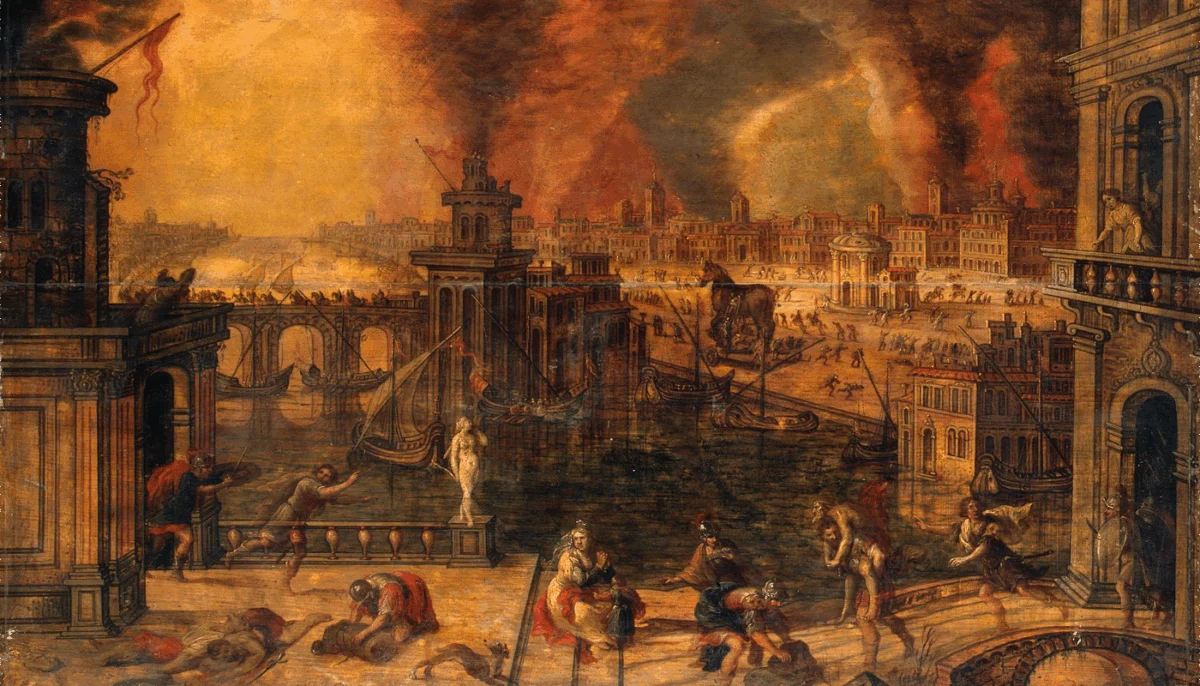
The echoes of a cataclysmic event that reshaped the ancient world, the Late Bronze Age Collapse, are resonating through contemporary discussions on societal resilience and sustainability. This period, roughly spanning from 1200 to 1150 BCE, witnessed the near-simultaneous implosion of sophisticated civilizations across the Eastern Mediterranean and the Near East. Empires crumbled, intricate trade networks dissolved, and in some regions, the very art of writing was lost, plunging vast swathes of the known world into a dark age. The central question that has captivated scholars and amateur enthusiasts alike for generations remains: what precipitated this widespread societal breakdown, and what lessons can be gleaned from its ashes for our own interconnected global society?
The Great Unraveling: A World on the Brink
The Late Bronze Age was characterized by an unprecedented level of interconnectivity. Powerful kingdoms like the Mycenaean civilization in Greece, the Hittite Empire in Anatolia, the New Kingdom of Egypt, and the states of the Levant and Mesopotamia were linked by extensive maritime and overland trade routes. They exchanged not only goods such as tin, copper, grain, and luxury items, but also diplomatic correspondence, artistic influences, and even technological innovations. This era is often described as the "first globalization," a testament to the complex and interdependent nature of these ancient societies.
However, this very interconnectedness may have sowed the seeds of its own destruction. Archaeological evidence paints a grim picture of this period: widespread destruction layers at major urban centers, abandoned settlements, and a dramatic decline in artistic and architectural sophistication. The iconic palaces and fortified cities that characterized the Late Bronze Age were, in many cases, reduced to rubble.
Unpacking the Theories: A Multifaceted Catastrophe
While no single event is solely responsible, a confluence of factors is widely believed to have contributed to the collapse. These theories, often debated and refined by historians and archaeologists, include:
-
Invasions and Migrations: The emergence of the "Sea Peoples," a confederation of mysterious maritime raiders, is frequently cited as a primary catalyst. Ancient Egyptian records, particularly from the reign of Ramesses III, detail fierce battles against these enigmatic groups who seem to have contributed to the destabilization and destruction of many coastal settlements. Their origins and ultimate fate remain subjects of intense scholarly debate. Beyond the Sea Peoples, evidence suggests internal rebellions and migrations of other groups also played a role in destabilizing existing power structures.
-
Climate Change and Environmental Degradation: Paleoclimatic data, derived from ice cores, lake sediments, and tree rings, indicates a period of prolonged drought and aridification across the Eastern Mediterranean region around the time of the collapse. This environmental stress would have severely impacted agricultural yields, leading to famine, resource scarcity, and increased competition for dwindling resources. Deforestation and soil erosion, exacerbated by intensive agriculture and population growth, may have further compounded these environmental challenges.
-
System Collapse and Internal Instability: The highly centralized and hierarchical nature of many Late Bronze Age states made them vulnerable to internal shockwaves. Over-reliance on complex, specialized economic systems could have rendered them brittle. When one component of the system failed – be it trade routes, agricultural production, or political leadership – the entire edifice could begin to crumble. Internal dissent, peasant revolts, and the breakdown of royal authority are all potential contributing factors.
-
Technological Shifts and Iron Production: The gradual adoption of iron metallurgy, which was more readily available than the bronze alloys that relied on long-distance trade for tin, may have played a role. While not an immediate cause of collapse, the diffusion of iron technology could have empowered new groups or shifted the balance of military power, potentially contributing to the downfall of established bronze-dependent elites.
The "Anti-Cline" List: A Modern Reinterpretation
Historian and archaeologist Eric H. Cline, a leading authority on this period, has synthesized many of these theories into a series of pointers for how societies can avoid collapse. In his widely viewed presentations and writings, such as "1177 BC: The Vanishing of the First Globalized World," Cline outlines seven key strategies for resilience. These include having multiple contingency plans, cultivating resilience to invasion, maintaining self-sufficiency while fostering alliances, encouraging innovation and invention, preparing for extreme weather, ensuring secure water supplies, and keeping the working class content.
In a fascinating inversion, the concept of societal collapse itself can be viewed through a literary lens, serving as a potent wellspring for narrative. By considering the antithesis of Cline’s resilience strategies, one can construct scenarios ripe with dramatic potential, exploring how the absence of these protective measures can lead to dramatic societal unraveling. This "Anti-Cline" framework offers a compelling approach to understanding the fragility of complex systems, both ancient and modern.
1. Don’t Have Multiple Contingency Plans
A society that fails to diversify its strategies and prepare for multiple eventualities is inherently vulnerable. Michael Swanwick’s novel In the Drift offers a fictional exploration of this. Following a catastrophic release of radioactive fallout from the Three Mile Island incident, the eastern seaboard of the United States fragments, with cities abandoned and recovery taking decades. This scenario highlights how a single, overwhelming disaster, without adequate backup plans or adaptive capacity, can lead to widespread societal breakdown and long-term disruption.
2. Don’t Cultivate Resilience to Invasion
The ability to defend against external threats is paramount for societal survival. H.G. Wells’ classic The War in the Air depicts a world utterly unprepared for aerial warfare. The novel illustrates how the rapid development and ease of deployment of air forces, combined with an inability to defend against them, led to the end of civilization as it was known. The destructive nature of this novel form of warfare, focused on annihilation rather than occupation, underscores the importance of adapting defense strategies to evolving threats.
3. Don’t Be Self-Sufficient Without Alienating Allies
Interdependence, when managed wisely, can be a source of strength. However, Frank Herbert’s Dune presents a stark warning about the dangers of isolation coupled with strategic reliance. The galactic civilization’s dependence on "Spice," a vital drug with a single source on the planet Arrakis, becomes a critical vulnerability. Centuries of brutalizing the native Fremen, rather than fostering a mutually beneficial relationship, lay the groundwork for their eventual rebellion, leveraging the empire’s absolute dependence against it. This illustrates the peril of neglecting diplomatic ties and alienating key partners, even while striving for internal self-sufficiency.
4. Don’t Be Innovative and Inventive
Technological stagnation can be as detrimental as uncontrolled innovation. H. Beam Piper’s Lord Kalvan of Otherwhen illustrates this through Styphon’s priests, who hoard the knowledge of black gunpowder production, making themselves power brokers. The strong discouragement of reverse-engineering this technology, while seemingly sensible for maintaining their monopoly, creates a critical chink in their armor. The moment this secret is revealed, whether by an alchemist, a disgruntled priest, or an accidental temporal displacement, Styphon’s carefully constructed order rapidly implodes. This highlights how the suppression of knowledge and innovation can lead to long-term systemic fragility.
5. Don’t Prepare for Extreme Weather
The impacts of climate change are increasingly evident, and societies that fail to anticipate and prepare for extreme weather events face significant risks. Kate Wilhelm’s Juniper Time is set in a world gripped by a massive, planet-wide drought. The unclear cause of this phenomenon does little to mitigate its devastating effects: famine, mass migrations, and widespread societal disruption and collapse on local and regional levels. This narrative serves as a potent reminder of the existential threat posed by unchecked environmental shifts and the critical need for proactive adaptation.
6. Don’t Have a Secure Water Supply
Water is a fundamental resource, and its scarcity can quickly lead to societal breakdown. Robert A. Heinlein’s The Moon Is a Harsh Mistress posits a future where Earth depends on lunar farms, which in turn rely on lunar ice mines. The core problem is the non-renewable nature of lunar ice, with its limits rapidly approaching. The ruling lunar authorities’ decision to ignore this impending crisis leads to the collapse of the established order as desperate Lunarians eventually revolt. This fictional scenario underscores the vital importance of resource management and foresight in ensuring long-term stability.
7. Don’t Keep the Working Class Happy
Social unrest, fueled by systemic inequality and oppression, can be a powerful engine of societal change. Terry Bisson’s Fire on the Mountain depicts African American slaves in a state of extreme suffering, unpaid, abused, and terrorized. The slavers’ intent to keep them too cowed to resist proves to be a miscalculation. This population, deeply motivated by their plight, seizes an opportunity—provided by Harriet Tubman’s raid on Harper’s Ferry—to rise up. The narrative demonstrates how such oppression can lead to not only the overthrow of a specific regime but also the collapse of broader imperialist world orders, creating opportunities for new societal structures. While the immediate beneficiaries are those at the bottom, the long-term implications can be transformative, albeit often at the expense of entrenched power structures.
Broader Implications and Future Outlook
The study of the Late Bronze Age Collapse offers more than just historical curiosity; it provides critical insights into the interconnectedness and vulnerabilities of complex societies. The lessons learned from this ancient implosion are remarkably relevant to our own era, characterized by globalization, rapid technological advancement, and increasing environmental pressures.
The "Anti-Cline" framework, by highlighting the inverse of resilience, serves as a stark reminder of the potential pitfalls that await societies that neglect foresight, adaptability, and equitable social structures. The widespread adoption of renewable energy, the development of sustainable agricultural practices, robust diplomatic engagement, and policies that promote social equity are not merely aspirational goals but essential components of ensuring long-term societal stability in the face of inevitable challenges. The echoes of 1177 BCE serve as a powerful and enduring cautionary tale, urging us to actively cultivate the conditions for resilience and avoid the precipice of collapse.