On the evening of March 21, 1976, the American Broadcasting Company (ABC) executed a programming strategy that would significantly alter the landscape of prime-time television. By scheduling a double-feature movie night consisting of two high-budget pilot films, the network sought to test the viability of two vastly different procedural concepts. The first, Charlie’s Angels, featured a trio of female private investigators, while the second, Most Wanted, served as a vehicle for established star Robert Stack. While both films garnered substantial ratings and secured spots on the fall 1976 schedule, their long-term trajectories diverged sharply, illustrating a pivotal shift in audience preferences and the emergence of what critics would eventually term "Jiggle TV."
The Competitive Landscape of 1976 Television
To understand the significance of the March 1976 broadcast, one must examine the broader context of the television industry during the mid-1970s. At the time, ABC was historically the third-place network, trailing behind the more established giants, CBS and NBC. However, under the leadership of Fred Silverman—who had recently moved from CBS to ABC—the network began a period of aggressive growth characterized by high-concept programming and youth-oriented demographics.
The "Movie of the Week" format was a staple of the era, serving as a low-risk incubator for potential series. By airing a 90-minute or two-hour standalone film, networks could gauge viewer interest through Nielsen ratings before committing to a full season of production. The March 21 double feature was a calculated gamble to bolster ABC’s crime drama portfolio, which already included hits like The Rookies and Starsky & Hutch.
The Genesis of Charlie’s Angels
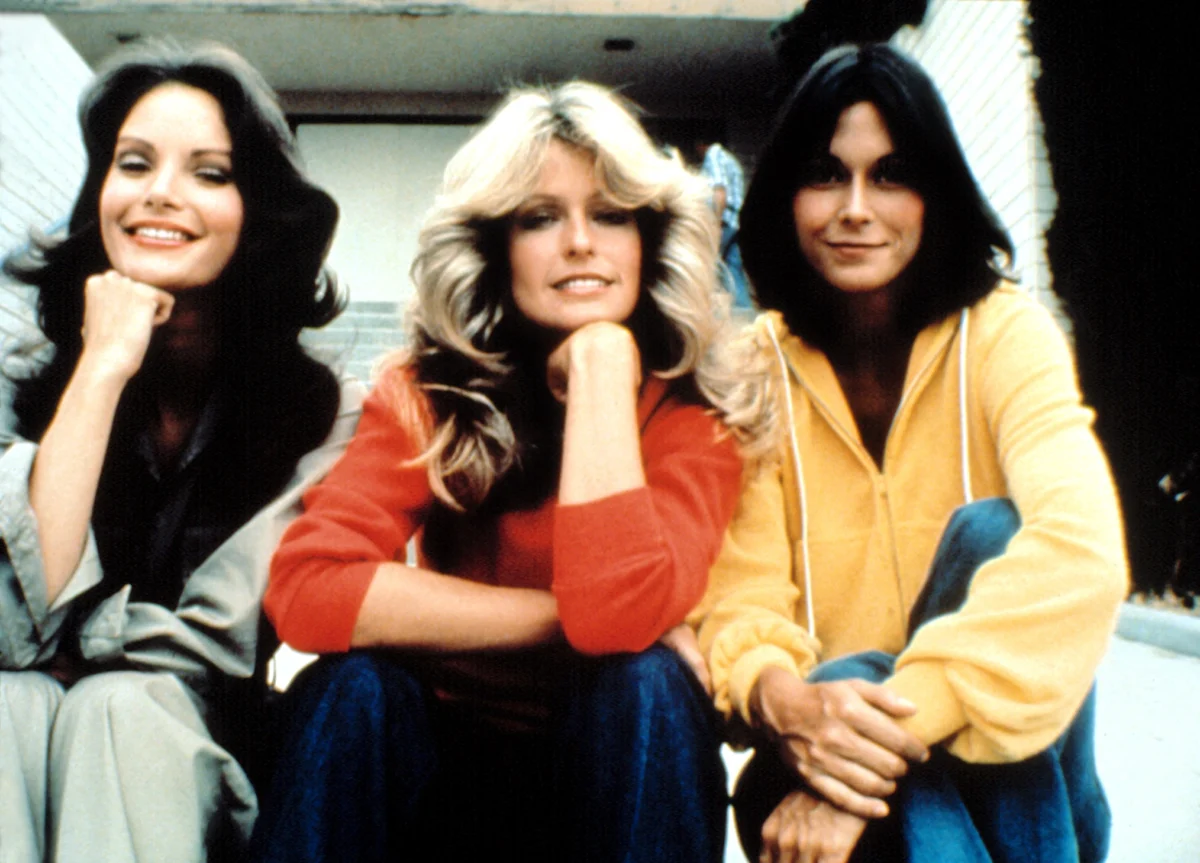
Charlie’s Angels was the brainchild of writers Ivan Goff and Ben Roberts, produced under the prolific banner of Aaron Spelling and Leonard Goldberg. The pilot film introduced audiences to Sabrina Duncan (Kate Jackson), Jill Munroe (Farrah Fawcett-Majors), and Kelly Garrett (Jaclyn Smith), three police academy graduates relegated to menial tasks who are recruited by the mysterious, never-seen Charlie Townsend to work for his private investigation firm.
The pilot was notable not only for its casting but for its tonal departure from the gritty realism of 1970s police procedurals. It prioritized glamour, exotic locales, and a lighthearted camaraderie among the leads. Despite initial skepticism from network executives—some of whom reportedly hated the concept—the pilot resonated powerfully with the American public. Kate Jackson, already a recognizable face from The Rookies, was initially intended to be the central star, but the broadcast immediately catapulted Farrah Fawcett into a realm of celebrity that transcended the television screen.
Most Wanted: A Return to Hard-Boiled Tradition
In contrast to the breezy aesthetic of Charlie’s Angels, Most Wanted was a traditional, hard-hitting police drama produced by Quinn Martin. Martin was a titan of the industry, known for his disciplined, "just the facts" approach seen in hits like The Fugitive and The FBI. The pilot starred Robert Stack as Captain Linc Evers, the leader of an elite, hand-picked unit of the Los Angeles Police Department tasked with capturing the city’s most dangerous criminals.
Stack brought a sense of gravitas and "law and order" authority to the role, echoing his iconic performance as Eliot Ness in The Untouchables. The pilot followed the unit as they pursued a high-profile killer, utilizing forensic science and tactical precision. At the time of the March 21 broadcast, industry insiders considered Most Wanted the "safer" bet for long-term success, given Stack’s pedigree and the proven track record of Quinn Martin Productions.
A Chronology of the 1976-1977 Television Season
The success of the March 21 double feature set off a chain of events that would define the upcoming television season:
- March 21, 1976: The pilot films for Charlie’s Angels and Most Wanted air back-to-back on ABC. Both achieve high Nielsen shares, comfortably winning their time slots.
- April 1976: ABC officially picks up both pilots for its fall schedule. Charlie’s Angels is slated for Wednesday nights, while Most Wanted is placed on the Friday night schedule.
- September 22, 1976: Charlie’s Angels premieres as a weekly series. It becomes an overnight sensation, quickly climbing into the top ten of the national ratings.
- October 16, 1976: Most Wanted premieres. While it maintains a respectable audience, it struggles to compete with the burgeoning popularity of more escapist fare.
- Spring 1977: By the end of the first season, Charlie’s Angels finishes as the fifth most-watched show in the country. Conversely, Most Wanted experiences a decline in viewership and is ultimately canceled after 22 episodes.
Nielsen Data and Demographic Shifts
The ratings for the March 21 broadcast provided a roadmap for the future of the network. Charlie’s Angels drew a massive audience, particularly among younger viewers and female demographics, which were becoming increasingly valuable to advertisers. The pilot’s success proved that female-led action series could sustain prime-time interest, a concept that had previously been met with institutional resistance.
Supporting data from the 1976-77 season highlights the disparity between the two shows. Charlie’s Angels averaged a 26.0 rating, meaning approximately 26% of all American households with a television were tuned in. Most Wanted, while initially strong, failed to break into the top 30 programs of the year. This shift signaled the end of the dominance of the "Quinn Martin style" of procedural, which relied on a somber, authoritative tone, in favor of the "Spelling style," which emphasized high-energy entertainment and visual appeal.
Industry Reactions and Critical Reception
The reaction to the rise of Charlie’s Angels was polarized. Critics frequently dismissed the show as "brainless" or "exploitative." Paul Klein, a programming executive at NBC, famously coined the term "Jiggle TV" to describe ABC’s reliance on the physical appeal of its female leads to attract viewers. Despite these criticisms, the show’s producers argued that the program was empowering, showcasing women in roles of authority who were capable of outwitting and outmaneuvering their male counterparts.
In a later interview, producer Leonard Goldberg noted that the network was initially "terrified" of the Charlie’s Angels pilot. "They thought it was the most ridiculous idea they had ever heard," Goldberg remarked. The overwhelming audience response on the night of March 21 forced a reevaluation of what the American public wanted from their crime dramas.
Robert Stack, for his part, remained a consummate professional throughout the run of Most Wanted. However, internal memos from the era suggest that the production felt the show was perhaps "too traditional" for a network that was rapidly rebranding itself as the home of "Living Color" and "Fantasy Island" style escapism.
Broader Impact and Cultural Implications
The long-term impact of the 1976 ABC double feature cannot be overstated. Charlie’s Angels became a global phenomenon, spawning a multi-million dollar merchandising industry, including dolls, lunchboxes, and the famous Farrah Fawcett red swimsuit poster, which sold over 12 million copies. The show paved the way for future female-led action series such as Wonder Woman, Bionic Woman, and much later, Cagney & Lacey.
Furthermore, the night marked a symbolic "passing of the torch" in television production. Quinn Martin, who had dominated the 1960s and early 70s with procedural realism, began to see his influence wane. Aaron Spelling, meanwhile, ascended to become one of the most powerful producers in Hollywood history, essentially defining the aesthetic of the 1980s with shows like The Love Boat, Dynasty, and Beverly Hills, 90210.
The failure of Most Wanted to secure a second season did not diminish Robert Stack’s career, but it did signal the end of the era where a "big name" film star and a standard police formula were enough to guarantee a long-running hit. Audiences were beginning to demand more "concept" with their "procedural."
Conclusion: Fifty Years of Perspective
Reflecting on the events of March 21, 1976, it is clear that ABC’s double feature was a watershed moment. It was the night that "The Angels" were born, transforming Kate Jackson, Farrah Fawcett, and Jaclyn Smith into household names and establishing a template for female-driven action that persists in media today. While Most Wanted and Robert Stack’s Captain Evers have largely faded into the annals of television history, the show served as a final, high-quality stand for the traditional detective drama before the genre was irrevocably changed by the glamorized, high-octane influence of the Spelling era.
Today, the legacy of that Sunday night is visible in the persistent popularity of the Charlie’s Angels franchise, which has seen multiple film reboots and a television revival. The ratings bonanza of 1976 remains a textbook example of how a single night of programming can capture the zeitgeist, shift network fortunes, and redefine the cultural conversation for decades to come. As the industry moves further into the era of streaming and fragmented audiences, the sheer collective impact of the 1976 ABC Movie Night serves as a reminder of the once-unrivaled power of the broadcast television pilot.