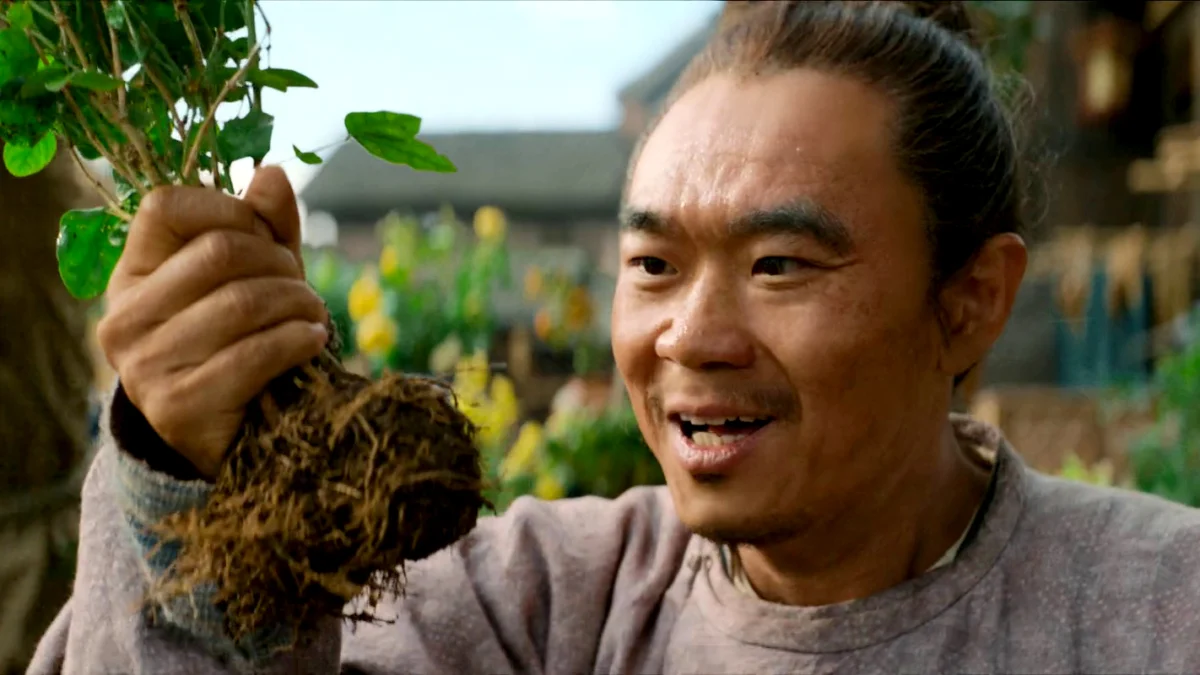
"The Lychee Road" marks a pivotal moment in the career of Da Peng, the acclaimed comedian and internet talk show host, as he ventures into his most ambitious directorial and acting endeavor to date. Adapted from the eponymous novel by renowned author Ma Boyong, this historical drama is Da Peng’s first foray into costume work, demonstrating a significant evolution from his previous comedic successes. The film, set against the opulent yet politically fraught backdrop of Chang’an City during the Tianbao era of the Tang Dynasty, intricately weaves a tale of bureaucratic corruption, human resilience, and the seemingly impossible pursuit of imperial indulgence. It has garnered considerable attention for its meticulous historical detail, compelling narrative, and a stellar ensemble cast that elevates its satirical commentary on power and morality.
Da Peng’s Evolving Artistic Vision
Da Peng, whose real name is Dong Chengpeng, first rose to prominence through his sharp comedic timing and engaging persona on various internet talk shows. His transition to filmmaking began with remarkable success, notably with his 2015 feature, "Jian Bing Man." This self-directed and starring vehicle not only showcased his unique comedic style but also earned him critical accolades, including Best New Director and Best New Actor, signaling his nascent talent behind and in front of the camera. Following this breakthrough, Da Peng continued to hone his craft, appearing in diverse productions such as "City of Rock," the martial arts fantasy "The Thousand Faces of Dunjia" directed by the legendary Yuen Woo-ping, and the critically well-received "Johnny Keep Walking!". Each role and project subtly broadened his artistic range, but "The Lychee Road" represents a significant departure and a bold statement of his maturation as a filmmaker. This project moves beyond the contemporary settings and comedic tones of his earlier works, plunging into a complex historical narrative that demands a nuanced approach to both direction and performance, signaling a deliberate expansion of his thematic and stylistic repertoire. The film is widely regarded by critics as a testament to his versatility and a strong indicator of his potential to become a leading voice in Chinese cinema across multiple genres.
A Chronicle of Imperial Logistics and Personal Ordeal
The narrative of "The Lychee Road" is set in the vibrant, bustling Chang’an City, the imperial capital of the Tang Dynasty, during the prosperous yet increasingly unstable Tianbao era (742-756 AD). This period is famed for its cultural zenith, poetic brilliance, and the influence of Emperor Xuanzong and his beloved consort, Yang Guifei, whose extravagant tastes and the subsequent political machinations ultimately contributed to the dynasty’s decline.
At the heart of the story is Li Shande, portrayed by Da Peng, a brilliant mathematician whose talents are paradoxically underutilized within the Imperial Bureau, where he holds a lowly officer position. Despite nearly two decades of diligent service, Li’s financial situation is precarious. His long-held dream of providing a stable home for his family—his astute wife, Zheng Yu Ting, and their daughter, Putao—is finally realized with the purchase of a house. However, this achievement comes at a steep price, forcing him to incur substantial debt from local money-lending monks, a detail that immediately establishes his vulnerability and the everyday pressures faced by even relatively privileged citizens in the imperial capital.
The central conflict ignites as the birthday of the Emperor’s favored consort, Yang Guifei, approaches. To express his affection and impress her, Emperor Xuanzong desires a unique and luxurious gift: fresh lychees. Known for their exquisite sweetness and delicate nature, lychees were a rare and coveted delicacy, particularly outside their native southern growing regions. This seemingly innocuous desire precipitates Li Shande’s impossible mission. The court’s superior, seeking to curry favor, assigns Li the task of transporting these highly perishable fruits from Lingnan (modern-day Guangdong and Guangxi provinces in southern China) to Chang’an.
Li, initially accepting the assignment as a chance to prove his worth, soon uncovers a cruel deception. The imperial decree demands fresh lychees, not the commonly preserved ones. This distinction creates a monumental logistical challenge: the journey by horse from Lingnan to Chang’an typically spanned a month, while fresh lychees spoil in a mere three days. This stark reality transforms Li’s assignment from a routine task into a seemingly insurmountable feat of engineering and endurance, designed to fail by those who wish to see him discredited or eliminated. The revelation underscores the ruthless nature of court politics, where human lives and livelihoods are often sacrificed for the whims of the powerful.
The Perilous Journey and Unexpected Alliances
Determined against all odds, Li Shande embarks on his perilous journey to Lingnan. His arrival in the southern orchards brings him into contact with local expertise and unexpected allies. He befriends Ah Tong, a resilient and knowledgeable lychee grower who possesses intimate understanding of the fruit and its cultivation. Another crucial figure he encounters is Su Liang, an eccentric yet shrewd merchant, whose pragmatism and network prove invaluable.
Despite Li’s earnest efforts, the local governor, He Qi Guang, a character portrayed with cynical self-interest by Hong Kong veteran Lam Suet, offers only token assistance, providing Li with a slave, all while secretly anticipating his failure. This act highlights the pervasive corruption within the regional administration, where officials prioritize their own survival and enrichment over the successful execution of imperial directives.
Undeterred, Li dedicates himself to experimenting with various transportation methods, attempting to defy the laws of nature and logistics. His initial attempts, however, prove futile, emphasizing the sheer difficulty of the task. The mounting failures bring him to the brink of despair. It is at this critical juncture that the powerful high-ranking court chancellor, Yang Guo Zhong—Yang Guifei’s cousin and a key figure in the Tang court’s political landscape—intervenes. Portrayed with commanding presence by Andy Lau in a significant late appearance, Chancellor Yang grants Li a final, high-stakes opportunity to complete his mission. This intervention, while appearing to be a lifeline, simultaneously ratchets up the pressure on Li, as failure would now carry even more severe consequences.
Historical Context and Thematic Resonance
The historical accuracy and detailed world-building are central to "The Lychee Road’s" appeal. The Tianbao era was a time of immense prosperity, fueled by advancements in agriculture, trade, and administrative efficiency, yet it was also a period where the seeds of the An Lushan Rebellion were being sown, largely due to internal court intrigue and the overreliance on powerful regional governors. The film cleverly uses the seemingly trivial demand for fresh lychees as a microcosm to explore the broader systemic issues of the Tang court: the disconnect between imperial whims and practical realities, the deep-seated corruption, and the ruthless power struggles that characterized the era.
The journey of lychees from Lingnan to Chang’an was not merely a logistical challenge but a legendary feat. Historical accounts suggest that such efforts did occur, often involving elaborate relay systems of fast horses and chilled environments, pushing the limits of ancient technology. The cost, both human and financial, was immense. The film leverages this historical anecdote to craft a narrative that is both epic in scope and intensely personal, reflecting the individual’s struggle against an overwhelming, indifferent, and often malevolent system.
The film’s initial comedic tone, a natural fit for Da Peng’s established strengths, serves to highlight Li Shande’s initial optimism and ingenuousness. Montages and simulations of his early lychee runs, while often light-hearted, underscore his capability and determination. This early buoyancy starkly contrasts with the grim reality that soon unfolds. As Li delves deeper into his mission, the narrative seamlessly transitions into a serious historical drama, imbued with elements of tragedy. The unfolding court conspiracies, the exploitation by scheming superiors, and the constant threat of failure gradually strip away the comedic veneer, revealing the harsh political realities.
A Sharp Satire of Imperial Power and Corruption
"The Lychee Road" evolves into a biting satire, offering profound reflections on the timeless themes of power struggles, corruption, and bureaucratic inefficiency. The film masterfully portrays those in power as arrogant, self-serving figures who ruthlessly exploit the less fortunate for personal gain and to solidify their own positions. This dynamic is consistently observed through the lens of Officer Li, an honest and principled protagonist. Despite gradually gaining some authority and understanding the machinations of the court, Li fundamentally remains an outsider, an ethical individual caught in a morally compromised world.
The film critiques the imperial court’s detachment from the common people and the consequences of unchecked power. The ultimate irony is that while many characters in Chang’an aspire to recognition, wealth, and happiness within the imperial system, Li experiences the antithesis. His journey, fraught with hardship and moral compromise forced upon him, transforms him into a tragic figure, a pawn in the vast, indifferent machinery of power and ambition. This critique resonates far beyond its historical setting, offering a poignant commentary on similar power dynamics that can be observed in contemporary societies and political systems.
Visual Grandeur and Stellar Performances
Beyond its compelling narrative, "The Lychee Road" stands out for its impressive visual authenticity and meticulous production design. The film spares no expense in recreating the splendor and grit of the Tang Dynasty. The elaborate costumes, designed with historical precision, not only add visual richness but also subtly convey character status and personality. The detailed art direction and set design transport the audience directly into the 8th century, showcasing a world that feels both grand and lived-in.
The interiors of Chang’an, with its bustling markets, grand palaces, and intricate residences, are particularly striking. Equally memorable are the serene yet imposing temples, filled with magnificent Buddha statues, which contribute to the film’s immersive atmosphere. The cinematography effectively captures both the sweeping landscapes of Lingnan and the claustrophobic opulence of the imperial court, using light and shadow to enhance the emotional texture of each scene. The production achieves a delicate balance between historical drama and moments of levity, largely attributed to Da Peng’s convincing and nuanced performance both in front of and behind the camera. The emotional depth of the film culminates in an impactful ending, which leaves a lasting impression on the viewer.
The ensemble cast delivers a series of memorable performances that elevate the narrative. Bai Ke delivers an excellent portrayal of Su Liang, the eccentric yet loyal merchant whose bond with Li becomes a cornerstone of the more dramatic moments. Their evolving relationship provides much-needed humanity amidst the political intrigue. Yang Mi shines as Li’s wife, Zheng Yu Ting, presenting a strong, likable character whose pragmatic approach, and occasional physical expressions of frustration (such as playfully slapping her husband), add a relatable dimension to her character. Zhuang Dafei, in her brief but impactful role as Ah Tong, leaves a lasting impression as the fiery yet grounded lychee grower whose local wisdom is critical to Li’s mission. Lam Suet’s depiction of the corrupt Governor He is suitably oily and conniving, providing a clear antagonist. And finally, Andy Lau’s late appearance as Chancellor Yang Guo Zhong is a masterclass in screen presence, his commanding performance underscoring the formidable power and influence of the imperial court.
Critical Acclaim and Broader Implications
"The Lychee Road" has been met with significant critical acclaim, praised for its ambitious scope, intricate storytelling, and the depth of its thematic exploration. Critics have lauded Da Peng’s courageous pivot to historical drama, recognizing his growth as a filmmaker capable of tackling complex narratives with both comedic flair and dramatic weight. The film’s ability to blend entertainment with profound social commentary has resonated deeply with audiences, affirming its status as a commercially successful and artistically significant work.
The film’s true strength lies in its incisive satire of corruption within the imperial court, a theme that transcends its historical setting and speaks to universal human experiences. It serves as a powerful reminder that the struggles for power, the exploitation of the vulnerable, and the inefficiencies of bureaucracy are not confined to ancient dynasties but are persistent challenges throughout history. By centering the narrative on an honest protagonist caught in this intricate web, the film offers a poignant commentary on the individual’s moral compass in the face of systemic corruption.
In conclusion, "The Lychee Road" is a highly entertaining and meticulously crafted cinematic achievement. It combines impressive visuals, engaging characters, and a compelling narrative to deliver a rich historical drama. More importantly, it highlights the significant evolution of Da Peng as a filmmaker, firmly establishing him as a versatile talent capable of delivering works that are both critically acclaimed and deeply resonant with audiences, bridging the gap between historical spectacle and timeless social critique.