The cinematic landscape, increasingly dominated by established intellectual properties and an endless cycle of sequels, reboots, and shared universes, has found an unlikely mirror in The Napa Boys, a new comedy that has traversed a bewildering path from a seemingly absurd concept to a wide release with Magnolia Pictures. Directed by Nick Corirossi and co-written with Armen Weitzman, who also stars, the film’s journey is as unconventional as its premise, prompting astonishment even from its creators and early champions. Peter Kuplowsky, the programmer for TIFF Midnight Madness, where the film made its IMAX debut, openly expressed his bafflement, stating, "I’m even baffled that I played it at the Toronto International Film Festival. The fact that its first screening was presented in IMAX…" Weitzman, in turn, humorously mused about Magnolia’s decision, suggesting they might have "lost a bet," a testament to the film’s audacious and genre-defying nature. This narrative of improbable success underscores The Napa Boys‘ deeper commentary on the current state of film commerce, artistic integrity, and the blurred lines between genuine creation and cynical exploitation of fandom.
Deconstructing Franchise Culture: "Sideways 4: Beta House" and Beyond
At its core, The Napa Boys functions as a sophisticated satire of the relentless franchise machine that defines contemporary Hollywood. The most succinct, albeit paradoxical, description of the film offered by its creators is "Sideways 4: Beta House." This seemingly contradictory label immediately conjures a dizzying array of associations: the nuanced dramedy of Fox Searchlight, the boisterous irreverence of frat humor, the sophisticated world of wine culture, and the often-maligned realm of direct-to-video sequels. The film posits a fictional universe where the beloved Paul Giamatti and Thomas Haden Church vineyard romp, Sideways (2004), spawned not just a few follow-ups, but an entire multimedia empire. This includes generations of sequels, many relegated to the direct-to-video market, alongside graphic novelizations, fan-hosted podcasts dissecting every detail, and elaborate comic-con style fan conventions dedicated to the "Napa Boys" lore. This layered, self-referential world building is not merely an aesthetic choice but a sharp critique of an industry where IP extensions often overshadow original storytelling.
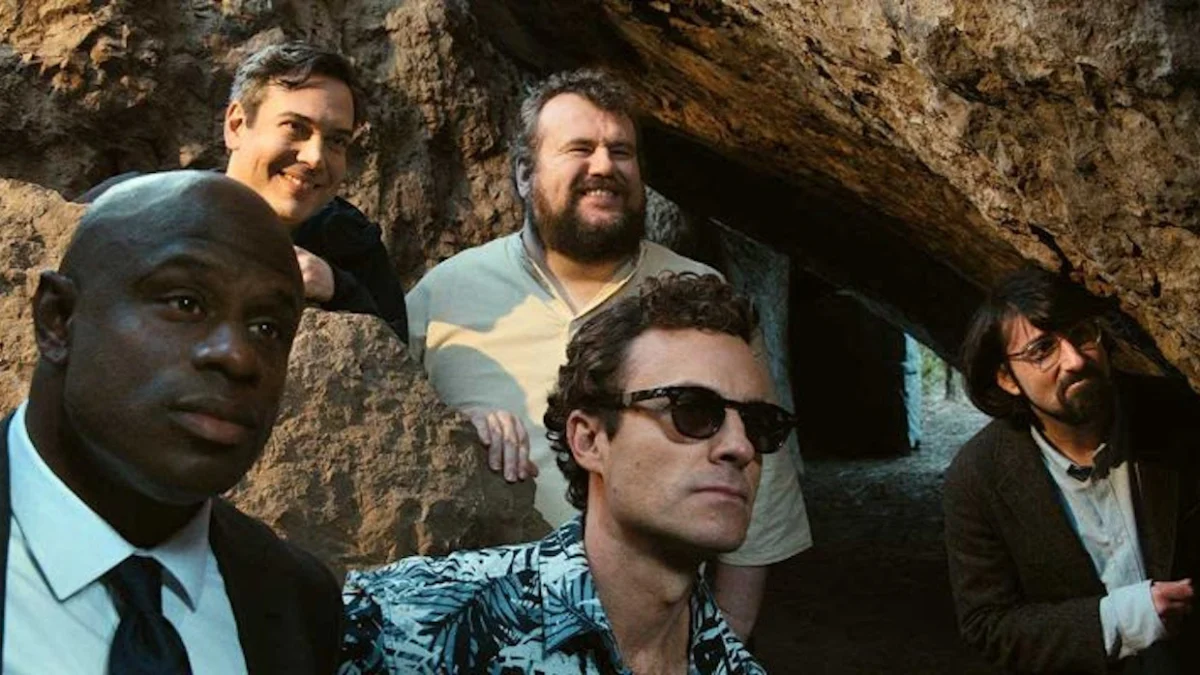
The comedic duo, Corirossi and Weitzman, delve into the mechanics of this franchise fatigue with surgical precision. The film, explicitly subtitled "The Napa Boys 4: The Sommelier’s Amulet," intentionally mimics the experience of walking into a late-entry Marvel film, where years of narrative history are assumed, and new viewers are expected to piece together a convoluted backstory from fleeting references. Miles Jr. (Weitzman) and Jack Jr. (Corirossi) are presented as the recurring stars of this in-universe "Napa Boys" film franchise, with their on-screen escapades secretly drawing from their own real-life (within the film’s universe) lewd and swashbuckling adventures in the picturesque Napa Valley. The plot points of this fourth installment are evoked with minimal connective tissue, creating a deliberate sense of narrative discontinuity that mirrors the often-disjointed experience of modern cinematic universes. Corirossi draws parallels to existing trends, citing the appearance of "Jabba the Hutt Jr." in a Mandalorian & Grogu trailer and the proliferation of "Stiffler’s cousin" characters in American Pie sequels, where Eugene Levy’s presence often serves as a forced exposition dump. In The Napa Boys, however, no such convenient explanations are forthcoming, intensifying the film’s commentary on the industry’s reliance on familiar faces and superficial callbacks rather than organic plot development.
The Masterminds Behind the Meta: Nick Corirossi and Armen Weitzman
The singular vision driving The Napa Boys stems from the extensive and often boundary-pushing comedic careers of Nick Corirossi and Armen Weitzman. Corirossi, in particular, has spent decades operating in the "borderlands" of what is real and what is fabricated in media, a sensibility that profoundly shapes the film’s meta-narrative. His prolific work with Funny or Die exemplifies this, where he created multiple episodes of Clip Cup, a fake Tosh.0-style show starring his character Craig Healey. This evolved into a single episode of Cliplicated, a mock Louie-style dramedy, and later, Craig Fixada America, a satirical take on Trevor Noah-esque political punditry. In 2012, Corirossi created Miami 1996, a mysterious website video resembling a party tape morphing into a snuff film, deliberately devoid of authorial trace. His 2014 film Hector, which chronicled the making of a film by a fictional "Nick Corirossi" that becomes humanity’s last relic in the year 3200, cemented his reputation as a master of the MacGuffin and blurred realities. Critic Nick Pinkerton, reflecting on Hector at the 2014 Borscht Film Festival, famously noted, "I can’t say if Nick Corirossi takes himself seriously as an artist, […] but I certainly do." This historical context illuminates Corirossi’s long-standing fascination with media deconstruction. Even his podcast, "La Nouba Boys," dedicated to weekly analysis of Cirque du Soleil’s 1998-2017 show at Downtown Disney Orlando, showcases this commitment to niche, hyper-specific, and often mock-serious engagement with cultural phenomena.
Armen Weitzman, a seasoned comedian and actor, brings his distinct comedic timing and collaborative spirit to the partnership. As co-writer and star, Weitzman’s performance as Miles Jr. grounds the film’s absurdity with a relatable, if often bewildered, presence. The genesis of The Napa Boys script itself is interwoven with Corirossi’s unique lifestyle choice. The duo penned the film at a Glendale, CA mall, famously advertised as a "lifestyle center." Corirossi revealed his residency there, explaining, "I live at The Americana. [The mall] has live-in places, and I live here as a social experiment that turned incredibly sincere." This environment, a microcosm of modern consumerism and manufactured experience, provided the perfect backdrop for a film that dissects the commercial and often artificial nature of contemporary entertainment. This unconventional writing location underscores the film’s thematic preoccupations, blending the mundane with the profoundly meta, much like the film itself.
A Plot of Deliberate Disorientation: "The Sommelier’s Amulet"
The narrative framework of The Napa Boys 4: The Sommelier’s Amulet is intentionally fragmented and relies heavily on implied backstory, serving as a direct parody of convoluted franchise lore. The ostensible central conflict revolves around a mysterious deity known as "The Sommelier" and his confounding omens, which loosely guide the protagonists. However, the true propulsion of the plot comes from the Napa Boys’ quest to save Mitch’s (Mike Mitchell) Winery. This endeavor requires them to best the villainous and "racist" Squirm (Paul Rust) and his vineyard conglomerate at an annual Napa tasting contest. This central conflict, while seemingly straightforward, is constantly derailed and enriched by a series of outlandish and seemingly unconnected subplots, designed to mimic the sprawling, often unfocused narratives of extended cinematic universes.
Among these detours are Jack Jr.’s persistent, if misguided, attempts to help Miles Jr. find romantic fulfillment, which includes a bizarre redux of a previous film’s encounter with "the Milfonator" (Eve Sigall). Another significant subplot involves the reunion of Kevin (Nelson Franklin), a character with minimal spoken lines, with his eccentric, tennis-playing family. His declaration, "I’m never going to miss another big game again," to a group of characters who appear only for this scene and are never seen again, epitomizes the film’s commitment to narrative non-sequiturs. Adding to the film’s infamous moments is a scene depicting Jack Jr. "shitting and cumming" into a barrel of wine after accidentally mixing psychedelics with laxatives and prophylactics. This shocking sequence, far from being mere shock value, is presented by the creators as an example of traditional comedic setup and payoff, however puerile the content. These disparate plot threads, rather than creating a coherent narrative, intentionally conjure the feeling of a franchise so bloated with its own mythology that it has forgotten how to tell a singular, cohesive story. The film’s brilliance lies in its ability to be simultaneously incoherent and profoundly insightful, offering a critique of modern storytelling by embodying its most absurd tendencies.
The "Deadpoolification" Critique: Beyond Self-Awareness
Corirossi and Weitzman’s The Napa Boys is not just a parody of franchise culture; it’s a pointed critique of what they term the "Deadpoolification" of comedy. This phenomenon, as Corirossi elaborates, involves disguising cliché and narrative shortcuts as self-awareness, thereby circumventing the fundamental mechanics of comedic writing. "They disguise cliché as self-awareness now to skip all of these mechanics and setups and payoffs and things people actually respond to. It’s disguising laziness," he asserts. The creators argue that modern studio comedies often substitute genuine character-driven humor and meticulously constructed jokes for meta-commentary that merely winks at the audience, acknowledging its own shortcomings without actually overcoming them.

This critique is vividly illustrated through their discussions about the Star Wars sequels. Corirossi recalls the character Maz Kanata’s brief, unexplained possession of Luke Skywalker’s lightsaber, brushed off with a dismissive "that’s a story for another time." He rages, "And they just never answered it! They exploit fandom for commerce. But we want to use that same trope [of callbacks to nothing], not for evil, but for good." This highlights a core distinction: while The Napa Boys employs similar tropes of referentiality and implied history, it does so to satirize the emptiness of such gestures, rather than to merely gloss over narrative gaps. Weitzman succinctly states what’s missing from much of contemporary comedy: "Jokes… Jokes based on the characters’ interdynamics, versus self-aware ‘jokes’ pulling from the writers’ viewpoints into the movie." This philosophy underpins the film’s deliberate embrace of "puerile" humor, such as the aforementioned wine barrel scene. For Corirossi and Weitzman, even crude humor, when executed with a proper setup and payoff rooted in character actions, represents a forgotten respect for the audience and the craft of storytelling. It’s mall-moviemaking, they imply, not as it is, but as it once was, and as it still could be, prioritizing genuine comedic construction over lazy, self-congratulatory meta-commentary.
The Blurring Lines of Reality: Cinema in the Age of Digital Diffusion
Corirossi’s long-standing artistic preoccupation with the "gray area of what’s real and what’s not" finds its ultimate expression in The Napa Boys. He articulates this contemporary phenomenon by stating, "The gray area of what’s real and what’s not is infinite right now. We went right through that crack to launder [The Napa Boys] into existence." This statement encapsulates the film’s profound commentary on an entertainment ecosystem where the distinction between a film that genuinely exists and one that merely exists as a concept, a trailer, or a piece of fan-fiction, is increasingly eroding. The article notes that this point becomes more salient daily, with revelations of Fortnite scenes for Quentin Tarantino movies, shrinking theatrical windows, and the pervasive emergence of AI-generated trailers. These developments contribute to a media landscape where content can materialize, exist in fragmented forms, or be imagined into being without traditional production pathways.
In this regard, The Napa Boys draws striking parallels to Francis Ford Coppola’s Megalopolis (2023), another highly anticipated yet seemingly improbable film that defied its unreal origins to eventually screen in theaters. Coppola, himself a Napa resident and a renowned wine connoisseur, even makes a meta-appearance as a character in The Napa Boys, portrayed by an actor bearing little resemblance to him, serving as a guest judge at the tasting contest. His line, "Napa Valley is the closest earthly embodiment of Cesar Catalina’s Megalopolis! I make wine…", further intertwines the film’s meta-narrative with the real-world blurring of art and life. Coppola’s own proposal to screen Megalopolis nationwide every New Year’s Eve has a distinctly "Corirossi-esque" ring to it, embodying the kind of audacious, reality-bending artistic ambition that The Napa Boys both satirizes and exemplifies. The film thus becomes a critical lens through which to examine the contemporary condition of cinema, where digital diffusion, fan culture, and the sheer volume of content continually challenge traditional notions of authenticity and existence.
Industry Reception and Broader Implications
The journey of The Napa Boys from a "vague concept" to an IMAX premiere at the Toronto International Film Festival and a wide release by Magnolia Pictures is a significant event in itself, speaking volumes about the film industry’s evolving receptiveness to unconventional projects. Peter Kuplowsky, the TIFF Midnight Madness programmer, aptly captured the film’s dual nature by describing it as "this weird combination of dissertation and shitpost." This characterization perfectly encapsulates the film’s ability to be both intellectually rigorous in its critique of modern media and uninhibitedly puerile in its comedic execution. The decision by Magnolia Pictures, an independent film distributor known for championing distinctive and challenging cinema, to back The Napa Boys further legitimizes its unique artistic merit.
The film’s surprising success implies a growing appetite, both within the industry and among audiences, for content that actively interrogates the mechanisms of its own creation. In an era saturated with algorithm-driven content and formulaic blockbusters, The Napa Boys offers a refreshing, albeit chaotic, alternative. It suggests that there is still room for projects that prioritize genuine comedic intent and a critical perspective, even if that perspective is delivered through the guise of a ludicrous, multi-generational Sideways parody. The film’s ability to "launder" itself into existence, as Corirossi puts it, through the cracks of what’s real and fake, highlights the transformative power of meta-narratives in a digitally fragmented world. Its existence and reception challenge conventional notions of marketability and artistic value, potentially paving the way for more experimental and self-aware comedies to find their audience. The Napa Boys isn’t just a film; it’s a symptom and a diagnosis of Hollywood’s current state, wrapped in an undeniably funny, if sometimes revolting, package.
A Prophetic Vision: The Americana Cycle
Corirossi’s personal connection to The Americana, the Glendale lifestyle center where the script was conceived, forms a poignant and prophetic full circle for The Napa Boys. His description of living there as "a social experiment that turned incredibly sincere" imbues the film’s origin with a layer of genuine artistic immersion in the very culture it critiques. This physical location, embodying the commercialized "lifestyle" that permeates modern society, serves as a symbolic crucible for a film that dissects the commercial imperatives of entertainment.
Corirossi’s vision of the film’s future lifecycle is particularly telling: "Me and Armen wrote the movie at the Americana, and now it will play at the AMC Americana. And the DVD will be in the Barnes & Noble at the Americana as well." This statement is more than just a logistical prediction; it’s a poetic articulation of the film’s core themes. It signifies the complete absorption of the artistic product back into the commercial ecosystem from which it sprung. The film, born in a "lifestyle center" designed to cater to every consumer need, returns to that same center to be consumed. This cyclical journey underscores the pervasive nature of commercialism and the way even subversive art can be re-integrated into the very system it critiques. It highlights the inescapable interconnectedness of creation, consumption, and the manufactured realities of modern life, leaving audiences to ponder whether the "Napa Boys" have truly escaped the system, or simply become its most self-aware, albeit chaotic, product.
Conclusion: The Enduring Return of "The Napa Boys"
The Napa Boys stands as a unique and provocative entry into the comedic canon, simultaneously a "dissertation and a shitpost," as Kuplowsky aptly described it. Its improbable journey from a nebulous concept to an IMAX premiere and a wide release challenges established norms of film production, distribution, and audience expectation. Through its intricate meta-narrative, the film offers a scathing, yet humorous, critique of Hollywood’s relentless franchise culture, the "Deadpoolification" of comedy, and the blurring lines between authentic and manufactured media. Corirossi and Weitzman, with their decades of experience navigating the nebulous boundaries of reality and fiction, have crafted a work that is both deeply personal and broadly resonant.
By dissecting the mechanics of cinematic laziness and celebrating the enduring power of character-driven humor, however crude, The Napa Boys serves as a vital commentary on the state of contemporary storytelling. It prompts audiences and industry insiders alike to reconsider what constitutes a "real" film in an age of infinite digital content and recycled intellectual property. As the film completes its full circle, from creation in a "lifestyle center" to exhibition and retail within the same commercial ecosystem, its message about the pervasive nature of media and consumerism rings profoundly true. "You’ve always known them, and they’re back" — this closing line, a nod to the film’s own cyclical, franchise-mocking premise, encapsulates The Napa Boys‘ enduring challenge to the status quo, reminding us that even in the most absurd corners of culture, profound truths about our media-saturated world can emerge.