The acquisition of the digital media outlet TBPN by OpenAI marks the latest entry in a long-standing historical cycle where the world’s most powerful corporate leaders and entities seek to gain control over the narratives that define their public perception. In an era where traditional media business models are under significant financial strain, a new class of "vanity media" owners is emerging, transitioning from being the subjects of news coverage to being the proprietors of the platforms that produce it. This trend, while reminiscent of the industrial conglomerates of the 20th century, is increasingly driven by a desire for narrative sovereignty and a direct line of communication to the public, bypassing traditional journalistic gatekeepers.
The OpenAI Acquisition of TBPN: A Strategic Narrative Shift
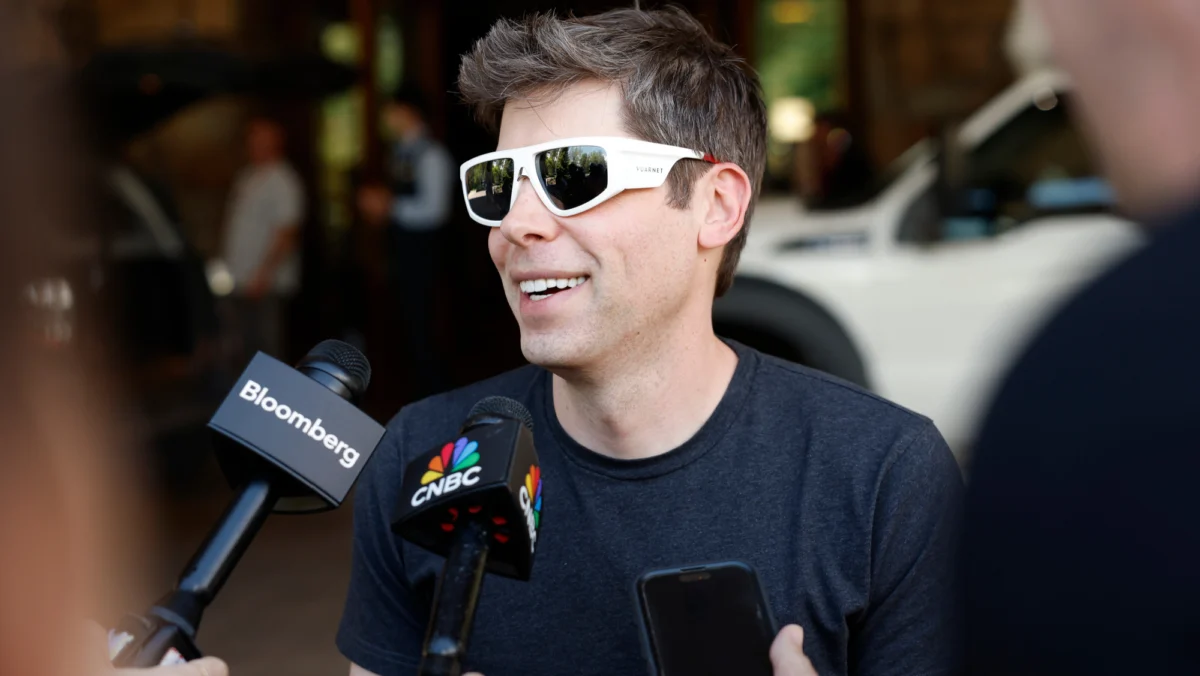
On Thursday, OpenAI, the artificial intelligence research organization led by CEO Sam Altman, announced the acquisition of The Business Playbook Network (TBPN). TBPN is a high-growth tech talk show and digital media brand that broadcasts live across major platforms including YouTube and X (formerly Twitter). The deal represents a significant pivot for a company primarily known for developing large language models like ChatGPT.
Sam Altman addressed the acquisition publicly, framing it as a move to support a program he personally values. "TBPN is my favorite tech show," Altman stated in a post on X. "We want them to keep that going and for them to do what they do so well. I don’t expect them to go any easier on us, and I’m sure I’ll do my part to help enable that with occasional stupid decisions."
Despite Altman’s assertion of editorial independence, internal communications within OpenAI suggest a more integrated strategic purpose. Fidji Simo, OpenAI’s applications CEO, informed staff that TBPN’s founders, Jordi Hays and John Coogan, would join the company to advise on communications and marketing. Simo’s memo highlighted the necessity of controlling the conversation surrounding Artificial General Intelligence (AGI). "With the mission of bringing AGI to the world comes a responsibility to help create a space for a real, constructive conversation about the changes AI creates," Simo wrote. This language—specifically the emphasis on "constructive conversation"—has been interpreted by industry analysts as a subtle critique of existing media coverage, which often focuses on the ethical risks, legal challenges, and safety concerns associated with OpenAI’s technology.
A Historical Chronology of Corporate Media Ownership
The intersection of major industry and media ownership is not a new phenomenon, but the motivations and the players have shifted over the decades. To understand the current landscape, it is necessary to examine the timeline of how corporate giants have treated media assets:
- 1960s–1980s: The Era of Industrial Conglomerates. During this period, media companies were often treated as diverse assets within large industrial portfolios. Gulf & Western, a manufacturing conglomerate, owned Paramount Pictures. The Coca-Cola Company owned Columbia Pictures for much of the 1980s, seeing it as a synergy for its global branding.
- 1980s–2000s: The Network Stewards. General Electric (GE) served as the long-term steward of NBC and Universal, integrating a major news and entertainment network into one of the world’s largest industrial and financial services companies. Similarly, Westinghouse Electric Corporation purchased CBS in 1995.
- 2010s: The Tech Billionaire Wave. A shift occurred as individual tech billionaires began purchasing legacy print institutions. In 2013, Amazon founder Jeff Bezos purchased The Washington Post for $250 million. In 2018, biotech billionaire Dr. Patrick Soon-Shiong acquired the Los Angeles Times, and Salesforce CEO Marc Benioff purchased Time magazine for $190 million.
- 2020s: The Platform and Content Integration. This current phase is defined by even more aggressive consolidation and the acquisition of digital-native platforms. Elon Musk’s $44 billion acquisition of Twitter (X) in 2022 remains the most prominent example of a titan seeking to reshape the "digital town square."
The Skydance-Paramount-Warner Bros. Discovery Nexus
The trend of billionaire intervention in media is currently manifesting in a complex series of high-stakes mergers and acquisitions involving the Ellison family. David Ellison, founder of Skydance Media and son of Oracle co-founder Larry Ellison, has been at the center of a transformative deal for Paramount Global.
Larry Ellison, whose net worth is estimated at over $140 billion, has provided the financial backing for his son’s ambitions to control some of the most influential news and entertainment brands in the United States. Following the acquisition of Paramount—the parent company of CBS News—the younger Ellison has reportedly explored a massive takeover of Warner Bros. Discovery (WBD), the owner of CNN.
Industry data suggests these moves are less about the immediate profitability of linear television—which is in decline—and more about the long-term value of intellectual property and the influence of national news divisions. Reports indicate that David Ellison has also looked toward digital innovators like Bari Weiss, founder of The Free Press, considering nine-figure deals to integrate libertarian-leaning digital outlets into legacy broadcast structures. This strategy aims to "jolt" traditional newsrooms into new eras of relevance and potentially different ideological leanings.
Jamie Dimon and the Pursuit of ‘Constructive’ Coverage
The desire to influence public policy through media ownership has also reached the highest levels of the financial sector. Jamie Dimon, the CEO of JPMorgan Chase, recently expressed his intention to enter the media space. In an interview with Axios, Dimon cited what he perceives as "poor coverage" of critical economic and policy areas as a catalyst for his interest.
"I think media is critical. Media teaches everybody. Media’s the great influencer," Dimon remarked. He argued that current journalistic standards often fail to accurately convey the complexities of fiscal policy, leading to "bad policy" decisions by the government. Dimon’s perspective reflects a growing sentiment among CEOs that the traditional press is no longer an objective arbiter of facts, but rather a fragmented landscape that requires direct corporate intervention to ensure "accuracy."
Supporting Data: The Economic Reality of Media Ownership
While the prestige of owning a media outlet is high, the financial data reveals a more sobering reality. The "vanity" aspect of these acquisitions is often underscored by the significant losses these outlets incur:
- The Washington Post: Under Jeff Bezos, the publication initially saw a surge in digital subscriptions. However, by 2023, the Post reported a loss of approximately $100 million and announced plans to cut 10% of its staff through buyouts.
- The Los Angeles Times: Since Dr. Patrick Soon-Shiong’s acquisition, the paper has faced continuous financial headwinds. In early 2024, the outlet laid off at least 115 journalists—over 20% of its newsroom—citing annual losses between $30 million and $40 million.
- X (formerly Twitter): Since Elon Musk’s acquisition, the company’s internal valuation has reportedly dropped by more than 50%, with advertising revenue in the U.S. falling significantly as major brands distanced themselves from the platform’s new content moderation policies.
These figures suggest that for tech titans, media ownership is rarely a straightforward capital investment. Instead, it is often treated as a "loss leader" for influence or a philanthropic endeavor intended to preserve a specific type of discourse.
The Rise of the Direct-to-Consumer Executive
A parallel trend to media acquisition is the rise of the "Direct-to-Consumer" executive, where leaders bypass traditional media entirely. This movement is spearheaded by Silicon Valley figures who view the mainstream press with skepticism.
Jason Calacanis, an investor and co-host of the All-In podcast, recently encapsulated this sentiment. "Founders: Take my advice… do not talk to the press, go direct and do long-form podcasts," Calacanis posted. He argued that outlets like The New York Times and Wired have become biased due to their reliance on subscription models that reward "rage-baiting."
This shift is evident in the popularity of long-form podcasts and newsletters. However, market analysis suggests that traditional media remains one of the few remaining "aggregators" of broad consumer attention. While a CEO can reach a dedicated niche through a podcast, they often lack the reach to influence the general public or global policy without the "institutional credibility" that legacy brands—the ones they are now buying—provide.
Official Responses and Industry Reactions
The reaction from the journalistic community to this wave of acquisitions has been one of cautious concern. Organizations such as the NewsGuild-CWA have frequently pointed out that billionaire owners, while providing a financial lifeline, often lack an understanding of the firewall between business interests and editorial independence.
In response to the OpenAI/TBPN deal, industry critics have noted the potential conflict of interest when an AI company—currently embroiled in multiple copyright lawsuits with news organizations like The New York Times—begins buying media assets. The concern is that these acquisitions could be used to create "AI-friendly" media environments that normalize the ingestion of copyrighted content for training models.
Implications for the Future of Media
The transition of media ownership into the hands of a few tech and financial titans carries profound implications for the future of the Fourth Estate.
First, there is the risk of "narrative monopolization." If the primary owners of media are also the primary subjects of the news, the potential for self-censorship within newsrooms increases. Even with promises of editorial independence, the "chilling effect" of a billionaire owner’s preferences can influence which stories are pursued and how they are framed.
Second, the "buy vs. build" strategy adopted by OpenAI and the Ellisons suggests that institutional credibility cannot be manufactured quickly; it must be purchased. However, as the history of Facebook founder Chris Hughes’ disastrous tenure at The New Republic shows, managing a newsroom requires a different skill set than managing a tech startup. Hughes eventually sold the magazine after a mass exodus of editors, realizing that journalists often resist the "disruptive" management styles favored in Silicon Valley.
Ultimately, the audience remains the final arbiter. While corporate titans may "wag the dog" by purchasing the platforms of the day, the shifting landscape of media consumption means that credibility is harder to maintain than ever. As legacy companies are absorbed into the portfolios of the ultra-wealthy, the challenge for these new owners will be to prove that their stewardship is motivated by a genuine commitment to public information rather than a desire to insulate themselves from criticism.