In the perpetually unsettling landscape of R.L. Stine’s Shadyside and its infamous Fear Street, the past is not merely a memory; it is an active, often malevolent, participant in the present. This fundamental characteristic of Stine’s universe, where lingering secrets and spectral inhabitants refuse to remain buried, is vividly illustrated in two classic Fear Street novels, Haunted (1990) and The Secret Bedroom (1991). Both narratives delve into the psychological and physical toll that unresolved historical trauma can inflict, highlighting how the spectral echoes of past events can profoundly disrupt the lives of the living. The prevalence of haunted houses on Fear Street is more than a stylistic choice; it serves as a potent metaphor for the town’s inability to escape its own dark history.
The Uneasy Welcome in The Secret Bedroom
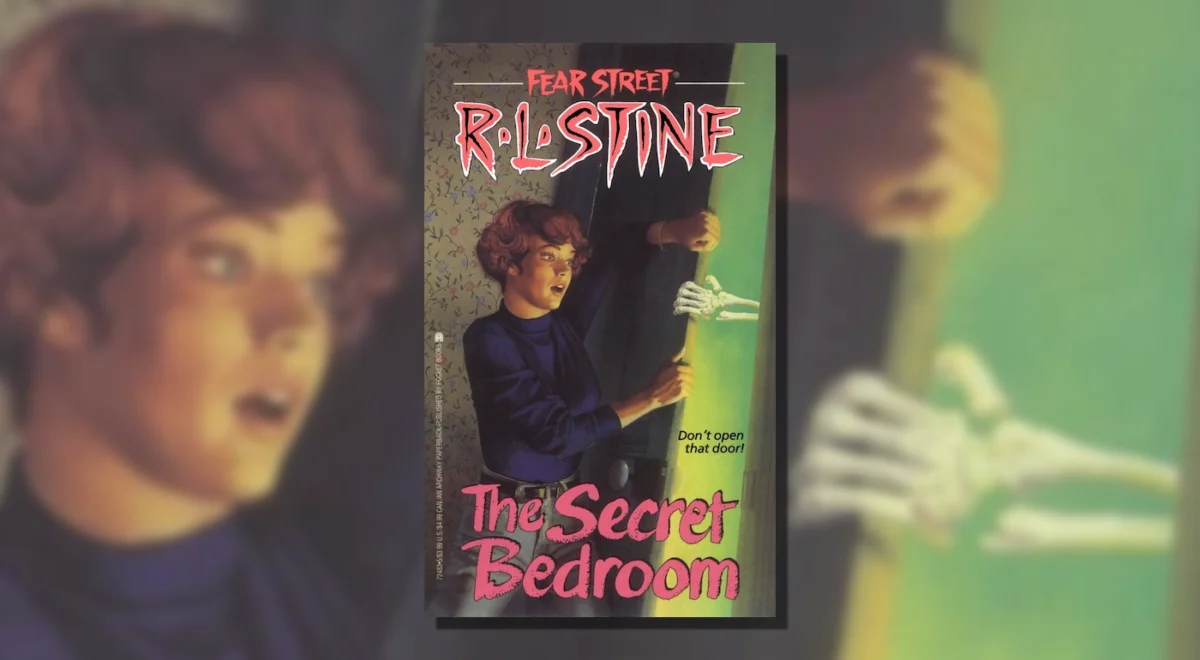
The Secret Bedroom presents a more traditional ghost story, centering on the Carson family’s relocation to a purportedly haunted residence on Fear Street. Lea Carson, the protagonist, finds herself navigating the typical anxieties of a new town and a new school, compounded by her family’s nomadic lifestyle. Her parents, driven by her father’s career, habitually purchase and renovate older homes, a pattern that leads them to Shadyside. During their house hunt, they are guided by Mrs. Thomas, the mother of the memorable Fear Street character Suki Thomas. While Mrs. Thomas excels at showcasing the property’s features, she cannot resist weaving speculative tales about its grim past, particularly concerning a locked room in the attic where a murder allegedly occurred a century prior.
This ominous detail is presented with a characteristic Shadyside shrug. As Mrs. Thomas herself notes, "most of the houses on Fear Street have similar stories… They’re not true, I don’t think. At least, they’re not all true." She attempts to reframe the unsettling history by suggesting that "there’s a horror story for every house on Fear Street. Yet the people I’ve met who live on this street are all as nice as can be." Undeterred by the potential "murder house" narrative, Lea’s parents proceed with the purchase, eager to establish their new lives.
Lea’s initial struggles in Shadyside High are exacerbated by an unfortunate encounter with Marci Hendryx, a popular student. A clumsy incident in the lunchroom results in chili spilled on Marci’s expensive sweater and an unwitting romantic entanglement with Marci’s boyfriend, Don Jacobs. The situation devolves into a calculated act of humiliation when Don, coerced by Marci, stands Lea up for their date. While Lea understandably seethes with anger towards Marci, she finds a measure of sympathy for Don, who appears genuinely remorseful, though his actions continue to align with Marci’s cruel machinations.
The atmosphere at home proves equally unsettling. With Lea’s parents frequently absent, she is left alone, and the house begins to reveal its spectral secrets. Footsteps echo from the attic above her bedroom, and the locked door to the mysterious room becomes the focal point of the haunting. The door initially appears to bleed and then sprouts sharp metal spikes, only to revert to an ordinary appearance whenever Lea attempts to draw attention to its manifestations. One night, drawn by the sounds of crying behind the door, Lea hears a disembodied voice pleading, "Open the door! Please—open the door!"
Despite her apprehension and logical reservations about opening a door connected to a murder, Lea hesitates. The mystery of the voice’s identity, its confinement, and the inherent danger of assisting a stranger behind a locked "murder door" weigh on her. However, after a brief internal debate, she relents. Upon opening the door, she discovers a meticulously preserved time capsule of a room, bathed in candlelight, with dark maroon, felt-like wallpaper and a large, satin canopy bed. Within this anachronistic space awaits Catherine, a girl from a bygone era, whose old-fashioned attire and hairstyle match the room’s furnishings.
Catherine recounts a tragic tale: she was conceived and born out of wedlock, and her parents, ashamed, locked her away for her entire life. Her resistance and attempted escape led to her murder. Catherine’s demeanor is intense, her "needy, so—hungry" expression a clear signal of her spectral state. Frightened by Catherine’s unnerving presence, Lea retreats, needing time to process the reality of a ghost in her attic and the implications of her encounter.
The Insidious Bond: Catherine’s Grip on Lea
Lea’s initial sympathy for Catherine eventually draws her back to the attic and the secret door. This return marks the beginning of Catherine’s insidious integration into Lea’s life, extending to a disturbing possession of Lea’s very being. Frustrated by Marci’s relentless bullying, Lea confides in Catherine, seeking assistance in scaring her tormentor. Catherine readily agrees, but with a chilling condition: she will possess Lea’s body for the journey to Marci’s house to conserve her spectral energy.
This Faustian bargain, akin to inviting a vampire across a threshold, proves disastrous. While Catherine successfully frightens Marci, her actions escalate beyond mere intimidation. As Marci flees upstairs, attempting to escape Lea, Catherine abandons Lea’s body and, in her invisible ghostly form, pushes Marci over the second-floor banister, resulting in her death. Lea is horrified, desperate to sever the connection with Catherine. However, it is too late. Catherine, having gained access to Lea’s body, can now force her way in at will, turning Lea’s life into a waking nightmare.
The narrative takes a sharp turn when Catherine reveals a devastating truth: Lea never actually opened the attic door. All of Lea’s perceived interactions with Catherine in the attic were elaborate visions, meticulously crafted and controlled by Catherine, who had been present in Lea’s room all along. Catherine confesses, "You were never in the hidden room… You were never in the room upstairs—because I was never in the room upstairs. I never left this room." Catherine had exploited Lea’s initial fascination with the locked room during the realtor’s tour, weaving a fabricated reality to manipulate her. Her dual objectives were to seize control of Lea’s body and to prevent Lea from discovering the true nature of the attic room.
Nothing Catherine had told Lea was true. She now reveals the chilling reality: the room in the attic is not where Catherine was imprisoned, but rather where she murdered her own parents. Catherine boarded up the room herself a century ago to conceal her crime, and "that door will stay locked forever." The only path to Lea’s liberation is to confront Catherine’s deception and unlock the room, uncovering the truth that Catherine desperately sought to keep hidden. The vengeful spirits of Lea’s murdered grandparents await within. They rise, their decaying forms and putrid odor a terrifying spectacle, encircling Catherine in a "foul, murderous hug," ultimately suffocating her. This climactic confrontation not only punishes Catherine but also brings peace to her parents’ restless spirits, leaving Lea to grapple with the fragmented reality of her experience and the daunting task of moving forward.
The Dual Nature of Paul in Haunted
Haunted offers a distinct interpretation of the haunted house trope, introducing a more complex ghost whose existence is intertwined with his living counterpart. Melissa Dryden is already on edge due to rumors of the "Fear Street Prowler," a burglar plagilling the neighborhood, when she first encounters a spectral figure in her bedroom. The ghost, described with dark, unwashed hair, high cheekbones, and an unpleasant sneer, fixes his dark eyes on Melissa and accuses her: "you killed me!"
Melissa, utterly certain she has never met this ghost, named Paul, and certainly has not killed him, is bewildered by his unwavering accusation and vengeful intent. She pleads for time, hoping to uncover the truth of his demise, clear her name, and ultimately help his spirit find peace.
Melissa’s investigation into recently deceased local teens yields no results, a frustratingly common outcome in Shadyside. Her efforts take a bizarre turn when she encounters Paul outside a teen dance club, but this Paul is very much alive. While Melissa has begun to establish a grudging rapport with Ghost Paul, Alive Paul is a menacing figure. He is seen drinking with friends in the parking lot, and upon encountering Melissa, he and his group exhibit clear predatory intentions, cornering her and issuing threatening remarks, including "What’s your hurry? Didn’t you come out to play?" and "I’ll let her go when I’m finished with her."
From this point, the two Pauls diverge dramatically in their narratives. Ghost Paul becomes increasingly sympathetic, driven to solve the mystery of his own impending death. Alive Paul, conversely, emerges as a genuinely dangerous individual who continues to threaten Melissa and is revealed to be the Fear Street Prowler, a criminal who knows her address.
Melissa’s desire to unravel the mystery and aid Ghost Paul intensifies. As she learns more about him, she begins to believe that this spectral version represents the "real" Paul, and Alive Paul’s aggressive behavior is merely a facade. This conflation of the two Pauls leads Melissa into perilous situations, such as visiting Paul’s house alone and tracking him and his friends to another dark parking lot, where the earlier harassment and threats of violence are repeated.
The Tragic Convergence and Melissa’s Transformation
The narratives of Melissa and the two Pauls converge dramatically when Alive Paul breaks into Melissa’s house, intending to assault her and rob her. Melissa, home alone, recalls her father’s purchase of a gun for protection against the Fear Street Prowler. She retrieves the firearm but hesitates to pull the trigger. Alive Paul, lacking such reservations, attempts to seize the gun and kill Melissa.
At this critical juncture, Ghost Paul intervenes. He lunges forward, grasping the pistol in his living self’s hand. The gun flies from their grasp, and Melissa catches it. In the ensuing chaos, the gun discharges, fatally wounding Alive Paul. Ghost Paul, having observed his living counterpart’s life, is unimpressed by the criminal he was. In this pivotal moment, he chooses to save Melissa’s life, accepting his ghostly fate.
Melissa is horrified, realizing that Ghost Paul’s premonition has come true: she has, in essence, killed him. However, Ghost Paul expresses no regret. "I couldn’t let him kill you. I—I care about you too much," he tells Melissa. Following a spectral, yet tangible, embrace, Paul reassures her, "Don’t feel guilty for killing me. Don’t ever feel guilty. You were the only one who ever cared about me." While Paul only experienced this care after his death, Melissa’s actions transform her from a murderer into a savior, someone who, albeit tragically, liberated him from a misguided criminal existence.
The Enduring Scars of the Supernatural
In both The Secret Bedroom and Haunted, the ghosts transcend mere spectral encounters or residual presences. Catherine and Paul possess the potential for profound destruction, with Catherine attempting to usurp Lea’s body and mind, and Paul posing a direct lethal threat to Melissa. The experiences leave indelible marks on Lea and Melissa, reverberating long after the ghosts are exorcised or laid to rest.
Lea’s temporary loss of control over her mind and body in The Secret Bedroom is likely to foster a lasting sense of doubt regarding her own thoughts and perceptions. Similarly, Melissa’s journey in Haunted involves a profound shift in her self-perception. Initially certain of her inability to take a life, she is thrust into the role of accidental killer, all while developing feelings for the ghost she was trying to save. By the conclusion of these narratives, the ghosts have vanished, but the protagonists have been fundamentally and irrevocably transformed by their encounters with the persistent shadows of Shadyside’s past. The Fear Street legacy, it seems, is not just about jump scares, but about the enduring psychological consequences of history’s unresolved traumas.