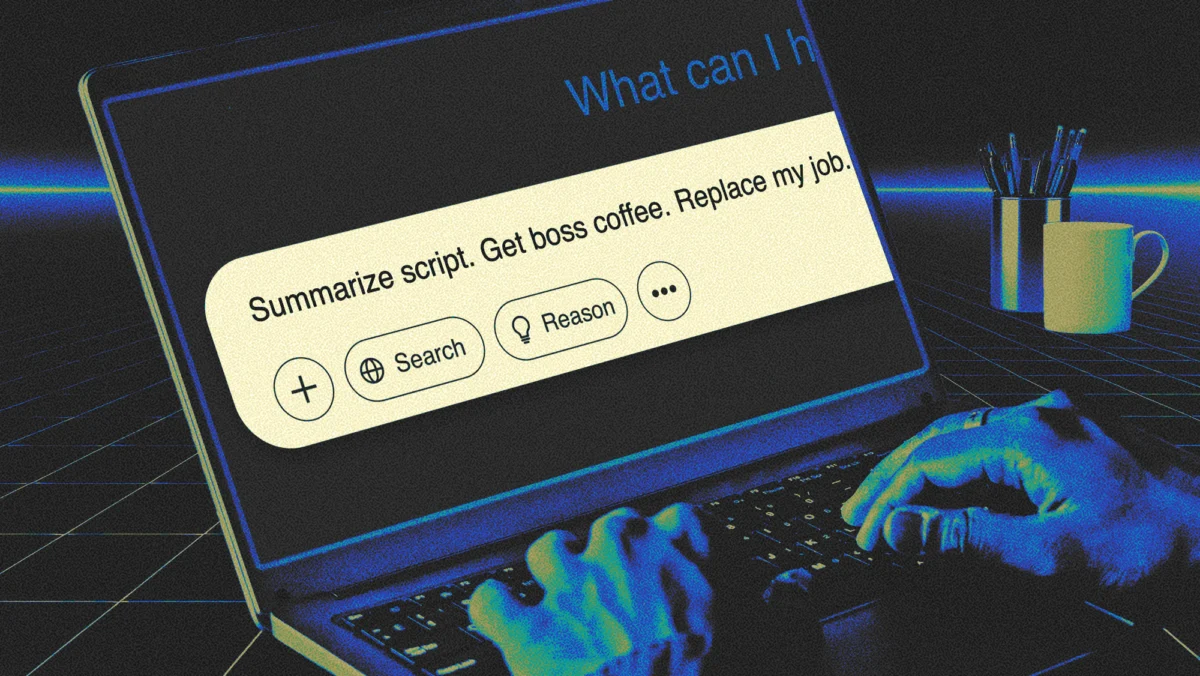
While industry watchers often anticipate the dramatic emergence of generative artificial intelligence in high-profile capacities—like an AI-driven screenplay landing on the coveted Black List or a virtual actor, a "Tilly Norwood," headlining the next Fast & Furious installment—the current reality of AI integration within Hollywood’s sprawling entertainment ecosystem is far more subtle, yet profoundly impactful. This transformation isn’t a top-down mandate but a bottom-up percolation, initiated by the industry’s assistant class and support staff, gradually becoming an embedded, often unofficial, standard that is redefining foundational workflows and raising complex questions about labor, intellectual property, and the very fabric of creative development.
The Unseen Integration: From Mundane to Mission-Critical
The widespread adoption of AI tools by Hollywood’s entry-level workforce signals a significant shift, driven primarily by an intensifying pressure to manage escalating workloads amidst dwindling headcounts. The Hollywood Reporter conducted interviews with a dozen assistants and support staff across major studios, networks, and agencies—all requesting anonymity due to concerns over job security in a notoriously competitive and challenging labor market—who illuminated the daily and consistent deployment of AI. These applications range from the seemingly trivial, like crafting a fawning thank-you note to fit a Beverly Hills florist’s 250-character limit, to more substantial tasks, such as utilizing AI notetakers during crucial studio meetings with creative teams behind streaming series.
This integration mirrors historical technological shifts in Hollywood, from the advent of digital film to the ubiquity of email, where new tools often gain traction through the ranks of those tasked with daily operational efficiency. Today’s "underlings," those who navigate the precarious landscape of continuous industry layoffs, are on track to become tomorrow’s power brokers, bringing their AI proficiencies—and potentially, their "shadow AI" habits—with them as they ascend.
Hollywood’s Shifting Sands: A Catalyst for AI Adoption
The entertainment industry has been in a state of flux for years, marked by the "streaming wars," intense competition for subscriber eyeballs, and a subsequent re-evaluation of profitability that has led to significant cost-cutting measures. This environment has exacerbated pressures on support staff. Layoffs have become commonplace, shrinking departmental sizes and leaving remaining assistants to manage the responsibilities of not just one, but often two or three executives. A 2025 THR survey of over 100 representatives and executives from its annual Next Gen list revealed that half either shared an assistant or had none at all, underscoring the severe strain on administrative resources.
This backdrop of "leaner and meaner" operations has made AI not merely a convenience but, for many, a necessity for survival. As one assistant candidly stated, "I do not need to be spending two hours of my day figuring out how to get a bottle of wine to somebody in the middle of nowhere." AI has become a digital assistant to the human assistant, handling pedestrian, unglamorous tasks such as composing emails, scheduling meetings, and orchestrating the incessant stream of congratulations and holiday gifts required in a relationship-driven industry. The tools streamline these administrative burdens, allowing support staff to maintain pace with their expanded duties.
The Double-Edged Sword of "Shadow AI": Risks and Ramifications
While efficiency gains are undeniable, the informal nature of much of this AI adoption presents considerable risks, particularly concerning sensitive information and intellectual property. Warner Bailey, a former Hollywood assistant and the force behind the popular social media meme page-turned-media company Assistants vs. Agents, has extensively surveyed the thousands-strong support staff community on their job practices, including their use (or misuse) of AI.
Bailey highlights the significant concern of "shadow AI" use—the deployment of free or publicly available AI tools, as opposed to company-approved enterprise solutions, without official oversight or security protocols. "Right now, a lot of assistants are just going and pasting sensitive information in the public AI tools, including things like client schedules and deal terms, internal notes, and data," he warns. This practice exposes companies to potential data breaches, intellectual property leakage, and compliance violations, as public AI models often use ingested data for further training, blurring lines of confidentiality and ownership.
The problem is compounded by a notable lack of formal training on AI use provided to assistants. Hollywood’s young assistant workforce, largely composed of Gen Z individuals, has grown up with generative AI and large language models (LLMs) integrated into their academic and personal lives. They naturally port these habits into the workplace, often unaware of the specific security and confidentiality implications within a high-stakes industry like entertainment. Bailey points out that the "education piece should fall on the company, but has to, unfortunately, fall outside of it because of various factors like shrinking budgets and also knowledge base. The [administrative] systems internally are so obsolete that senior-level, or even those who were assistants two or three years ago, don’t necessarily have the knowledge to train other people on it." This creates a dangerous knowledge gap, leaving critical data vulnerable.
Creative Crossroads: AI in Development and Script Coverage
Beyond administrative tasks, AI is also making inroads into the core creative development process, particularly in the realm of "coverage." Coverage is the foundational analytical report on a script, book, or short story, evaluating its content, quality, and commercial viability—a critical first step in a story’s journey from page to screen. Faced with overwhelming volumes of material, some readers, including assistants, are uploading PDFs of written materials, including unpublished works, to tools like ChatGPT and Claude to generate summaries and initial analyses.
However, industry veterans caution against over-reliance on AI for such nuanced tasks. LLMs excel at ingesting and synthesizing vast amounts of text, but they often struggle with the subtleties inherent in human storytelling—nuance, irony, subtext, and emotional depth. They are also prone to "hallucinations," introducing narrative inaccuracies or fabricating plot points. Stephen Galloway, dean of Chapman University’s Dodge College of Film and Media Arts and a former THR editor who spent five years as a script reader, emphasizes this limitation: "AI can’t summarize emotion. It can’t define if a character is original." He underscores that while AI is a powerful tool, understanding its limitations and mastering uniquely human skills remains paramount. Chapman’s film school, which offers five AI-related classes, advocates a "dual obligation: one is to master the tool, but know what you can do that is separate from the tool."
Corporate Ambivalence and Strategic Embrace
The corporate response to AI integration within Hollywood is varied, reflecting a mix of caution, skepticism, and strategic embrace. One partner at a major Hollywood management company voiced a preference for "independent thought," explicitly disallowing AI use by their support staff or representatives. This stance highlights a philosophical resistance to delegating cognitive tasks to machines, valuing human originality above all.
Conversely, other entertainment outfits are more bullish. Some actively encourage staff to track their AI use, a practice more common in tech giants like Meta and Google, signaling a move towards quantifying AI’s impact and potentially integrating it into performance metrics. Disney, for instance, held an internal AI summit in January with representatives from all departments, from Imagineering to business affairs, to promote company-wide AI integration. This initiative, occurring months before its reported $1 billion OpenAI investment ended following the termination of OpenAI’s Sora video app, indicates a significant, if evolving, commitment to leveraging AI across its diverse operations. These contrasting approaches underscore the industry’s ongoing struggle to define its relationship with this transformative technology.
The Human Cost: Job Security, Skill Atrophy, and the Apprenticeship Model
Beneath the veneer of efficiency, the growing reliance on AI by the Hollywood "underclass" fuels profound existential anxieties. Assistants express two primary concerns: the environmental impact of energy-draining AI technologies and, more acutely, job security. "When they say, ‘You should be using AI,’ the first thought in your head is: ‘Are you asking me to teach you how to replace me with technology?’" one studio assistant articulated, encapsulating the fear that efficiency gains could lead to redundancy rather than promotion.
This concern is amplified by the industry’s traditional apprenticeship model. Historically, time spent as an assistant, often starting in the mailroom, was the foundational rung on Hollywood’s career ladder—a period for robust skill-building, networking, and understanding the industry’s intricate nuances. If AI automates essential tasks, assistants worry they might miss opportunities to develop critical skills that would traditionally prepare them for higher-level positions. "I can’t help but think that, yeah, we’re going to quote-unquote streamline, but then you’re just gonna give me two more bosses, and we will be back to where we started. Instead of hiring two assistants, you’re gonna hire one, and I’m still swamped with admin work," another assistant lamented, adding, "and I’m not being pushed any closer to a promotion."
Stephen Galloway suggests that the broader industry retrenchment and consolidation, rather than AI itself, poses a more immediate threat to the assistant workforce. Cost-cutting has led to fewer entry-level jobs, and assistant pay has largely stagnated over the past decade while the cost of living in Los Angeles has soared. This economic squeeze, combined with the industry’s shrinking size and a pervasive "survival first" mentality, is damaging the "continuous ladder of relationships" that once defined Hollywood’s career progression.
Navigating the Future: Training, Policy, and Ethical Considerations
The infiltration of AI into Hollywood’s foundational roles necessitates a proactive approach to mitigate risks and maximize benefits. Addressing the "shadow AI" problem requires robust company policies, enterprise-level AI tool procurement, and comprehensive training programs that educate staff on secure and ethical AI usage, data privacy, and intellectual property protection. Labor unions, such as the WGA and SAG-AFTRA, have already begun to address AI in their collective bargaining agreements, establishing precedents for consent, compensation, and control over digital likenesses and AI-generated content. These agreements represent critical steps toward formalizing AI’s role and safeguarding human labor.
Furthermore, a re-evaluation of the industry’s apprenticeship model is crucial. While AI can automate routine tasks, it cannot replicate human creativity, empathy, or the nuanced understanding of market dynamics and human psychology that define successful entertainment. The focus of entry-level roles may need to shift from administrative execution to critical analysis, prompt engineering, and leveraging AI as a creative partner, rather than a replacement. Film schools and industry organizations have a vital role in preparing the next generation with both technical AI skills and the indispensable human competencies that AI cannot replicate.
The integration of AI into Hollywood, starting from its most fundamental levels, is not merely a technological upgrade but a systemic transformation. It promises enhanced efficiency but simultaneously poses profound challenges to job security, skill development, and the very culture of an industry built on human creativity and connection. As Hollywood grapples with these complexities, the choices made today by assistants, executives, and policymakers will ultimately determine whether AI becomes a tool for empowerment or an instrument of disruption, shaping the future of storytelling for decades to come.
This story appears in The Hollywood Reporter’s upcoming AI Issue, out in April.