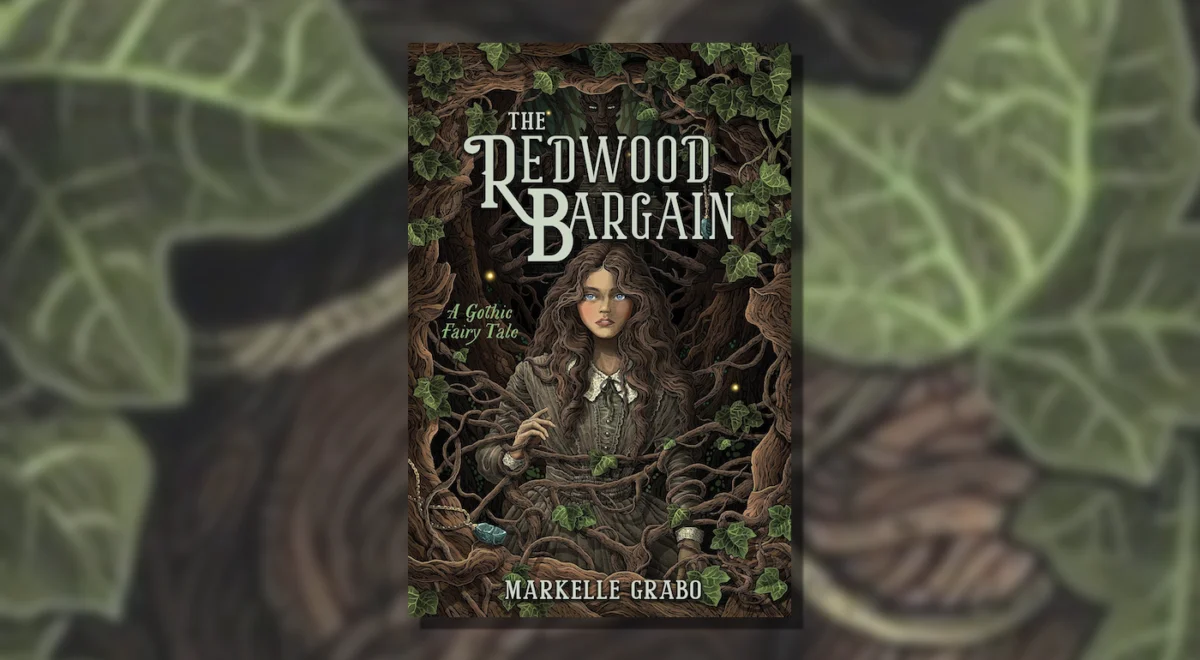
Page Street YA is set to release Markelle Grabo’s highly anticipated young adult sapphic fantasy novel, The Redwood Bargain, on April 28th. The book introduces readers to a world where a desperate indentured servant must gamble with a dangerous forest entity to secure her cousin’s freedom, a narrative fraught with deception, burgeoning romance, and the high stakes of survival.
A Desperate Bargain for Freedom
At the heart of The Redwood Bargain is Katrien, an indentured servant burdened by a past decision that prolonged her cousin Helsa’s servitude. Her life takes a perilous turn when a mysterious and formidable entity, known only as The Redwood Man, demands the lord of the manor’s youngest daughter as payment for saving his life. Driven by a fierce desire to rectify her past mistake and secure Helsa’s freedom, Katrien devises a dangerous plan: to impersonate Lady Zaviera, the lord’s youngest daughter, and deceive The Redwood Man.
This is no simple deception. Three other girls have already met tragic ends attempting to fool the forest lord, each falling prey to his discerning nature and swift wrath. Katrien’s challenge is amplified by the growing impatience of The Redwood Man, whose power is manifesting in increasingly unsettling ways. The manor itself is under threat, with sentient vines encroaching upon its walls and staff, suggesting a malevolent force at play.
To equip Katrien for this perilous charade, Lady Zaviera and her sisters undertake the arduous task of transforming a kitchen maid into a convincing noblewoman. This transformation, however, is complicated by unexpected developments. As Katrien navigates the intricate art of deception, she finds herself drawn to the tenderhearted Lady Zaviera, developing feelings that blur the lines between duty, desire, and the very real possibility of her own demise. The narrative promises a compelling exploration of sacrifice, self-discovery, and the complexities of love blossoming in the shadow of imminent danger.
Prologue: Whispers of the Unseen
The novel opens with a prologue narrated by Katrien, setting a somber and ominous tone. The narrative begins with a fervent, albeit unfulfilled, prayer: "When our lord of the manor fails to return from his hunt in time for lunch with his daughters, my first and only prayer is that he never returns at all." This initial sentiment immediately establishes Katrien’s deep-seated resentment towards Lord Elwood Barras and hints at the dire circumstances that plague the manor’s servants.
Lord Barras’s eventual return is far from triumphant. Arriving after sunset, disheveled and on foot, his absence of his horse sparks immediate concern among the estate’s staff. The butler’s terse announcement of the horse’s demise is followed by the valet’s explanation: the animal suffered a broken leg. While the fate of the horse is regrettable, Katrien admits to a personal relief, as horses induce fear in her.
The late hour does not deter the manor’s servants from gathering, their collective anxiety palpable. The kitchen and scullery maids, including Katrien, continue their duties while covertly absorbing the hushed conversations. The valet reveals that Lord Barras is refusing medical attention, claiming to be unharmed. This assertion is met with skepticism by a housemaid who observed his clothes, reporting them to be soaked in blood and an unusual green sap. The valet’s confusion, stating he saw no visible injuries on the lord, deepens the mystery surrounding the hunting accident.
The servants speculate about the nature of the lord’s injuries and the presence of the peculiar sap. The butler offers a crucial piece of information: Lord Barras was lost in the forest until an unidentified man guided him home. This benefactor, however, did not seek thanks or enter the manor, merely stating he expected a "favor" in return. This cryptic exchange leaves the servants bewildered and a palpable sense of unease settles over the gathering. Katrien, particularly troubled by the eerie tale, experiences a shiver that causes her hands to tremble, nearly dropping the dishes she is carrying.
The servants eventually disperse, but Katrien lingers, hoping to speak with her cousin Helsa, who is tasked with tending to the horses. Katrien’s hope for her cousin’s well-being is tied to Lord Barras’s absence, as his continued presence exacerbates Helsa’s difficult situation, which includes overwork and a growing reliance on alcohol.
As Katrien prepares to retire for the night, a peculiar tapping sound at the kitchen door interrupts her thoughts. Initially dismissing it as a prank or a call for a doctor, she finds no one upon opening the door. The tapping resumes, more insistent and closer. Her second, more forceful opening of the door reveals not a prankster, but a green vine, writhing on the stoop. Her initial alarm at mistaking it for a snake quickly turns to dread as she realizes more vines are emerging, their leaves rustling ominously. She slams the door shut, unnerved and convinced this is a matter for others to handle.
The tapping persists. Katrien retreats to her room, the eerie sounds echoing in her mind. She struggles to dismiss the incident as a figment of her imagination, attributing it to fatigue and her recent fallout with Helsa. However, her unease is confirmed when she is jolted awake by a piercing scream, followed by another. Descending the stairs in her nightclothes, she finds the kitchen transformed. Ivy vines have completely overtaken the room, adorning every surface, their glossy leaves illuminated by the gaslight. A scullery maid, trembling, clings to her for support.
The situation rapidly escalates as the vines exhibit a disturbing sentience. A vine ensnares a footman’s neck, pulling him to his knees. The servants rally, a desperate chain of hands working to free him. Another maid is caught by her ankle, her screams as the ivy begins to engulf her. The collective effort of the servants, forming a human chain, manages to save the maid just as groundskeepers arrive with shears, battling the encroaching vegetation.

The Escalation of the Threat
The harrowing events in the kitchen are merely the prelude to a larger, more sinister unfolding of events. In the days following Lord Barras’s disastrous hunt, the supernatural manifestations intensify. Fully grown redwood trees begin to inexplicably appear across the estate, their presence seemingly targeted. While these imposing trees do not directly harm the human staff, they exert a powerful, almost magnetic pull on the estate’s livestock. Sheep, goats, and chickens are found dead atop the roots of these new trees, their mouths filled with traces of bark shavings, indicating a potential poisoning. Lord Barras, in response, mandates that tenants keep their livestock securely penned.
The earth itself begins to rebel. Tremors shake the manor, causing damage to delicate objects and leading to several falls among the staff. These seismic disturbances appear localized to the estate, as no external aid is sought or offered. Fearful of Lord Barras’s volatile temper, the manor’s inhabitants remain isolated. The lord issues a decree forbidding any servant from leaving the estate and turning away all visitors, with the exception of tenants making scheduled deliveries. This enforced isolation heightens the sense of entrapment and fear within the manor.
The Nature of The Redwood Man’s Bargain
The servants, observing these escalating phenomena, come to understand the root cause: the entity they now refer to as The Redwood Man. The terror is not random but a consequence of an unfulfilled bargain. The Redwood Man had been promised a prize for aiding Lord Barras, a prize that the lord had failed to deliver. This prize was not merely a symbolic gesture but a specific demand: one of Lord Barras’s daughters.
However, the ladies of the manor, despite their precarious situation, are unwilling to surrender one of their own. They devise strategies, sending girls of their choosing to the woods in hopes of appeasing The Redwood Man. Yet, these attempts are consistently rejected. The narrative chillingly details the fates of these chosen girls, each discovery more horrific than the last. The first is found with evergreen needles stuffed down her throat, the second impaled by a tree branch, and the third, a macabre discovery, is found missing her eyes. These grim outcomes underscore the immense power and the unforgiving nature of The Redwood Man.
The repeated rejection of the offered girls implies a deeper, more specific requirement for the fulfillment of the bargain, a detail that has yet to be uncovered or understood by the inhabitants of the manor. The implication is clear: a fourth girl will inevitably be sent, and the question remains whether she will be the one to finally satisfy The Redwood Man, or if her fate will mirror that of her predecessors, perpetuating the cycle of fear and violence.
Analysis and Broader Implications
Markelle Grabo’s The Redwood Bargain taps into primal fears of the unknown and the consequences of broken promises. The story’s exploration of a magical contract gone awry, set against the backdrop of a rigidly hierarchical society, offers fertile ground for examining themes of power dynamics, class struggle, and the lengths to which individuals will go to protect those they love.
The narrative’s sapphic element introduces a layer of complexity, suggesting that love and connection can transcend societal expectations and even the darkest of supernatural threats. Katrien’s internal conflict between her duty to her cousin and her growing feelings for Lady Zaviera promises a nuanced portrayal of emotional development under extreme duress.
The story also serves as a cautionary tale about the dangers of hubris and the unforeseen consequences of making pacts with entities beyond human comprehension. Lord Barras’s initial decision to hunt without his valet and his subsequent refusal to seek proper medical attention suggest a character who is either supremely arrogant or deeply afraid of revealing the true nature of his encounter. The ensuing events serve as a stark reminder that such actions can have devastating repercussions, not only for the individuals involved but for entire communities.
The escalating supernatural phenomena – the sentient vines, the sudden appearance of redwoods, and the earth tremors – are not merely plot devices but symbolic representations of a natural world rebelling against an imbalance created by human actions. The Redwood Man, in this context, can be interpreted as an embodiment of nature’s wrath, a force that demands respect and equilibrium.
The Redwood Bargain is poised to be a significant addition to the young adult fantasy genre, offering a dark, compelling, and emotionally resonant story that explores the enduring power of love and the terrifying consequences of desperation. The intricate plot, rich world-building, and compelling characters suggest a narrative that will captivate readers and leave them contemplating the true cost of a bargain.
Excerpted from The Redwood Bargain, copyright © 2026 by Markelle Grabo.