At the close of January, acclaimed comic artists Nick Dragotta and Daniel Warren Johnson engaged in a four-day marathon signing session at a Marriott Hotel in Monterey Park, California. Seated at separate tables, fueled by coffee and punctuated by brief meal breaks, the duo meticulously signed an astonishing volume of comic books—estimated between 15,000 and 20,000 issues. Under the vigilant gaze of representatives from a specialized signing and grading company, each comic was carefully handled, placed into protective holders, and prepared for professional grading and encapsulation, ensuring their pristine preservation. This intensive, yet remarkably quiet, endeavor underscored a significant shift in the comic book industry: the emphatic return of the superstar artist, a phenomenon largely driven by the unprecedented success of DC’s Absolute line.
A Seismic Shift in the Comic Industry
For much of the 21st century, despite being an inherently visual medium, the comic book industry had been predominantly writer-driven. While individual artists garnered respect and a degree of popularity, the marquee names and primary sales drivers were typically authors such as Brian Michael Bendis, Robert Kirkman, Scott Snyder, James Tynion IV, and Brian K. Vaughan. This era built upon the legacy of influential wordsmiths like Alan Moore and Grant Morrison, whose complex narratives and deconstructive storytelling reshaped the medium. The focus shifted towards intricate plots, character development, and serialized storytelling that often prioritized the narrative architect over the visual interpreter. This emphasis also coincided with a period where comic book properties became increasingly valuable intellectual property for Hollywood adaptations, further elevating the profile of writers responsible for crafting these expansive universes.
However, the landscape is now undergoing a dramatic transformation. Artists like Nick Dragotta, Daniel Warren Johnson, Hayden Sherman, Jorge Jimenez, and Peach Momoko are rapidly ascending to a level of mainstream recognition not seen since the early 1990s. This earlier era, often referred to as "Beatlemania" for comics, saw a rebellious cohort of artists—including Jim Lee, Todd McFarlane, and Rob Liefeld—depart Marvel Comics to establish Image Comics, placing creative control and ownership firmly in the hands of artists. Their store appearances, such as those at iconic locations like L.A.’s Golden Apple, drew unprecedented crowds. In the aftermath of this artist-led boom, major publishers like Marvel and DC consciously recalibrated their strategies, subsequently elevating the stature and perceived importance of writers to regain control over their intellectual properties and editorial direction.
Jim Lee, a veteran of that 1990s artist reign and currently the sole publisher of DC, has observed the cyclical nature of the industry’s power dynamics. Reflecting on the current environment, he describes it as a return to "a balance where both artists and writers are driving sales, driving fans." Lee emphasizes the positive implications of this shift, stating that the re-emergence of the artist as a superstar "is good for the business, it is good for the artform." This sentiment is echoed across the industry, as renewed enthusiasm translates into tangible market growth and creative innovation.
The Catalyst: DC’s Absolute Line

Central to this artistic renaissance is the runaway success of DC’s Absolute line, which debuted towards the end of 2024. Spearheaded by titles such as Absolute Batman, Absolute Wonder Woman, and Absolute Superman, this initiative boldly reinterpreted iconic characters and their origins in truly sweeping and often radical ways. Unlike previous "relaunches" or reboots undertaken by DC or Marvel, which often struggled to maintain momentum or attract new demographics, the Absolute line has injected unprecedented vigor into both publishers and retailers. It has unexpectedly broadened the readership, drawing in new fans alongside long-time enthusiasts, and, crucially, cultivated a new generation of celebrity artists whose presence can transform a standard signing event into a fervent, late-night phenomenon, as demonstrated by Dragotta and Johnson’s recent Oakland appearance, or the hundreds-strong queues that greeted Jimenez in Spain in February. These artists are now strategically leveraging this newfound mainstream recognition to expand their influence and capitalize on diverse revenue streams.
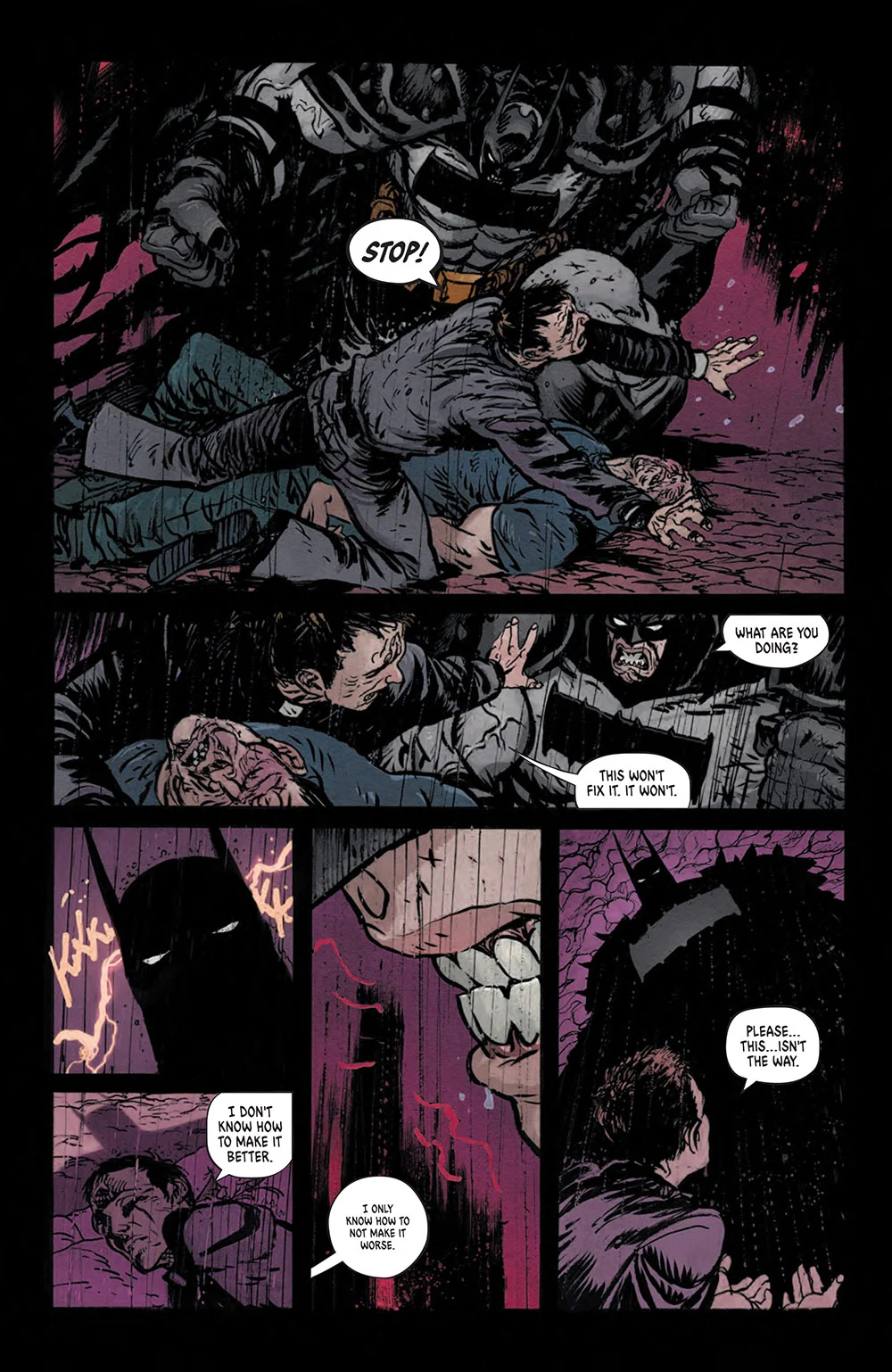
Nick Dragotta vividly recalls the pivotal moment his career trajectory changed: hearing writer Scott Snyder’s radical pitch for Absolute Batman. "The real hook was when he said, ‘Bruce’s parents will die in a school shooting,’" Dragotta recounts. "And I was like, ‘You really going there?’ And he was like, ‘Yeah.’" This willingness to push boundaries defined the line. In Dragotta’s Absolute Batman, Bruce Wayne is reimagined as growing up in a blue-collar neighborhood, devoid of a butler or the iconic Batcave. Similarly, Hayden Sherman’s Absolute Wonder Woman presents a Diana Prince raised in Hades by the sorceress Circe, trained as a witch rather than an Amazonian princess on Paradise Island, soaring on a skeleton horse—a stark departure from established canon.
The Absolute line’s impact on DC has been nothing short of seismic. For the first time this century, DC has surpassed long-time rival Marvel in market share, a testament to the line’s innovative approach and popular appeal. Since its launch, the Absolute titles have sold nearly 12 million units. Absolute Batman, in particular, defies conventional publishing trends by demonstrating continually rising sales, rather than the typical drop-off or leveling experienced by most series. In a February tweet, writer Scott Snyder expressed his astonishment: "Just heard that sales on Absolute Batman 17 actually went up from 16, which is crazy. To have sales going up or even holding at this point…we don’t know how to wrap our heads around it." Absolute Batman is now consistently selling an extraordinary 300,000 issues per month, a figure considered monstrous in the contemporary comic book publishing landscape, where even a successful title might sell a quarter of that.
Economic Revival and New Artist Revenue Streams
The Absolute phenomenon has resonated deeply within the retail sector. Ryan Liebowitz, owner of LA’s Golden Apple Comics, enthusiastically states, "The Absolute comics have restored faith in the comic industry and retailers alike." He notes a significant influx of first-time comic book readers, a crucial indicator of market expansion. "We haven’t seen anything like this in a long time," Liebowitz adds, underscoring the revitalizing effect on the local comic shop ecosystem.
Beyond direct comic sales, the new generation of superstar artists is benefiting from revenue streams that were either non-existent or less lucrative in previous generations. Once largely complimentary, artist signings have evolved into significant money-makers, often commanding fees for autographs and sketches. Limited edition variant covers, featuring unique artwork from sought-after artists, have become highly collectible and generate substantial income. However, the most lucrative new stream is the booming market for original comic art.
Felix Lu, a former Hollywood assistant who transitioned into a prominent comic art dealer, runs an online store where original art from Dragotta, Johnson, Sherman, and others consistently sells out almost instantly upon release. These pieces are fetching prices more aligned with classic artists from the 1970s and 1980s, indicating a significant revaluation of contemporary comic art. "It is a moment," Lu affirms. "We will look back on this and see that this was a special time."

A prime example of this market surge is Dragotta’s cover for Absolute Batman No. 1, which sold for an astounding $70,000 in late 2024, less than a month after the title’s debut. This set a new record for a modern age comic cover, and experts suggest its value would likely be even higher today given the title’s sustained explosion in popularity. A notable shift in collecting habits has also emerged: while collectors traditionally purchased individual art pages, there is now a growing trend of aficionados snapping up complete issues, often paying well into six figures for an entire story’s original artwork. "We’re getting vintage values now," Lu observes, highlighting the unprecedented financial recognition for contemporary artists.
When asked about the most significant change in his life two days into his marathon signing with Johnson, Nick Dragotta chuckled and candidly replied, "Money." This simple, honest answer encapsulates the profound economic transformation many artists are experiencing in this new era.
Journeys to Stardom: Nick Dragotta and Daniel Warren Johnson
The paths taken by Dragotta and Johnson to reach this pivotal moment, while distinct, share a common thread: an unwavering dedication to drawing.
Nick Dragotta, 50, grew up in a blue-collar household in New Jersey. His parents, though not artists themselves, fostered creativity, taking the family to art museums in Philadelphia and Broadway shows in New York. Dragotta’s early career included vocational school, working in a chemical glassware factory, and even farm labor with his brother. Despite constantly drawing, the idea of a career in art only solidified after encountering a booth for the Savannah College of Art and Design at a comic convention, setting him on a path to study sequential art. After graduation, he secured a job coloring comics in Georgia, a state where, as he recalls, "you could live like a king if you made ten grand a year" in the 1990s.
His early comic gigs for Marvel were, by his own admission, "awful." Yet, through persistence, showing his work at conventions, and networking with editors, he slowly built his portfolio. Notable assignments included a silent issue of Fantastic Four and co-creating America Chavez, a key character in Doctor Strange in the Multiverse of Madness, with writer Joe Casey. Despite these successes, he and his family often relied on credit cards to make ends meet. His breakthrough came in the 2010s with East of West, a sci-fi Western monthly comic from Image that he co-created and drew, enjoying modest success and finally providing a stable income. However, he unequivocally credits Absolute Batman as the biggest break of his career, acknowledging, "I know it’s late," a testament to his "overnight success years in the making."
Daniel Warren Johnson, 39, hails from Massachusetts and cultivated his artistic skills early, immersed in the worlds of Power Rangers and Transformers. Without the aid of Google, he meticulously taught himself to draw complex humanoid robots, iterating until he felt he captured their essence. Raised in a strict Christian, homeschooled environment from third to twelfth grade, Johnson’s burgeoning interests often clashed with his parents’ conservative views. Certain music was forbidden, and while some comics were tolerated, many were not. He recounts an instance where his grandparents bought him Superboy issues, only for his father to confiscate them dueuing to the hero’s "90s leather jacket look," replacing them with a Spider-Man comic "that specifically had no punching on the cover."

A defining moment occurred when a teenage Johnson defied his father’s disapproval to purchase Battle Chasers, a comic known for its stylized violence and heroines. "Dad, I’m buying this," he asserted, laying his money down. Reflecting on the dynamic, Johnson states, "He was a good dad. I think he was just trying to be really careful with the visual that I was taking in. And eventually I just had to go my own way with it."
Johnson studied art at Chicago’s North Park University. Even as he discovered creator-owned comics beyond superheroes, like Spawn, The Walking Dead, and Hellboy, a career in the industry remained distant. His trajectory shifted dramatically during his first day as a middle school art teacher, witnessing a student stab another with a mechanical pencil. "It was like a Tarantino movie, with the hose of blood coming out," he vividly recalls. This harrowing experience, and the subsequent downhill slide of that job, prompted him to quit with his wife’s encouragement. He pursued any visual work available—graphic design, storyboarding commercials—and eventually launched his webcomic, Space Mullet. This propelled him into indie creator-owned work, interspersed with assignments for Marvel and DC, steadily building a fanbase and earning him multiple Eisner Award nominations, the comic industry’s equivalent of the Oscars.
His first major breakthrough arrived with his rekindled childhood love for Transformers, leading him to launch the eponymous comic under Skybound/Image in 2023. As both writer and artist, he transformed a licensed property, a genre not typically celebrated for artistic innovation, into a massive commercial and critical success. The first issue alone sold over 100,000 copies, and the series unbelievably garnered two Eisner Awards: one for best continuing series and another for best writer/artist.
Already skyrocketing in popularity, Johnson initially declined DC’s overtures for the Absolute line. However, as he puts it, "the election and inauguration happened and then I had an idea." This was early 2025. By the end of that year, his Absolute Batman Annual No. 1, featuring Batman confronting white supremacists with "powerbombs and chokeslams, not to mention one arm being snapped in mid-Hitler salute," was in readers’ hands. Like the main Absolute Batman series, it pulsed with an urgency and contemporary relevance, selling a staggering 150,000 copies and quickly moving into its third printing after breezing through a second.
The New Aesthetic, Audience, and Digital Impact
The artistic style of this new class of creators often diverges from the hyper-detailed illustrators of past generations, such as Neal Adams or Jim Lee. Instead, many are heavily influenced by manga and anime, a trend Dragotta openly embraces, admitting it’s "almost all he reads nowadays." This aesthetic shift resonates deeply with a changing demographic. For years, the comic market was perceived as largely the domain of middle-aged male enthusiasts. However, the current audience is notably younger and more diverse, a demographic shift largely attributed to Gen Z growing up on non-superhero graphic novels like Dav Pilkey’s Dog Man and the works of Raina Telgemeier. Their fervent engagement is evident in the proliferation of YouTube videos analyzing new releases and comic trends taking off on TikTok, driving organic, grassroots interest.
"It’s one of the first times we’re seeing social media having an impact on store sales," notes Golden Apple’s Liebowitz. "In this instance, the people are talking about this thing called Absolute Batman or Wonder Woman or whatever, and rushing into local comic books stores to find it." This direct correlation between online buzz and physical sales represents a powerful new marketing channel. Felix Lu succinctly captures the essence of this demographic resurgence: "One thing we haven’t seen is that the kids are back. I didn’t think we’d see that again."

Future Outlook and Artistic Legacy
As with most popular art trends, the longevity and ultimate direction of this "superstar artist" phenomenon remain uncertain. Nick Dragotta is committed to Absolute Batman for the foreseeable future, ensuring a rare cohesion for the title in modern comics, with occasional fill-in issues allowing him to manage his demanding schedule. This commitment highlights a publisher’s willingness to invest in an artist’s long-term vision.
Daniel Warren Johnson, ever the rebellious spirit, is adopting a "one for them, one for me" approach, balancing his mainstream success with a forthcoming creator-owned sci-fi book, the details of which he keeps under wraps. He is acutely aware of "having a moment" and is determined to maximize its potential. "I don’t know how long my vision will be relevant when it comes to the comic industry and the kind of stories people want to read," he muses. "For as long as that is true and for as long as people resonate with the things I’m making, I’d like to throw as many stories through the window before it shuts, before my time is over."
This pragmatic yet passionate outlook reflects the broader implications of the current era. It’s a time of unprecedented creative freedom and financial reward for artists, empowering them to pursue both high-profile corporate work and deeply personal projects. The industry is witnessing a rebalancing of power, a renewed appreciation for visual storytelling, and a vibrant, expanding audience—all signaling a dynamic and potentially transformative period for comic books. The impact of these superstar artists, fueled by innovative publishing and a digitally-savvy readership, is not merely a passing trend but a powerful testament to the enduring appeal and evolving artistry of the comic book medium.