Narrative Overview and Character Dynamics
The story follows Anna, portrayed by Alexandra McVicker, a young woman in her twenties who flees the suffocating and transphobic environment of her rural Australian hometown. Seeking a fresh start and the safety of anonymity, she relocates to the city to live with her sister, Dakota, played by Charlotte Chimes. Anna quickly secures employment at a local record store, an environment that aligns with the film’s overall vintage sensibilities. However, her transition to urban life is complicated by "daymares"—vivid, hallucinogenic visions that initially appear as symptoms of psychological distress but are soon revealed to be manifestations of latent extrasensory abilities.
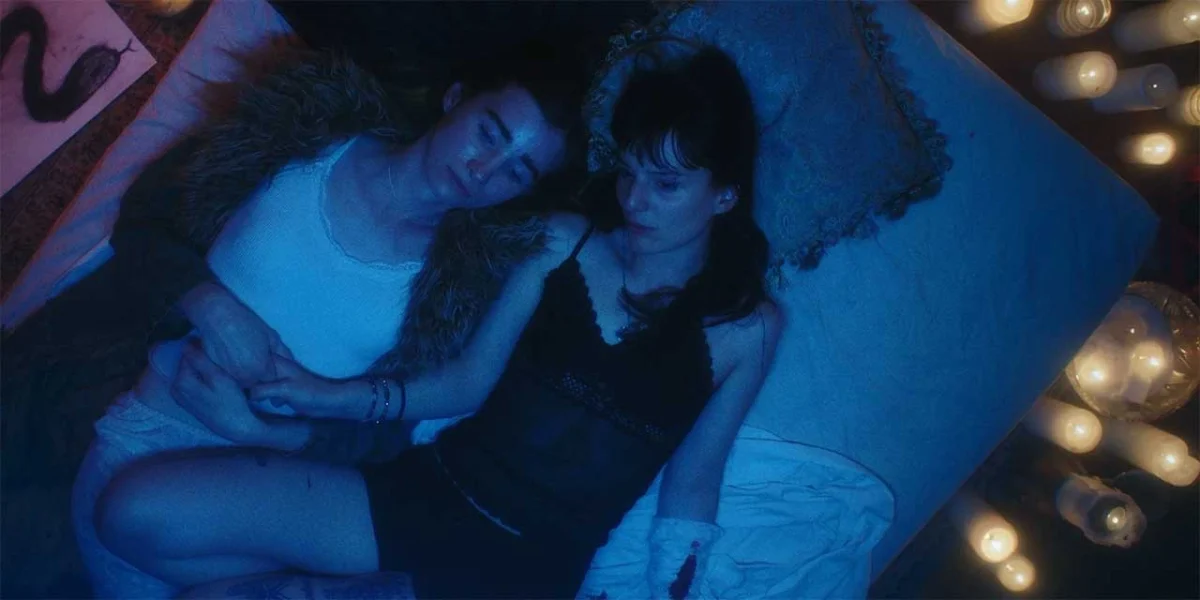
Anna’s trajectory shifts when she encounters Gen (Avalon Fast), a confident tattoo artist whom Anna had previously seen in her psychic visions. Gen reveals that they share a supernatural lineage, possessing telekinetic and precognitive powers. As Gen begins to mentor Anna in the mastery of these abilities, a romantic bond develops between the two. This idyllic period is abruptly terminated when an accidental supernatural occurrence unleashes a demonic entity. The malevolence takes root in Danny (Jordan Dulieu), Anna’s neighbor and former casual acquaintance, turning him into a vessel for an ancient evil that feeds on the life force of those in the protagonists’ inner circle. The narrative then shifts into a high-stakes supernatural thriller as Anna and Gen must utilize their combined powers to neutralize the threat and protect their community.
Chronology of Production and Festival Recognition
The development of The Serpent’s Skin follows Alice Maio Mackay’s rapid ascent in the independent film world. Following the success of her previous features, such as So Vam (2021) and Bad Girl Boogey (2023), Mackay began principal photography for The Serpent’s Skin with a focus on capturing the specific "lo-fi" aesthetic of late 1990s and early 2000s television.
The film’s production timeline culminated in its premiere at the Fantasia International Film Festival, a premiere venue for genre cinema. This festival has historically served as a launching pad for innovative horror, and Mackay’s work was highlighted for its unapologetic focus on trans narratives within a traditional horror framework. The post-production phase was notably bolstered by the involvement of editor Vera Drew, whose own directorial debut, The People’s Joker, received critical acclaim for its transgressive and psychedelic editing style. Drew’s influence is evident in the film’s use of double exposures and crossfades, which mirror the disorienting nature of Anna’s psychic awakenings.
Technical Execution and Aesthetic Influences
The Serpent’s Skin is characterized by a deliberate "retro-chic" visual language. Cinematographer Aaron Schuppan utilizes color palettes and lighting techniques that evoke the era of The Craft (1996) and Buffy the Vampire Slayer. Despite the financial constraints typical of independent Australian productions, the film achieves a high level of visual polish. One standout sequence involves a single-shot take of Gen at work, where a circular ring light is positioned to resemble a halo, visually coding her as a "guiding light" for Anna’s journey.
The lighting throughout the film is described as bright and "dreamy," drawing comparisons to David Lynch’s Mulholland Drive. This choice serves to contrast the gritty reality of Anna’s past with the heightened, almost magical reality of her new life in the city. The musical score, composed by Alexander Taylor and Eduardo Daniel Victoria, further enhances this atmosphere. Making heavy use of orchestral strings, the score leans into Hitchcockian suspense, particularly the works of Bernard Herrmann, providing a sophisticated sonic backdrop to the film’s more "off-the-wall" horror elements.
Performance Analysis and Casting
The casting of Alexandra McVicker as Anna has been cited as a cornerstone of the film’s emotional resonance. McVicker portrays Anna as a figure of quiet resilience, emphasizing the character’s internal struggle to reconcile her past trauma with her new supernatural identity. Critics have noted that McVicker successfully navigates Anna’s impulsive decision-making, making her rapid integration into the city’s queer and occult subcultures feel organic rather than forced.
Avalon Fast’s portrayal of Gen provides a necessary counterpoint to Anna’s introspection. As the more experienced "witch," Fast brings a level of headstrong confidence to the screen that facilitates the film’s world-building. The chemistry between McVicker and Fast is central to the film’s stakes, as their romantic connection is the primary motivator for their final confrontation with the demonic entity. Supporting roles, including Charlotte Chimes as the supportive sister and Jordan Dulieu as the possessed antagonist, provide the necessary grounding for the film’s more fantastical leaps.
Supporting Data: The Rise of Trans-Led Horror
The Serpent’s Skin arrives at a time of increased visibility for transgender creators in the horror genre. Industry data suggests a growing market for "identity-focused" genre films. According to reports on independent film distribution, titles that cater to specific subcultures while maintaining broad genre appeal—such as supernatural horror—have seen a 15% increase in VOD (Video on Demand) engagement over the last three years.
Furthermore, the "Adelaide school" of filmmaking, of which Mackay is a prominent member, has become a recognized hub for low-budget, high-concept independent cinema in Australia. The South Australian Film Corporation has increasingly supported diverse voices, recognizing that films like The Serpent’s Skin offer a high return on cultural capital despite their modest production scales.
Critical Analysis and Industry Implications
While the film has been praised for its atmosphere and performances, some analysts have pointed to narrative inconsistencies in the final act. The metaphorical nature of the demon—representing the "soullessness" or the "feeding" on identity—sometimes clashes with the literal mechanics of the plot. The climax has been described as "proudly bizarre," a stylistic choice that may alienate viewers seeking a traditional linear resolution but rewards those looking for experimental "weirdo queer cinema."
The implications of Mackay’s work extend beyond the film itself. At only 20 years old, Mackay represents a generation of filmmakers who have grown up with digital tools and a deep archival knowledge of film history. Her ability to synthesize 90s nostalgia with contemporary trans politics suggests a shift in how genre films are marketed. No longer relegated to the fringes, trans-coded horror is moving toward the center of the independent film conversation.
Broader Impact and Conclusion
The Serpent’s Skin serves as a testament to the power of self-actualization, both in its narrative and its production. By explicitly labeling the work as a "Transgender Film," Mackay reclaims a genre that has historically used trans identities as tropes for "otherness" or villainy. Here, the transition is not a source of horror, but a source of power. The "horror" is found in the external threats that seek to stifle that transition—whether they be transphobic townspeople or literal soul-sucking demons.
As the film continues its run through international festivals and moves toward a wider digital release, it stands as a benchmark for what can be achieved with a clear vision and a dedicated creative team. The collaboration between Mackay, Robinson, Drew, and Schuppan demonstrates a holistic approach to filmmaking where every technical element—from the ring-light "halos" to the Herrmann-esque strings—serves the central theme of shedding one’s old skin to reveal a more powerful, authentic self. For audiences seeking a "spellbinding" and "forward-thinking" cinematic experience, The Serpent’s Skin offers a compelling look at the beauty and difficulty of becoming who you are meant to be.