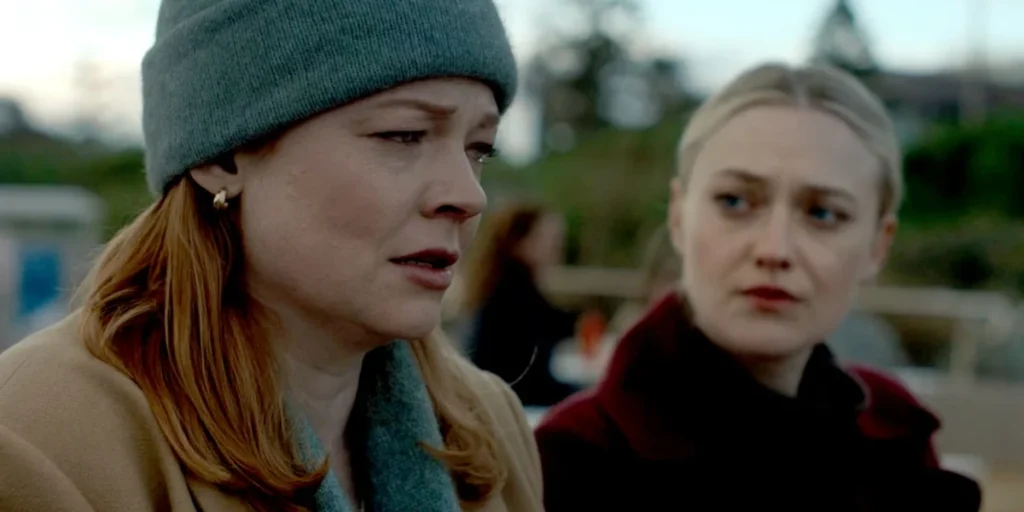
The Stranger, a 2025 cinematic drama directed and written by the prolific French filmmaker François Ozon, has officially commenced its theatrical rollout across the United States following a high-profile debut on the international festival circuit. Based on Albert Camus’s seminal 1942 novel L’Étranger, the film represents a significant cultural undertaking, attempting to translate one of the most influential works of 20th-century literature into a contemporary visual medium. Produced with a focus on period authenticity and philosophical depth, the film stars Benjamin Voisin in the central role of Meursault, a character defined by his emotional detachment and the eventual commission of a senseless act of violence on an Algerian beach. Supported by a cast featuring Rebecca Marder, Pierre Lottin, Swann Arlaud, and the veteran actor Denis Lavant, Ozon’s interpretation seeks to reconcile Camus’s "philosophy of the absurd" with the aesthetic demands of modern cinema.
The Literary Foundation: Camus and the Philosophy of the Absurd
To understand the weight of Ozon’s 2025 adaptation, one must look to the source material published during the height of World War II. Albert Camus’s The Stranger is frequently cited as the definitive example of existentialist and absurdist literature. The novel follows Meursault, a French Algerian who remains curiously indifferent to the death of his mother, the love of a woman, and his own eventual trial for murder. The book’s opening line—"Mother died today. Or maybe yesterday; I can’t be sure"—has become a cornerstone of literary history, establishing the protagonist’s profound alienation from societal norms.
Camus used the narrative to explore the concept of the "absurd," the conflict between humanity’s search for meaning and the silent, meaningless universe. Prior to Ozon’s 2025 version, the most notable adaptation was Luchino Visconti’s 1967 film starring Marcello Mastroianni. However, that version was often criticized for being too literal or failing to capture the internal vacuum of Meursault’s psyche. Ozon’s decision to revisit this text in the mid-2020s suggests a belief that the themes of moral ambiguity, judicial bias, and existential isolation remain as relevant today as they were in the 1940s.
Chronology of Production and Festival Recognition
The development of The Stranger began in earnest in the early 2020s, with Ozon securing the rights to the Camus estate, a feat that has historically been difficult for filmmakers due to the family’s protective stance over the author’s legacy. Production took place primarily in France and North Africa, aiming to capture the stark, blinding sunlight that plays a pivotal role in the novel’s climax.
The film’s critical journey reached its zenith in late 2024 and early 2025, culminating in its world premiere at the 82nd Venice International Film Festival. Selected for the Main Competition, the film was a contender for the prestigious Golden Lion. While the competition featured a diverse array of international cinema, Ozon’s entry was highlighted by critics for its austere direction and Voisin’s transformative performance. The Venice premiere served as a launchpad for international sales, eventually leading to the acquisition of U.S. distribution rights by Music Box Films, a distributor known for its commitment to high-end foreign language cinema and prestige titles.
Casting and Creative Collaboration
The selection of Benjamin Voisin for the role of Meursault marks a continued collaboration between the actor and François Ozon. Voisin previously starred in Ozon’s Summer of 85 (2020), a performance that earned him significant acclaim and established him as a rising star in French cinema. In The Stranger, Voisin is tasked with portraying a character who is famously "un-actable" due to his lack of traditional motivation or emotional outbursts.
The supporting cast provides the necessary foil to Meursault’s vacuum. Rebecca Marder plays Marie Cardona, the woman whose affection Meursault accepts without ever truly reciprocating. Pierre Lottin and Swann Arlaud fill out the social circle that leads Meursault toward his fateful encounter on the beach, while Denis Lavant—an icon of French cinema known for his work with Leos Carax—brings a gritty, grounded intensity to the production. This ensemble was carefully chosen to reflect the stratified social layers of colonial Algiers, providing a backdrop of human noise against which Meursault’s silence resonates.
Theatrical Rollout and Distribution Strategy
Music Box Films has initiated a "platform release" strategy for The Stranger, a common tactic for foreign-language films designed to build word-of-mouth momentum through critical reviews and localized interest. As of the current reporting period, the film is playing in key metropolitan markets, including:

- New York City: Serving as the primary hub for the film’s domestic debut.
- Los Angeles: Targeting the industry and academy voters.
- San Francisco & Washington D.C.: Tapping into markets with high concentrations of cinephiles and academic interests.
- Portland, Indianapolis, and Baltimore: Expanding the reach to diverse regional audiences.
Following this initial limited engagement, Music Box Films has confirmed plans for a national expansion. This phased approach allows the distributor to capitalize on the film’s festival pedigree and the inevitable discussions regarding its fidelity to Camus’s prose. Historically, Ozon’s films have performed well in the U.S. "art-house" circuit, with previous titles like Frantz and 8 Women finding dedicated audiences.
Critical Analysis of Implications and Themes
The release of The Stranger in 2025 invites a broader analysis of how 21st-century audiences perceive moral indifference. In an era dominated by social media "outrage culture" and the constant demand for performative empathy, Meursault’s refusal to lie about his feelings—or lack thereof—takes on a new dimension. Ozon’s direction reportedly emphasizes the judicial system’s discomfort with Meursault’s character; he is not executed merely for the crime he committed, but for his failure to weep at his mother’s funeral.
Industry analysts suggest that Ozon’s film arrives at a time when there is a renewed interest in "difficult" protagonists. By staying true to the novel’s lack of a traditional redemption arc, the film challenges the conventions of the Hollywood "hero’s journey." Furthermore, the film addresses the colonial context of the original story. While Camus was often criticized for the "nameless" nature of the Arab victim in the novel, contemporary directors like Ozon face the challenge of navigating these historical criticisms while maintaining the integrity of the source text.
Professional Reception and Director Insights
In various industry interviews, including discussions with the Next Best Picture Podcast, François Ozon has elaborated on the technical challenges of the adaptation. The director noted the importance of the film’s auditory landscape—using sound to convey the oppressive heat and the psychological pressure that Meursault experiences. Ozon has expressed that his goal was not to modernize the story in terms of setting, but to modernize the cinematic language used to describe the "absurd."
Early reactions from the Venice competition praised the film’s visual clarity. Cinematographer Manuel Dacosse, who has worked with Ozon on several projects, utilizes a palette that shifts from the vibrant, saturated hues of the Mediterranean coast to the stark, desaturated tones of the courtroom. This visual dichotomy mirrors the transition from Meursault’s sensory-driven freedom to his eventual confinement.
Broader Impact on the Film Industry
The success of The Stranger on the festival circuit and its subsequent U.S. release underscore the enduring viability of literary adaptations in the global market. At a time when theatrical windows are shrinking and streaming platforms dominate the landscape, the theatrical run of a French-language drama based on a 1942 novel serves as a litmus test for the "prestige" cinema sector.
Furthermore, the film’s nomination for the Golden Lion at the 82nd Venice International Film Festival places it in the company of the year’s most significant artistic achievements. For Music Box Films, the title represents a flagship release for their 2025 slate, potentially positioning Benjamin Voisin for recognition during the international awards season.
As The Stranger expands to more theaters across North America, it remains a focal point for discussions regarding the intersection of philosophy and film. By bringing Meursault back to the screen, Ozon has ensured that Albert Camus’s observations on the human condition continue to provoke, disturb, and engage audiences nearly a century after they were first penned. The film stands as a testament to the power of classic literature to find new life in the hands of a director who understands the delicate balance between silence and speech, and between the sun and the shadows.