Illumination and Nintendo’s highly anticipated sequel, The Super Mario Galaxy Movie, has launched into the domestic box office with an impressive initial performance, signaling another major win for the burgeoning cinematic franchise. The animated feature, which debuted on Wednesday, secured a robust $34.5 million on its opening day, followed by an additional $24.6 million on Thursday as the crucial Easter weekend began. This strong two-day haul brings its domestic total to an impressive $59.1 million, positioning it as a dominant force in the current theatrical landscape and setting the stage for a potentially colossal holiday weekend.
This early success places Galaxy slightly ahead of its predecessor, The Super Mario Bros. Movie, which likewise opened on the Wednesday before Easter in 2023. The original film garnered $58.3 million in its first two days domestically, unadjusted for inflation. The sequel’s Wednesday performance alone marked the biggest opening day of the year to date, comfortably surpassing the $33.1 million record previously set by Project Hail Mary just weeks prior. Furthermore, Galaxy‘s $34.5 million Wednesday gross outpaced the $31 million earned by the first Super Mario Bros. Movie on its own first Wednesday before Easter. The 2023 phenomenon, which then took in $26.1 million on its inaugural Thursday, ultimately became a global box office sensation, culminating in a worldwide gross of $1.36 billion and solidifying a new marquee franchise for Universal, Illumination Entertainment, and Nintendo.
The Rise of a Cinematic Powerhouse: Context and Legacy
The extraordinary success of The Super Mario Bros. Movie in 2023 was a watershed moment for Universal, Illumination, and Nintendo, demonstrating the immense, untapped potential of beloved video game intellectual property (IP) on the big screen. For decades, Hollywood had struggled to translate the magic of video games into compelling cinematic experiences, often resulting in critical and commercial disappointments. Nintendo, in particular, had famously been wary of film adaptations since the widely panned 1993 live-action Super Mario Bros. movie. However, the meticulously crafted 2023 animated film, developed with close creative oversight from Nintendo’s legendary game designer Shigeru Miyamoto, broke this curse. Its success was not merely financial; it redefined the paradigm for video game adaptations, proving that authentic storytelling, combined with high-quality animation and respect for source material, could resonate deeply with both long-time fans and new audiences.
The rapid greenlighting of The Super Mario Galaxy Movie was an inevitable consequence of its predecessor’s triumph. Studio executives and industry analysts quickly recognized the foundational elements of a burgeoning cinematic universe. The original film’s ability to transcend cultural barriers and appeal to diverse demographics, from children to nostalgic adults, hinted at a franchise with long-term viability. Its robust performance during the competitive Easter holiday corridor in 2023 also highlighted the strategic advantage of a family-friendly tentpole release during a period when many audiences are seeking communal entertainment experiences. The sequel, therefore, arrived with enormous expectations, burdened by the task of not just replicating, but ideally expanding upon, the original’s success. Its early box office figures suggest it is well on its way to achieving that goal, further cementing the Mario franchise as a pillar of contemporary animated cinema.
Ambitious Projections and Global Reach
Current projections for The Super Mario Galaxy Movie underscore the industry’s confidence in its continued performance. Universal insiders are reportedly projecting a five-day domestic opening of $186 million for Galaxy, which would include a substantial $128.2 million for the traditional three-day weekend. Some optimistic theater owners and independent box office prognosticators believe the film could even reach as high as $200 million for its five-day debut, a figure that would place it on par with The Super Mario Bros. Movie‘s stellar five-day opening of $204.6 million over the same holiday period last year. These figures, if realized, would not only represent a phenomenal financial success but also validate the studio’s strategy of launching another major animated event film during this lucrative Easter corridor.
Beyond North American shores, The Super Mario Galaxy Movie is also demonstrating significant international appeal. Early overseas numbers indicate a projected debut of $175 million, which would easily establish it as the top worldwide opening of 2026 to date. Through Wednesday, the film had already accumulated an early international haul of $33.9 million from 78 markets. Notably, the sequel has set new records in several key territories, particularly across Latin America, where the Mario franchise holds a deeply ingrained cultural significance. The robust global performance is crucial for animated blockbusters, which often derive a substantial portion of their total gross from international markets. The consistent worldwide appeal of the Super Mario brand, transcending language and cultural barriers, positions Galaxy for a long and profitable run in cinemas around the globe, mirroring the widespread embrace of its predecessor.
Narrative Expansion and Star-Studded Ensemble
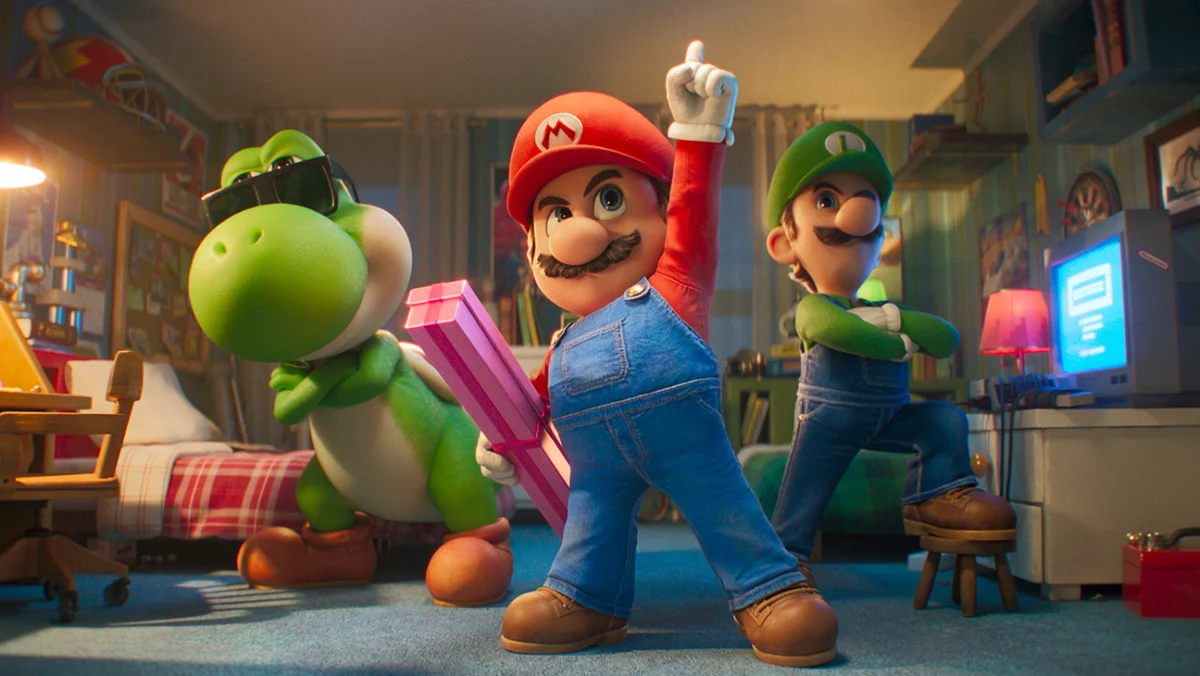
The Super Mario Galaxy Movie delves deeper into the rich lore of the Nintendo universe, expanding the narrative beyond the Mushroom Kingdom to the vastness of space. The follow-up story once again sees iconic heroes Mario, Luigi, and Princess Peach embarking on a perilous adventure, this time to confront not only the formidable King Bowser but also his mischievous son, Bowser Jr. Their quest takes them across the galaxy, introducing new beloved characters from the Super Mario video game series. Among these highly anticipated additions are Princess Rosalina, a celestial protector and guardian of the Lumas, and the fan-favorite Nintendo icon Yoshi, the loyal dinosaur companion known for his insatiable appetite and helpful abilities. The inclusion of these characters, particularly Rosalina and Yoshi, directly references the acclaimed Super Mario Galaxy video games, providing a deeper connection for long-time fans while enriching the cinematic universe for newcomers.
The filmmakers have successfully reunited the core voice cast that brought the initial film to life, a testament to their established chemistry and widespread popularity. Chris Pratt reprises his role as the courageous plumber Mario, alongside Anya Taylor-Joy as the resolute Princess Peach, Charlie Day as the perpetually anxious Luigi, Jack Black as the villainous yet surprisingly charismatic Bowser, and Keegan-Michael Key as the cheerful Toad. The sequel also boasts an impressive roster of new voice talent, further elevating the film’s star power and appeal. Benny Safdie lends his voice to the character of Bowser Jr., adding a new dimension to the villainous dynamic. Issa Rae joins as the regal Honey Queen, Brie Larson embodies the ethereal Princess Rosalina, Glen Powell takes on the role of the adventurous Fox McCloud, and Donald Glover brings his unique charm to the beloved Yoshi. This blend of returning favorites and exciting new additions ensures a compelling and entertaining experience for audiences of all ages.
Behind the scenes, the creative team responsible for the original film’s success has also returned. Aaron Horvath and Michael Jelenic once again directed the sequel, building upon their established vision for the franchise. The script was penned by returning scribe Matthew Foget, ensuring continuity in tone and storytelling. Their collective expertise, combined with Illumination’s renowned animation prowess and Nintendo’s creative guidance, has been instrumental in translating the intricate and imaginative world of Super Mario Galaxy into a captivating animated feature.
The "Review-Proof" Phenomenon: Audience vs. Critics
A notable aspect of The Super Mario Galaxy Movie‘s strong box office performance is its apparent resilience to critical reception, a phenomenon increasingly observed with highly anticipated, IP-driven films. While the sequel has reportedly been "snubbed by many critics," receiving a generally lukewarm response from professional reviewers, its stellar audience scores are more than compensating for any critical deficit, at least in these early stages. This divergence between critical consensus and audience enthusiasm is not new to the Mario franchise; the first Super Mario Bros. Movie similarly faced mixed critical reviews upon its release but was met with overwhelming adoration from general audiences, particularly families and fans of the games.
This "review-proof" quality highlights a significant trend in contemporary cinema, where the power of established intellectual property, coupled with effective marketing and strong word-of-mouth from its core fanbase, can often override the impact of critical opinions. For a franchise as globally recognized and cherished as Super Mario, audience loyalty and pre-existing emotional connections play a far greater role in driving ticket sales than critical endorsements. The film’s robust audience scores, often measured through platforms like CinemaScore or Rotten Tomatoes’ audience score, indicate high satisfaction among moviegoers, which is a stronger predictor of sustained box office success for family-oriented films. This reinforces the idea that for certain properties, delivering an experience that resonates directly with the target demographic and honors the source material is paramount, even if it doesn’t always align with traditional critical benchmarks.
Broader Implications and the Future of Video Game Adaptations
The phenomenal early success of The Super Mario Galaxy Movie carries significant implications for the broader entertainment industry. For Universal, it further solidifies their position as a dominant force in animated filmmaking, bolstering their already impressive slate from Illumination. The partnership with Nintendo has proven to be incredibly lucrative, establishing a blueprint for how studios can successfully adapt cherished video game properties while maintaining creative integrity and fan engagement. This success also reinforces Universal’s strategic advantage in leveraging the Easter holiday corridor, a period traditionally ripe for family-friendly releases.
For Nintendo, Galaxy‘s triumph marks another validation of their renewed cinematic strategy. After decades of guarding their IP closely, their proactive involvement in the film’s production, exemplified by Shigeru Miyamoto’s direct participation, has paid dividends. This continued success opens the door wide for a potential Nintendo Cinematic Universe, a prospect that has long tantalized fans and industry observers alike. The inclusion of characters like Fox McCloud, an iconic figure from the Star Fox series, subtly hints at a larger, interconnected world. Speculation will undoubtedly intensify regarding future adaptations of other beloved Nintendo franchises, such as The Legend of Zelda, Metroid, or Donkey Kong, potentially leading to a multi-film saga that could rival the scale of established superhero universes.
Beyond the immediate stakeholders, The Super Mario Galaxy Movie‘s performance is a beacon for the entire video game adaptation landscape. It continues the trend set by its predecessor and other recent successful adaptations, demonstrating that video game movies are no longer a niche genre but a mainstream box office draw. This will likely encourage more studios to invest in high-quality adaptations, leading to a new era where video game narratives are given the respect and cinematic treatment they deserve. The financial and cultural impact extends beyond ticket sales, influencing merchandising, theme park attractions, and the overall longevity of the Super Mario brand across various media platforms. The early box office numbers for The Super Mario Galaxy Movie are not just figures; they represent a powerful statement about the enduring appeal of imaginative storytelling and the vibrant future of animated cinema.
(This story was originally published April 2 at 10:17 a.m. and updated on April 3, 9:40 a.m. with Thursday grosses.)