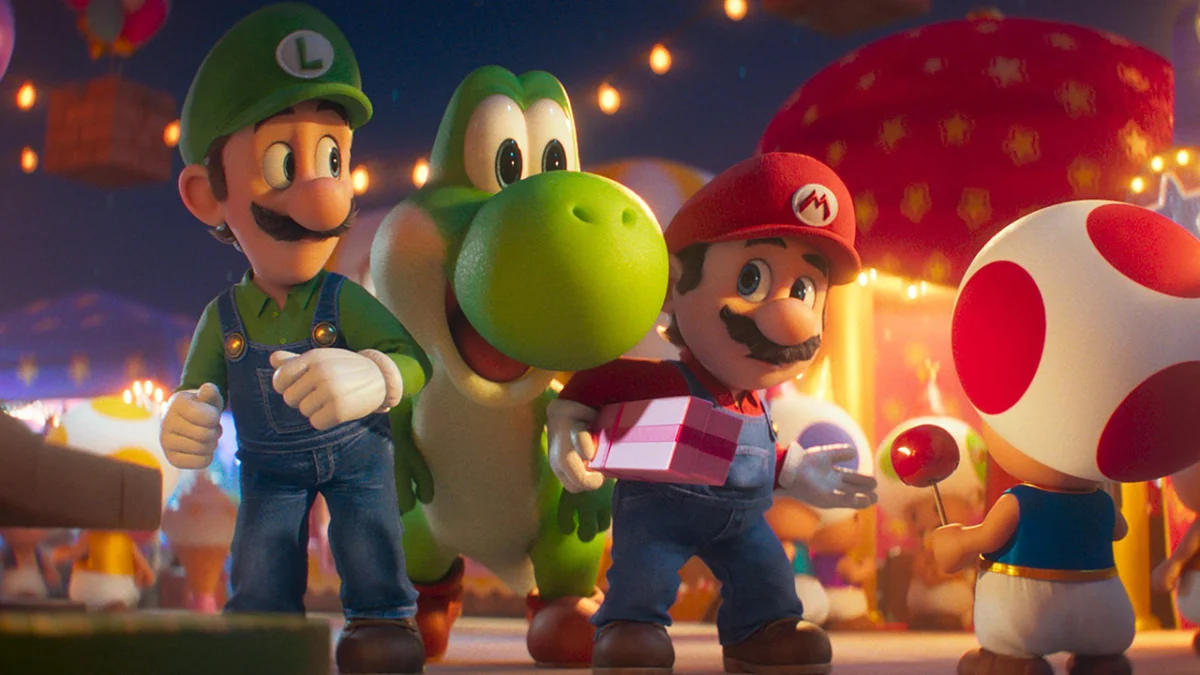
Having debuted in theaters on April 1st, 2026, The Super Mario Galaxy Movie, the highly anticipated sequel from Illumination and Universal Pictures, has already cemented its status as one of the year’s most significant blockbusters. Following its explosive theatrical run, fans worldwide are now eagerly awaiting the announcement of its digital and streaming availability. This comprehensive report delves into the film’s performance, the intricate streaming release schedule for the United States on Peacock and Netflix, and its projected international rollout, providing a detailed timeline and broader industry context.
A Galactic Success: Theatrical Performance and Critical Reception
The Super Mario Galaxy Movie launched with immense fanfare, capitalizing on the groundwork laid by its massively successful predecessor, The Super Mario Bros. Movie (2023). Directed by Aaron Horvath and Michael Jelenic, and produced by Chris Meledandri and Shigeru Miyamoto, the sequel continued Illumination’s tradition of visually vibrant animation and Universal’s strategic distribution. Opening to a global box office estimated to be north of $200 million in its inaugural weekend, the film quickly surpassed industry expectations, fueled by a potent blend of nostalgia, family appeal, and the enduring popularity of Nintendo’s iconic plumber. By the end of its theatrical run, analysts project The Super Mario Galaxy Movie to have garnered over $1.1 billion worldwide, solidifying the nascent Nintendo Cinematic Universe (NCU) as a major player in contemporary cinema. This impressive financial performance underscores the immense loyalty of the Mario fanbase and the broad appeal of Illumination’s animation style, which consistently translates into commercial triumphs.
Despite its undeniable box office success, critical reception for The Super Mario Galaxy Movie presented a familiar dichotomy, echoing the experience of many major franchise entries. While audiences overwhelmingly embraced the film’s adventurous spirit, vibrant visuals, and faithful adaptation of game elements – particularly the beloved Super Mario Galaxy lore – critics offered a more tempered assessment. Review aggregators, such as Rotten Tomatoes, indicated a noticeable divergence, with audience scores soaring significantly higher than those from professional critics. This pattern is not uncommon for adaptations of cherished intellectual properties, where fan expectations often prioritize fidelity and spectacle over narrative complexity or groundbreaking cinematic artistry. Nevertheless, the film’s ability to captivate its target demographic and drive unparalleled ticket sales demonstrates a clear victory in the court of public opinion, validating Nintendo and Universal’s collaborative strategy.
Expanding the Universe: Story, Cast, and Future Implications
The Super Mario Galaxy Movie plunged audiences into a new cosmic adventure, taking Mario and Luigi far beyond the familiar landscapes of the Mushroom Kingdom. The narrative expertly wove in elements from the acclaimed Super Mario Galaxy video games, introducing new challenges and beloved characters. Chris Pratt returned to voice the titular Mario, alongside Anya Taylor-Joy as Princess Peach, Charlie Day as Luigi, Jack Black as Bowser, Keegan-Michael Key as Toad, and Seth Rogen as Donkey Kong. The sequel also introduced prominent new additions to the voice cast, most notably Brie Larson as the ethereal Rosalina and Benny Safdie as the mischievous Bowser Jr. These fresh voices, combined with the returning ensemble, further enriched the film’s character dynamics and expanded the potential for future storylines within the NCU.
The decision to introduce Rosalina, a fan-favorite character from the Galaxy series, signaled a clear intent to broaden the scope of the cinematic universe beyond the initial Mushroom Kingdom focus. Her inclusion provided opportunities for deeper lore exploration and introduced a cosmic dimension that was visually stunning and narratively engaging. Similarly, the appearance of Bowser Jr. hinted at new generational conflicts and comedic possibilities. The film’s post-credit scene, a now-standard practice in interconnected cinematic universes, directly teased further sequels and potential spin-offs. This strategic narrative choice, coupled with the film’s gargantuan box office performance, strongly indicates that Universal and Nintendo are committed to developing a robust and expansive cinematic future for their iconic characters. This move aligns with Nintendo’s broader strategy to diversify its intellectual property beyond gaming, following the immense success of its theme park partnerships and merchandise lines.
The Streaming Blueprint: Universal’s Pay-1 Window Strategy in the US
For viewers in the United States, the journey of The Super Mario Galaxy Movie from the silver screen to home entertainment platforms is governed by Universal Pictures’ established streaming deals, primarily involving Peacock and Netflix. These agreements dictate a carefully structured "pay-1 window" system, designed to maximize revenue across various distribution channels while ensuring premium content remains a draw for Universal’s owned streaming service, Peacock.
The core of this strategy lies in a landmark deal struck in July 2021, and subsequently extended, between Universal and Netflix. This agreement stipulates that animated films from Illumination and DreamWorks Animation will first stream on Peacock for a four-month exclusive window, followed by a ten-month period on Netflix, before returning to Peacock for an additional four months. This staggered approach ensures that Universal maintains a significant competitive advantage for its flagship streaming platform while also leveraging Netflix’s unparalleled global subscriber base for a secondary, yet substantial, revenue stream and extended content visibility. The deal was recently expanded to include live-action titles, demonstrating Universal’s commitment to this hybrid distribution model through 2026 and beyond.
To predict the precise streaming dates for The Super Mario Galaxy Movie, industry analysts often look to the release pattern of its predecessor, The Super Mario Bros. Movie. The 2023 film followed a consistent 120-day window from its theatrical debut to its initial streaming release on Peacock. Applying this established timeline to The Super Mario Galaxy Movie, which premiered in theaters on April 1st, 2026, we can project its streaming availability with considerable accuracy.
Projected US Streaming Release Schedule:
-
Peacock Premiere (United States): Based on the 120-day window from its April 1st theatrical release, The Super Mario Galaxy Movie is anticipated to make its streaming debut on Peacock in the United States on July 30th, 2026. This four-month exclusive window on Universal’s platform is designed to drive subscriptions and engagement for Peacock, offering its subscribers early access to one of the year’s biggest animated blockbusters.
-
Netflix Premiere (United States): Following its four-month exclusivity on Peacock, the film will then transition to Netflix for a ten-month period. Consequently, The Super Mario Galaxy Movie is estimated to arrive on Netflix in the United States on November 30th, 2026. This strategically timed release ensures the film hits Netflix just in time for the holiday season, capitalizing on increased viewership and providing a significant boost to Netflix’s content library during a peak consumption period. The extensive ten-month window on Netflix allows the film to reach a broader, more diverse audience, many of whom may not subscribe to Peacock.
-
Return to Peacock (United States): After its ten-month stint on Netflix, The Super Mario Galaxy Movie will cycle back to Peacock for an additional four-month window. This final stage of the pay-1 window ensures that Universal’s primary streaming service retains long-term access to its marquee titles, providing ongoing value to its subscribers. This return to Peacock is expected around September 2027.
This intricate dance between theatrical release, premium video-on-demand (PVOD) windows (which typically precede streaming, though specific dates are often unannounced publicly), and exclusive streaming periods on Peacock and Netflix exemplifies the evolving landscape of film distribution in the digital age. It represents a sophisticated balancing act by Universal to maximize revenue from various sources while simultaneously bolstering its own streaming ecosystem.
Global Reach: International Streaming Projections
The international streaming rollout of The Super Mario Galaxy Movie presents a more complex picture, influenced by a patchwork of regional licensing agreements, pre-existing deals, and varying market conditions. Unlike the relatively standardized US model, international distribution often involves distinct negotiations with local streaming platforms, or different timelines for Netflix’s global availability.
Based on the precedent set by The Super Mario Bros. Movie, certain Netflix regions can expect to receive The Super Mario Galaxy Movie significantly earlier than the US Netflix release, albeit still several months after its initial theatrical debut. Countries like Australia, Belgium, and South Korea typically fall into this category. For these markets, the film is projected to arrive on Netflix approximately six to seven months after its April 2026 theatrical release, placing its streaming premiere around October or November 2026. These earlier international Netflix releases are often a result of specific regional licensing deals that predate or operate independently of the Universal-Peacock-Netflix US agreement.
However, other major international markets, particularly the United Kingdom, operate under different arrangements. Netflix UK has historically acquired Illumination films on a delayed schedule, often around two years after their initial theatrical release, for a six-month licensing period. If this pattern holds true for The Super Mario Galaxy Movie, UK subscribers can anticipate the film arriving on Netflix sometime in early 2028. This extended waiting period highlights the complexities of international content licensing, where regional broadcasters and established pay-TV deals can influence streaming availability timelines.
For all other regions not covered by these specific projections, the streaming release schedule for The Super Mario Galaxy Movie is expected to vary widely, with availability anticipated at various points between 2027 and 2029. These disparities underscore the fragmented nature of global streaming rights, where studios navigate a myriad of local regulations, existing broadcast contracts, and competitive bidding landscapes to secure the best distribution deals for each territory. Fans in these regions will need to monitor local streaming announcements closely as the film approaches its digital release windows.
Broader Industry Implications and the Future of the NCU
The success of The Super Mario Galaxy Movie and its meticulously planned streaming rollout carry significant implications for the entertainment industry at large. For Nintendo, it solidifies the viability of its strategy to expand its beloved intellectual properties into major cinematic franchises, offering a blueprint for future adaptations of titles like The Legend of Zelda or Metroid. The consistent box office performance, despite mixed critical reviews, demonstrates that brand recognition and fan loyalty can be powerful drivers of success, even in a crowded market. This success story will likely embolden Nintendo to explore further cinematic ventures, potentially developing a more interconnected narrative universe across films and possibly even television series.
For Universal Pictures and Illumination, The Super Mario Galaxy Movie reinforces their position as powerhouses in animated entertainment. Illumination’s ability to consistently deliver visually appealing and commercially successful films, combined with Universal’s strategic distribution, ensures a steady flow of high-performing content for both theatrical exhibition and streaming platforms. The staggered streaming release strategy, with Peacock as the primary hub followed by Netflix, serves as a model for studios seeking to balance the demands of proprietary streaming services with the broad reach of third-party platforms. It validates the "hybrid" release approach that has become increasingly common in the post-pandemic era, where theatrical exclusivity is carefully weighed against the imperative of digital availability.
The film’s journey from cinema to home screens is more than just a logistical exercise; it represents a critical step in the evolution of the Nintendo Cinematic Universe. With a post-credit scene explicitly setting up future installments, and the consistent commercial triumph of the first two films, it is clear that Mario and Luigi’s big-screen adventures are far from over. As fans prepare to welcome The Super Mario Galaxy Movie onto their home screens, the anticipation for what comes next in this burgeoning cinematic universe continues to grow, promising more warp pipe travel and galaxy-hopping escapades for years to come.