When The Texas Chainsaw Massacre: The Beginning premiered in 2006, it was met with a wave of critical disdain and commercial underperformance. The film, a prequel to the 2003 remake of the iconic 1974 horror classic, grossed approximately $52 million worldwide against its $16 million budget, a stark contrast to the $107 million its predecessor earned. Critics were largely unforgiving, with publications like Time Out describing it as "oppressive, mean-spirited and sadistic," and Rolling Stone labeling it "putridly written, directed and acted." This reception painted a picture of a film that was merely a gratuitous exercise in gore, lacking any substantive merit.
However, a closer examination of the film, particularly in retrospect and considering its thematic depth, suggests that The Texas Chainsaw Massacre: The Beginning may have been unfairly maligned. The film, directed by Jonathan Liebesman and penned by Sheldon Turner, sought to delve into the origins of the notorious Hewitt family and the desolate circumstances that forged Leatherface into the iconic killer he would become. This prequel aimed to provide a backstory to characters introduced in Marcus Nispel’s 2003 remake, offering explanations for their twisted motivations and the desolate atmosphere of their rural Texas domain.
Unpacking the Hewitt Family’s Descent
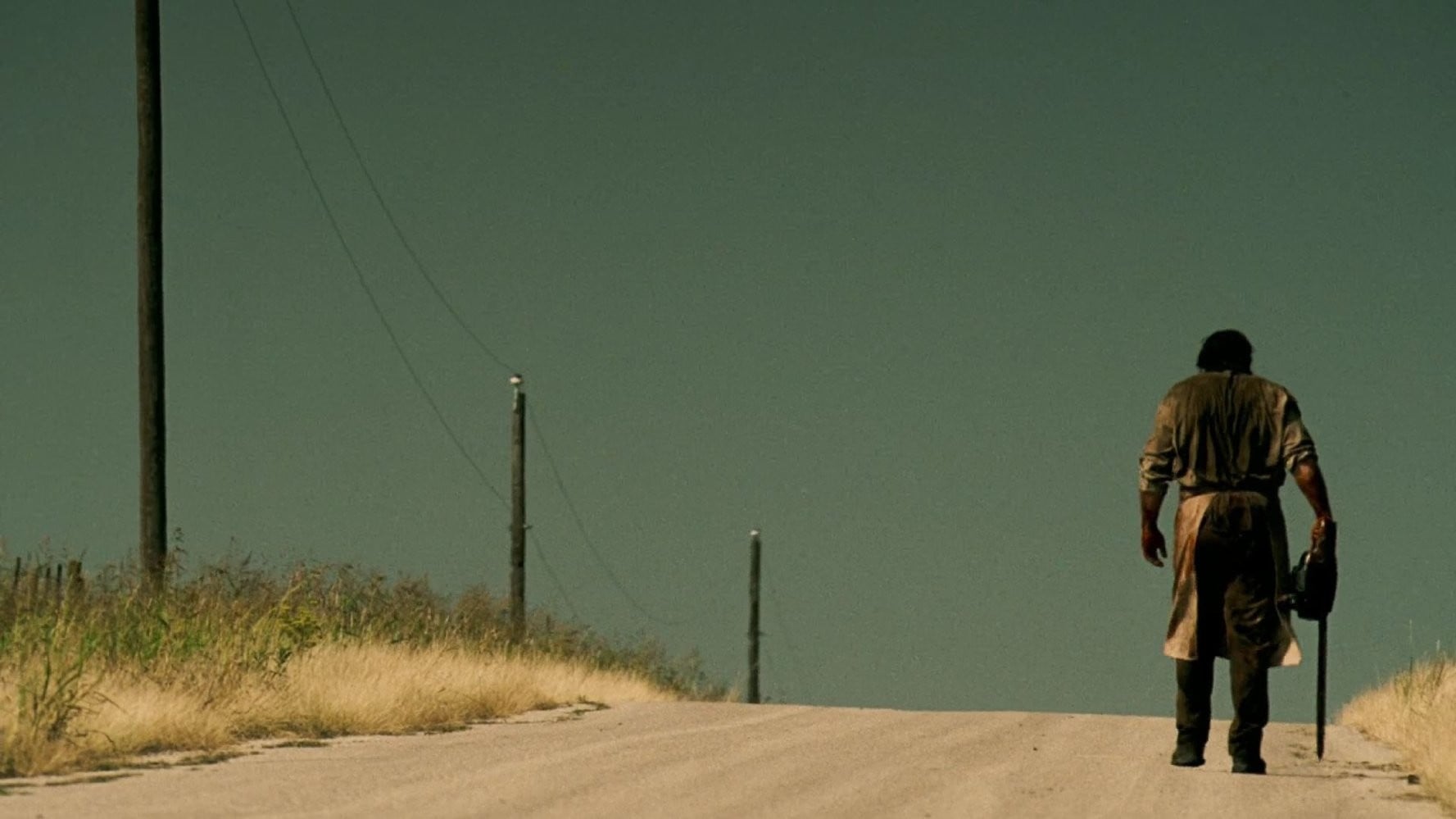
A key strength of The Texas Chainsaw Massacre: The Beginning lies in its detailed exploration of the Hewitt family’s history, offering a more fleshed-out portrayal of the antagonists. The film meticulously reconstructs the tragic and disturbing evolution of Thomas Hewitt, who would become Leatherface (portrayed by Andrew Bryniarski). Bryniarski reprises his role, building upon the foundation laid in the 2003 film, and here, his performance is given more room to explore the character’s tragic origins. The film posits that Thomas’s descent into madness was exacerbated by societal neglect and the dehumanizing conditions of the local slaughterhouse where his mother, Luda Mae Hewitt (Marietta Marich), worked.
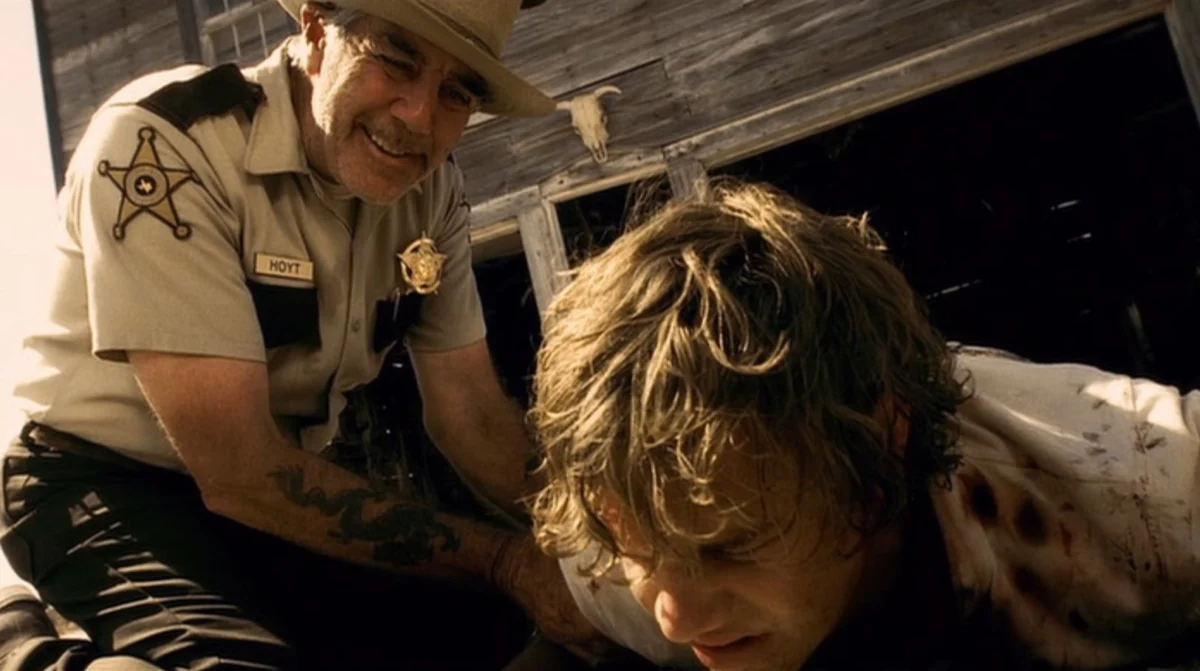
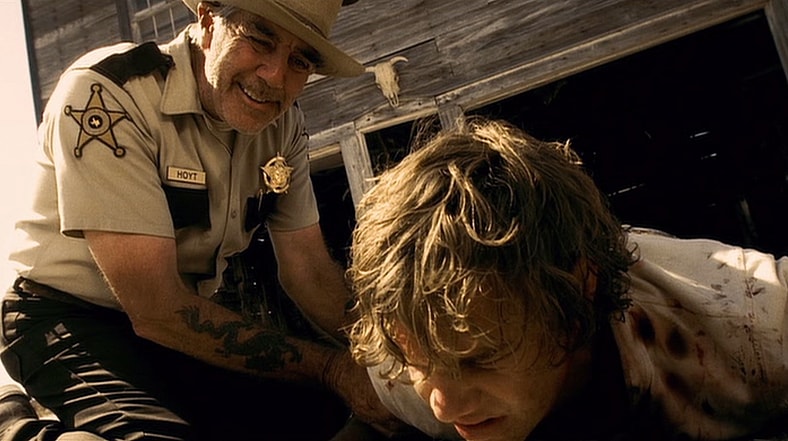
The narrative also significantly expands on the role of Charles Hewitt, who adopts the persona of Sheriff Hoyt (played with chilling intensity by the late R. Lee Ermey). Ermey, whose performance as Gunnery Sergeant Hartman in Stanley Kubrick’s Full Metal Jacket remains legendary, imbues Hoyt with a terrifying blend of authority and derangement. His character serves as a twisted patriarch figure, a former soldier whose experiences and subsequent psychological trauma manifest in his brutal enforcement of a warped sense of order. The film suggests Hoyt’s psychosis is a product of his wartime experiences and his subsequent inability to reintegrate into civilian life, leading him to embrace the brutality he witnessed.
The supporting cast also contributes significantly to the film’s unsettling atmosphere. Marietta Marich as Luda Mae Hewitt, the matriarch whose affection is intertwined with a disturbing dependency, and Kathy Lamkin as the unsettling Tea Lady, a seemingly harmless eccentric who harbors a dark secret, provide crucial layers to the family’s depravity. Each actor is given moments to showcase the chilling nuances of their characters, contributing to a sense of lived-in horror that grounds the supernatural elements.
Thematic Resonance and Social Commentary
Beyond the surface-level gore, The Texas Chainsaw Massacre: The Beginning attempts to engage with broader social and political themes, many of which resonate with striking relevance to contemporary issues. The film is set in two key periods: initially in 1939, depicting the harsh economic realities that shaped the Hewitt family, and then primarily in 1969, a time of significant social upheaval in America.
The 1969 setting is particularly potent, allowing the film to draw parallels between the era’s burgeoning counterculture, the divisive Vietnam War, and the underlying economic anxieties that plagued many working-class communities. The film subtly critiques the hyper-patriotism fueled by the war, the economic instability that led to widespread layoffs and a sense of societal displacement, and the pervasive ableism directed at Thomas Hewitt due to his physical and mental differences. The narrative implicitly questions how societal neglect and the failure to address economic hardship can breed resentment and violence.
The film’s portrayal of the Hewitt family as products of their environment, rather than purely monstrous entities, invites a critical examination of societal structures. The narrative suggests that their cruelty is not simply inherent but is a response to a world that has ostracized and exploited them. This diagnostic approach to villainy, where their sadism is presented as a symptom of deeper societal ills, is a testament to the film’s unexpected intelligence.
A "Real" and Lived-In Horror
The film’s ability to create a sense of authenticity and lived-in reality is a crucial element in its effectiveness as a horror film. Even characters with limited dialogue, such as Andrew Bryniarski’s Leatherface, exude a palpable sense of wounded rage. His menacing glares and sudden bursts of violence are not merely those of a mindless brute but suggest a deep-seated pain and resentment. Bryniarski’s portrayal taps into a primal fear, evoking the image of a wounded animal lashing out.
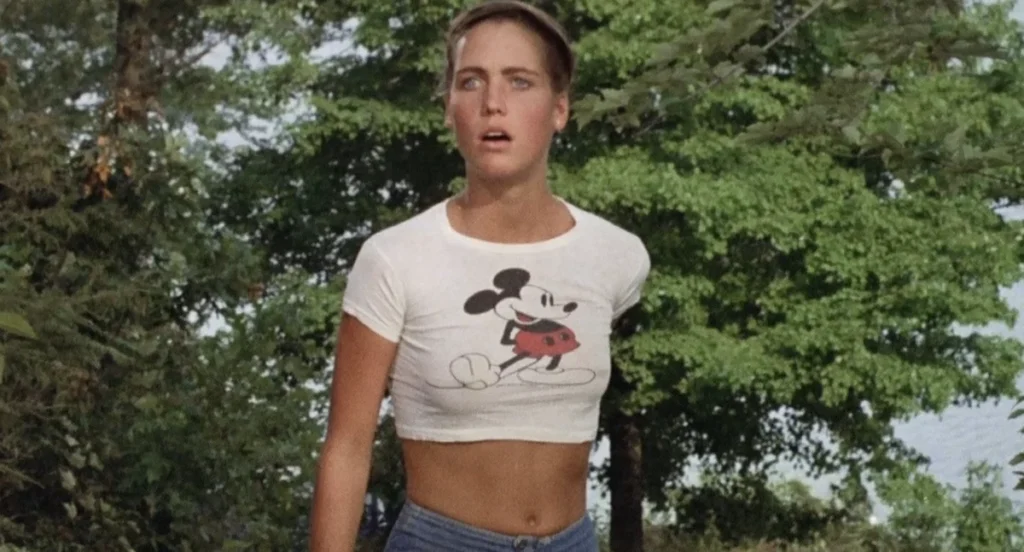
The horror in The Texas Chainsaw Massacre: The Beginning, much like its 1974 predecessor, is not solely derived from the visceral spectacle of violence. While the film does not shy away from gore—with copious amounts of blood and dismemberment—its true terror lies in the psychological torment inflicted upon the protagonists. The innocent victims, including Chrissie (Jordana Brewster), Dean (Taylor Handley), Eric (Matt Bomer), and Bailey (Diora Baird), find themselves trapped in a nightmarish game of cat and mouse. The film masterfully depicts their desperate struggle for survival, highlighting the profound horror of being subjected to the unadulterated evil that resides within human nature. This focus on the exposure of the deepest layers of evil within a person’s soul elevates the film beyond a simple slasher flick.
The Political and Social Underpinnings
One of the most compelling aspects of The Texas Chainsaw Massacre: The Beginning is its engagement with the sociopolitical climate of the late 1960s. The film uses the Hewitt family’s isolation and their distorted worldview to reflect the societal contradictions of the era. The narrative explicitly draws parallels between the escalating Vietnam War and the "irrational hyper-patriotism" it engendered, the persistent economic anxieties of factory closures and job losses, and the societal biases against those with disabilities.
The character of Thomas Hewitt, ostracized and mistreated for his physical and mental condition, serves as a poignant representation of ableism. His transformation into Leatherface is depicted as a consequence of this societal rejection, a brutal manifestation of his internalized pain and rage. The film also touches upon sexual repression and the rise of reactionary moralizing, themes that were prevalent during the period.
Parallels to Contemporary America
The film’s exploration of these themes transcends its 1969 setting, offering a stark commentary on recurring societal issues. The parallels drawn to the present day are particularly striking. The author notes the persistent presence of what are perceived as "irrational and immoral wars" in contemporary geopolitics, echoing the historical context of the Vietnam War. The ongoing struggle with economic instability, characterized by layoffs and a lack of secure employment, mirrors the anxieties of the 1960s and the period when the film was released.
Furthermore, the bigotry and discrimination faced by Leatherface due to his disability are presented as issues that have persisted without significant abatement into the present day. The film’s critique of toxic masculinity and its association with misogyny is also highlighted as a pervasive element, particularly in the context of contemporary political discourse. These thematic connections suggest that The Texas Chainsaw Massacre: The Beginning is not merely a period piece but a film that engages with enduring aspects of the human condition and societal failings.
A Diagnostic Approach to Evil
What elevates The Texas Chainsaw Massacre: The Beginning from a conventional horror film to a more profound work of art is its diagnostic approach to evil. The cruelty depicted is not presented as gratuitous but as a symptom of a deeply fractured society. The Hewitt family, in their repellent nature, act as a dark mirror reflecting the contradictions and inherent darkness present within a specific American moment—the twilight of the 1960s, a period when the nation’s internal decay became undeniable.
The film’s ability to resonate with audiences decades after its release stems from its prescient understanding of how societal neglect, economic disparity, and ingrained prejudice can foster a breeding ground for violence and extremism. Long after the political figures and movements of any given era have faded from relevance, the raw, unadulterated evil that The Texas Chainsaw Massacre: The Beginning so effectively portrays continues to manifest in various forms. It is this enduring depiction of fundamental human darkness, coupled with its insightful social commentary, that makes the film a compelling and thought-provoking piece of horror cinema, deserving of reevaluation. The film’s peak moments, when contemplating true horror, continue to be revisited for their unflinching portrayal of the darkest corners of human nature and societal breakdown.