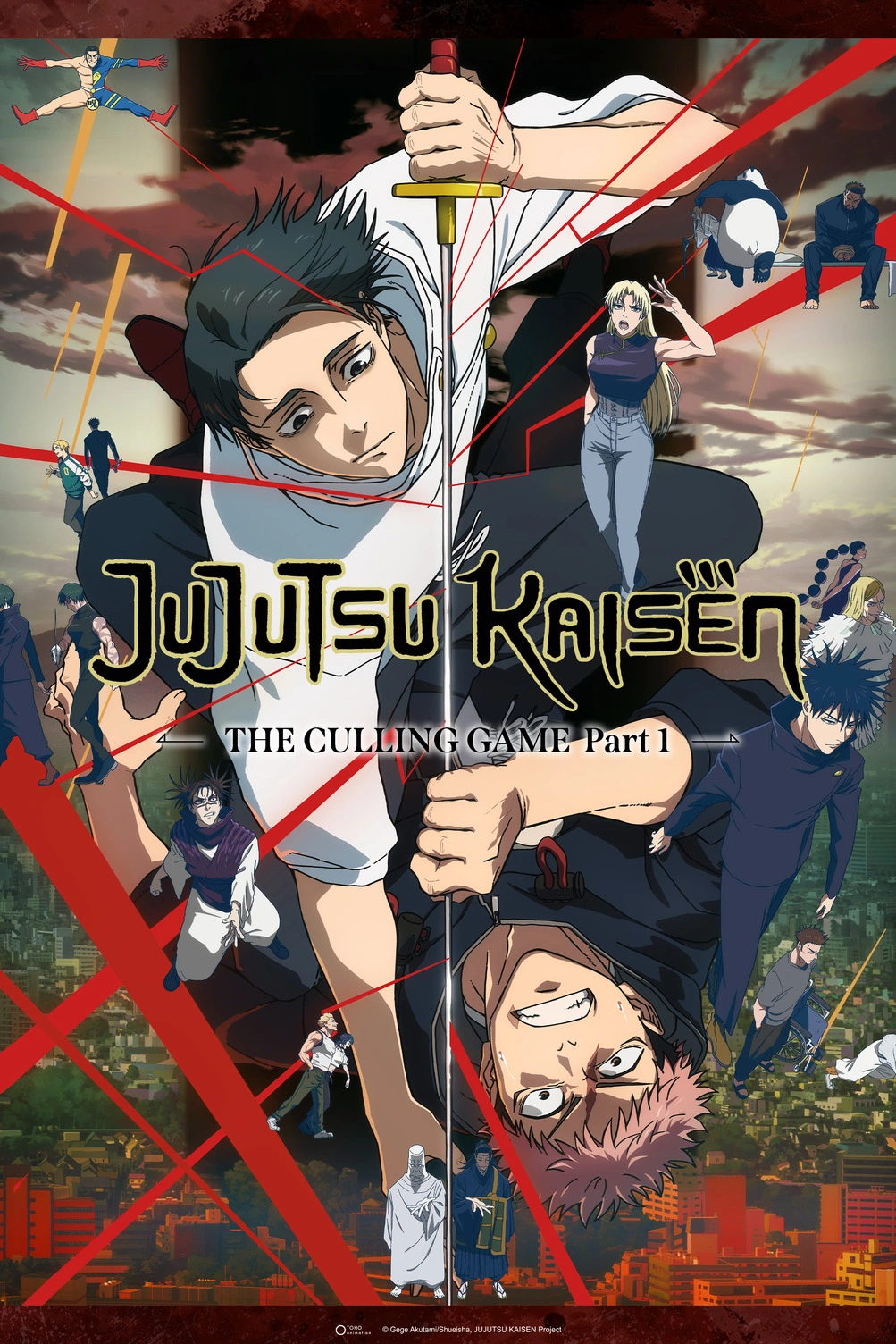
The highly anticipated third season of the anime adaptation of Gege Akutami’s Jujutsu Kaisen dives headfirst into the tumultuous "Culling Game" arc, a pivotal and expansive storyline that marks a significant shift in the series’ narrative and thematic complexity. Produced by the renowned animation studio MAPPA, this latest installment has been met with considerable discussion, as both the original creator and the animation team have demonstrably unleashed their creative prowess, challenging conventional storytelling within the shonen genre.
Setting the Stage: The Aftermath of Shibuya
To fully appreciate the scope and ambition of the "Culling Game," it is essential to contextualize it within the broader narrative of Jujutsu Kaisen. The series, which debuted its anime adaptation in October 2020, quickly established itself as a global phenomenon, lauded for its intricate power system of cursed energy, compelling characters, and visceral action sequences. Set in a world where negative human emotions manifest as dangerous entities called Curses, Jujutsu Sorcerers are tasked with exorcising them to protect humanity. Central to this conflict are characters like Yuji Itadori, a high school student who becomes a vessel for the powerful Curse Sukuna; Megumi Fushiguro, a talented sorcerer from a prestigious clan; and Satoru Gojo, the seemingly invincible special-grade sorcerer who serves as the bedrock of the jujutsu world’s power balance.
The second season, which adapted the "Hidden Inventory/Premature Death" and the "Shibuya Incident" arcs, cemented Jujutsu Kaisen‘s reputation for high-stakes drama and breathtaking animation. The "Shibuya Incident" in particular was a watershed moment, depicting a large-scale assault orchestrated by the ancient sorcerer Kenjaku and the vengeful Curse user Suguru Geto (inhabited by Kenjaku), resulting in widespread destruction, countless casualties, and the sealing of Satoru Gojo. Gojo’s sealing removed the most powerful protective force from the jujutsu world, plunging it into an unprecedented state of chaos and vulnerability. This event, which concluded the previous season, directly precipitates the "Culling Game."
The Genesis of the Culling Game: Kenjaku’s Grand Design
Following the devastating aftermath of Shibuya, Tokyo is left ravaged, overrun by powerful Curses unleashed by Kenjaku’s machinations. The established order of the jujutsu world crumbles, with its central pillar, Satoru Gojo, incapacitated. It is into this volatile environment that Yuji Itadori and Megumi Fushiguro are thrust, drawn into a conflict far more dangerous and ethically ambiguous than any they have faced before: the "Culling Game."
The architect of this deadly ritual is Kenjaku, an ancient and immensely powerful sorcerer who has transcended multiple eras by implanting his brain into different bodies. His ultimate goal is to force humanity’s evolution through a catastrophic assimilation of cursed energy, effectively merging all of Japan’s population with Master Tengen, an immortal being integral to the jujutsu barrier system. To achieve this, Kenjaku initiates the Culling Game, a nationwide deathmatch designed to accumulate vast amounts of cursed energy and create a new, horrifying era for humanity.
As eventually explained by the immortal jujutsu sorcerer Master Tengen, the Culling Game operates under a complex set of rules. Participants, both newly awakened sorcerers and reincarnated sorcerers from past eras, are forced to battle within designated "colonies" across Japan. Points are awarded for killing other players, with specific rules governing how points can be used to add new regulations to the game itself. This dynamic rule-setting mechanism introduces an element of strategic depth and unpredictable chaos, forcing players to adapt not only to their opponents but also to the ever-changing parameters of the conflict.
Navigating the Labyrinthine Rules and Expanding Cast
The narrative of the Culling Game, as adapted in the third season, quickly becomes intricate. The initial explanation of the game’s purpose and rules by Tengen sets a complex precedent, which is further amplified by the players’ ability to introduce new rules. This adds layers of strategic depth but also contributes to a certain narrative convolution. The constant introduction of new characters, each with unique cursed techniques and motivations, further compounds this complexity. While eventually the various group and one-on-one battles help ground the immediate action, the sheer volume of new elements raises questions about the long-term manageability of the narrative.
As rival factions clash and existing power structures collapse—most notably the Zen’in clan, which undergoes a brutal internal purge led by Maki Zenin—new alliances and rivalries form. Key figures like the prodigious Yuta Okkotsu, a special-grade sorcerer whose power rivals Gojo’s, and the unpredictable Kinji Hakari, a third-year student with a unique gambling-themed cursed technique, emerge as crucial players. Within the various colonies, a diverse array of combatants, each seeking survival, power, or their own twisted sense of justice, engage in high-stakes battles.
Yuji Itadori, grappling with profound guilt over the destruction wrought by Sukuna during the Shibuya Incident, strives to contribute meaningfully. Megumi Fushiguro, driven by the desperate need to save his sister, Tsumiki, who has become an unwilling participant in the Game, faces agonizing choices. Their ultimate goal, shared by their allies, crystallizes: gather enough points to manipulate the game’s rules, locate the enigmatic "Angel" who possesses a cursed technique capable of freeing Gojo from the Prison Realm, and ultimately thwart Kenjaku’s apocalyptic vision.
A Surge of Surrealism and Absurdity
Beyond its structural complexity, the "Culling Game" arc takes a distinct turn towards the surreal and the absurd. Akutami’s imagination, amplified by MAPPA’s visual interpretation, ventures into territory that challenges conventional battle shonen tropes. The characters introduced and the unfolding of battles often lean into a fantastical, almost ludicrous sensibility, transforming the entire conflict into a high-stakes game where protagonists are mere pawns.
This shift is exemplified by characters such as Hiromi Higuruma, a former defense attorney turned sorcerer whose cursed technique forces opponents into a courtroom trial, where their guilt determines the outcome of the battle. This meta-commentary on justice and consequences is just the beginning. The subsequent appearance of Hajime Kashimo, a powerful reincarnated sorcerer seeking to fight Sukuna, and particularly Takaba, a comedian whose cursed technique can manifest anything he finds "funny," truly pushes the boundaries of the narrative. Takaba’s absurd comedy routine, combined with his surprising combat prowess, infuses the story with a unique brand of dark humor and unpredictable chaos, blurring the lines between serious conflict and satirical parody.
Battles like Megumi’s intense confrontation with Reggie Star, who can manifest objects from receipts, further cement this element of creative eccentricity. The invocation of giant sumo wrestlers, falling cars, and other bizarre constructs transforms combat into a dynamic, almost cartoonish spectacle, making it difficult for viewers to discern whether the creators are earnestly exploring new narrative avenues or playfully deconstructing the genre itself. This intentional ambiguity adds a layer of intellectual engagement for the audience, prompting reflection on the nature of power and narrative in Jujutsu Kaisen.
Maki Zenin’s Ascendance: A Brutal and Dramatic Highlight
Amidst the narrative complexity and surreal battles, the arc of Maki Zenin stands out as a powerful and emotionally resonant centerpiece of the season. Following her near-fatal injuries in the Shibuya Incident and the destruction of her family’s esteemed but restrictive Zen’in clan, Maki undergoes a profound transformation. Her journey culminates in a brutal internal purge of the clan, particularly involving her twin sister Mai and her oppressive father.
This specific storyline is widely regarded by fans and critics as one of the most impactful segments of the "Culling Game." It is a raw, unflinching depiction of vengeance, liberation, and the breaking of generational curses. The violence in this arc reaches one of its apogees, infusing the series with an intensely appealing dramatic element that contrasts sharply with some of the season’s more comedic or absurd moments. Maki’s physical and emotional evolution, driven by her desire to carve her own path free from the clan’s oppressive legacy, provides a grounded and visceral counterpoint to the more abstract philosophical battles, showcasing the series’ capacity for profound character development within its brutal world.
MAPPA’s Animation Prowess: Elevating the Abstract
MAPPA’s animation, once again, proves to be a cornerstone of Jujutsu Kaisen‘s success. The studio, known for its high-profile adaptations of series like Attack on Titan and Chainsaw Man, consistently delivers top-tier visual fidelity. In the third season, this excellence is particularly evident in how it translates Akutami’s increasingly abstract and surreal concepts into dynamic on-screen action. The sheer inventiveness of the cursed techniques and the outlandish scenarios are brought to life with a fluidity and impact that few studios can match.
The battles, in general, are nothing short of impressive, characterized by their kinetic energy and visual flair. While the frequent explanations of rules and actions during combat can occasionally become somewhat verbose, potentially disrupting the flow, this is a minor detraction from the overall spectacle. Where Jujutsu Kaisen truly reaches its apogee in animation is in its depiction of movement. The morphing of bodies, the transformative effects of cursed energy, the visceral depiction of wounding, and every nuanced form of motion are rendered with astonishing detail and fluidity. This mastery of animation not only makes the action sequences visually stunning but also enhances the emotional and physical impact of each confrontation.
The character design, spearheaded by Hiromi Niwa and Yosuke Yajima, maintains an exceptionally high standard. The diversity of the ever-expanding cast is impressive, each new character instantly recognizable and imbued with distinct visual traits. Furthermore, the way battles and injuries affect characters’ appearances, often leading to grotesque yet impactful transformations, adds another layer of visual storytelling and contributes significantly to the series’ overall artistic prowess. This meticulous attention to detail ensures that even the most fleeting new character leaves an impression, enriching the densely populated world of the Culling Game.
Broader Implications and Future Outlook
The third season of Jujutsu Kaisen, adapting the first half of the "Culling Game," represents a bold evolutionary step for the series. It consciously pushes the boundaries of its established narrative and thematic framework, embracing a level of complexity and surrealism that distinguishes it from many of its shonen contemporaries. While some viewers may find the intricate rules and rapidly expanding cast challenging to follow, the season undeniably delivers on its promise of intense action, compelling character arcs, and visually stunning animation.
Industry analysts note that Jujutsu Kaisen‘s willingness to delve into darker, more morally ambiguous territory, coupled with its consistent animation quality, has solidified its position as a leading force in modern anime. The series continues to influence popular culture, sparking widespread fan discussions, merchandise sales, and critical acclaim. Its complex storytelling, which often blurs the lines between good and evil, reflects a broader trend in contemporary Japanese animation towards more mature and philosophically rich narratives within the action genre.
The decision to adapt only the first half of the "Culling Game" indicates the immense scope and detail of the arc, ensuring that future seasons will continue to explore its profound implications. As Yuji, Megumi, and their allies navigate the deadly labyrinth of Kenjaku’s game, the stakes continue to escalate, promising even more brutal confrontations and pivotal revelations. While Jujutsu Kaisen: The Culling Game Part 1 certainly ventures into challenging narrative territory, both in terms of complexity and its embrace of the absurd, it ultimately reinforces the series’ reputation for delivering a high-octane, thought-provoking, and visually spectacular experience, leaving audiences eagerly anticipating the next phase of this unprecedented struggle for humanity’s future.