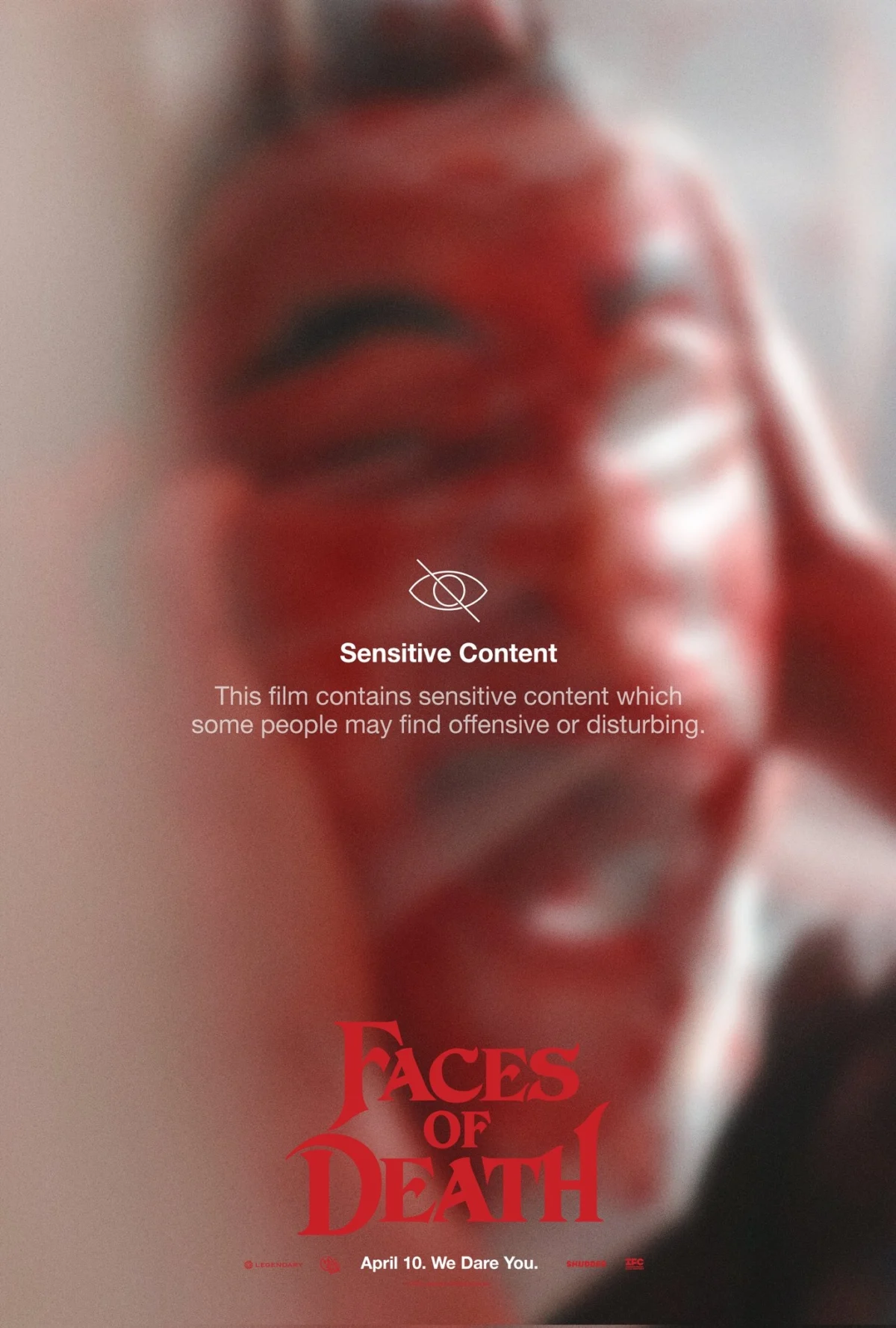
Shudder and IFC have ignited a fervor of anticipation with their audacious marketing campaign for the upcoming reimagining of Faces of Death. In a bold move that directly taps into the notorious legacy of the original shockumentary, the platforms have released a series of posters deliberately designed to push the boundaries of acceptable theatrical display, employing strategic obscuration to hint at profound brutality without explicitly revealing it. This tactic, far from being a simple aesthetic choice, is a calculated engagement with the very essence of the Faces of Death brand: the disquieting ambiguity between reality and staged horror.
The campaign centers on a collection of striking visuals, each designed to provoke curiosity and a sense of unease. One poster, for instance, presents a disturbingly intimate close-up of a face slick with blood, its features blurred and indistinct, leaving the viewer to grapple with the implied trauma. Another image depicts a shadowy figure looming over a prone form, a palpable sense of violence suggested by the crimson streaks that mar the scene, again, rendered indistinctly by a deliberate veil of digital blur. These visuals are not mere advertisements; they are carefully crafted invitations to confront the unknown, leveraging the power of suggestion to amplify the inherent shock value associated with the Faces of Death franchise. The choice to obscure these images, rather than censor them entirely, is a testament to the understanding that the absence of explicit detail can often be more potent than its direct presentation, especially within a genre that thrives on pushing psychological limits.
This approach is deeply rooted in the original Faces of Death film, which premiered in 1978. The original, directed by John Alan Schwartz, was a controversial documentary-style film that purported to show actual deaths. Its graphic content, much of which was later revealed to be staged or simulated, sparked widespread debate and moral outrage, cementing its status as a cultural touchstone for extreme cinema. The film’s enduring legacy lies in its ability to blur the lines between authentic horror and manufactured spectacle, leaving audiences questioning the veracity of what they were witnessing. The new marketing campaign for the reimagining directly echoes this foundational element, employing visual ambiguity to mirror the original’s thematic core.
The decision by Shudder and IFC to revisit Faces of Death speaks to a broader trend in the horror genre, which often sees a resurgence of interest in established franchises that can tap into existing cultural memory and a built-in audience. The original film’s impact on the exploitation and shockumentary subgenres cannot be overstated. It was a film that dared to show what many considered unshowable, forcing a societal confrontation with mortality and the taboo nature of death. Its imitators were numerous, but few captured the same blend of genuine shock and ethical controversy.
The contemporary reimagining, slated for release on April 10th, is helmed by director Daniel Goldhaber, known for his critically acclaimed film CAM. The screenplay is co-written by Isa Mazze, and the film boasts a compelling cast that includes Barbie Ferreira, Dacre Montgomery, Josie Totah, Charli XCX, and Jermaine Fowler. This ensemble suggests a production that aims to blend genuine horror with a contemporary sensibility, potentially exploring the themes of death and media in the digital age.
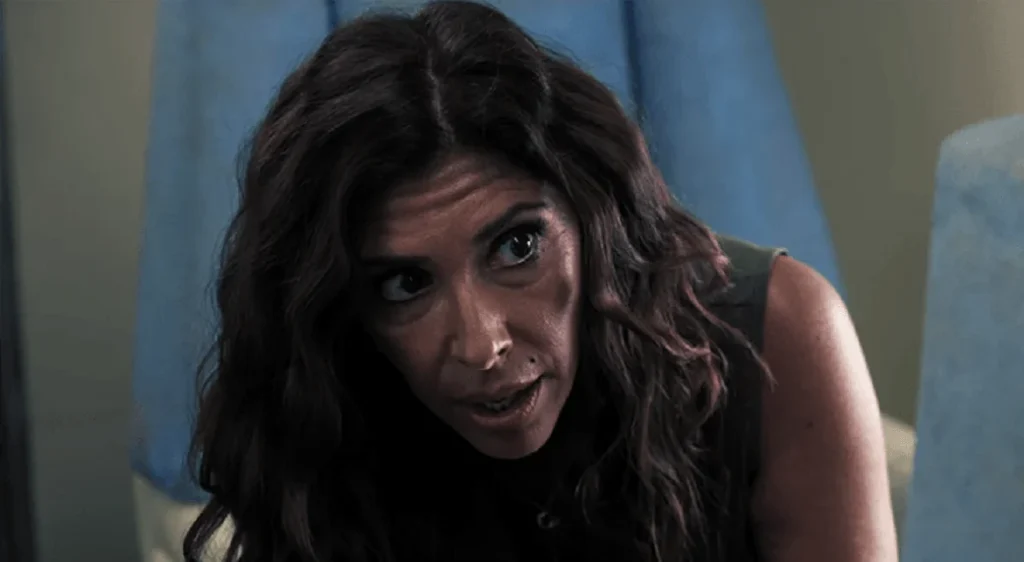
The narrative premise, as outlined, directly addresses the original film’s central conceit. Barbie Ferreira stars as a content moderator for a major video platform who stumbles upon what appear to be reenactments of murders from the original Faces of Death. In an era where digital content is often manipulated and authenticity is constantly under scrutiny, her task becomes a harrowing investigation into whether the violence she’s witnessing is fictional or unfolding in real-time. This modern interpretation intelligently adapts the franchise’s core question – "Is it real or not?" – to the complexities of the internet age, where misinformation and curated realities are pervasive. The film’s exploration of a content moderator’s role is particularly pertinent, highlighting the often-unseen labor involved in policing the vast and often disturbing landscape of online visual content.
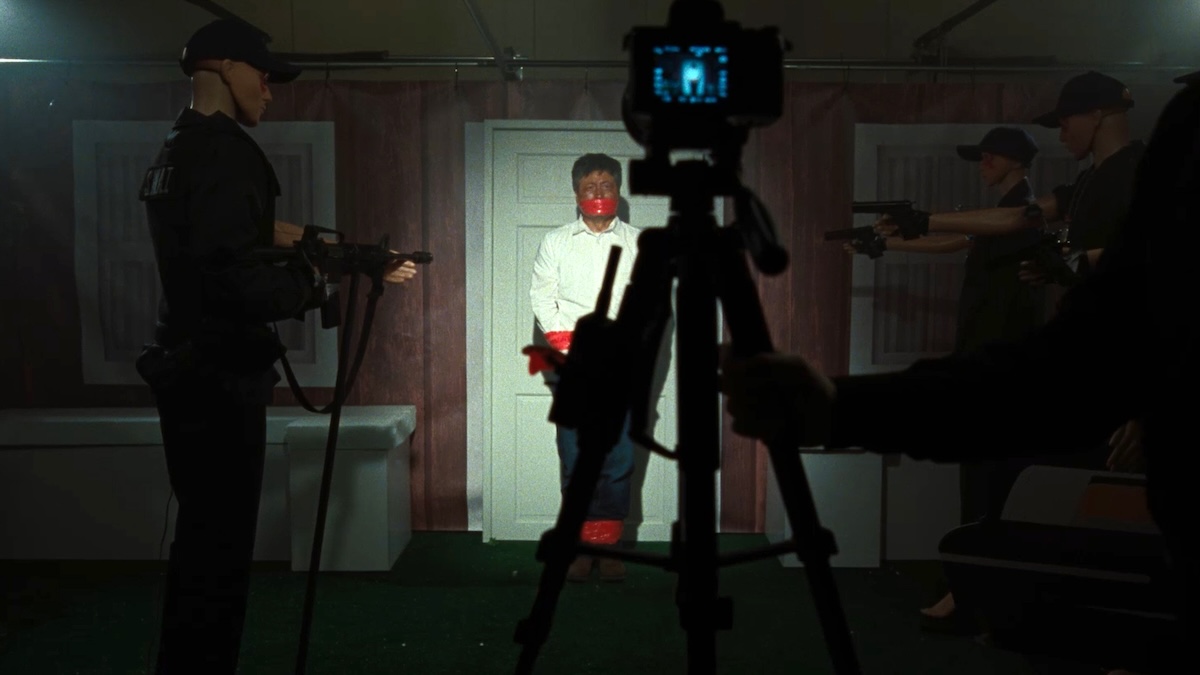
The official rating for the new Faces of Death is R, a designation that comes with a stern warning: "strong bloody violence and gore, sexual content, nudity, language, and drug use." This rating is consistent with the franchise’s reputation and the visceral nature of its subject matter. The deliberate choice of such a strong rating underscores the commitment to delivering a viewing experience that is intended to be as intense and challenging as its predecessor.
The marketing strategy, with its intentionally unsettling and obscured imagery, is a masterclass in building anticipation for a film that promises to be confronting. By refusing to reveal the full extent of the horror, Shudder and IFC are inviting audiences to project their own fears and anxieties onto the visuals. This psychological engagement is precisely what made the original Faces of Death so impactful. The ambiguity forces viewers to actively participate in constructing the horror, making the eventual experience potentially more personal and disturbing.
Background and Legacy of Faces of Death
To fully appreciate the current marketing push, it’s crucial to understand the original Faces of Death‘s impact. Released in 1978, the film was a global phenomenon, grossing over $50 million worldwide against a minimal budget. Its success was fueled by its controversial nature, which led to bans and censorship in numerous countries. The film’s structure, a faux documentary narrated by an unseen figure exploring different "methods" of death, employed a mix of genuine archival footage, staged scenes, and special effects to create a deeply disturbing and often misleading viewing experience. The "death effects" were groundbreaking for their time, featuring realistic prosthetics and gore that shocked audiences accustomed to more sanitized depictions of violence.
The film’s ethical implications were a constant source of debate. Critics and audiences grappled with the question of whether the footage was real, and if not, whether its graphic nature was gratuitous and exploitative. This ambiguity, intentional or not, was a significant part of its allure. It tapped into a primal human fascination with death, a subject that is often relegated to the shadows of polite society. Faces of Death brought it into the light, albeit in a highly controversial manner.
The film spawned several sequels and imitations throughout the 1980s and 1990s, many of which failed to capture the original’s impact and often devolved into pure exploitation. The concept, however, remained potent, and the title itself became synonymous with extreme and taboo content.
The Modern Landscape of Horror and Marketing

The decision to reimagine Faces of Death for a contemporary audience is a strategic one. The horror genre has seen a significant resurgence in recent years, with audiences demonstrating an appetite for both original concepts and well-executed franchise revivals. Films like Jordan Peele’s Get Out and Ari Aster’s Hereditary have pushed the boundaries of what is considered "elevated horror," while franchises like Halloween and Scream have found new life through thoughtful continuations and reboots.
The marketing for the new Faces of Death aligns with a growing trend of creating buzz through unconventional and provocative means. Social media has become a powerful tool for horror marketing, allowing studios to engage directly with fans and generate organic discussion. The obscured posters, designed to be shared and debated, are perfectly suited for this digital ecosystem. They invite speculation, fuel online conversations, and create a sense of mystery that is often more compelling than a straightforward trailer.
The film’s premise, which places the exploration of death and deception within the context of a content moderator’s job, is a prescient commentary on the current digital environment. In an age saturated with online content, distinguishing between truth and fabrication has become increasingly challenging. The film’s narrative explores the psychological toll of constant exposure to violence and the blurred lines between entertainment and reality that define our digital lives.
Statements and Inferences
While direct quotes from the filmmakers or studio executives regarding the specific marketing strategy are not provided in the initial information, the approach itself speaks volumes. The choice to intentionally blur graphic content suggests a conscious decision to engage with the audience on a more psychological level. It implies a confidence in the film’s ability to deliver genuine horror and a belief that hinting at the extreme is more effective than showing it outright.
One can infer that the filmmakers and marketing teams are acutely aware of the original film’s legacy and its controversial reception. Their strategy appears to be a direct nod to this history, aiming to recapture the sense of unease and moral ambiguity that defined the first Faces of Death. By focusing on suggestion and implication, they are challenging the audience to confront their own thresholds for horror.
The casting of Barbie Ferreira, known for her role in the boundary-pushing series Euphoria, further suggests a commitment to exploring mature and potentially unsettling themes. Dacre Montgomery, who has demonstrated his range in darker roles, also indicates a cast prepared for the film’s intense subject matter. The inclusion of Charli XCX, a prominent figure in the music world known for her avant-garde approach, hints at a potentially innovative and experimental direction for the film, possibly even extending to its soundtrack or visual aesthetic.

Broader Impact and Implications
The reimagining of Faces of Death and its provocative marketing campaign have several implications for the horror genre and the film industry.
Firstly, it signifies a willingness to engage with and re-examine controversial cinematic properties. The success of this approach could encourage other studios to revisit franchises that were once deemed too extreme or problematic for modern audiences, provided they can find a contemporary relevance and a thoughtful narrative framework.
Secondly, the marketing strategy itself serves as a case study in how to build anticipation for a film that relies heavily on shock value and psychological impact. By leveraging ambiguity and suggestion, Shudder and IFC have managed to generate significant buzz without resorting to conventional trailers or explicit gore. This approach could influence future marketing campaigns for horror films, particularly those that aim for a more artful or disturbing experience.
Thirdly, the film’s narrative premise, set within the context of online content moderation, reflects a growing awareness of the psychological impact of our digital lives. As more content is consumed and created online, the lines between reality and simulation become increasingly blurred. Faces of Death has the potential to tap into this contemporary anxiety, offering a horror narrative that is both terrifying and socially relevant.
Finally, the film’s R rating and the explicit mention of "strong bloody violence and gore" indicate that Shudder and IFC are not shying away from the franchise’s inherent transgressive nature. This commitment to visceral horror, combined with a compelling narrative and a strong cast, suggests that the new Faces of Death could be a significant entry in the genre, one that not only pays homage to its infamous predecessor but also carves out its own disturbing identity in the modern cinematic landscape. The daring approach to its promotional materials suggests a film that is unafraid to confront the darkest aspects of human experience, inviting audiences to look into the abyss, even if that abyss is intentionally shrouded in shadow.