The cinematic landscape has recently been punctuated by a surprising surge of visually striking Brazilian films that delve into the often-unseen corners of LGBTQ+ life, with a particular focus on clandestine encounters. Following the Oscar-nominated "The Secret Agent," which depicted violent interruptions in nocturnal trysts within a gay cruising ground, comes "Night Stage," a queer thriller that unflinchingly portrays hedonistic pursuits in a public park in Porto Alegre. "It’s the year of gay Brazilian cruising!" exclaims Marcio Reolon, co-writer and co-director of "Night Stage," with a wry sense of triumph.
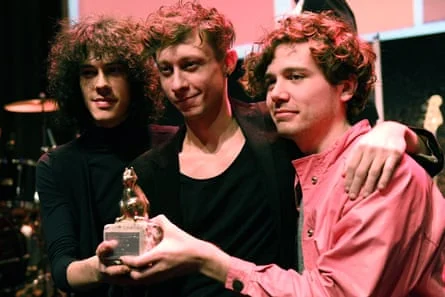
Reolon, alongside his partner and co-director Filipe Matzembacher, embodies a distinct aesthetic – a blend of "exchange-student punk" with studded accessories and striking silver jewelry. Reolon, 41, with sharp cheekbones and a distinctive quiff, wears a padlock necklace, a subtle nod to themes of confinement and liberation. Matzembacher, 37, with a cherubic face and curly hair, sports a barbed-wire tattoo on his hand, hinting at the complex narratives they weave. Their Berlin apartment serves as the backdrop for an insightful discussion about their latest work, their creative process, and their place within the evolving landscape of queer cinema.

"Night Stage": A Tapestry of Exhibitionism, Identity, and Societal Pressure
"Night Stage," their third feature film, centers on Matias (Gabriel Faryas), a theatre actor whose life takes an unexpected turn when he connects with Rafael (Cirillo Luna), a mayoral candidate, through a hook-up app. Their initial intimacy takes a daring turn when, instead of drawing the curtains, Rafael throws them wide open during sex, making their act visible to the entire street. This provocative act lays bare the film’s central tension: the interplay between performance and authentic identity, and the societal pressures that dictate how queer individuals are expected to present themselves.
The recurring motif of curtains, both within domestic spaces and the theatrical realm, underscores the film’s exploration of the "stage" – be it the proscenium arch of a theatre or the open, public space of the city’s cruising grounds. This duality highlights the precarious balance Matias and Rafael must strike. Matias’s burgeoning television acting career demands discretion about his personal life, while Rafael’s political ambitions necessitate that his personal life, including his sexuality and kinks, remain concealed. The film subtly critiques the notion of queer acceptance, as one character observes, "Queers are accepted now, but only ‘the ones who behave’." This sentiment reflects a broader societal debate about the superficiality of inclusivity versus genuine liberation.
The "Assimilation Myth" and the Politics of Visibility
Reolon articulates this critique through the concept of "the assimilation myth." He explains, "This lie that if we comply with the expectations of the dominant group, we will be absorbed. The truth is that as soon as we’re not profitable any more, we are the first ones to be discarded. This is the journey of the characters in Night Stage. They come to see how disposable they are." This observation resonates deeply in a socio-political climate where marginalized communities often find their acceptance contingent on conforming to heteronormative or bourgeois standards, only to be ostracized when they deviate or are no longer deemed beneficial.
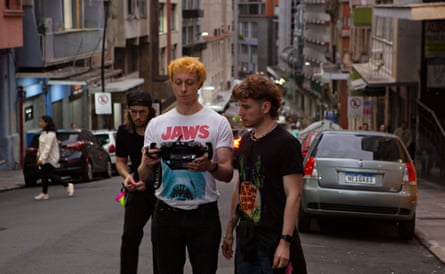
The film’s sexually charged, propulsive narrative is underscored by a deliberate and often knowingly absurd tone. The directors cite Italo Calvino’s "Six Memos for the Next Millennium" as a significant inspiration. "Calvino speaks about how we can address heavy topics through lightness," Matzembacher shares. "He mentions Perseus defeating Medusa by confronting her in a mirror. So we thought: ‘OK, maybe genre could be our mirror to address these heavy topics.’" This philosophical approach informs their cinematic style, utilizing genre conventions not to dilute, but to amplify, the profound themes they explore.
Genre as a Tool for Queer Storytelling
This embrace of genre extends to their future projects, with plans for a horror film and a western. This is a departure from traditional queer filmmaking, which has often been confined to specific narrative tropes. "It’s usually been very male and heterosexual," Reolon notes, "but I think this is shifting." The conversation naturally turns to other recent examples of genre-bending queer cinema, such as the British thriller "Femme," Yann Gonzalez’s "Knife + Heart," and "I Saw the TV Glow," suggesting a burgeoning trend of queer filmmakers reclaiming and reimagining genre.
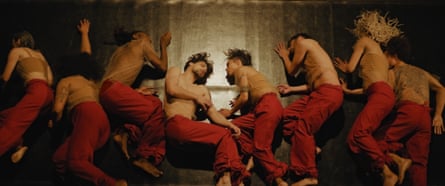
"Night Stage" itself draws inspiration from the visual flair of directors like Brian De Palma, evident in its crash-zooms and split-screens, and a vibrant use of color. The film builds to an erotic climax that has been likened to the intensity of David Cronenberg’s "Crash." Matzembacher humorously remarks, "We wanted a happy ending. Pun intended." This playful yet profound statement encapsulates their ability to infuse their work with both gravitas and a sense of dark humor.
A Partnership Forged in Film and Life
Reolon and Matzembacher’s creative and personal partnership began 17 years ago at film school in Brazil. "We started to date and work together at the same time," Reolon explains. "So we don’t know how to separate that. It’s one big messy thing. But for us, it works." Their filmography showcases a consistent exploration of identity and vulnerability. Their debut, "Seashore" (2015), was an ethereal coming-of-age drama about teenage gamers. This was followed by the more confrontational "Hard Paint" (2018), which focused on an online sex worker named NeonBoy. "Hard Paint" notably engaged with the audience’s presence, with a scene depicting NeonBoy napping during a livestream while viewer comments scrolled across the screen, directly addressing themes of voyeurism and commodification.
Voyeurism, Agency, and the Power of the Gaze
"Night Stage" intensifies the exploration of voyeurism and performance. The filmmakers immersed themselves in the works of Hitchcock, De Palma, and "Basic Instinct" as research, but ultimately forged their own path. "Usually, the character in front of the camera is the object of the gaze," Matzembacher observes. "There’s no agency there. But we thought we could make a film that subverts this, so that they are aware they’re being watched." In "Night Stage," the characters not only acknowledge being watched but actively court it, finding exhilaration in their public displays of intimacy. This defiance is captured in a scene where Matias and Rafael, after a car encounter, whoop and holler as if escaping after a heist, highlighting their agency and pleasure in transgressing societal norms.
The film’s provocative nature has led to unique screening opportunities, including a one-night-only naturist screening at London’s Rio cinema, further emphasizing its boundary-pushing approach.

Porto Alegre: A Complex Muse
The film’s "femme fatale," as Reolon describes it, is Porto Alegre itself. Both directors hail from the city, and despite a complex relationship with it, they return regularly. Matzembacher reflects on the city’s transformation: "It used to be very punk. Home to a lot of progressive leftwing movements. But something broke in the mid-2000s when it got more conservative and lost some of its charm." This sentiment echoes the disillusionment expressed by one of the characters in "Hard Paint," who likens Porto Alegre to purgatory.
The political climate of Brazil, particularly the rise of the far-right and the subsequent election of Jair Bolsonaro in 2018, profoundly influenced their work. "We were very angry with the city, and with the country, when we made that film," Reolon admits. "It was just after Brazil had suffered a coup d’état. We were watching the rise of the far right… The city became like an antagonist." This animosity is visually translated in the film through shots of anonymous figures observing street-level violence from apartment windows, a metaphor for societal apathy. "It’s like all the crimes against humanity happening today," Matzembacher laments. "People looking out of their windows, then turning away and doing nothing."
The Berlinale and the Intersection of Art and Politics
Having found acclaim and a supportive community in Berlin, particularly after "Hard Paint" won the Teddy Award at the Berlinale, the directors have direct experience with the international film festival circuit. They express dismay at the recent controversy surrounding Berlinale jury president Wim Wenders’ comments that filmmakers "have to stay out of politics."

Matzembacher, while conceding Wenders might not have intended to cause offense, notes, "He’s a very smart person so he had the tools to express it properly." Reolon, however, is more critical: "I think he knew exactly what he was saying. It was embarrassing to say the least." Their personal histories, marked by politically engaged families – Reolon’s father’s imprisonment during Brazil’s military dictatorship and Matzembacher’s childhood exposure to protests – imbue their work with an inherent political consciousness.
The line in "Night Stage," "There are moments in our lives where we have to choose who we’ll be," resonates deeply with their own convictions. Matzembacher connects this to their fathers’ legacies, a poignant realization that underscores the personal and political dimensions of their filmmaking.
Cruising as a Political Act
The directors view cruising, even in its heightened cinematic portrayal, as a politically charged act. "The whole world is living this politically intense and radical moment," Matzembacher asserts. "It’s a time to understand politics are part of everything. Even cruising, which crosses boundaries such as age, class and race." They highlight how cruising spaces, often historically public, are increasingly privatized, and how these practices by LGBT+ individuals create spaces for connection and visibility that transcend traditional social divisions. "Cruising accepts everyone, even those who are closeted," they emphasize. "You’re having interactions with people from very different backgrounds and circumstances, making connections you couldn’t make anywhere else."

Despite the stylized depiction of cruising in "Night Stage," the directors acknowledge the reality of these spaces in Porto Alegre. "We do have a cruising scene back in Porto Alegre," Reolon confirms, noting that the park featured in the film is a popular cruising spot. However, they deliberately avoided shooting in the exact location to preserve the experience for others. Reflecting on their personal experiences with cruising, they admit to having never engaged in it in their hometown, perhaps due to a fear of encountering familiar faces.
"Night Stage" stands as a powerful testament to the directors’ bold vision, their commitment to exploring complex social and political themes through the dynamic lens of cinema, and their unwavering dedication to amplifying queer voices and experiences.