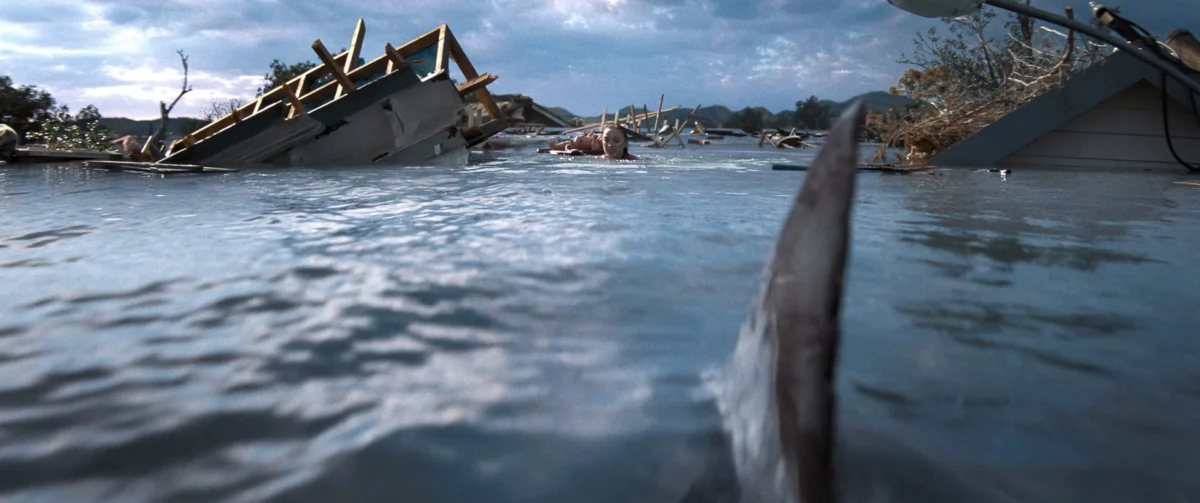
Netflix’s new aquatic horror film, Thrash, directed by Tommy Wirkola, known for his work on Dead Snow, attempts to capitalize on the genre’s recent surge in popularity. However, despite a promising premise and a star-studded cast, the film ultimately falls short of delivering a truly terrifying or even consistently engaging experience. While it offers moments of visceral gore and a throwback to classic exploitation cinema, Thrash struggles with pacing, character development, and a lack of genuine tension, leaving audiences with a sense of missed opportunity.
The Premise: A Town Submerged, A Carnage Unleashed
Thrash is set in a coastal town that is ravaged by a catastrophic hurricane. The film opens with expository text that frames the disaster as part of a larger pattern of extreme weather events in the 21st century. While this serves as a narrative device to justify the subsequent onslaught of bull sharks into the flooded urban landscape, the film largely eschews any deeper commentary on climate change. Instead, the environmental devastation is primarily a backdrop for the creature feature to unfold.
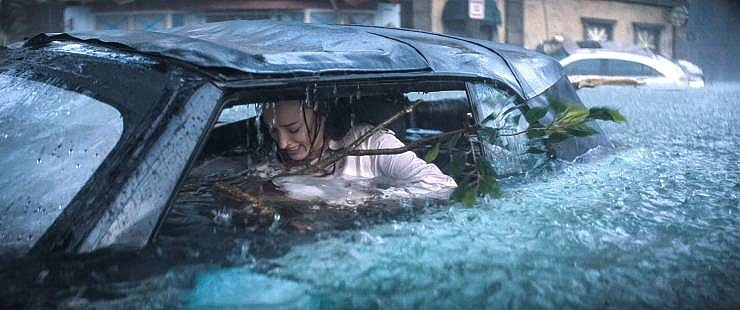
The narrative diverges from the singular focus of films like Crawl, which centered on Kaya Scodelario’s harrowing survival. Thrash, by contrast, adopts an episodic structure, following three distinct groups of characters as the town succumbs to the floodwaters and the apex predators that follow. These storylines involve Djimon Hounsou’s marine biologist, a pregnant woman named Lisa (Phoebe Dynevor) trapped in her vehicle, and a trio of foster children stranded in their home. This multi-pronged approach, while aiming for breadth, often dilutes the impact of individual scenarios.
A Stellar Cast Navigates Uneven Waters
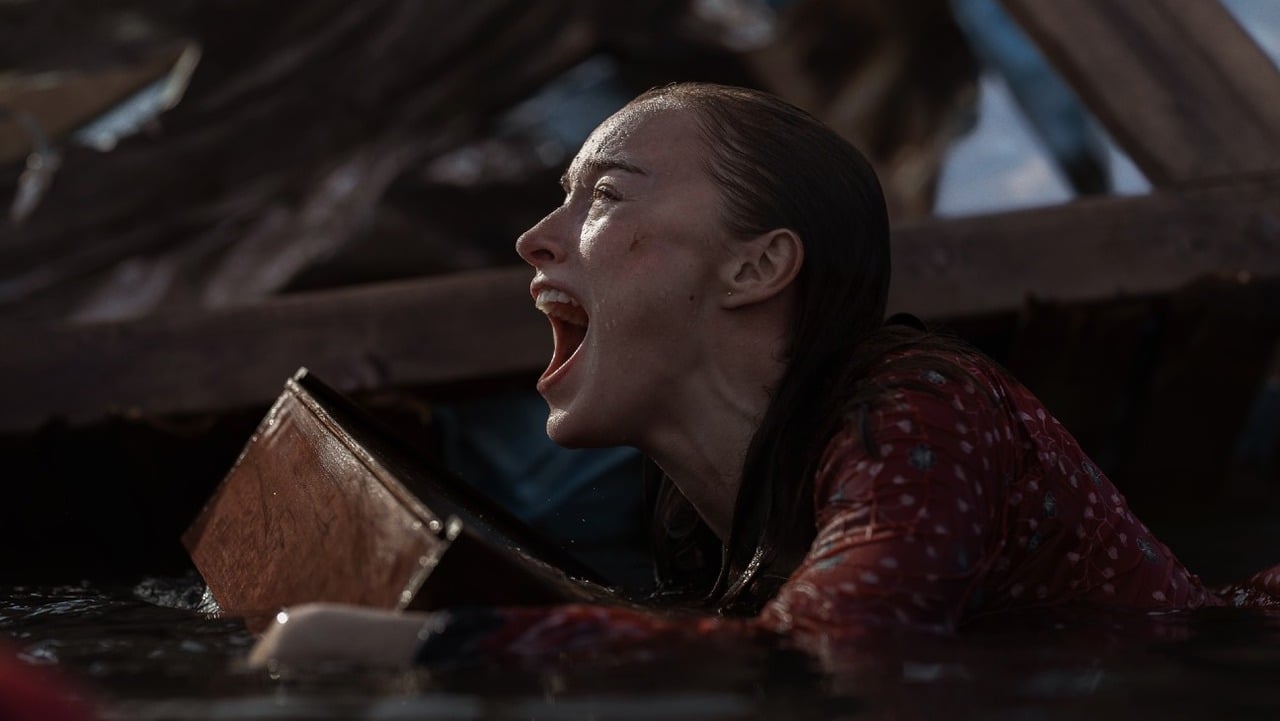
The film boasts a cast of talented actors, including Djimon Hounsou and Phoebe Dynevor, alongside Whitney Peak as Dakota, an agoraphobic young woman whose storyline intertwines with Lisa’s. While the actors largely deliver commendable performances, the script often fails to provide them with substantial material to work with.
Djimon Hounsou, an Oscar-nominated actor, finds himself significantly underutilized. His character, a marine biologist, is largely relegated to brief appearances at the beginning and end of the film. This choice has drawn criticism, as it seems to squander the considerable talent Hounsou brings to the screen, a sentiment echoed by comparisons to his limited role in A Quiet Place Part II. Similarly, Whitney Peak’s portrayal of Dakota, despite dealing with internal trauma that mirrors the external chaos, is hampered by predictable character arcs. Phoebe Dynevor’s performance as Lisa, while conveying a sense of urgency, is often overshadowed by the film’s broader narrative fragmentation.
Shark Attack Tropes and Exploitation Sensibilities
For audiences seeking the thrill of a shark attack movie, Thrash certainly delivers on its promise of gore and violence. The film embraces its exploitation roots, drawing parallels to classic B-movies like Mako: The Jaws of Death and The Last Shark. The shark sequences are often graphic and clearly staged, featuring CG-rendered bull sharks that, while not always flawless upon close inspection, effectively convey the ferocity of their attacks. The film does not shy away from depicting the predators as the bloodthirsty hunters audiences expect, despite a token line of dialogue suggesting otherwise.
The sheer volume of blood and gore is a notable aspect of Thrash, offering a certain visceral appeal. However, the film’s reluctance to escalate the tension significantly hinders its overall effectiveness. Characters like Dakota and Lisa are often placed in situations that, while outwardly perilous, rarely feel genuinely life-threatening. The foster children, for instance, spend much of their ordeal perched safely on a floating table, removed from any immediate danger.
A Lack of Genuine Tension and Missed Opportunities

Despite director Tommy Wirkola’s known penchant for dark humor, Thrash plays its premise surprisingly safe. This conservative approach results in a dearth of suspense when it comes to the film’s body count. The narrative often telegraphs the fates of characters, such as the caricatured foster parents whose survival is predictable from their introduction.
The film’s ambition to include a dramatic hurricane birth scene is also swiftly handled, a stark contrast to the more effectively executed suspenseful sequences in films like John Krasinski’s A Quiet Place. This suggests a hesitation to fully commit to the extreme horror elements that could have elevated the film beyond its predictable beats.
Comparisons to Predecessors and the Evolving Genre Landscape
Thrash inevitably invites comparisons to other successful aquatic horror films. It falls short of the unhinged, exploitative fun of Alexandre Aja’s Piranha 3D and even the chaotic energy of Xavier Gens’ Under Paris, which achieved significant viewership on Netflix. Instead, Thrash occupies a space somewhere between low-budget C-movie sensibilities and the polished production values of a major streaming service.
The film’s attempt to blend Roger Corman-esque B-movie tropes with a modern Netflix aesthetic results in a somewhat diluted experience. While the film provides enough bloodshed to maintain a baseline level of interest, it lacks the innovative spark seen in other recent shark thrillers. For example, the Australian independent film Beast of War managed to revitalize a familiar post-Jaws formula with fresh creativity. In contrast, Thrash carries the subtle scent of predictability, offering a bite that is ultimately unsatisfying.
Release and Reception
Thrash premiered on Netflix on April 10th. Initial reactions suggest a mixed reception, with critics acknowledging its gory moments but lamenting its overall lack of originality and tension. The film’s summary on its release highlights its potential for an "exploitative good time" but notes that its "incongruous goodwill never bloodies the waters quite as well as it should."
Broader Implications and the Future of Aquatic Horror
The release of Thrash underscores the continued appetite for creature features and survival horror, particularly those set in aquatic environments. The genre has seen a resurgence in recent years, with films like The Shallows, 47 Meters Down, and the aforementioned Crawl and Under Paris finding success. This trend reflects a broader fascination with the primal fears associated with being vulnerable in the face of nature’s power, especially when amplified by monstrous predators.
However, the success of these films often hinges on their ability to innovate within established tropes, deliver compelling character arcs, or push the boundaries of visceral horror. Thrash‘s struggle to achieve these elements suggests that simply replicating familiar formulas, even with a high-profile cast and a major platform, may not be enough to capture audience attention. The streaming landscape, in particular, demands films that can stand out amidst a vast library of content.
The film’s weak commentary on environmental themes also represents a missed opportunity. While not every horror film needs to be a didactic allegory, the backdrop of a devastating hurricane provides fertile ground for exploring the anxieties surrounding climate change. By sidestepping this potential, Thrash opts for a more straightforward, albeit less impactful, approach to its narrative.
As the genre continues to evolve, filmmakers will need to find ways to balance the visceral thrills of creature features with more substantive storytelling and thematic depth. The success of films that manage this balance, like The Shallows with its focus on survival ingenuity or Crawl with its intense character-driven narrative, provides a roadmap for future aquatic horror endeavors. Thrash, while offering a dose of gore, ultimately serves as a reminder that even the most fearsome predators require a compelling story to truly sink their teeth into.