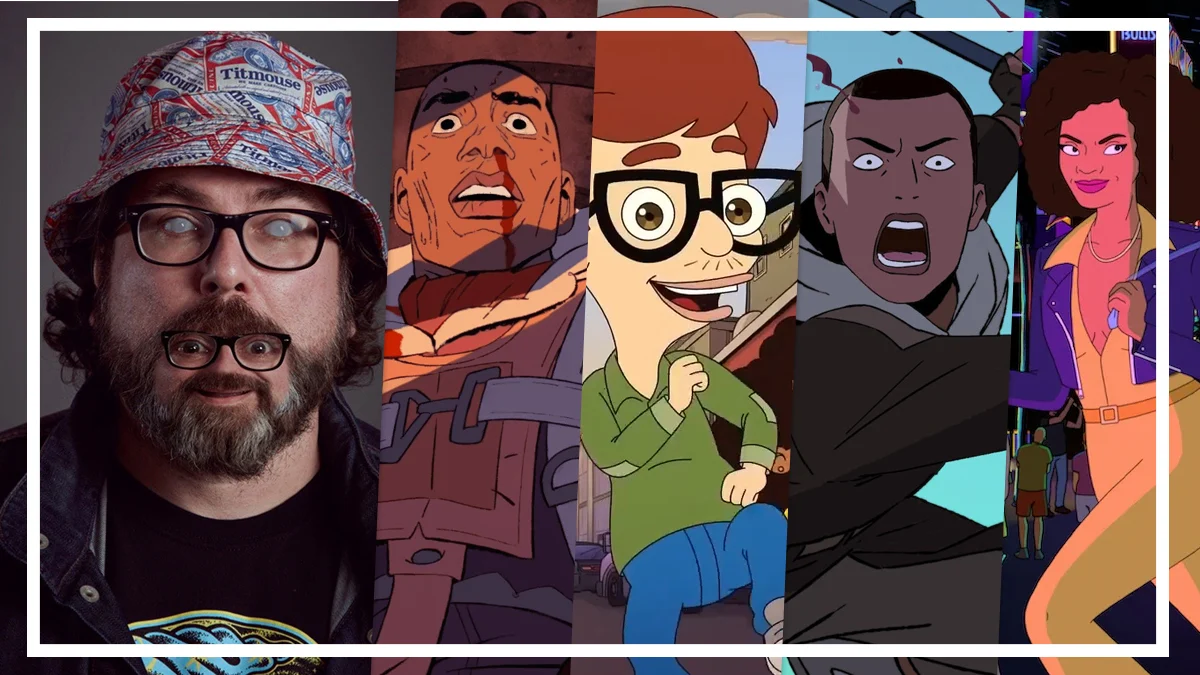
Titmouse, the innovative animation studio co-founded by Chris and Shannon Prynoski a quarter-century ago, stands as a testament to sustained creativity and adaptability within the ever-evolving entertainment landscape. From its humble beginnings, the company has blossomed into a veritable powerhouse, employing hundreds of talented artists and technicians who have contributed to a diverse portfolio of critically acclaimed and fan-favorite animated series. Their work spans iconic titles such as Scavengers Reign, Beavis and Butt-Head, The Legends of Vox Machina, The Venture Bros., and the recently announced The Mighty Nein. In parallel, Titmouse has cultivated a robust partnership with Netflix, producing a significant slate of original animated content that underscores its versatility and strategic importance in the streaming era.
A Quarter-Century of Creative Evolution: The Titmouse Journey
Founded 25 years ago, Titmouse emerged from the independent animation scene, driven by Chris and Shannon Prynoski’s vision to create a studio that prioritized artistic integrity and innovation. In the late 1990s and early 2000s, the animation industry was undergoing significant shifts, with the rise of CGI challenging traditional 2D animation, and adult animation beginning to carve out a more prominent niche beyond established hits like The Simpsons. Titmouse navigated these changes by embracing a wide array of styles and genres, quickly becoming known for its distinctive visual flair and irreverent humor.
The studio’s early days were marked by a commitment to fostering a creative environment where artists could thrive. This ethos allowed them to take on projects that pushed boundaries, from the cult classic The Venture Bros., which garnered a dedicated following for its intricate storytelling and unique character designs, to the revival of the quintessential MTV series Beavis and Butt-Head, showcasing their ability to honor legacy content while injecting fresh energy. Their collaboration on The Legends of Vox Machina further cemented their reputation for delivering high-quality, action-packed fantasy animation, a genre that has seen a resurgence in popularity. The upcoming The Mighty Nein promises to continue this trend, building on the success of their work with Critical Role.
The Netflix Partnership: A Cornerstone of Streaming Animation
Titmouse’s collaboration with Netflix exemplifies the shifting dynamics of content production in the streaming age. The studio has become a pivotal partner for the global streamer, contributing to a substantial portion of its original animated programming. Their most recent project, Cullen Crawford’s Strip Law, is a prime example of this synergy, bringing a visually rich and "grimy" rendition of Las Vegas to life. Chris Prynoski himself lauded the show’s environmental storytelling, noting, "People say this about every show, that the environment is a character in the show, but in Strip Law, it’s true." This dedication to immersive world-building is a hallmark of Titmouse’s approach, a philosophy that resonates deeply with creators and audiences alike.
Beyond Strip Law, Titmouse’s extensive roster of Netflix originals includes a diverse array of projects. They are the creative force behind the distinct aesthetics of Haunted Hotel, contributed several acclaimed episodes to the Emmy-winning anthology series Love, Death and Robots, and animated the spy comedy Agent Elvis. Their portfolio also spans family-friendly fare like Arlo the Alligator Boy, adult animated comedies such as Chicago Party Aunt, and the thought-provoking The Midnight Gospel. The studio has also been instrumental in the production of established hits like Human Resources and the wildly popular Big Mouth, demonstrating their capacity to handle both new IP and established franchises.

Netflix’s investment in animation has been a significant strategic play, with the streamer consistently expanding its animated offerings across various demographics and genres. Titmouse’s ability to deliver high-quality animation across this spectrum makes them an invaluable partner. Furthermore, Titmouse has also been involved in projects that later found a home on Netflix through licensing agreements, amplifying their reach. Shows like the critically praised sci-fi drama Scavengers Reign, the intricate Pantheon, and the recently acquired Digman! (for US audiences) highlight the studio’s broader impact on the animation landscape, transcending initial platform exclusivity to reach wider audiences. This licensing trend underscores the value of well-produced animated content in a competitive streaming market.
Navigating Hollywood’s Shifting Sands: A Veteran’s Perspective
The entertainment industry, particularly Hollywood, is currently experiencing a period of significant anxiety, marked by economic uncertainties, the ongoing impact of streaming consolidation, and the disruptive potential of artificial intelligence. Chris Prynoski, a seasoned veteran who has weathered over two decades of industry turbulence, offers a pragmatic and resilient perspective. Reflecting on past downturns, he notes, "I’ve seen after 9/11, after the financial crisis, all these things — I think the industry took worse downturns than it’s in now. While it is very bad, it is not the worst I’ve ever seen. Just hang around long enough and you’ll see a lot of bad shit." This seasoned outlook provides a vital counterpoint to the immediate anxieties gripping the industry, suggesting that resilience and adaptation are inherent to its nature.
Prynoski recalls the apprehension that gripped traditional animators with the advent of CGI, specifically citing the release of Toy Story. "When Toy Story came out, we were like, ‘We’re sunk. This is over. Nobody’s going to want this anymore.’ We just saw the future, and it was so not true. There was a path for both kinds of things," he explains. This historical parallel is particularly pertinent today, as the rise of AI in creative fields sparks similar fears about job displacement and the devaluation of human artistry. Titmouse’s proud declaration in Strip Law‘s opening credits, celebrating that "humans made this show," serves as a powerful statement in this context. Prynoski affirms, "We employ humans to make all the decisions. I mean, computers are used in everything… but the humans are making all the creative decisions." This stance highlights Titmouse’s commitment to human ingenuity at a time when the debate surrounding AI’s role in creative industries is intensifying, offering a clear philosophical position on the future of artistic production.
The Artist-Led Model: Titmouse’s Unique Approach to Creativity
A defining characteristic of Titmouse is its foundation as a business run by artists, for artists. This philosophy, championed by Chris and Shannon Prynoski, permeates every level of the company. "It’s just the way it is," Prynoski states, emphasizing that the studio’s very composition is shaped by its artistic core. This model contrasts sharply with more corporatized structures often found in large production houses, fostering an environment where creative concerns are inherently understood and prioritized.
The artistic background of key personnel, such as Chief Operating Officer Ben Kalina, who began his career in film school and worked as an editor and compositor, reinforces this ethos. "Really, everybody who’s running the company is an artist so we all care about it," Prynoski elaborates. This deep understanding of the creative process, from conceptualization to execution, allows Titmouse to communicate more effectively with its talent and clients, ensuring that artistic visions are realized with integrity.
Prynoski also shared a personal anecdote about his challenging transition from artist to boss, specifically recalling the profound difficulty of his first employee termination. "The first time I had to fire somebody was so hard… I was so visibly distraught that the editor at the end of the firing patted me on the shoulder and was like, ‘It’s going to be okay. Don’t worry about it.’ I was so upset." This candid reflection underscores the emotional toll of leadership and the necessary development of "thicker skin" to navigate the business realities of a creative enterprise. It highlights the unique challenges faced by artists who step into managerial roles, balancing empathy with the practical demands of running a successful studio.

This artist-centric approach extends to how Titmouse nurtures its creative talent. Prynoski has adopted a philosophy of supportive leadership rather than prescriptive oversight. Recognizing that creators often receive numerous notes from clients and networks, he refrains from adding another layer of unsolicited feedback. Instead, his role has evolved to one of a resource and confidant. "I’m not going to give you notes, but I’m here for you to ask me any question. If you need help with anything," he explains, describing his approach with Cullen Crawford on Strip Law. This could involve brainstorming solutions for a stuck joke, offering a fresh perspective, or mediating discussions with networks. This collaborative, empowering model encourages creators to discover their own best solutions, fostering a sense of ownership and creative autonomy that is vital for producing original and impactful work.
Crafting Diverse Animated Worlds: From Comedy to Drama
Titmouse’s prowess lies in its ability to adapt its animation capabilities to a vast spectrum of creative visions, meticulously balancing artistic ambition with production realities. A prime example is Scavengers Reign, a show Prynoski holds in high regard for its exceptional execution. Originally airing on HBO Max before finding a wider audience on Netflix, this series was "100% dependent upon the execution," as it was not a dialogue-driven show. The challenge, as Prynoski explains, was to maximize production value within strict budget and schedule parameters, especially given the initial debate about including dialogue in its 22-minute episodes. The decision to incorporate some dialogue ultimately proved strategic, preventing the creators, Joe Bennett and Charles Huettner, from "painting [themselves] into a corner" creatively. Scavengers Reign stands as a testament to Titmouse’s capacity for visual storytelling that transcends conventional narrative structures, achieving critical acclaim for its breathtaking alien landscapes and nuanced character journeys.
The studio’s versatility is further evident in its handling of distinct animation styles. Projects like Beavis and Butt-Head, while seemingly simplistic, present unique challenges. "People think it’s going to be easy to draw, but some of those jobs are the harder ones to draw," Prynoski reveals, explaining that the characters’ "irregular" designs make traditional construction methods difficult. This highlights the deceptive complexity often found in seemingly crude or stylized animation, requiring a specific skill set and attention to detail.
Similarly, their work with Brad Neely on shows like China, IL showcased another facet of Titmouse’s adaptability. Despite its absurdist comedy, Neely insisted on a grounding in realistic movement and staging. Prynoski recalls Neely’s philosophy for the "Professor Brothers": "Brad really wanted them to hang and work like a professor’s blazer would. It’s not a cartoon shorthand of how that works." This commitment to physical realism within a fantastical setting demonstrates Titmouse’s technical expertise and its dedication to honoring each creator’s specific artistic demands. Neely’s advice to his artists—"I want people not to draw badly, but to try and draw the best drawing they can as fast as possible"—encapsulates a unique approach to achieving a "rough-around-the-edges" style without compromising the underlying quality of the drawing.
Titmouse also emphasizes the critical importance of drawing inspiration from the real world, rather than solely relying on existing animation. Antonio Canobbio, the studio’s Chief Creative Officer, advises artists to "Dig deeper" than the first page of a Google search. While the internet offers unparalleled access to references, the danger lies in the homogenization of visual styles due to over-reliance on readily available, "low-hanging fruit" imagery. Prynoski champions the practice of "real-life observation," a technique fundamental to early Disney animators, as a means to foster originality and avoid the pitfalls of merely referencing other animated works. This philosophy encourages artists to continually analyze and interpret the world around them, enriching their work with unique perspectives and fresh visual language, thereby ensuring Titmouse productions maintain their distinctiveness.
The Future of Animation: Passion, Persistence, and the Human Touch
In an industry marked by both immense opportunity and intense competition, Chris Prynoski offers poignant advice for aspiring and young artists. His message is unequivocal: profound passion is not just an asset, but a prerequisite. "You got to love it. It’s a weird job, any kind of creative job, but specifically animation, it’s so labor-intensive. It is so super competitive that it has to be something that you just can’t not do," he asserts. He likens the pursuit of an animation career to becoming a professional basketball player, emphasizing that even to secure a spot on the bench, one must be among the best in the country. To succeed as a concept or character designer, artists must commit to "draw[ing] eight hours a day every day, because you can’t not draw eight hours a day every day."

This advice underscores the demanding realities of the animation profession, which requires not only innate talent but also relentless dedication, continuous skill development, and an unwavering drive. The industry is characterized by long hours, tight deadlines, and constant innovation, making it an unsuitable path for those without deep-seated enthusiasm. Prynoski’s counsel serves as a filter, suggesting that if one is weighing animation against a more stable career like architecture solely for financial viability, the latter might be the more practical choice.
However, he also offers a nuanced perspective on the role of art in one’s life. He encourages those who love to create but are not prepared for the rigors of a professional career to embrace art as a hobby. "You can do it as a hobby… Do it for fun. If you want to do it as a career, make sure you really, really are passionate about it because if you’re not, it might be frustrating." This distinction between pursuing art for personal fulfillment versus professional ambition is crucial, providing a compassionate yet realistic outlook.
Prynoski’s insights resonate deeply within the broader context of the creative economy, where the lines between passion and profession are often blurred. His emphasis on intrinsic motivation and relentless practice serves as a vital reminder for anyone aspiring to break into highly competitive creative fields. It reinforces Titmouse’s foundational belief in the human element of art-making—a belief that, in an increasingly automated world, positions the studio not just as a production house, but as a champion of enduring human creativity and artistic integrity.
Titmouse’s 25-year journey from a burgeoning animation studio to a leading force in the industry is a testament to its founders’ vision, its artist-led philosophy, and its remarkable adaptability. As it continues to produce groundbreaking content for platforms like Netflix and beyond, the studio remains committed to the principles of human creativity, resilience, and a deep-seated passion for the art of animation, ensuring its continued impact on the global entertainment landscape.