A significant legislative challenge has emerged in Washington D.C. as Republican lawmakers, supported by major Hollywood studios, move to dismantle the regulatory framework of Canada’s Online Streaming Act. The newly introduced Protecting American Streaming and Innovation Act represents a sharp escalation in a cross-border trade dispute that centers on how digital media is produced, funded, and distributed in the North American market. Introduced by Representative Lloyd Smucker of Pennsylvania, the bill seeks to categorize Canada’s domestic media requirements as discriminatory trade barriers, potentially paving the way for retaliatory tariffs and significant shifts in the United States-Mexico-Canada Agreement (USMCA) relationship.
The legislation specifically targets the Canadian Online Streaming Act, formerly known as Bill C-11, which received royal assent in 2023. The Canadian law mandates that foreign digital platforms, including industry giants such as Netflix, Disney+, Amazon Prime Video, and Spotify, contribute a portion of their Canadian revenues to the production of local film, television, and music content. While the Canadian government frames the law as a necessary modernization of the Broadcasting Act to ensure "cultural sovereignty" in the digital age, U.S. lawmakers and industry groups argue it imposes an unfair financial burden on American companies while providing preferential treatment to Canadian domestic entities.
The Legislative Counter-Move in Washington
Representative Lloyd Smucker’s bill is designed to provide the U.S. government with the tools necessary to counter what his office describes as "digital trade barriers targeting American streaming companies and content producers." In a statement accompanying the bill’s introduction, Smucker emphasized that the legislation is a response to policies that "undermine the competitiveness" of the American entertainment industry. The bill aims to compel the Office of the United States Trade Representative (USTR) to take a more aggressive stance against Canadian regulations that force U.S. platforms to subsidize their foreign competitors.
The timing of the bill is critical. It arrives as the three North American nations prepare for the 2026 review of the USMCA. By introducing this legislation now, Republican sponsors are signaling that digital trade and cultural exemptions will be top-tier issues in upcoming negotiations. The bill has garnered significant support from a coalition of industry advocates, including the Computer and Communications Industry Association (CCIA), the Digital Media Association (DiMA), and the Information Technology and Innovation Foundation (ITIF). These groups argue that Canada’s approach sets a dangerous global precedent that could encourage other nations to impose similar "content levies" on American digital exports.
Chronology of the Dispute: From Bill C-11 to the Present
The tension over Canada’s media regulation has been building for several years, following a clear timeline of legislative and regulatory milestones:
- November 2020: The Canadian government introduces Bill C-10, the precursor to the Online Streaming Act, aiming to bring social media and streaming platforms under the jurisdiction of the Canadian Radio-television and Telecommunications Commission (CRTC).
- April 2023: After significant debate and revision, Bill C-11 (the Online Streaming Act) officially becomes law. It grants the CRTC the power to impose financial requirements and "discoverability" mandates on foreign streamers.
- June 2024: The CRTC issues a landmark ruling requiring major foreign streaming services to contribute 5% of their Canadian annual revenues to fund local news and Canadian content (CanCon). This levy is estimated to generate roughly $200 million CAD (approximately $147 million USD) annually for the Canadian media ecosystem.
- Late 2024: U.S. tech and media companies launch legal challenges in the Canadian Federal Court of Appeal, arguing that the CRTC has exceeded its statutory authority.
- March 2025: Representative Lloyd Smucker introduces the Protecting American Streaming and Innovation Act in the House of Representatives, marking the first major U.S. legislative attempt to directly penalize Canada for its streaming policies.
The Economic Stakes: Data and Market Impact
The financial implications of the Online Streaming Act are substantial for both the Canadian and American economies. According to data from the CRTC, foreign streaming services have seen explosive growth in the Canadian market, often at the expense of traditional cable and satellite providers who are legally required to fund Canadian content.
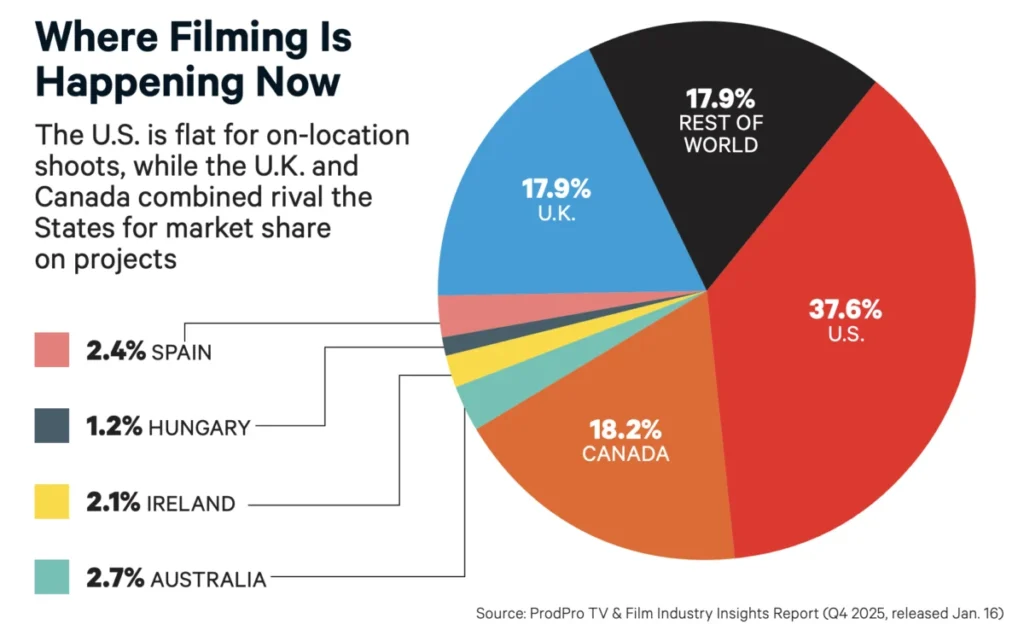
In 2023, the Canadian film and television production industry reached a record high of nearly $12 billion CAD in total volume. However, a significant portion of this—roughly $6.7 billion—came from "Foreign Location and Service" (FLS) production, which primarily involves Hollywood studios filming in hubs like Vancouver, Toronto, and Montreal to take advantage of tax credits and a favorable exchange rate.
The Canadian government argues that while Hollywood spends money on labor and facilities in Canada, it does not necessarily invest in "Canadian stories" or intellectual property owned by Canadians. The 5% levy is intended to bridge this gap. Conversely, the Motion Picture Association (MPA) points out that its members already spent over $5 billion CAD annually on production in Canada, making them some of the largest contributors to the local economy. The MPA argues that forcing an additional 5% revenue levy on top of these massive investments is "discriminatory," as Canadian broadcasters do not face the same specific obligations regarding global revenue.
Industry Reactions: A Divide in Perspectives
The reaction to the U.S. legislation has been polarized along national and industry lines. Charles Rivkin, Chairman and CEO of the Motion Picture Association, has been one of the most vocal supporters of the Smucker bill. Rivkin contends that the Online Streaming Act creates an uneven playing field.
"Canada and its audiences are important to our member studios and the broader industry," Rivkin said in a statement. "However, Canada’s Online Streaming Act disadvantages American companies and undermines competitiveness by requiring streaming companies to subsidize and promote Canadian content over their own productions through discriminatory obligations that Canadian broadcasters do not face."
On the other side of the border, the Canadian Media Producers Association (CMPA), which represents thousands of independent producers, views the U.S. bill as an attack on cultural fairness. The CMPA argues that the digital age requires a modernization of rules that have applied to traditional broadcasters for decades.
"At its core, the Online Streaming Act is about fairness, recognizing how content is consumed in the digital age and ensuring that online streaming platforms carry requirements similar to those of traditional broadcasters," the CMPA stated. "By bringing these platforms in line with the rest of the industry, we can help secure a future where Canadian stories are supported, funded, and accessible."
Broader Trade Implications and the USMCA
The conflict over the Online Streaming Act does not exist in a vacuum; it is inextricably linked to broader trade tensions between Ottawa and Washington. Under the USMCA, Canada retained a "cultural exception" that allows it to protect its domestic media and cultural industries. However, the agreement also includes a provision that allows the United States to take "measures of equivalent commercial effect" if it believes the cultural exception is being used to discriminate against American businesses.
The Smucker bill essentially signals that the U.S. is ready to invoke these retaliatory measures. This could take the form of tariffs on unrelated Canadian exports, such as softwood lumber, steel, or dairy products—sectors that are already flashpoints in the bilateral relationship.
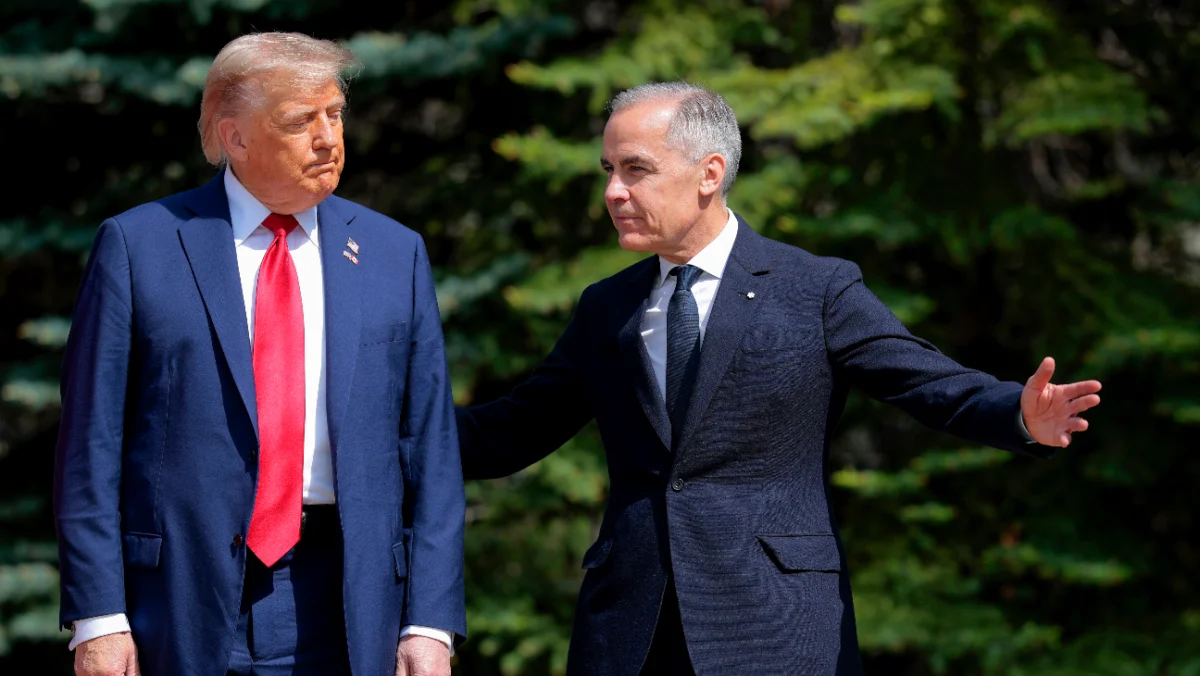
Furthermore, this dispute follows a similar pattern seen with Canada’s Digital Services Tax (DST). In late 2024 and early 2025, the Canadian government faced intense pressure from the U.S.—including direct threats of tariffs from the Trump administration—over a tax targeting the revenues of large tech companies like Google and Meta. While Canada eventually paused certain aspects of the DST to facilitate trade talks, the Online Streaming Act remains a firm pillar of Prime Minister Justin Trudeau’s policy agenda, suggesting a collision course is inevitable.
Analysis of Potential Outcomes
The introduction of the Protecting American Streaming and Innovation Act suggests several potential paths forward for the North American media landscape:
- Escalation of Trade Remedies: If the bill passes, the USTR will likely launch a Section 301 investigation into Canada’s digital trade practices. This process often leads to the imposition of retaliatory tariffs, which could spark a broader trade war during a period of global economic volatility.
- Negotiated Compromise: Canada may attempt to offer concessions during the 2026 USMCA review, such as lowering the 5% levy or expanding the definition of "Canadian content" to include productions led by American streamers that employ Canadian crews and talent.
- Investment Flight: There is a growing concern among Canadian local media players that if the U.S. retaliates harshly, Hollywood studios may reduce their "service production" footprints in Toronto and Vancouver. Since the Canadian industry relies heavily on the infrastructure and jobs provided by American "big-budget" shoots, a withdrawal of Hollywood investment could cripple the very sector the Online Streaming Act seeks to protect.
- Legal Standoff: The implementation of the Act remains tied up in the Canadian court system. A ruling against the CRTC could provide a "soft exit" for the Canadian government, allowing them to revise the regulations without appearing to capitulate to U.S. political pressure.
As the Protecting American Streaming and Innovation Act moves through the legislative process in Washington, it serves as a stark reminder of the complexities of modern trade. In an era where "content is king," the borders between cultural protectionism and digital trade barriers have become increasingly blurred, leaving the multi-billion-dollar entertainment industry caught in the middle of a high-stakes diplomatic battle.