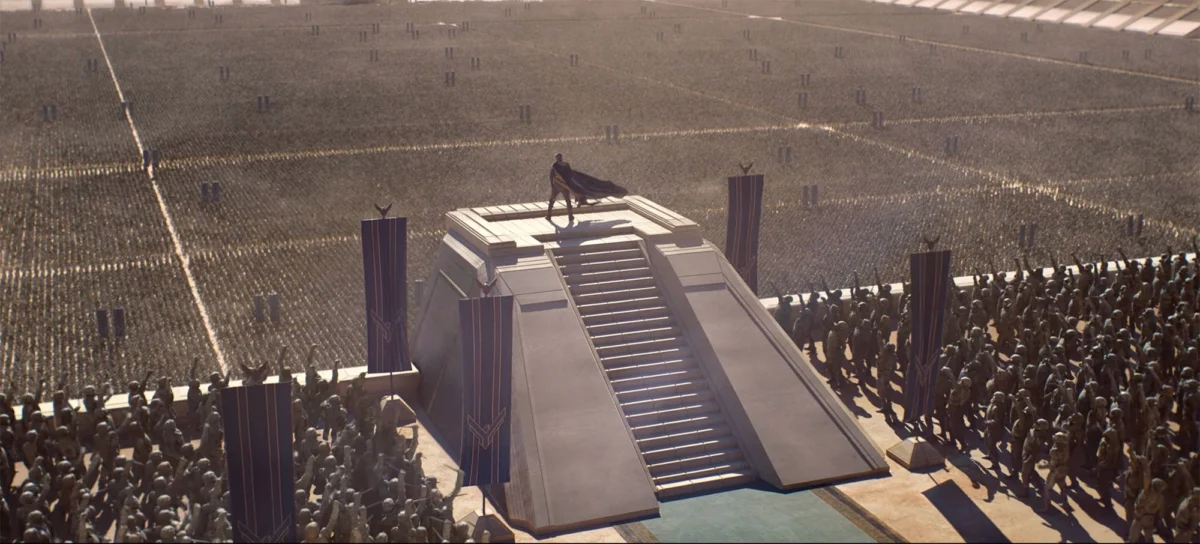
Warner Bros. Pictures has officially released the first teaser trailer for Dune: Part Three, confirming a theatrical release date of December 18, 2026, and marking the final chapter in director Denis Villeneuve’s adaptation of Frank Herbert’s science fiction masterpiece. Following the massive commercial and critical success of Dune: Part Two in early 2024, the production has moved at an accelerated pace to bring the third installment to global audiences within a two-year window. The film, primarily based on Herbert’s 1969 sequel novel, Dune Messiah, is set to explore the darker consequences of Paul Atreides’ rise to power as the Emperor of the Known Universe. The teaser, which debuted on March 17, 2026, via official digital channels, features the haunting narration of Paul Atreides, played by Timothée Chalamet, reflecting on the cyclical nature of conflict: "War feeds on itself. The more I fight, the more our enemies fight back."
Narrative Direction and Adaptation of Dune Messiah
Dune: Part Three serves as the narrative conclusion to the trilogy established by Villeneuve in 2021. While the first two films covered the events of the original 1965 novel Dune, the third film shifts its focus to the fallout of the holy war, or Jihad, unleashed in Paul’s name. The screenplay, co-written by Villeneuve and acclaimed comic book writer and screenwriter Brian K. Vaughan, draws heavily from Dune Messiah. This specific narrative arc is widely regarded as Herbert’s deconstruction of the "hero’s journey," illustrating the perils of messianic leadership and the loss of individual agency within massive political and religious structures.
The plot of the upcoming film follows Paul "Muad’dib" Atreides as he navigates the complexities of his reign. As Emperor, Paul possesses unprecedented power, yet he finds himself trapped by the very prophecies he used to ascend the throne. The official synopsis confirms that the story will deal with an intricate conspiracy involving the displaced political Great Houses, the Spacing Guild, and the Bene Gesserit, all operating within Paul’s own inner circle. Central to the conflict is the tension between Paul’s duty to his empire and his personal devotion to Chani, as well as the emergence of an heir to the Atreides dynasty.
The Evolution of the Ensemble Cast
The third installment features a blend of returning stars and significant new additions to the franchise. Timothée Chalamet returns as Paul Atreides, joined by Zendaya as Chani, whose role is expected to be even more pivotal following her departure at the end of Part Two. Rebecca Ferguson returns as the Lady Jessica, now the Reverend Mother of Arrakis, while Florence Pugh reprises her role as Princess Irulan, whose political marriage to Paul serves as a central pillar of the new imperial order.

Notably, the teaser confirms the return of Jason Momoa. While his character, Duncan Idaho, perished in the first film, readers of the source material will recognize his return as a "ghola"—a biological clone created by the Tleilaxu. This version of the character, named Hayt, introduces a psychological depth to the story as Paul grapples with the resurrection of his closest friend.
New additions to the cast include Robert Pattinson as Scytale, a pivotal antagonist and a "Face Dancer" from the Tleilaxu, a group of genetic manipulators. Anya Taylor-Joy, who made a brief cameo in Part Two as Paul’s sister Alia Atreides, will have a lead role in this conclusion. The cast is further rounded out by Isaach De Bankolé as Farok, Charlotte Rampling as the Reverend Mother Mohiam, and Javier Bardem as Stilgar. The production also introduces newcomers Nakoa-Wolf Momoa and Ida Brooke in undisclosed roles.
Production Timeline and Industrial Context
The development of Dune: Part Three follows a period of significant growth for the franchise. The first film, released in 2021, grossed over $400 million at the global box office despite a day-and-date release on streaming services during the pandemic era. Its sequel, Dune: Part Two, released in March 2024, surpassed its predecessor with a global haul exceeding $711 million, cementing Villeneuve’s vision as a premiere cinematic property.
Warner Bros. and Legendary Entertainment fast-tracked the development of the third film to capitalize on this momentum. While Villeneuve initially expressed a desire to work on other projects—including a potential adaptation of Cleopatra or Arthur C. Clarke’s Rendezvous with Rama—the script for Dune: Part Three was prioritized. Brian K. Vaughan’s involvement as a co-writer suggests a focus on the dense political maneuvering and psychological elements that define Dune Messiah.
Principal photography reportedly took place throughout 2025, utilizing locations in Jordan, the United Arab Emirates, and soundstages in Budapest. The December 2026 release date positions the film as a major holiday blockbuster, a slot traditionally reserved for high-earning tentpoles and Academy Award contenders.

Chronology of the Villeneuve Dune Trilogy
The timeline of the cinematic adaptation spans five years of real-world time and significant in-universe shifts:
- October 2021: Release of Dune: Part One. The film introduces Paul Atreides and the fall of House Atreides on the planet Arrakis. It wins six Academy Awards, primarily in technical categories.
- March 2024: Release of Dune: Part Two. The film depicts Paul’s integration into Fremen culture, his victory over House Harkonnen, and his ascension to the throne after defeating Emperor Shaddam IV.
- March 2026: Release of the first teaser trailer for Dune: Part Three.
- December 18, 2026: Scheduled worldwide theatrical release of Dune: Part Three.
This chronology highlights a consistent output from Villeneuve, who has maintained a high level of visual and thematic continuity across the trilogy. The 2026 release will bring the total runtime of the saga to approximately nine hours, making it one of the most comprehensive adaptations of Frank Herbert’s work.
Critical and Commercial Implications
Industry analysts suggest that Dune: Part Three is poised to be one of the highest-grossing films of 2026. The franchise has successfully bridged the gap between high-concept science fiction and mainstream action cinema. By adapting Dune Messiah, Villeneuve is taking a calculated risk; the book is notably more philosophical and dialogue-heavy than its predecessor, with fewer large-scale battles. However, the teaser suggests that the film will maintain the "brutal" and "twisted" aesthetic that has become a hallmark of the series.
The inclusion of Robert Pattinson and the return of Jason Momoa are expected to drive significant interest. Furthermore, the expansion of Zendaya and Florence Pugh’s roles aligns with the rising star power of both actresses since the first film’s inception. The film also carries the burden of concluding the "Muad’dib" cycle, providing a definitive end to Paul Atreides’ story before any potential future adaptations of the later, more abstract Dune novels by other filmmakers.
Official Responses and Creative Vision
While official statements from the cast have been limited to the "Trailer Launch Conversation" released on YouTube, Villeneuve has frequently spoken about his reverence for the source material. In previous interviews, he noted that Dune Messiah was written by Herbert specifically to correct the public’s perception of Paul Atreides as a traditional hero. Villeneuve’s intent with Part Three appears to be a faithful execution of that correction.

"The story follows Muad’dib, heir to unimaginable power, as he brings to fruition the ancient scheme to create a superbeing ruler among men," the studio’s promotional materials state. This focus on the "superbeing" or Kwisatz Haderach as a potentially destructive force is the central theme of the teaser. The visual language of the trailer—darker palettes, claustrophobic interiors of the imperial palace, and the looming presence of the Tleilaxu—indicates a shift away from the vast desert vistas of the first two films and toward a more intimate, psychological thriller.
Warner Bros. Discovery’s decision to schedule the film for December 18, 2026, reflects confidence in the film’s broad appeal. This date puts the film in direct competition with other holiday releases but allows it to dominate the IMAX and large-format screens, which accounted for a significant portion of the revenue for Part Two.
As the film moves toward its year-end release, further trailers are expected to detail the roles of the new cast members and the visual realization of the Tleilaxu technology. For now, the teaser serves as a stark reminder that the "Golden Path" of Paul Atreides is one paved with difficult choices and immense sacrifice.