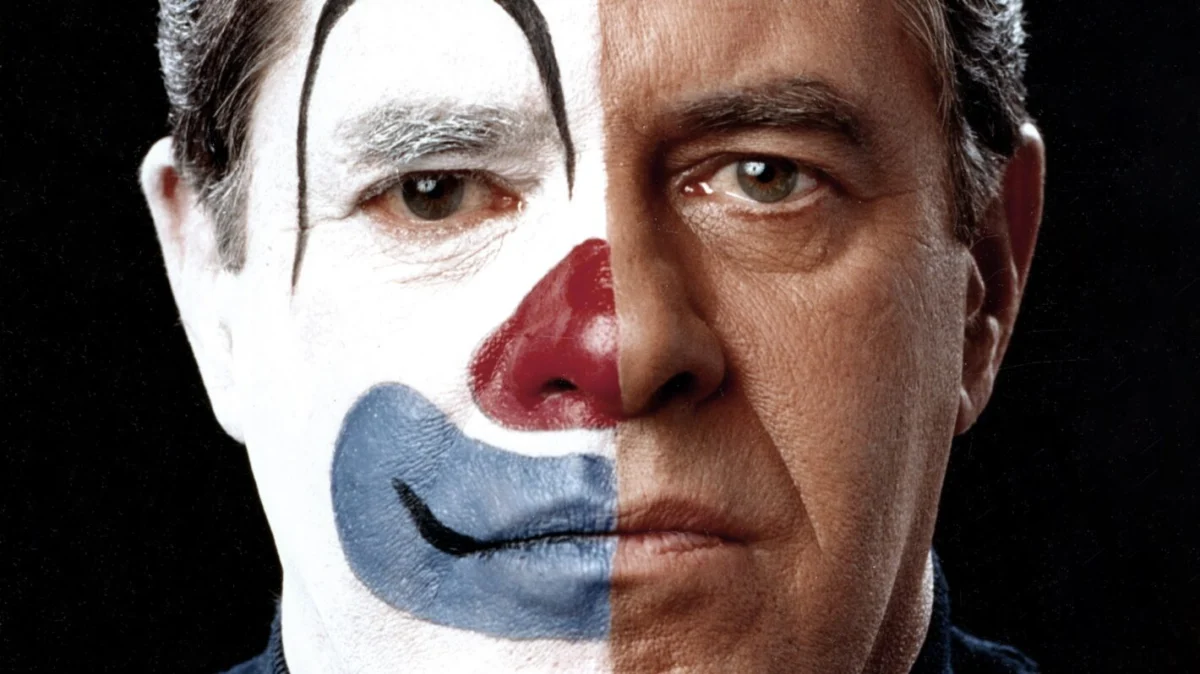
The narrative surrounding the film is not merely one of a failed production but a complex intersection of financial mismanagement, copyright disputes, and a fundamental shift in how global audiences and creators approach the sensitivity of the Shoah. While Lewis was primarily known for his slapstick comedy and "The King of Comedy" persona, this project represented his most significant attempt at dramatic gravitas—a move that ultimately resulted in a work so controversial that Lewis himself spent the remainder of his life ensuring it remained hidden from the world.
The Narrative Premise and Production History
The origins of the project date back to 1971, when producer Nathan Wachsberger approached Jerry Lewis with a screenplay written by Joan O’Brien and Charles Denton. The story centers on Helmut Doork, a washed-up, ego-driven German circus clown who is arrested by the Gestapo after drunkenly mocking Adolf Hitler in a bar. Doork is sent to a concentration camp for political prisoners, where he initially struggles to maintain his dignity. Eventually, he finds a new audience in the Jewish children of the camp. The plot reaches a harrowing climax when the SS utilizes Doork to lead the children into the gas chambers at Auschwitz, promising him his own freedom in exchange for his cooperation in keeping the children calm and distracted.
Production commenced in 1972, with filming primarily taking place in Stockholm, Sweden. Lewis, who not only starred as Doork but also directed the feature, reportedly lost 35 pounds for the role and invested over $2 million of his own money into the production when Wachsberger’s financing failed to materialize. The atmosphere on set was described as somber and intense, reflecting Lewis’s dedication to the material. However, the production was plagued by technical difficulties and a mounting realization that the tonal balance between clownish antics and the horrors of the Holocaust was increasingly precarious.
A Chronology of Suppression and Legal Deadlock
The history of the film’s disappearance is as intricate as its production. The following timeline outlines the key milestones in the film’s journey from the set to the vault:
- 1971: Jerry Lewis signs on to direct and star in the film after reading the O’Brien and Denton script.
- 1972: Principal photography begins in Sweden. Financial issues arise almost immediately as Wachsberger fails to deliver the promised budget.
- 1973: Production is halted. Lewis takes the rough cut of the film with him, but he lacks the legal rights to release it because the original screenwriters, Joan O’Brien and Charles Denton, were never paid for their work. Consequently, they refused to authorize the film’s distribution.
- 1970s–2010s: Lewis maintains a private copy of the film in his personal safe. He occasionally screens it for select individuals but becomes increasingly hostile toward questions about the project in public forums.
- 1979: Actor and satirist Harry Shearer views a rough cut of the film, later providing one of the few eyewitness accounts of its content.
- 2013: During a press conference at the Cannes Film Festival, Lewis states that the film was "bad, bad, bad" and that "no one will ever see it."
- 2015: Lewis donates his personal archives, including a copy of the film, to the Library of Congress, under the strict condition that it not be screened for at least ten years.
- 2017: Jerry Lewis passes away at the age of 91.
- June 2024: The 10-year moratorium on the Library of Congress’s copy expires, theoretically allowing researchers access to the footage.
Supporting Data and Production Logistics
The financial and logistical data surrounding the film underscore the chaos of its creation. At the time of filming, the estimated budget was approximately $5 million, a significant sum for an independent production in the early 1970s. When the production ran out of funds, Lewis utilized his personal wealth to pay the crew and keep the cameras rolling, a testament to his belief in the project’s potential.
The legal entanglement was equally significant. Joan O’Brien, the primary co-writer, remained steadfast in her refusal to allow the film’s release. In various interviews, she expressed her dissatisfaction with the changes Lewis made to the script, which she felt leaned too heavily into sentimentality and deviated from the darker, more cynical tone of the original draft. This copyright stalemate created a "permanent limbo" for the film; even if Lewis had wanted to release it, he lacked the underlying intellectual property rights to do so legally.
Eyewitness Accounts and Critical Reaction
Because the film has never been screened for a general audience, its reputation relies heavily on the testimony of the few who have seen fragments or rough cuts. The most famous of these critiques came from Harry Shearer, who saw the film in 1979. In an interview with Spy magazine in 1992, Shearer described the experience as overwhelming, but for the wrong reasons.
"With most of these kinds of things, you find that the anticipation is better than the reality. But ‘The Day the Clown Cried’ is perfect," Shearer remarked. "This movie is so drastically wrong, its pathos and its comedy are so wildly misplaced, that you could not, in your fantasy of what it might be like, improve on what it really is. ‘Oh, My God!’—that’s all you can say."
Shearer’s reaction highlighted the central critique that has followed the film: the perceived "offensiveness" of using a comedic figure to lead children to their deaths. Critics have argued that the film attempted to find "beauty" or "innocence" in a setting where such concepts are fundamentally at odds with the historical reality of the gas chambers.
Official Responses and Jerry Lewis’s Personal Stance
In the decades following the production, Jerry Lewis’s stance on the film shifted from defensive to deeply apologetic. In his 1982 autobiography, Jerry Lewis: In Person, he spoke of the film with a degree of hope, but by the 2000s, his rhetoric had changed entirely.
"I was ashamed of the work," Lewis told a reporter in 2013. "I was grateful that I had the power to contain it all, and never let anyone see it. It was bad, bad, bad. It could have been wonderful, but I mismanaged it."
When Lewis donated the film to the Library of Congress in 2015, the move was seen by film historians as a compromise. By placing it in an archive with a long-term moratorium, Lewis ensured that the film would be preserved for historical study while sparing himself the embarrassment of a public release during his lifetime or the immediate years following his death. The Library of Congress confirmed that they received a "work print" rather than a finished, polished film, suggesting that even if screened today, the movie would be an incomplete artifact.
Broader Impact and Implications for Holocaust Cinema
The legacy of The Day the Clown Cried extends beyond its status as a curiosity. It serves as a precursor to a genre of Holocaust cinema that attempts to blend tragedy with fable-like elements. Comparisons are frequently drawn between Lewis’s film and Roberto Benigni’s 1997 film Life is Beautiful (La vita è bella). While Benigni’s film won three Academy Awards and was a commercial success, it faced similar criticisms regarding the trivialization of the Holocaust through comedy.
The failure of Lewis’s project highlights the "unrepresentability" of the Holocaust in certain artistic registers. Philosophers and historians, such as Theodor Adorno and Elie Wiesel, have famously questioned the morality of creating art out of the atrocities of the death camps. The Day the Clown Cried became a cautionary tale for filmmakers, demonstrating that without a precise and sensitive tonal balance, the attempt to humanize the tragedy through a comedic lens can result in something perceived as grotesque or exploitative.
Furthermore, the film’s "lost" status has contributed to a larger cultural conversation about film preservation and the rights of an artist to suppress their own work. The 2016 documentary The Day the Clown Cried: It’s About Time, directed by Eric Friedler, utilized behind-the-scenes footage and interviews with surviving cast members to piece together the film’s history, providing the public with its most comprehensive look at the project to date without actually screening the film itself.
The 2024 Milestone and the Future of the Archive
As of June 2024, the moratorium established by Jerry Lewis and the Library of Congress has officially ended. This does not, however, mean that the film will be available for streaming or general theatrical release. Because the Library of Congress holds the physical film but not the copyright, they are legally restricted from showing it to the public for profit or in a way that violates the rights of the O’Brien and Denton estates.
Instead, the film is expected to be available for scholarly research. Historians and film students will likely be able to view the footage at the Library’s Packard Campus for Audio-Visual Conservation in Culpeper, Virginia. This transition from "lost movie" to "archival specimen" marks the final chapter in the film’s long journey. It moves the conversation away from sensationalism and toward a technical and historical analysis of Lewis’s directorial choices.
Ultimately, The Day the Clown Cried remains a monument to the risks of artistic ambition. It stands as a reminder that some historical events are so profound in their horror that they resist the traditional structures of narrative entertainment. While the mystery of the film may be partially solved by its archival availability, its reputation as a singular, tragic misfire in the career of one of comedy’s most influential figures is likely to endure for generations to come.