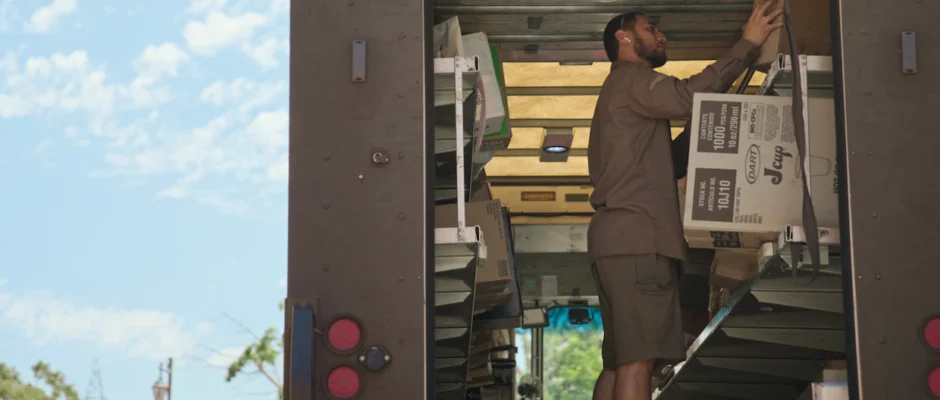
Filmmaker Yael Bridge’s latest documentary, Who Moves America, arrives at a pivotal moment for the American labor movement, chronicling the high-stakes 2023 contract negotiations between the United Parcel Service (UPS) and its 340,000 Teamsters union members. The film, which recently premiered at True/False and is set for a screening as part of DOC NYC Selects in Spring 2026, offers an intimate look into the collective power of workers and the critical role unions play in advocating for dignity and fair conditions. Through a mosaic of voices from across the nation, Bridge’s work underscores a resounding message: the essential labor of everyday Americans is the true engine of the country, a sentiment powerfully conveyed by the film’s title, devoid of a question mark.
The Genesis of a Labor Documentary
The inspiration for Who Moves America emerged from a confluence of factors signaling a shift in the labor landscape. Yael Bridge, known for her 2020 documentary The Big Scary ‘S’ Word, which explored America’s inherent socialist tendencies, collaborated with producer Yoni Golijov and cinematographer Erick Stoll. Their prior work on "When We Fight," a short film about the 2019 Los Angeles teacher strike, had already cemented their interest in labor issues. The team recognized the significance of the UPS Teamsters situation following the election of Sean O’Brien as the union’s new president. O’Brien’s campaign was built on a promise of aggressive negotiation, a stark contrast to the perceived concessions of the 2018 contract, which had left a substantial portion of the membership feeling disenfranchised.
The 2018 contract, in particular, had been a source of deep frustration. Despite being ratified, a significant percentage of Teamsters members voted against it, highlighting a disconnect between leadership and rank-and-file workers. This discontent fueled O’Brien’s ascent, as he vowed to reclaim lost ground and push for substantial improvements. When O’Brien began publicly advocating for a general strike if UPS management failed to address critical workplace grievances, Bridge and her filmmaking collective understood they were witnessing a potentially historic moment. They assembled a "super team" of filmmakers, commencing production approximately a year before the 2023 contract’s expiration, aiming to capture the trajectory of these crucial negotiations.
A Crucial Juncture for American Labor
The 2023 UPS Teamsters contract negotiations represented the largest private-sector bargaining unit in the United States, encompassing approximately 340,000 employees. This sheer scale meant that the outcome would reverberate far beyond UPS, influencing labor relations across numerous industries. The issues at stake were not merely incremental demands but fundamental concerns about worker health, economic security, and basic human dignity in the workplace.
One of the most pressing concerns highlighted in the film was the deadly heat faced by drivers. Many UPS delivery trucks, particularly older models, lacked air conditioning, forcing drivers to operate in temperatures that could exceed 120 degrees Fahrenheit inside the cargo area during summer months. This issue had led to numerous heat-related illnesses and even fatalities among drivers, making AC a non-negotiable demand for the union. Beyond the immediate health risks, the economic plight of part-time employees—who constitute the majority of UPS’s workforce—was another central grievance. These workers often struggled with low wages and inadequate benefits, despite their integral role in the company’s vast logistics network. Furthermore, a widespread concern among the entire workforce was the stagnation of wages, which had failed to keep pace with the accelerating cost of living and inflation, eroding their purchasing power and quality of life. In 2022, the Consumer Price Index for all urban consumers (CPI-U) rose 6.5 percent, while average hourly earnings for production and non-supervisory employees increased by only 4.6 percent, illustrating the growing gap between wages and living expenses.
UPS, a global logistics behemoth, reported revenues of over $100 billion in 2022, underscoring its financial capacity to address worker demands. The potential for a strike at such a massive company was a significant economic threat. Analysts estimated that a sustained strike could cost UPS hundreds of millions of dollars weekly and disrupt supply chains nationwide, impacting countless businesses and consumers. This immense leverage, coupled with O’Brien’s unwavering stance, set the stage for a dramatic showdown.
Echoes of the Past: The 1997 UPS Strike
The shadow of the 1997 UPS strike loomed large over the 2023 negotiations, serving as both a cautionary tale for management and a source of inspiration for the union. The 1997 strike, which lasted 15 days, cost UPS an estimated $700 million and severely impacted its reputation and market share. That strike primarily centered on the company’s reliance on part-time workers and its demands for concessions on benefits and full-time job creation. The Teamsters, under then-president Ron Carey, successfully campaigned with the slogan "Part-time America Won’t Work," ultimately securing significant gains, including the creation of 10,000 new full-time jobs.
Bridge’s film captures the generational divide in understanding this history. Some of the older workers featured in Who Moves America actively picketed during the 1997 strike, their experiences shaping their deep-seated class consciousness and commitment to union principles. They carried the memory of collective victory and the belief that solidarity could force concessions from even the largest corporations. In contrast, many younger workers, particularly those from Gen Z, had either not yet been born or were too young to comprehend the socio-economic implications of such a large-scale labor action. Their engagement with the union was often rooted in more immediate concerns about job security and fair pay in a precarious modern economy. This blend of seasoned veterans and newly awakened activists provided a rich tapestry for Bridge to explore the evolving nature of labor consciousness.
Crafting the Narrative: Filming Across America
To effectively portray the vastness and diversity of the Teamsters’ membership, Bridge and her team made deliberate choices regarding filming locations and character selection. With 340,000 members spread across the country, it was crucial to demonstrate that the issues were systemic, not isolated.
New York City was a practical choice, given that much of the film crew was based there, allowing for easier logistics. The New York segment provided a glimpse into the complexities of urban logistics and a diverse membership base. To juxtapose this, the team also filmed in the San Diego area. Bridge noted that Teamsters in this region tend to be more politically conservative, allowing the film to explore the "bipartisan straddling" necessary for broad-based organizing. This geographic and political diversity aimed to show that worker solidarity could transcend traditional divides.
Louisville, Kentucky, became the third crucial location, primarily because it is home to UPS Worldport, the company’s global air hub and the largest automated package handling facility in the world. While the sheer scale of Worldport didn’t fully make it into the final cut, its significance as the nerve center of UPS operations provided an important backdrop. The aim was to capture a range of experiences, from long-term union loyalists ("I’ve been a union member for 30-40 years and I have a UPS tattoo") to those who viewed UPS as merely a part-time job, yet were still affected by the contract. This meticulous approach ensured that the film authentically represented the myriad faces and motivations within the union, showcasing what true solidarity entails.
Navigating Access and Building Trust
Gaining access to the inner workings of a major union during sensitive contract negotiations, and simultaneously filming around a multinational corporation’s facilities, presented significant challenges. Bridge commended the Teamsters for their "extreme generosity" in allowing the film crew into private conversations and strategic meetings, which provided invaluable insight into the union’s decision-making processes. This level of access is rare in documentary filmmaking, particularly in high-stakes corporate-labor environments.
However, filming around UPS facilities, especially Worldport, proved more contentious. Despite the legality of filming in public spaces, the crew faced multiple instances of police being called on them while shooting outside UPS properties. This highlights the inherent tension between corporate entities and those seeking to document their operations, particularly in the context of labor disputes.

Building trust with individual workers was a cornerstone of Bridge’s methodology. The process often began with informal interactions, sans camera, allowing the filmmakers to simply "hang out" and talk. This patient approach fostered genuine connections. For instance, initial connections in New York were made through individuals like Tony, who was already politically involved and could vouch for the filmmakers within his social circles. In California, a subject named Justin was reportedly found through extensive outreach. The Kentucky segment proved the hardest to cast, as the team specifically sought individuals less involved in the union. Ultimately, they connected with two sisters working at UPS, one of whom was a union member and the other not, providing a nuanced perspective on union engagement. This deliberate approach to casting allowed Who Moves America to explore the full spectrum of worker experiences and sentiments toward the union and the negotiations.
Generational Perspectives and the Radicalizing Power of Organizing
A compelling aspect of Who Moves America is its exploration of generational differences in labor consciousness. The film effectively contrasts the perspectives of veteran workers, who vividly recall the transformative power of the 1997 strike, with younger employees, some of whom were not even alive during that era. Bridge observes that the act of labor organizing itself is inherently "radicalizing" and empowering. In a system where individual workers often lack a voice, collective action provides a mechanism for "economic and employment democracy."
Bridge points out the stark reality: an individual asking management for air conditioning in their truck is likely to be dismissed, whereas a unified front of 340,000 workers demanding it cannot be ignored. This collective bargaining power allows workers to challenge corporate decisions that impact their lives, from workplace safety to environmental practices. The process of organizing—talking to colleagues, building solidarity—fosters a "developmental growth" in participants, transforming them from isolated individuals into empowered collective actors. This shift from feeling helpless to becoming agents of change is a central theme Bridge has observed repeatedly throughout her career documenting labor movements. The film vividly illustrates how this process reignites a sense of agency and purpose, turning ordinary workers into "superheroes" in their own lives, capable of shaping their working conditions and, by extension, their communities.
Unique Dimensions of the UPS Teamsters
Bridge noted several unique characteristics of the UPS Teamsters union that distinguished it from other labor movements she had documented. Historically, many unions represented physical labor jobs, a tradition that persists within the Teamsters, making it a predominantly male-dominated organization. This contrasts with the rising prominence of unions in sectors like nursing and teaching, which often have a higher proportion of female members. The film offers a glimpse into this "specific type of masculine performance and behavior," including interactions with International Brotherhood of Teamsters (IBT) leadership in Washington D.C., often depicted in "double-breasted suits."
Furthermore, the legacy of the Teamsters is distinct, marked by a history of both powerful advocacy and, at times, controversy. Despite this, UPS jobs hold immense significance in many communities, particularly communities of color. These roles, especially at the driver level, represent a pathway to middle-class stability without requiring a college degree, offering six-figure incomes. This economic opportunity, coupled with union protection, makes UPS employment a highly valued position, despite the inherent hardships and demanding nature of the work. The film subtly conveys this dual reality: the arduous nature of the job juxtaposed with the significant economic benefits secured through union representation.
Leadership and Membership: A Symbiotic Relationship
A critical narrative choice in Who Moves America was the careful portrayal of Sean O’Brien, the Teamsters’ president. While O’Brien’s vocal leadership and aggressive stance were instrumental in the negotiation strategy, Bridge deliberately avoided positioning him as a singular "figurehead." She recognized the danger of reinforcing a "false understanding of where power lies." Instead, the film emphasizes that O’Brien, while a powerful leader, is ultimately "led by the 340,000 members pushing him in a direction."
This perspective highlights the democratic nature of union power, where the will of the membership dictates the course of action. O’Brien’s role, as depicted, is one of motivation and icon status, but the true emotional journey and the ultimate decision-making power rest with the rank-and-file members who vote on the contract and engage in on-the-ground organizing. This nuanced portrayal reinforces the film’s overarching message that collective action, rather than individual leadership, is the ultimate driver of change. It underscores that the union’s strength derives from the active participation and solidarity of its diverse membership.
The Averted Strike and Contract Ratification
When the time came for the Teamsters to vote on the proposed contract, the decision to ratify was overwhelming. The union secured significant concessions from UPS without resorting to a full-scale strike, a testament to the power of their organizing and the credible threat of withholding labor. Key gains included:
- Air Conditioning: All new UPS vehicles purchased after January 1, 2024, would be equipped with air conditioning, and existing vehicles would have fans installed. This was a monumental victory for driver safety.
- Wage Increases: Full-time drivers saw their average top rate increase to $49 per hour by the end of the contract, representing a substantial raise over the five-year period.
- Part-Time Pay: Part-time workers, a central focus of the negotiations, received an immediate pay raise to at least $21 per hour, with significant increases over the life of the contract, addressing long-standing grievances about low wages.
- End to Two-Tier Wages: The contract eliminated the controversial "22.4" two-tier wage system, which had paid newer full-time drivers less than their veteran counterparts for the same work, a major point of contention.
- New Full-Time Jobs: The agreement also committed UPS to creating 7,500 new full-time jobs, building on the legacy of the 1997 strike.
Bridge reflected on whether not striking ultimately "hurt the union." As a documentarian, she refrained from offering a personal opinion on the specific benefits for individual Teamsters. However, she emphasized the profound narrative value in demonstrating the "power of organizing without going on strike." The very act of being organized, communicating effectively, and possessing the collective capacity to withhold labor was sufficient to compel UPS to make "huge gains" in the contract. This outcome provided a powerful lesson: the credible threat of a strike, backed by a unified membership, can be as effective as a strike itself, avoiding the economic disruption for both workers and the company.
Looking Ahead: The Future of Labor and the 2028 Horizon
The 2023 UPS Teamsters contract negotiations are not an isolated event but a significant data point in a broader resurgence of the American labor movement. The current contract expires in 2028, coinciding with Sean O’Brien’s re-election cycle, setting the stage for another round of high-stakes negotiations. Beyond UPS, a notable trend is emerging: numerous major unions, including nurses, flight attendants, and the United Auto Workers (UAW), are strategically aligning their contract expirations around 2028. This coordinated approach fuels speculation about the potential for a "much larger, more unified general strike" across multiple sectors, a concept that could fundamentally reshape American labor relations and economic power dynamics.
Bridge and her team remain in close contact with the workers and IBT leadership featured in the film, underscoring the ongoing nature of these struggles. She encourages those outside traditional union structures, including documentary filmmakers, to consider how they can "support, participate, and bring what we learn into our own workspaces." This call to action highlights the film’s broader objective: to inspire greater labor consciousness and organizing efforts across all professions.
A Resurgent Labor Movement?
The landscape of American labor is at an interesting "pivot point," as Bridge describes. While union density—the percentage of the workforce belonging to unions—remains at a historic low (around 10% in 2023), union popularity is at a historic high, particularly among younger generations. Recent polling data from Gallup consistently shows public approval for unions hovering around 67-71%, significantly higher than decades prior. This growing enthusiasm, especially among Gen Z and millennials, stems from a clear-eyed recognition of diminished job security, stagnant wages, and the erosion of worker protections in a highly competitive and often exploitative economy.
The "Hot Labor Summer" of 2023, marked by high-profile strikes from the UAW, Hollywood writers and actors, and other sectors, further amplified this sentiment. These actions demonstrated the effectiveness of collective bargaining in securing better pay, benefits, and working conditions. For many, unions are no longer just a historical relic but a vital, perhaps "the only," mechanism to push back against corporate power and secure a fairer distribution of wealth and opportunity. Bridge’s optimism for the future of American organizing is palpable. She believes that the lessons from the UPS Teamsters, and other contemporary labor successes, are "pretty obvious" and that films like Who Moves America play a crucial role in making these lessons accessible and inspiring new generations to join the fight for workers’ rights. The film serves not just as a historical record, but as a rallying cry for a more equitable and democratic economic future.